
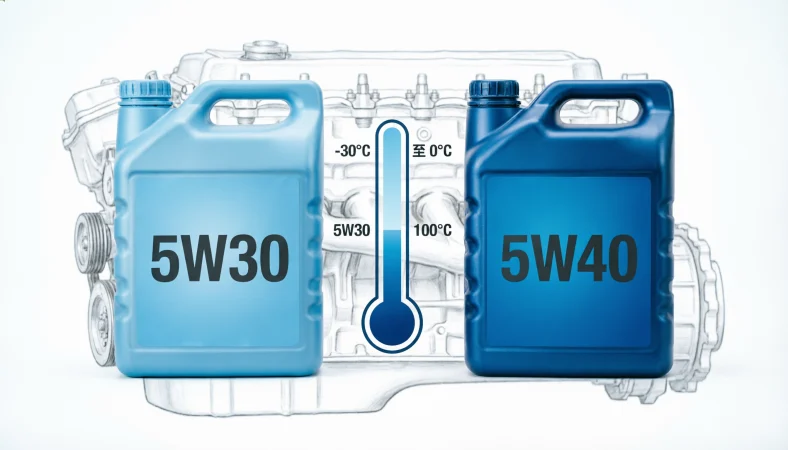
5W30 vs 5W40 engine oil mainly differs in thickness at high temperatures. Both oils flow the same in cold weather, but 5W40 is thicker when the engine is hot, offering extra protection under heavy load. Choosing between them depends on your vehicle type, climate, and driving style.
Choosing the right engine oil is not simple. Many drivers see labels like 5W30 and 5W40 and feel confused. Both look similar. Both start with 5W. So what is the real difference?
Engine oil protects your car’s engine. It reduces friction. It keeps parts cool. It prevents wear. If you choose the wrong oil, your engine may not perform well. Fuel use can increase. Parts can wear out faster.
The debate around 5W30 vs 5W40 is common among car owners. Some people think thicker oil is always better. Others follow what the manufacturer says. Some drivers change oil grades depending on weather.
This guide will explain everything in simple words. You will learn what the numbers mean, when to use each oil, and what mistakes to avoid. Whether you drive a small sedan, SUV, diesel truck, or turbo car, this article will help you make the right decision.
Quick Answer About 5W30 vs 5W40
Here is the short and clear answer:
- Both 5W30 and 5W40 have the same cold-start viscosity rating.
- 5W30 is thinner at high engine temperatures.
- 5W40 is thicker at high engine temperatures.
What This Means
- In cold weather, both oils flow the same.
- When the engine becomes hot, 5W40 provides thicker protection.
- 5W30 usually improves fuel economy slightly.
- 5W40 may offer better protection for turbocharged or high-performance engines.
Always check your vehicle manual before switching.
Understanding What 5W30 and 5W40 Mean
To understand 5W30 vs 5W40, you need to understand viscosity.
What Is Viscosity
Viscosity means thickness of a liquid.
Think of:
- Water = very thin
- Honey = thick
Engine oil must not be too thin or too thick. It must flow quickly at cold start. It must stay thick enough when hot.
Breaking Down the Numbers
Take 5W30 as an example:
- 5W means winter rating.
- 5 shows how the oil flows in cold temperature.
- 30 shows thickness at operating temperature.
For 5W40:
- 5W is the same cold rating.
- 40 means thicker when hot compared to 30.
Comparison Table
| Feature | 5W30 | 5W40 |
|---|---|---|
| Cold Start Performance | Same | Same |
| High Temperature Thickness | Thinner | Thicker |
| Fuel Economy | Slightly Better | Slightly Lower |
| Engine Protection Under Heavy Load | Good | Better |
| Suitable for Turbo Engines | Yes | Often Preferred |
Why the Cold Rating Is the Same
Both oils start with 5W. This means:
- They flow well at low temperatures.
- They are good for cold starts.
- They are suitable for winter climates.
So in terms of starting your engine in cold weather, 5W30 vs 5W40 makes no difference.
How High Temperature Viscosity Affects Your Engine
When your engine runs, temperature rises above 90°C. Oil must maintain a protective layer.
If Oil Is Too Thin
- Metal parts may touch.
- Friction increases.
- Wear increases.
- Oil consumption may rise.
If Oil Is Too Thick
- Engine works harder.
- Fuel efficiency drops.
- Oil flow may slow slightly.
5W40 stays thicker at high heat. This helps:
- Turbocharged engines
- High-speed driving
- Heavy loads
- Hot climates
5W30 is ideal for:
- Normal driving
- Daily commuting
- Modern fuel-efficient engines
Advantages and Disadvantages of 5W30
Advantages
- Better fuel economy
- Faster internal lubrication
- Commonly recommended by manufacturers
- Lower internal resistance
Disadvantages
- Slightly thinner under extreme heat
- May not be ideal for heavily stressed engines
Advantages and Disadvantages of 5W40
Advantages
- Better high-temperature protection
- Good for performance engines
- Ideal for towing or heavy-duty use
- Stronger oil film under stress
Disadvantages
- Slightly lower fuel efficiency
- May be unnecessary for small engines
Real-World Examples of 5W30 vs 5W40
Example 1: Daily City Driver
You drive a compact car in moderate climate.
Best choice: 5W30
Why: Improves fuel efficiency and matches manufacturer recommendations.
Example 2: Turbocharged Sports Car
Turbo engines create more heat.
Best choice: 5W40
Why: Better high-temperature protection.
Example 3: Hot Desert Climate
If you live in very hot areas:
5W40 may provide stronger protection.
Example 4: Cold Snowy Region
Both oils perform the same during cold start. Climate alone does not require switching between 5W30 and 5W40 if winter rating is same.
Regional and Global Usage of 5W30 vs 5W40
Oil choice often depends on region.
North America
Many manufacturers recommend 5W30 for fuel efficiency standards.
Europe
5W40 is more common, especially for diesel engines and turbocharged vehicles.
Middle East
Due to high temperatures, 5W40 is frequently used.
Asia
Modern fuel-efficient cars often use 5W30.
However, always follow manufacturer guidelines first.
Manufacturer Recommendations Matter Most
Your vehicle manual provides:
- Approved oil grades
- Required certifications
- Service intervals
Using the wrong oil can:
- Void warranty
- Increase engine wear
- Reduce efficiency
If your manual says 5W30, do not switch to 5W40 without reason.
Common Mistakes When Comparing 5W30 vs 5W40
Mistake 1: Thicker Is Always Better
Not true. Too thick oil can reduce efficiency.
Mistake 2: Switching Without Reason
Changing viscosity without need can affect performance.
Mistake 3: Ignoring Climate and Driving Style
Heavy towing needs stronger protection.
Mistake 4: Mixing Random Oils
Mixing occasionally is not harmful, but regular mixing is not recommended.
Advanced Technical Differences
For deeper understanding:
High Temperature High Shear Rating
5W40 often has higher HTHS rating. This means:
- Better resistance under stress
- Better film strength in turbo engines
Oil Pressure Impact
Thicker oil may increase oil pressure slightly. However, this does not always mean better lubrication.
Engine Tolerances
Modern engines are built with tight tolerances. They often require specific viscosity like 5W30.
Older engines may tolerate 5W40 better.
When Can You Switch Between 5W30 and 5W40
You can consider switching if:
- Manufacturer allows both grades
- Engine has high mileage
- You drive in extreme heat
- You tow heavy loads
Do not switch if:
- Under warranty
- Manual specifies only one grade
Exercises About 5W30 vs 5W40
Exercise 1
Which oil is thicker at high temperature?
A. 5W30
B. 5W40
Answer: B
Exercise 2
Do 5W30 and 5W40 perform differently during cold start?
Answer: No. Both have 5W rating.
Exercise 3
Which oil is better for fuel economy?
Answer: 5W30 generally provides slightly better fuel efficiency.
Exercise 4
True or False: 5W40 is always better for every engine.
Answer: False.
Related Comparisons
Many drivers also compare:
- 0W30 vs 5W30
- 10W30 vs 5W40
- 5W30 vs 0W40
0W30 vs 5W30
0W flows better in extremely cold weather.
10W30 vs 5W40
10W is thicker during cold start compared to 5W.
Understanding viscosity numbers helps you compare all oil types confidently.
Professional Recommendation on 5W30 vs 5W40
Here is practical advice:
- Follow your manufacturer’s recommendation first.
- Choose 5W30 for normal driving and better fuel economy.
- Choose 5W40 for high performance, heavy load, or extreme heat.
- Do not switch oil grades frequently without technical reason.
- Use high-quality oil that meets required certifications.
FAQs
Can I use 5W40 instead of 5W30?
Only if your manufacturer approves both. 5W40 is thicker at high temperatures and may reduce fuel economy slightly.
Is 5W40 better for high mileage engines?
Sometimes yes. The thicker oil film of 5W40 can help reduce oil consumption in older engines.
Does 5W30 give better mileage than 5W40?
Yes, in many cases 5W30 provides slightly better fuel efficiency.
Is 5W30 good for summer?
Yes. 5W30 works well in hot weather unless the engine requires thicker oil.
Can I mix 5W30 and 5W40?
In emergency situations, yes. But regular mixing is not recommended.
Which oil is better for turbo engines, 5W30 or 5W40?
5W40 is often preferred for turbocharged engines due to better high-temperature protection.
Does 5W40 increase oil pressure?
It may slightly increase oil pressure because it is thicker when hot.
Is 5W30 too thin for hot climates?
Not if the manufacturer recommends it. Modern 5W30 oils are designed for high temperatures.
Should I switch from 5W30 to 5W40 in summer?
Only if your vehicle manual allows both grades.
What happens if I use wrong viscosity oil?
You may experience lower efficiency, increased wear, or possible warranty issues.
Conclusion
The difference between 5W30 vs 5W40 is simple but important. Both oils behave the same in cold weather. The real difference appears when the engine becomes hot. 5W40 is thicker and offers stronger protection under heavy load or high temperature. 5W30 is thinner at operating temperature and usually improves fuel economy.
Your driving style, climate, and engine design matter. A small daily commuter car often performs best with 5W30. A turbocharged or heavily loaded vehicle may benefit from 5W40.
The safest decision is always to follow your manufacturer’s recommendation. Modern engines are designed with specific oil grades in mind. Choosing the right oil helps your engine last longer, perform better, and run more efficiently.
Make informed decisions. Your engine depends on it.