Last Updated on March 18, 2026
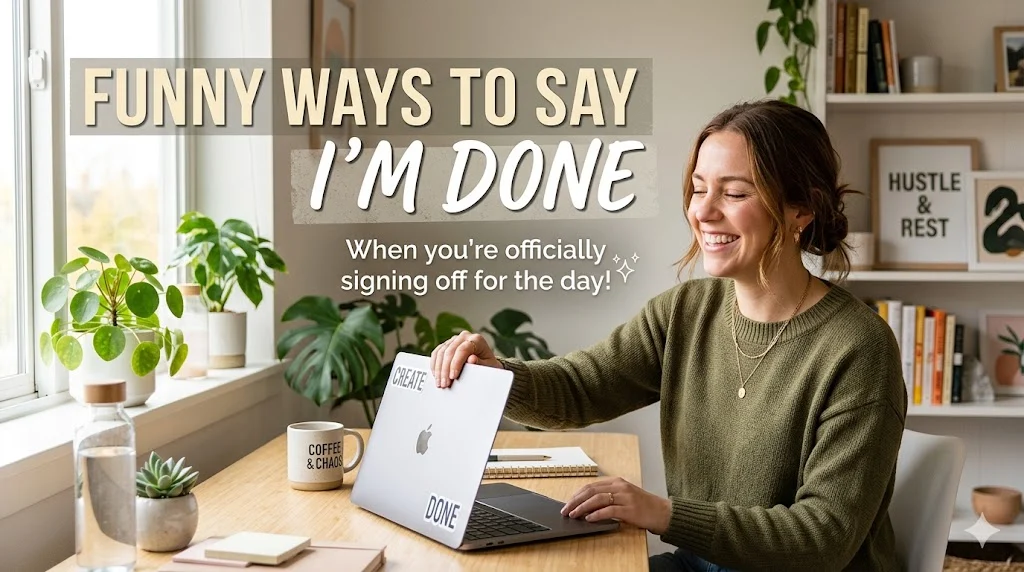
If you’re looking for funny ways to say I’m done, try these: I’m outta here, I’ve had enough, I’m tapping out, That’s my cue to leave, I’m calling it quits.
These phrases add personality and humor while helping you sound more natural in everyday English.
The phrase “I’m done” is commonly used to express that you’ve finished something or reached your limit. It can be serious, emotional, or even humorous depending on how you say it.
Many learners look for alternatives to funny ways to say I’m done to sound more expressive in conversations. Using variety helps you better express excitement in English and avoid repeating the same phrases.
Expanding your vocabulary with other ways to say funny ways to say I’m done improves fluency, tone awareness, and confidence in both casual and professional communication.
Quick Categories
Formal Alternatives to “funny ways to say I’m done”
- I have completed this
- I am finished here
- That concludes my work
- I have reached my limit
Pro Tip: Use these in presentations, emails, or formal discussions.
Casual Alternatives
- I’m out
- I’m done for the day
- I’m over it
- I’m calling it
Pro Tip: Perfect for conversations with friends or relaxed settings.
Professional Alternatives
- I’ll wrap this up now
- I’ve completed the task
- I’ll step away now
- That’s all from me
Pro Tip: Choose neutral, respectful phrases in workplace communication.
Informal Expressions
- I’m tapping out
- I’m throwing in the towel
- I’m peacing out
- I’m donezo
Pro Tip: These are great examples of informal expressions in English, but avoid them in formal contexts.
“The right phrase doesn’t just say you’re finished—it shows your personality.”
Common Mistakes
- Using it in formal emails
Example: “I’m done with the report.” → sounds abrupt - Sounding rude unintentionally
Example: “I’m done with you.” → may sound harsh - Overusing the same phrase
Example: Repeating “I’m done” in every conversation - Wrong tone in professional settings
Example: “I’m outta here” in a meeting - Confusing emotional vs neutral meaning
Example: “I’m done” (angry) vs (finished task)
What Does “funny ways to say I’m done” Mean?
It refers to humorous or creative phrases used to say you have finished something or reached your limit.
Grammatically, “I’m done” is a present simple structure using “be + adjective.”
Example: I’m done with my homework.
When to Use “funny ways to say I’m done”
- Ending a task
- Leaving a place
- Expressing frustration
- Finishing a conversation
Spoken vs Written: Mostly spoken
Formal vs Informal: Usually informal
Is It Professional or Polite to Say “funny ways to say I’m done”?
In most cases, it is polite but not professional.
Business Example:
“I’ve completed the report and will now proceed to the next task.”
Polite? ✔️ Yes
Professional? ❌ No (in most cases)
“Professional English is not about sounding smart—it’s about sounding appropriate.”
Pros and Cons of Using “funny ways to say I’m done”
Pros
- Simple and natural
- Friendly tone
- Common usage
- Easy to understand
Cons
- Too informal for work
- Overused
- Limited emotional range
- Not suitable for formal writing
Other Ways to Say “funny ways to say I’m done” With Examples
These alternatives will help you sound more fluent, confident, and natural in different situations.
Use them according to tone, context, and audience to express excitement in English.
1. Phrase: I’m calling it quits
Meaning: I am stopping now
Explanation: Used when you decide to stop something
Example Sentence: I’m tired—I’m calling it quits for today.
Best Use: casual ending
Worst Use: formal email
Tone: relaxed, final
Context Variability: casual / spoken
2. Phrase: I’m tapping out
Meaning: I give up
Explanation: Comes from sports
Example Sentence: This puzzle is too hard—I’m tapping out.
Best Use: humor, games
Worst Use: workplace
Tone: playful, informal
Context Variability: casual
3. Phrase: I’m outta here
Meaning: I am leaving
Explanation: Very casual exit phrase
Example Sentence: It’s late—I’m outta here.
Best Use: friends
Worst Use: meetings
Tone: informal, relaxed
Context Variability: spoken
4. Phrase: That’s my cue to leave
Meaning: It’s time to go
Explanation: Slightly humorous and polite
Example Sentence: Well, that’s my cue to leave.
Best Use: social events
Worst Use: urgent work
Tone: light, polite
Context Variability: casual / semi-formal
5. Phrase: I’m donezo
Meaning: Completely done
Explanation: Slang emphasis
Example Sentence: I’m donezo with this project.
Best Use: humor
Worst Use: formal
Tone: playful, slang
Context Variability: informal
6. Phrase: I’ve had enough
Meaning: I cannot continue
Explanation: Shows frustration
Example Sentence: I’ve had enough of this noise.
Best Use: emotions
Worst Use: polite settings
Tone: strong, emotional
Context Variability: spoken
7. Phrase: I’m wrapping this up
Meaning: Finishing now
Explanation: Professional-friendly
Example Sentence: I’m wrapping this up now.
Best Use: work
Worst Use: jokes
Tone: neutral, professional
Context Variability: professional
8. Phrase: I’m calling it a day
Meaning: Ending work for the day
Explanation: Common workplace phrase
Example Sentence: Let’s call it a day.
Best Use: work
Worst Use: arguments
Tone: neutral
Context Variability: casual / professional
9. Phrase: I’m finished here
Meaning: Task complete
Explanation: Neutral tone
Example Sentence: I’m finished here.
Best Use: general
Worst Use: humor
Tone: neutral
Context Variability: all
10. Phrase: I’m stepping away
Meaning: Taking a break
Explanation: Polite exit
Example Sentence: I’m stepping away for a bit.
Best Use: workplace
Worst Use: emotional
Tone: polite
Context Variability: professional
11. Phrase: I’m throwing in the towel
Meaning: I am giving up
Explanation: Comes from boxing, meaning you quit
Example Sentence: This project is too stressful—I’m throwing in the towel.
Best Use: frustration
Worst Use: formal work
Tone: idiomatic, expressive
Context Variability: casual / spoken
12. Phrase: I’m peacing out
Meaning: I am leaving
Explanation: Very informal exit phrase
Example Sentence: Alright guys, I’m peacing out.
Best Use: friends
Worst Use: workplace
Tone: slang, relaxed
Context Variability: informal
13. Phrase: I’m done and dusted
Meaning: Completely finished
Explanation: British expression
Example Sentence: That task is done and dusted.
Best Use: casual talk
Worst Use: formal writing
Tone: light, casual
Context Variability: spoken
14. Phrase: That’s it for me
Meaning: I am finished
Explanation: Neutral and simple
Example Sentence: That’s it for me today.
Best Use: general
Worst Use: emotional situations
Tone: neutral
Context Variability: all
15. Phrase: I’m clocking out
Meaning: Ending work
Explanation: Refers to leaving work
Example Sentence: I’m clocking out early today.
Best Use: workplace
Worst Use: jokes
Tone: casual, work-related
Context Variability: casual / professional
16. Phrase: I’m signing off
Meaning: Ending communication
Explanation: Often used online or in emails
Example Sentence: I’m signing off for the night.
Best Use: emails, chats
Worst Use: arguments
Tone: polite, neutral
Context Variability: professional / casual
17. Phrase: I’m done for
Meaning: Completely finished (dramatic)
Explanation: Often exaggerated or humorous
Example Sentence: After that workout, I’m done for.
Best Use: humor
Worst Use: formal
Tone: dramatic, playful
Context Variability: informal
18. Phrase: I’m out of here
Meaning: Leaving immediately
Explanation: Slightly stronger than “I’m outta here”
Example Sentence: This place is boring—I’m out of here.
Best Use: casual
Worst Use: professional
Tone: direct, informal
Context Variability: spoken
19. Phrase: I’m wrapping things up
Meaning: Finishing tasks
Explanation: Slightly more formal than “wrapping up”
Example Sentence: I’m wrapping things up before lunch.
Best Use: workplace
Worst Use: humor
Tone: neutral, professional
Context Variability: professional
20. Phrase: I’ve reached my limit
Meaning: Cannot continue
Explanation: Expresses emotional or physical limit
Example Sentence: I’ve reached my limit with this noise.
Best Use: serious situations
Worst Use: casual jokes
Tone: serious, firm
Context Variability: spoken
“Choosing the right phrase depends on context, tone, and your audience.”
21. Phrase: I’m calling it a wrap
Meaning: Finished completely
Explanation: Comes from film production
Example Sentence: Great job team—we’re calling it a wrap.
Best Use: group work
Worst Use: formal writing
Tone: light, team-oriented
Context Variability: casual / work
22. Phrase: I’m done with this
Meaning: I refuse to continue
Explanation: Shows frustration
Example Sentence: I’m done with this argument.
Best Use: emotions
Worst Use: polite settings
Tone: strong, negative
Context Variability: spoken
23. Phrase: I’m checking out
Meaning: Leaving or disengaging
Explanation: Can be literal or figurative
Example Sentence: I’m checking out early today.
Best Use: casual work
Worst Use: emotional
Tone: neutral
Context Variability: casual / professional
24. Phrase: I’m finished for today
Meaning: Work is complete
Explanation: Clear and neutral
Example Sentence: I’m finished for today.
Best Use: workplace
Worst Use: humor
Tone: neutral
Context Variability: all
25. Phrase: I’m done here
Meaning: Finished at this place
Explanation: Slightly direct
Example Sentence: I’m done here—let’s go.
Best Use: casual
Worst Use: formal
Tone: firm
Context Variability: spoken
26. Phrase: That’s all from me
Meaning: No more to add
Explanation: Common in presentations
Example Sentence: That’s all from me, thank you.
Best Use: professional
Worst Use: jokes
Tone: polite, formal
Context Variability: professional
27. Phrase: I’m logging off
Meaning: Ending online activity
Explanation: Used in digital contexts
Example Sentence: I’m logging off for the night.
Best Use: remote work
Worst Use: in-person talk
Tone: neutral
Context Variability: professional / casual
28. Phrase: I’m done and out
Meaning: Completely leaving
Explanation: Emphasizes finality
Example Sentence: I’m done and out see you tomorrow.
Best Use: casual
Worst Use: formal
Tone: firm, informal
Context Variability: spoken
29. Phrase: I’m stepping out
Meaning: Leaving temporarily
Explanation: Polite version of leaving
Example Sentence: I’m stepping out for a moment.
Best Use: workplace
Worst Use: humor
Tone: polite
Context Variability: professional
30. Phrase: I’m done for the day
Meaning: Work is finished
Explanation: Very common daily phrase
Example Sentence: I’m done for the day time to relax.
Best Use: daily life
Worst Use: emotional
Tone: neutral, relaxed
Context Variability: casual / professional
“Mastering multiple expressions is the key to sounding fluent and natural in English.”
Mini Quiz / Self-Check
- Which phrase is best for a meeting?
A. I’m donezo
B. I’m wrapping this up ✔️
C. I’m outta here - Which sounds most informal?
A. I’ve completed the task
B. I’m tapping out ✔️
C. I am finished - Choose the polite exit phrase:
A. I’m peacing out
B. That’s my cue to leave ✔️
C. I’m done with you
Comparison Table: Top Alternatives
| Phrase | Tone | Best Use |
|---|---|---|
| I’m calling it quits | casual | daily talk |
| I’m tapping out | playful | games |
| I’m outta here | informal | friends |
| That’s my cue to leave | light | social |
| I’ve had enough | emotional | frustration |
| I’m wrapping this up | professional | work |
| I’m calling it a day | neutral | office |
| I’m stepping away | polite | meetings |
| I’m finished here | neutral | general |
| I’m donezo | slang | humor |
FAQs
1. What are some funny ways to say I’m done?
You can say “I’m tapping out,” “I’m donezo,” or “I’m calling it quits” for a humorous tone.
2. Are funny ways to say I’m done appropriate at work?
Usually not. Use professional reaction phrases like “I’ve completed the task.”
3. How can I sound more natural in English?
Learn alternatives to funny ways to say I’m done and practice them in real conversations.
4. What is the most polite way to say I’m done?
“I’ve finished this task” or “I’ll wrap this up now” are polite options.
5. Why should I avoid repeating the same phrase?
Using different expressions improves fluency and helps you express excitement in English more effectively.
Conclusion
Learning funny ways to say I’m done and their alternatives helps you communicate with more personality and precision. It also allows you to adapt your tone depending on the situation.
Practice these phrases daily, and focus on context and tone. With time, you’ll naturally choose the right expression in both casual and professional settings.
CTA: Try using 3 new phrases today in conversation to build confidence.