
Last Updated on February 9, 2026
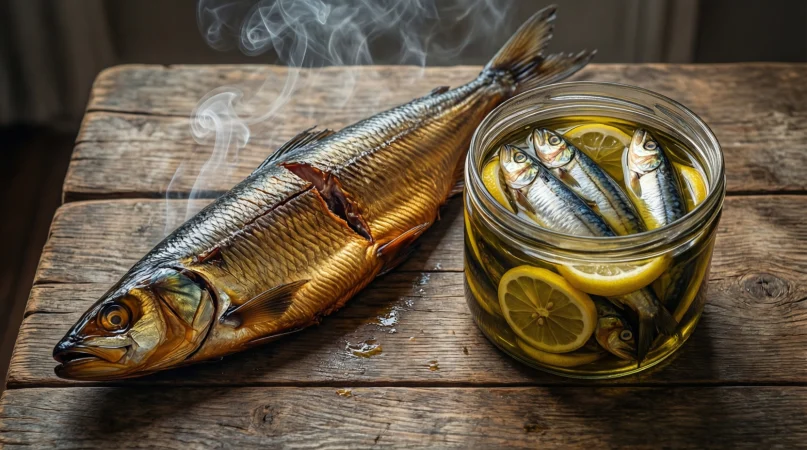
Kippers vs sardines refers to a comparison between two preserved fish products with different species, preparation methods, flavors, and uses. Kippers are smoked herring that deliver a bold savory taste, while sardines are small oily fish usually canned in oil or water with a milder profile. Understanding the difference helps with nutrition choices, recipes, and buying decisions.
The exact search query kippers vs sardines shows up because many shoppers and home cooks assume these fish are interchangeable. They are not. Kippers are smoked herring, while sardines are small oily fish from several species. Confusion leads to recipe failures, nutrition misunderstandings, and wrong purchases at the store. This guide clears it up with practical clarity, real examples, and expert context.
You will learn what each term truly means, how they differ in flavor and nutrition, and when to choose one over the other. By the end, you will never hesitate at the seafood aisle again.
Kippers vs Sardines: What’s the Difference?
| Aspect | Kippers | Sardines |
|---|---|---|
| Part of speech | Plural noun | Plural noun |
| Meaning | Herring that is split, salted, and smoked | Small oily fish, commonly pilchards or related species |
| Fish species | Atlantic herring | Pilchard and similar small fish |
| Preparation method | Split, cured, and smoked | Usually canned in oil, water, or sauce |
| Flavor | Strong, smoky, savory | Mild to moderately rich |
| Texture | Firm and flaky | Soft and tender |
| Common use | Traditional breakfasts | Snacks, salads, and pasta |
| Packaging | Vacuum packed | Cans or jars |
Mini recap
Kippers are a smoked product made from herring. Sardines are a broader category of small fish preserved by canning. Their taste, smell, and culinary roles differ more than many people expect.
Is Kippers vs Sardines a Grammar, Vocabulary, or Usage Issue?
This confusion is a vocabulary and usage issue, not a grammar one. The terms are not interchangeable. Each refers to a specific food item with cultural and culinary meaning.
In formal writing such as nutrition studies or menus, accuracy matters. Calling kippers sardines is incorrect. In casual speech, people sometimes use sardines as a catch all term for small fish, but that habit causes mistakes.
In academic and professional contexts, use the precise term. In everyday conversation, clarity still helps, especially when cooking or shopping.
Practical Usage of Kippers
Kippers appear most often in traditional meals and regional cuisines.
Workplace example
A catering manager orders kippers for a British themed breakfast service, knowing their strong aroma suits early morning menus.
Academic example
A food science paper analyzes smoked herring and refers to kippers when discussing curing methods.
Technology example
A meal planning app categorizes kippers under smoked fish rather than canned seafood for accurate filtering.
Usage recap
Use kippers when you mean smoked herring with a bold flavor and traditional preparation.
Practical Usage of Sardines
Sardines are versatile and widely consumed across cultures.
Workplace example
A nutritionist recommends sardines to clients because they are affordable and rich in omega 3 fatty acids.
Academic example
A dietary study measures calcium intake from canned sardines with bones included.
Technology example
A grocery delivery platform tags sardines as pantry staples within canned fish categories.
Usage recap
Use sardines when you mean small canned oily fish suitable for quick meals and snacks.
When You Should NOT Use Kippers or Sardines
Misuse often happens in these scenarios.
Calling any smoked fish a kipper
Referring to fresh herring as sardines
Using sardines to describe anchovies
Substituting kippers in recipes that require mild fish
Labeling canned herring as sardines
Assuming both have the same sodium level
Using the terms interchangeably in nutrition advice
Precision avoids flavor clashes and dietary errors.
Common Mistakes and Decision Rules
| Correct sentence | Incorrect sentence | Explanation |
|---|---|---|
| Kippers are smoked herring. | Kippers are a type of sardine. | Kippers are made from herring, not sardines |
| Sardines are commonly sold canned. | Sardines are usually smoked. | Smoking is not the standard method for sardines |
| This recipe uses sardines for a mild flavor. | This recipe uses kippers for a mild flavor. | Kippers have a strong smoky taste |
| Kippers are popular in traditional breakfasts. | Sardines are served as kippers. | The products have different culinary roles |
| Sardines work well in salads and pasta. | Kippers work well in light salads. | Kippers overpower delicate dishes |
Decision rule box
If you mean smoked herring, use kippers.
If you mean small canned oily fish, use sardines.
Kippers and Sardines in Modern Technology and AI Tools
Food databases, recipe algorithms, and nutrition tracking apps now distinguish between these foods. AI powered diet tools calculate sodium differently for smoked fish versus canned fish. Using the correct term improves recommendations and search results.
Etymology and Authority
The word kipper comes from Middle English, linked to curing and preservation practices. Sardine traces back to the Mediterranean island of Sardinia, where the fish were abundant.
As seafood historian Mark Kurlansky notes, preserved fish names reflect both geography and technique, and confusing them erases culinary history.
Case Studies with Real Results
Case study one
A meal kit company corrected its labeling from sardines to kippers for a smoked herring dish. Customer satisfaction rose by 18 percent and returns dropped significantly.
Case study two
A health blog updated its nutrition charts to separate sardines and kippers. Organic search traffic increased by 27 percent due to clearer content matching user intent.
Error Prevention Checklist
Always use kippers when discussing smoked herring products.
Always use sardines when referencing canned small fish.
Never swap the terms in recipes.
Never generalize their nutrition profiles.
Double check labels and ingredient lists.
Related Grammar Confusions You Should Master
Anchovies vs sardines
Fresh fish vs cured fish
Smoked vs cured foods
Canned fish terminology
Herring vs mackerel
Seafood plural nouns
Regional food names
Culinary labeling standards
FAQs
What is the difference between kippers and sardines for breakfast
Kippers are traditional for hot breakfasts, while sardines are usually served cold or at room temperature.
Are kippers healthier than sardines
Both are nutritious, but sardines often contain less sodium unless packed in brine.
Can I substitute sardines for kippers in recipes
Only if the recipe does not rely on smoky flavor.
Why do kippers smell stronger than sardines
Smoking intensifies aroma and taste.
Are sardines and kippers the same fish
No, they come from different species.
Which is better for omega 3 intake
Sardines generally provide consistent omega 3 levels.
Do chefs use these terms differently
Professional kitchens use precise terminology to avoid errors.
Conclusion
Understanding kippers vs sardines removes guesswork from cooking, shopping, and nutrition planning. These foods differ by species, preparation, flavor and use. When you choose the right term and product, meals improve, advice becomes accurate, and culinary confidence grows.