
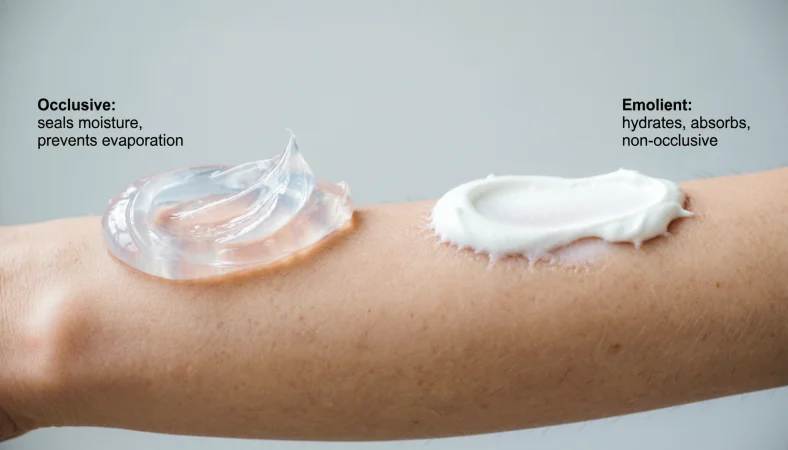
Ointment vs cream refers to two common types of topical medications used on the skin. An ointment is a thick oil based preparation that locks moisture into the skin, while a cream is a lighter mixture of water and oil that absorbs quickly. The difference matters because choosing the wrong form can reduce treatment effectiveness.
Many people search for the exact question ointment vs cream because both products look similar and are often used to treat the same skin conditions. However they are not identical. An ointment is a dense oil rich topical medication designed to protect and seal moisture into the skin. A cream is a semi liquid blend of water and oil that spreads easily and absorbs faster.
This confusion causes real mistakes. Someone with severe dry skin might choose a cream that evaporates quickly when an ointment would work better. On the other hand a person treating a moist rash might apply an ointment that traps heat and irritation.
Understanding the difference helps you select the right treatment and avoid ineffective skincare routines.
Ointment vs Cream: What’s the Difference?
Both ointments and creams are topical formulations used in dermatology and medicine. They differ mainly in texture, composition, absorption rate, and ideal medical use.
| Feature | Ointment | Cream |
|---|---|---|
| Part of speech | Noun | Noun |
| Basic definition | Thick oil based topical medication | Semi solid mixture of oil and water |
| Texture | Greasy and dense | Smooth and light |
| Water content | Very low | Moderate to high |
| Absorption speed | Slow absorption | Faster absorption |
| Best for | Very dry skin or protective barrier | Everyday skin treatment |
| Residue | Leaves shiny protective layer | Usually absorbs with minimal residue |
Quick Recap
An ointment contains mostly oil and forms a protective barrier on the skin.
A cream contains both oil and water and absorbs faster.
Ointments are stronger at moisture retention while creams are better for comfort and daily use.
Is Ointment vs Cream a Grammar, Vocabulary, or Usage Issue?
The distinction between ointment and cream is primarily a vocabulary and usage issue rather than a grammar problem.
Interchangeable or Not
These terms are not interchangeable in medical or skincare contexts. Each refers to a different formulation with distinct chemical composition and performance on the skin.
Formal vs Informal Usage
In everyday conversation people sometimes use the word cream loosely to describe any topical product. In professional dermatology and pharmacy settings the difference is strictly defined.
Academic vs Casual Language
Medical textbooks and pharmaceutical instructions treat ointment and cream as separate dosage forms. Using the wrong term in academic or medical writing can lead to confusion about the treatment method.
Understanding the terminology ensures accuracy in both professional and everyday health discussions.
Understanding Ointment
An ointment is a topical medication with a high concentration of oils or petroleum based ingredients. Because it contains very little water it creates a protective seal on the skin.
Workplace Example
A factory worker with severely cracked hands might apply a medicated ointment after work. The thick layer protects damaged skin overnight and prevents further moisture loss.
Academic Example
In dermatology research papers ointments are often recommended for conditions such as eczema because their oil base improves hydration and strengthens the skin barrier.
Technology Example
Modern telehealth platforms sometimes recommend ointment formulations for patients with chronic dry skin when analyzing uploaded skin images and symptoms.
Ointment Usage Recap
Ointments are best when strong hydration and protection are needed.
They remain on the skin longer than creams.
They may feel greasy but that barrier effect is exactly what makes them effective.
Understanding Cream
A cream is a topical product made from a balanced blend of water and oil. This composition creates a smooth texture that spreads easily and absorbs quickly.
Workplace Example
An office worker treating a mild allergic rash might use a cream because it absorbs quickly and does not leave oily residue on clothing.
Academic Example
Pharmacy textbooks often describe creams as ideal for treating skin conditions in areas where cosmetic comfort matters such as the face or hands.
Technology Example
Many skincare mobile apps recommend creams for daytime use since they absorb faster and allow sunscreen or makeup to be applied afterward.
Cream Usage Recap
Creams are lighter and more comfortable for frequent application.
They absorb quickly into the skin.
They work well for mild dryness and everyday treatment.
When You Should NOT Use Ointment or Cream
Even though both are common skin treatments there are situations where each option is not appropriate.
- Using ointment on a moist rash that needs airflow
- Applying thick ointment on acne prone skin which may clog pores
- Choosing cream for extremely dry cracked skin that requires stronger protection
- Using cream on open wounds without medical advice
- Applying ointment before heavy physical activity where sweat and heat increase irritation
- Treating fungal infections with a product not designed for that condition
- Using cosmetic cream when a medicated ointment is required for severe eczema
- Ignoring professional medical instructions regarding formulation type
Choosing the wrong form can reduce treatment effectiveness or worsen irritation.
Common Mistakes and Decision Rules
| Correct Sentence | Incorrect Sentence | Explanation |
|---|---|---|
| The doctor prescribed an antibiotic ointment for the wound. | The doctor prescribed an antibiotic cream to seal the wound. | Ointments create protective barriers better than creams. |
| I use a moisturizing cream during the day. | I use a greasy ointment before applying makeup. | Creams absorb quickly and work better for daytime skincare. |
| Petroleum ointment protects extremely dry skin. | Petroleum cream protects extremely dry skin. | Petroleum products are usually ointment based. |
| Hydrocortisone cream reduces mild itching. | Hydrocortisone ointment is always better for every rash. | Creams are sometimes preferred for comfort and breathability. |
Decision Rule Box
If you need a thick protective layer and strong moisture retention use ointment.
If you need a lighter formula that spreads easily and absorbs quickly use cream.
Ointment and Cream in Modern Technology and AI Tools
Digital health platforms increasingly help users choose between ointment and cream. Artificial intelligence based dermatology tools analyze skin photos and symptoms to recommend the most suitable topical formulation.
Telemedicine services also guide patients toward the correct form when prescribing treatments remotely. This reduces misuse and improves treatment results for common conditions such as eczema, dermatitis, and mild infections.
Etymology and Historical Background
The word ointment comes from the Latin term unguentum, meaning a substance used for anointing or healing. Historically ointments were mixtures of animal fats and herbal extracts applied to wounds.
The word cream originally referred to the thick layer that rises to the top of milk. Over time the term expanded to describe smooth semi solid substances including cosmetic and medical skin products.
These linguistic roots reflect the physical texture of each formulation.
“The base of a topical medication determines how it interacts with the skin barrier.”
Dr. Leslie Baumann, dermatologist and skincare researcher
Case Studies: Real Results from Choosing the Right Form
Case Study 1 Severe Dry Skin Treatment
A dermatology clinic studied patients with chronic eczema. Half used moisturizing cream while the other group used petroleum based ointment. After four weeks the ointment group showed significantly improved skin hydration and fewer flare ups.
Case Study 2 Workplace Skin Irritation
An office employee developed mild dermatitis from frequent hand washing. Switching from ointment to a fast absorbing cream allowed repeated daytime use without greasy residue. Symptoms improved within ten days.
These examples highlight how formulation choice directly affects treatment success.
Author note: This article is written by a content strategist specializing in language clarity and high authority educational SEO content within health and communication topics.
Error Prevention Checklist
Always use ointment when:
You need a protective barrier for extremely dry or cracked skin
You want longer lasting moisture retention
A doctor specifically prescribes an ointment formulation
Never use cream when:
Severe dryness requires strong occlusive protection
A wound needs a thick protective seal
Medical instructions specifically require ointment
Related Terminology Confusions You Should Master
Understanding ointment vs cream becomes easier when you also learn similar skincare distinctions:
Lotion vs cream
Serum vs moisturizer
Gel vs cream formulations
Balm vs ointment
Topical vs oral medication
Hydrating vs moisturizing
Occlusive vs emollient ingredients
Dermatitis vs eczema terminology
Antibiotic cream vs antifungal cream
Prescription vs over the counter treatments
Mastering these differences improves both skincare knowledge and medical communication.
FAQs
What is the main difference between ointment and cream?
The main difference is composition. Ointments contain mostly oil and very little water, which creates a thick protective barrier. Creams contain both water and oil so they absorb faster and feel lighter on the skin.
Which is better for dry skin ointment or cream?
Ointment is usually better for very dry or cracked skin because it locks moisture into the skin more effectively than cream.
Why do doctors prescribe ointment instead of cream?
Doctors prescribe ointment when a stronger protective barrier is needed. The oil rich base improves medication absorption and helps prevent moisture loss.
Can ointment and cream treat the same conditions?
Yes many medications come in both forms. The choice depends on the severity of the condition, skin type, and comfort of the patient.
Is cream better for daytime use?
Creams are often better for daytime because they absorb quickly and do not leave a greasy layer on clothing or skin.
Does ointment absorb into the skin?
Ointment absorbs more slowly than cream. Its main function is to create a protective barrier that keeps moisture and medication on the skin longer.
Can I use cream instead of ointment for eczema?
For mild eczema cream may work well. For severe dryness or flare ups dermatologists often recommend ointment because it provides stronger hydration.
Why do ointments feel greasy?
Ointments contain high levels of oil or petroleum based ingredients. This creates the greasy texture that helps seal moisture into the skin.
Are creams less effective than ointments?
Not necessarily. Creams are effective for many conditions and are often preferred when quick absorption and comfort are important.
Conclusion
Understanding ointment vs cream is essential for choosing the correct topical treatment. Ointments contain mostly oil and provide strong moisture retention and protection. Creams contain both oil and water and absorb quickly, making them more comfortable for everyday use.
Selecting the right formulation improves treatment results, prevents skin irritation and ensures medications perform as intended. When dryness is severe an ointment usually works best. When comfort and quick absorption matter a cream is often the better option.