
Last Updated on April 7, 2026
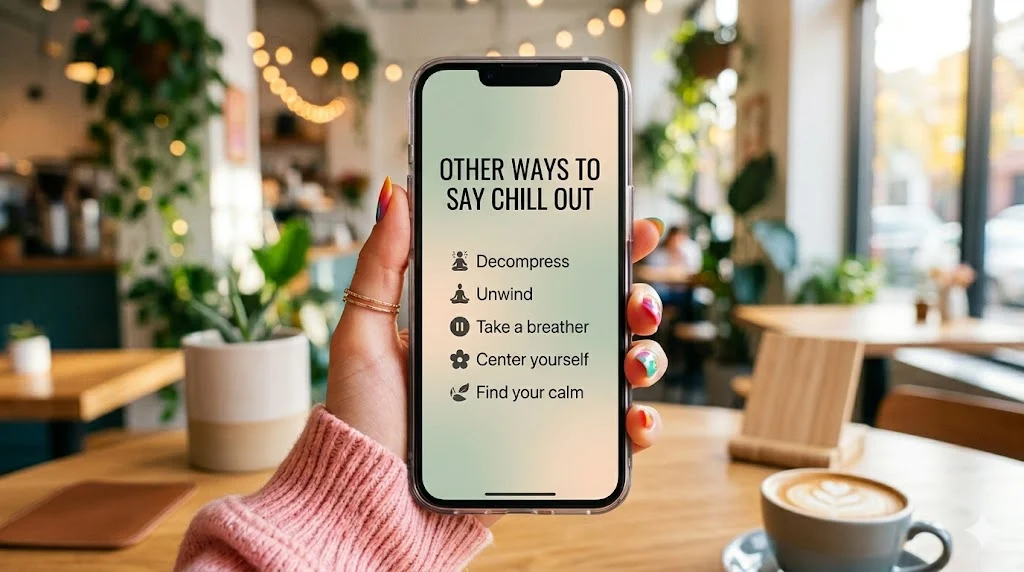
If you want alternatives to “chill out” try: calm down, relax, take it easy, stay cool, don’t stress. These options help you sound more polite, professional and context appropriate.
The phrase “chill out” is commonly used to tell someone to relax or stop being upset, stressed, or overly excited. It’s widely used in informal conversations.
However, it can sometimes sound dismissive or rude depending on your tone. Learning alternatives to “chill out” helps you communicate more thoughtfully and effectively.
Expanding your vocabulary also allows you to express excitement in English appropriately and use better professional reaction phrases in different situations.
Quick Categories Section
Formal Alternatives to “Chill Out”
- Please remain calm
- Kindly relax
- Stay composed
- Please maintain composure
Pro Tip: Use formal phrases in professional or sensitive situations.
Casual Alternatives
- Relax
- Take it easy
- Calm down
- No worries
Pro Tip: Casual phrases work well with friends and family.
Professional Alternatives
- Let’s stay focused
- Please stay calm
- Let’s approach this calmly
- Take a moment
Pro Tip: Use calm, respectful language in the workplace to avoid sounding rude.
Informal Expressions
- Chill
- Cool it
- Take a breather
- Ease up
Pro Tip: These informal expressions in English can sound too direct if used with the wrong tone.
“Tone matters more than words when emotions are involved.”
Common Mistakes
- Sounding rude or dismissive
Example: “Just chill out!” - Using it in formal communication
Example: “Please chill out during the meeting.” - Using it during serious situations
Example: Saying “chill out” when someone is upset - Wrong tone with authority figures
Example: Saying it to a manager - Overusing the phrase
Example: Repeating “chill out” frequently
What Does “Chill Out” Mean?
Definition: It means to relax, calm down, or reduce stress or anger.
Grammar: It’s an informal phrasal verb used as a command.
Example: “Just chill out and everything will be fine.”
When to Use “Chill Out”
- With friends or peers
- In relaxed conversations
- When someone is overreacting
- In informal spoken English
Spoken vs Written: Mostly spoken
Formal vs Informal: Informal
Is It Professional or Polite to Say “Chill Out”?
Polite? ❌ Not always
Professional? ❌ No
Business Example:
“Let’s take a moment and approach this calmly.”
Pros and Cons of Using “Chill Out”
Pros
- Simple and natural
- Common usage
- Easy to understand
- Expresses emotion quickly
Cons
- Can sound rude
- Too informal for work
- May feel dismissive
- Not suitable for serious situations
“The right words can calm a situation—or make it worse.”
Other Ways to Say “Chill Out” With Examples
These other ways to say “chill out” will help you sound more fluent, confident and natural in different situations.
Use them based on tone, context, and audience to communicate calmness effectively.
1. Phrase: Calm down
Meaning: Reduce anger or stress
Explanation: Direct but common
Example Sentence: Please calm down and listen
Best Use: emotional moments
Worst Use: sensitive situations
Tone: direct, neutral
Context Variability: casual / spoken
2. Phrase: Relax
Meaning: Become less tense
Explanation: Simple and widely used
Example Sentence: Just relax, everything is fine
Best Use: casual talk
Worst Use: serious conflict
Tone: calm, neutral
Context Variability: casual
3. Phrase: Take it easy
Meaning: Stay relaxed
Explanation: Friendly and soft
Example Sentence: Take it easy, no need to rush
Best Use: friendly advice
Worst Use: emergencies
Tone: friendly, calm
Context Variability: casual
4. Phrase: Stay calm
Meaning: Maintain composure
Explanation: More controlled tone
Example Sentence: Stay calm during the discussion
Best Use: guidance
Worst Use: casual jokes
Tone: serious, neutral
Context Variability: professional / spoken
5. Phrase: Don’t stress
Meaning: Avoid worrying
Explanation: Reassuring tone
Example Sentence: Don’t stress about the results
Best Use: encouragement
Worst Use: high-pressure tasks
Tone: supportive, friendly
Context Variability: casual
6. Phrase: Take a deep breath
Meaning: Pause and relax
Explanation: Suggests calming technique
Example Sentence: Take a deep breath and try again
Best Use: emotional support
Worst Use: sarcasm
Tone: calm, caring
Context Variability: spoken
7. Phrase: Stay composed
Meaning: Keep control of emotions
Explanation: Formal expression
Example Sentence: Please stay composed during the meeting
Best Use: workplace
Worst Use: casual chat
Tone: formal, serious
Context Variability: professional
8. Phrase: Let’s stay calm
Meaning: Encourage calmness together
Explanation: Inclusive and polite
Example Sentence: Let’s stay calm and solve this
Best Use: teamwork
Worst Use: commands
Tone: cooperative, calm
Context Variability: professional / spoken
9. Phrase: Ease up
Meaning: Relax effort or tension
Explanation: Informal suggestion
Example Sentence: Ease up, it’s not that serious
Best Use: friends
Worst Use: workplace
Tone: casual, direct
Context Variability: informal
10. Phrase: Take a moment
Meaning: Pause briefly
Explanation: Professional and polite
Example Sentence: Let’s take a moment before deciding
Best Use: workplace
Worst Use: urgent situations
Tone: calm, professional
Context Variability: professional
11. Phrase: Cool down
Meaning: Become less angry or emotional
Explanation: Suggests reducing intensity of emotions
Example Sentence: Take a moment to cool down before responding
Best Use: emotional situations
Worst Use: formal writing
Tone: calm, slightly direct
Context Variability: casual / spoken
12. Phrase: Keep calm
Meaning: Stay relaxed and controlled
Explanation: Encourages emotional control
Example Sentence: Keep calm and focus on the task
Best Use: guidance
Worst Use: sarcasm
Tone: neutral, steady
Context Variability: professional / spoken
13. Phrase: Slow down
Meaning: Reduce speed or intensity
Explanation: Can refer to actions or emotions
Example Sentence: Slow down and think carefully
Best Use: advice
Worst Use: urgent situations
Tone: calm, instructive
Context Variability: casual / professional
14. Phrase: Don’t panic
Meaning: Stay calm in stressful situations
Explanation: Reassures someone
Example Sentence: Don’t panic—we’ll find a solution
Best Use: emergencies
Worst Use: dismissive tone
Tone: reassuring, direct
Context Variability: spoken / professional
15. Phrase: Take a breather
Meaning: Pause and relax briefly
Explanation: Suggests a short break
Example Sentence: Let’s take a breather before continuing
Best Use: teamwork
Worst Use: urgent deadlines
Tone: friendly, relaxed
Context Variability: casual / spoken
16. Phrase: Relax a bit
Meaning: Become slightly less tense
Explanation: Softer than “relax”
Example Sentence: Relax a bit, everything is under control
Best Use: friendly advice
Worst Use: serious stress
Tone: gentle, supportive
Context Variability: casual
17. Phrase: Stay cool
Meaning: Remain calm under pressure
Explanation: Often used in stressful moments
Example Sentence: Stay cool and handle the situation
Best Use: pressure situations
Worst Use: formal writing
Tone: casual, encouraging
Context Variability: casual / spoken
18. Phrase: Settle down
Meaning: Become calm or quiet
Explanation: Often used when emotions are high
Example Sentence: Please settle down so we can continue
Best Use: group settings
Worst Use: sensitive situations
Tone: firm, direct
Context Variability: casual / spoken
19. Phrase: Keep your cool
Meaning: Maintain emotional control
Explanation: Emphasizes self-control
Example Sentence: Try to keep your cool during the meeting
Best Use: advice
Worst Use: casual jokes
Tone: encouraging, neutral
Context Variability: professional / spoken
20. Phrase: Let it go
Meaning: Stop worrying or being upset
Explanation: Encourages emotional release
Example Sentence: Just let it go—it’s not worth it
Best Use: emotional support
Worst Use: serious issues
Tone: calming, supportive
Context Variability: casual
21. Phrase: No need to worry
Meaning: Everything is fine
Explanation: Reassures someone
Example Sentence: No need to worry about the results
Best Use: reassurance
Worst Use: high-risk situations
Tone: comforting, calm
Context Variability: casual / professional
22. Phrase: Stay relaxed
Meaning: Maintain a calm state
Explanation: Gentle encouragement
Example Sentence: Stay relaxed during the interview
Best Use: preparation
Worst Use: emergencies
Tone: calm, supportive
Context Variability: professional / spoken
23. Phrase: Take things slowly
Meaning: Avoid rushing
Explanation: Encourages a calm approach
Example Sentence: Take things slowly and focus
Best Use: guidance
Worst Use: urgent deadlines
Tone: calm, thoughtful
Context Variability: professional / spoken
24. Phrase: Give it a rest
Meaning: Stop worrying or talking about something
Explanation: Informal and slightly blunt
Example Sentence: Just give it a rest for now
Best Use: casual talk
Worst Use: formal situations
Tone: informal, slightly firm
Context Variability: casual
25. Phrase: Keep it together
Meaning: Maintain emotional control
Explanation: Encourages composure
Example Sentence: Keep it together—we’re almost done
Best Use: stressful moments
Worst Use: jokes
Tone: supportive, serious
Context Variability: spoken
26. Phrase: Don’t overreact
Meaning: Stay reasonable
Explanation: Suggests calm thinking
Example Sentence: Don’t overreact—it’s a small issue
Best Use: advice
Worst Use: emotional situations
Tone: direct, cautionary
Context Variability: casual / spoken
27. Phrase: Take a step back
Meaning: Pause and reassess
Explanation: Encourages perspective
Example Sentence: Let’s take a step back and review
Best Use: workplace
Worst Use: urgent action
Tone: thoughtful, professional
Context Variability: professional
28. Phrase: Think calmly
Meaning: Use logic instead of emotion
Explanation: Encourages clear thinking
Example Sentence: Think calmly before making a decision
Best Use: guidance
Worst Use: casual chat
Tone: serious, instructive
Context Variability: professional
29. Phrase: Stay level-headed
Meaning: Remain calm and rational
Explanation: Emphasizes balanced thinking
Example Sentence: Stay level-headed in tough situations
Best Use: leadership
Worst Use: casual jokes
Tone: formal, encouraging
Context Variability: professional
30. Phrase: Don’t get worked up
Meaning: Avoid becoming upset
Explanation: Soft and conversational
Example Sentence: Don’t get worked up over this
Best Use: friendly advice
Worst Use: serious conflict
Tone: gentle, casual
Context Variability: casual / spoken
“Small changes in wording create big improvements in fluency.”
Mini Quiz / Self-Check
1. Which is the most professional alternative?
A. Chill
B. Stay composed
C. Ease up
2. Best phrase for casual conversation?
A. Take it easy
B. Remain composed
C. Maintain professionalism
3. Which sounds too informal for business?
A. Stay calm
B. Take a moment
C. Cool it
4. Best phrase for emotional support?
A. Calm down
B. Take a deep breath
C. Stay composed
Answers
1. ✅ B. Stay composed
2. ✅ A. Take it easy
3. ✅ C. Cool it
4. ✅ B. Take a deep breath
Comparison Table: Top Alternatives
| Phrase | Tone | Best Use |
|---|---|---|
| Calm down | Direct | Emotional situations |
| Relax | Neutral | Daily use |
| Take it easy | Friendly | Casual talk |
| Stay calm | Serious | Guidance |
| Don’t stress | Supportive | Encouragement |
| Take a deep breath | Caring | Emotional support |
| Stay composed | Formal | Workplace |
| Let’s stay calm | Cooperative | Teams |
| Take a moment | Professional | Meetings |
| Keep calm | Neutral | General |
FAQs
1. What are the best alternatives to “chill out”?
Some of the best alternatives include “relax,” “calm down,” and “take it easy.”
2. Is “chill out” rude?
It can sound rude or dismissive depending on tone and context.
3. What is a professional way to say “chill out”?
Use phrases like “please remain calm” or “let’s approach this calmly.”
4. How can I calm someone politely in English?
Use soft phrases like “take a deep breath” or “let’s stay calm.”
5. Why learn alternatives to “chill out”?
Learning other ways to say chill out improves tone, clarity, and communication skills.
Conclusion
Learning other ways to say “chill out” helps you communicate more thoughtfully and effectively, especially in sensitive situations. It allows you to adjust your tone and avoid sounding rude or dismissive.
Practice these alternatives to “chill out” daily to improve your fluency and confidence. Always choose phrases that match your audience and context.
CTA: Try using 3 new alternatives today in real conversations.