
Last Updated on March 26, 2026
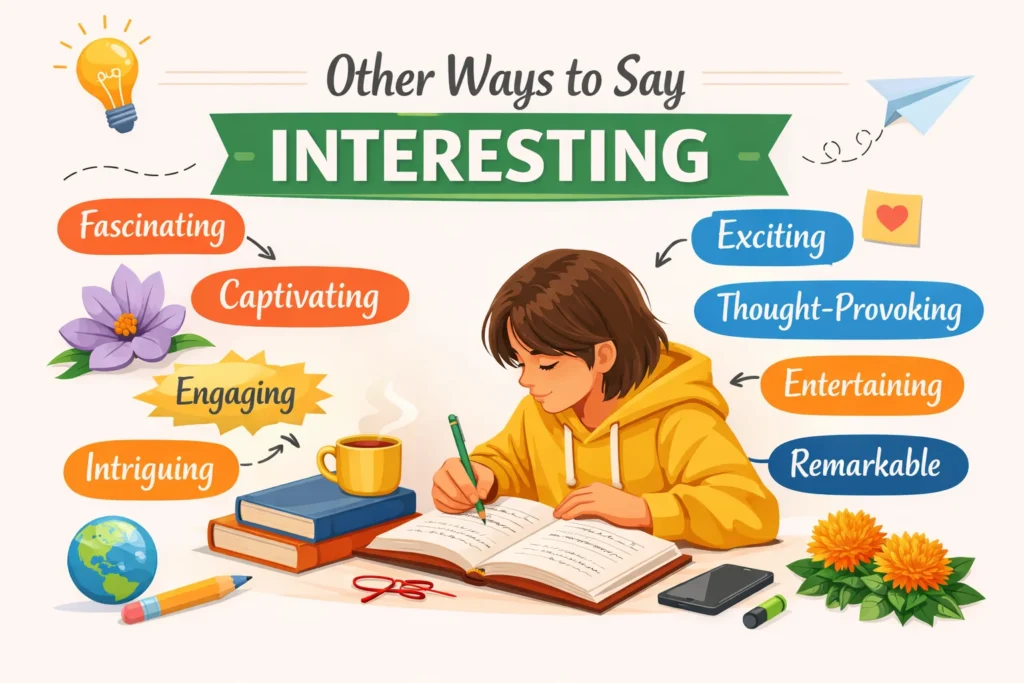
If you want alternatives to “interesting,” try: fascinating, engaging, intriguing, compelling, captivating.
These options help you sound more precise, expressive, and natural in both casual and professional English.
The word “interesting” is one of the most commonly used adjectives in English. It describes something that captures attention or sparks curiosity.
People use it in conversations, presentations, and writing but often too frequently. That’s why learning alternatives to “interesting” is essential for clearer, more engaging communication.
Expanding your vocabulary helps you express excitement in English more effectively and sound more confident in both casual and professional situations.
“Using precise words turns simple English into powerful communication.”
Top Alternatives to “Interesting” Word | Meaning | Example
| Word | Meaning | Example |
|---|---|---|
| Fascinating | Extremely interesting | The documentary was fascinating. |
| Intriguing | Arousing curiosity | That’s an intriguing idea. |
| Engaging | Holding attention well | Her speech was engaging. |
| Compelling | Strongly convincing or interesting | He gave a compelling argument. |
| Captivating | Attracting and keeping attention | The story was captivating. |
| Insightful | Showing deep understanding | That was an insightful comment. |
| Noteworthy | Worth attention | The results are noteworthy. |
| Entertaining | Providing enjoyment | The show was entertaining. |
| Impressive | Causing admiration | Her work is impressive. |
| Eye-opening | Surprising and enlightening | The experience was eye-opening. |
Quick Categories Section
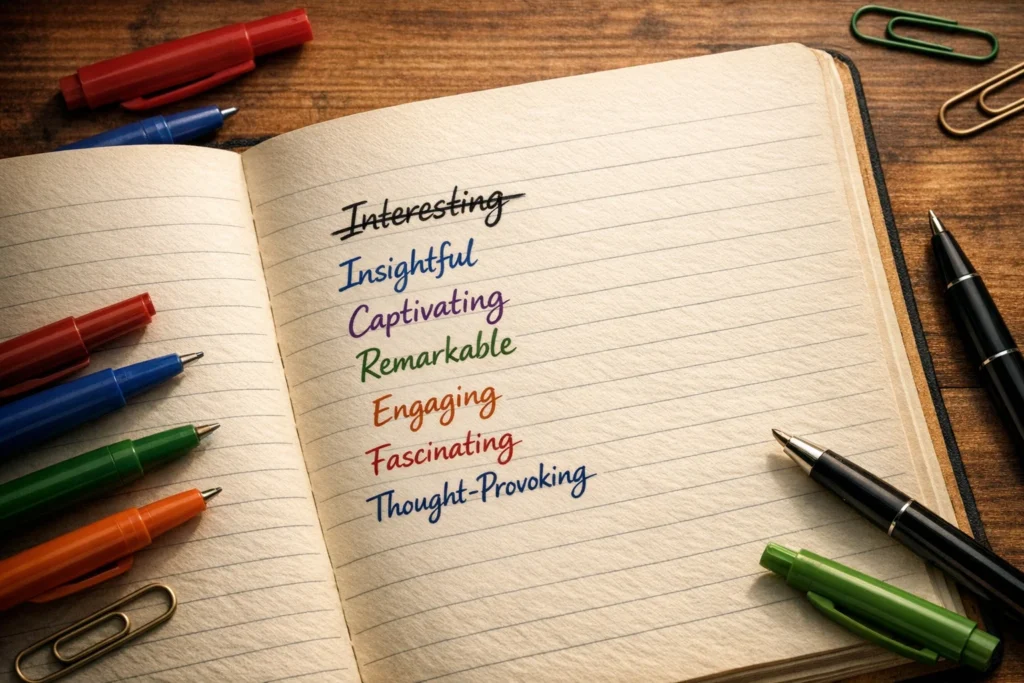
Formal Alternatives to “Interesting”
- Fascinating
- Intriguing
- Compelling
- Thought-provoking
Pro Tip: Use formal options in essays, reports, and academic discussions.
Casual Alternatives
- Cool
- Fun
- Neat
- Awesome
Pro Tip: These are great for relaxed conversations but avoid them in formal writing.
Professional Alternatives
- Noteworthy
- Insightful
- Valuable
- Relevant
Pro Tip: Choose words that show evaluation, not just reaction.
Informal Expressions
- Pretty cool
- Kind of interesting
- Super engaging
- Really neat
Pro Tip: Informal expressions work best in friendly chats, not presentations.
“The right word choice can instantly elevate your English.”
Common Mistakes
- Overusing “interesting”
Example: The book was interesting, and the movie was interesting too. - Using it in formal writing
Example: The results were interesting. (Too vague) - Not being specific enough
Example: That’s interesting. (What exactly?) - Using it without emotion
Example: Your idea is interesting. (May sound neutral or dismissive) - Wrong tone in professional settings
Example: Your proposal is interesting. (Can sound uncertain)
What Does “Interesting” Mean?

Definition: Something that attracts attention or curiosity.
Grammar: Adjective
Example:
That documentary was really interesting.
When to Use “Interesting”
- Casual conversations
- Reacting to new ideas
- Describing experiences
- Light discussions
Spoken vs Written: More common in speech
Formal vs Informal: Mostly informal
Is It Professional or Polite to Say “Interesting”?
Polite? ✔️ Yes
Professional? ❌ No (in most cases)
In business contexts, “interesting” can sound vague or even indirect.
Example:
Your proposal is interesting, but we need more data.
Pros and Cons of Using “Interesting”
Pros
- Simple and natural
- Friendly tone
- Common usage
- Easy to understand
Cons
- Too informal for work
- Overused
- Limited emotional range
- Not suitable for formal writing
“Professional English depends on clarity, not convenience.”
Other Ways to Say “Interesting” With Examples

These alternatives will help you sound more fluent, confident, and natural in different situations.
Use them based on tone, context, and audience to express excitement, admiration, or approval.
1. Phrase: Fascinating
Meaning: Extremely interesting
Explanation: Shows strong curiosity or admiration
Example Sentence: That research is fascinating.
Best Use: formal speech
Worst Use: casual slang
Tone: strong, positive
Context Variability: professional / spoken
2. Phrase: Intriguing
Meaning: Mysteriously interesting
Explanation: Suggests curiosity or mystery
Example Sentence: That’s an intriguing idea.
Best Use: discussions
Worst Use: casual chat
Tone: thoughtful, curious
Context Variability: professional / spoken
3. Phrase: Engaging
Meaning: Holds attention well
Explanation: Often used for people or content
Example Sentence: Her presentation was engaging.
Best Use: presentations
Worst Use: negative topics
Tone: positive, warm
Context Variability: professional
4. Phrase: Compelling
Meaning: Strongly convincing or interesting
Explanation: Suggests emotional impact
Example Sentence: He made a compelling argument.
Best Use: business
Worst Use: casual talk
Tone: serious, persuasive
Context Variability: professional
5. Phrase: Captivating
Meaning: Attracts and holds attention
Explanation: Strong emotional appeal
Example Sentence: The story was captivating.
Best Use: storytelling
Worst Use: data reports
Tone: vivid, expressive
Context Variability: spoken
6. Phrase: Thought-provoking
Meaning: Makes you think deeply
Explanation: Used for ideas or content
Example Sentence: It’s a thought-provoking article.
Best Use: academic
Worst Use: casual
Tone: intellectual
Context Variability: professional
7. Phrase: Insightful
Meaning: Shows deep understanding
Explanation: Highlights intelligence
Example Sentence: That was an insightful comment.
Best Use: workplace
Worst Use: casual slang
Tone: respectful
Context Variability: professional
8. Phrase: Noteworthy
Meaning: Worth attention
Explanation: Slightly formal
Example Sentence: The results are noteworthy.
Best Use: reports
Worst Use: casual
Tone: formal
Context Variability: professional
9. Phrase: Stimulating
Meaning: Mentally exciting
Explanation: Often intellectual
Example Sentence: It was a stimulating discussion.
Best Use: academic
Worst Use: casual
Tone: intellectual
Context Variability: professional
10. Phrase: Absorbing
Meaning: Fully engaging
Explanation: Deep focus
Example Sentence: The book was absorbing.
Best Use: reading
Worst Use: formal reports
Tone: descriptive
Context Variability: spoken
11. Phrase: Amusing
Meaning: Causing mild laughter or enjoyment
Explanation: Used for something lightly funny or pleasant
Example Sentence: That story was quite amusing.
Best Use: casual talk
Worst Use: serious topics
Tone: light, playful
Context Variability: spoken / casual
12. Phrase: Entertaining
Meaning: Providing enjoyment or fun
Explanation: Often used for shows, stories, or people
Example Sentence: The movie was very entertaining.
Best Use: media talk
Worst Use: formal reports
Tone: positive, relaxed
Context Variability: spoken
13. Phrase: Cool
Meaning: Informally interesting or impressive
Explanation: Common in casual conversations
Example Sentence: That’s a really cool idea.
Best Use: friends
Worst Use: workplace
Tone: casual, friendly
Context Variability: informal
14. Phrase: Awesome
Meaning: Extremely impressive or exciting
Explanation: Strong informal approval
Example Sentence: That project sounds awesome!
Best Use: casual chat
Worst Use: formal writing
Tone: enthusiastic
Context Variability: informal
15. Phrase: Impressive
Meaning: Causing admiration or respect
Explanation: Highlights quality or achievement
Example Sentence: Her performance was impressive.
Best Use: general use
Worst Use: slang
Tone: positive, respectful
Context Variability: professional / spoken
16. Phrase: Remarkable
Meaning: Worth attention due to uniqueness
Explanation: Slightly formal and strong
Example Sentence: That’s a remarkable discovery.
Best Use: formal writing
Worst Use: casual slang
Tone: formal, strong
Context Variability: professional
17. Phrase: Unique
Meaning: One of a kind
Explanation: Emphasizes originality
Example Sentence: It’s a unique approach.
Best Use: general
Worst Use: exaggeration
Tone: neutral, positive
Context Variability: all contexts
18. Phrase: Eye-opening
Meaning: Surprising and enlightening
Explanation: Changes your perspective
Example Sentence: The documentary was eye-opening.
Best Use: learning
Worst Use: casual jokes
Tone: reflective
Context Variability: spoken / professional
19. Phrase: Riveting
Meaning: Completely absorbing
Explanation: Strong emotional engagement
Example Sentence: The speech was riveting.
Best Use: storytelling
Worst Use: casual chat
Tone: intense
Context Variability: spoken / formal
20. Phrase: Memorable
Meaning: Worth remembering
Explanation: Leaves a lasting impression
Example Sentence: It was a memorable experience.
Best Use: reflection
Worst Use: quick reactions
Tone: reflective
Context Variability: all contexts
“Choosing the right synonym helps you express excitement in English more naturally.”
21. Phrase: Inspiring
Meaning: Motivates or encourages
Explanation: Creates positive feelings
Example Sentence: Her journey is inspiring.
Best Use: motivation
Worst Use: neutral topics
Tone: uplifting
Context Variability: spoken / professional
22. Phrase: Appealing
Meaning: Attractive or interesting
Explanation: Often used for ideas or designs
Example Sentence: That plan is appealing.
Best Use: business
Worst Use: slang
Tone: polite
Context Variability: professional
23. Phrase: Engrossing
Meaning: Fully absorbing attention
Explanation: Similar to “riveting” but softer
Example Sentence: The novel was engrossing.
Best Use: reading
Worst Use: formal reports
Tone: descriptive
Context Variability: spoken
24. Phrase: Curious
Meaning: Strange or unusual in an interesting way
Explanation: Suggests mild surprise
Example Sentence: That’s a curious result.
Best Use: analysis
Worst Use: praise
Tone: neutral
Context Variability: professional
25. Phrase: Striking
Meaning: Very noticeable or impressive
Explanation: Strong visual or emotional impact
Example Sentence: The design is striking.
Best Use: visuals
Worst Use: casual talk
Tone: strong
Context Variability: professional / spoken
26. Phrase: Enlightening
Meaning: Providing new understanding
Explanation: Focuses on learning
Example Sentence: The lecture was enlightening.
Best Use: academic
Worst Use: casual
Tone: intellectual
Context Variability: professional
27. Phrase: Refreshing
Meaning: Pleasantly different
Explanation: Suggests originality
Example Sentence: That’s a refreshing idea.
Best Use: feedback
Worst Use: criticism
Tone: positive
Context Variability: spoken / professional
28. Phrase: Exciting
Meaning: Causing strong enthusiasm
Explanation: Expresses energy
Example Sentence: This is an exciting opportunity.
Best Use: general
Worst Use: formal reports
Tone: energetic
Context Variability: spoken
29. Phrase: Dynamic
Meaning: Full of energy or change
Explanation: Often used for people or environments
Example Sentence: She is a dynamic speaker.
Best Use: workplace
Worst Use: casual slang
Tone: professional
Context Variability: professional
30. Phrase: Outstanding
Meaning: Exceptionally good or impressive
Explanation: Strong praise
Example Sentence: That was an outstanding performance.
Best Use: evaluation
Worst Use: neutral topics
Tone: strong, formal
Context Variability: professional / spoken
“Expanding your vocabulary gives you control over tone, clarity, and confidence.”
Mini Quiz / Self-Check
1. Which is best for a business meeting?
A. Cool
B. Fascinating
C. Awesome
Answer: B
2. Which sounds most casual?
A. Noteworthy
B. Cool
C. Insightful
Answer: B
3. Choose the best sentence:
A. The report is cool
B. The report is insightful
Answer: B
Comparison Table: Top Alternatives
| Phrase | Tone | Best Use |
|---|---|---|
| Fascinating | Strong | Formal |
| Intriguing | Curious | Discussion |
| Engaging | Warm | Presentations |
| Compelling | Serious | Business |
| Insightful | Professional | Workplace |
| Noteworthy | Formal | Reports |
| Thought-provoking | Intellectual | Academic |
| Captivating | Emotional | Storytelling |
| Cool | Casual | Conversation |
| Impressive | Positive | General |
FAQs
1. What are the best alternatives to “interesting”?
Fascinating, intriguing, engaging, and compelling are strong choices.
2. Is “interesting” too basic?
Yes, it’s common and often lacks precision in advanced English.
3. What is a professional synonym for “interesting”?
Use “insightful,” “noteworthy,” or “compelling.”
4. How can I express excitement in English better?
Use vivid words like “captivating” or “fascinating.”
5. Are informal expressions okay at work?
No, avoid casual phrases like “cool” in professional contexts.
Conclusion
Learning other ways to say “interesting” helps you communicate more clearly and effectively. It allows you to match your tone with the situation whether casual, academic, or professional.
Practice using these alternatives daily to build confidence and fluency. The key is choosing the right word for the right context.
CTA: Try using 3 new alternatives today in your conversations or writing.