Last Updated on April 7, 2026
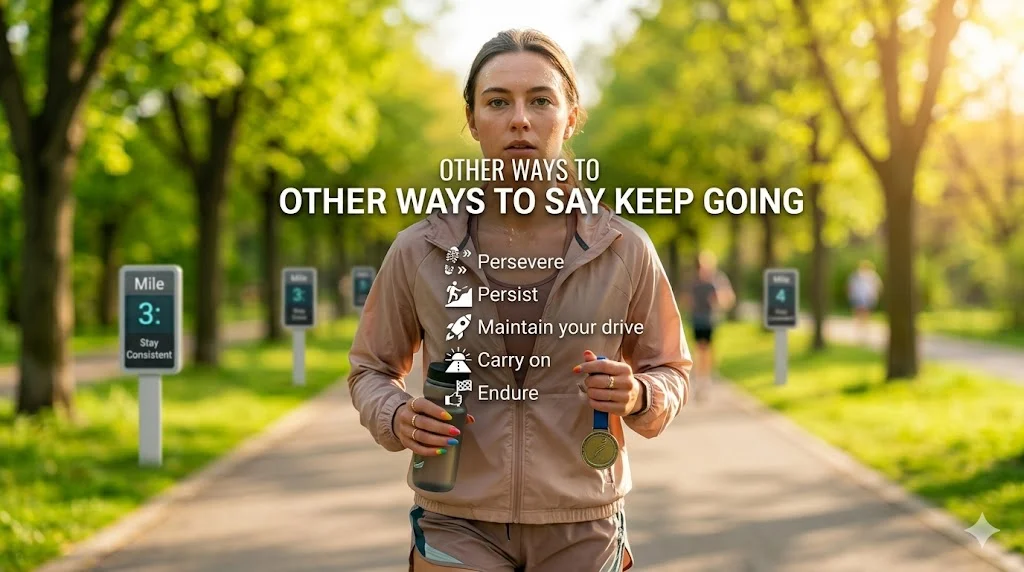
If you want alternatives to “keep going,” try: keep it up, don’t stop, carry on, continue forward, stay strong. These phrases help you encourage others with the right tone in both casual and professional situations.
The phrase “keep going” is commonly used to motivate someone to continue despite difficulty, fatigue, or challenges. It’s simple, encouraging, and widely used in both personal and professional communication.
However, repeating the same phrase can sound limited. Learning alternatives to “keep going” helps you express encouragement more naturally and effectively.
Expanding your vocabulary also allows you to express excitement in English and use stronger professional reaction phrases when motivating others.
Quick Categories Section
Formal Alternatives to “Keep Going”
- Continue your efforts
- Please proceed further
- Maintain your progress
- Continue working diligently
Pro Tip: Use formal phrases in professional emails, presentations, or performance feedback.
Casual Alternatives
- Keep it up
- Don’t stop
- Go on
- Stay with it
Pro Tip: Casual phrases are perfect for daily conversations and friendly motivation.
Professional Alternatives
- Keep up the momentum
- Stay focused
- Continue making progress
- Let’s move forward
Pro Tip: Use professional phrases that sound supportive and goal-oriented.
Informal Expressions
- You’ve got this
- Push through
- Keep pushing
- Don’t give up
Pro Tip: These informal expressions in English are powerful but best used in relaxed or emotional contexts.
“Encouragement is most powerful when your words match the moment.”
Common Mistakes
- Sounding too repetitive
Example: Saying “keep going” again and again - Using informal phrases in formal settings
Example: “You’ve got this” in a report - Sounding too forceful
Example: “Keep going!” without empathy - Ignoring tone
Example: Using flat voice instead of supportive tone - Lack of clarity
Example: Not specifying what to continue
What Does “Keep Going” Mean?
Definition: A phrase used to encourage someone to continue their effort or action.
Grammar: It is an imperative phrase used for motivation.
Example: “Keep going—you’re almost there!”
When to Use “Keep Going”
- To motivate someone
- During challenging tasks
- In both personal and professional settings
- When progress is ongoing
Spoken vs Written: Both
Formal vs Informal: Mostly informal
Is It Professional or Polite to Say “Keep Going”?
Polite? ✔️ Yes
Professional? ❌ Not always (can sound basic)
Business Example:
“Please continue your progress—we’re on the right track.”
Pros and Cons of Using “Keep Going”
Pros
- Simple and encouraging
- Friendly tone
- Easy to understand
- Widely used
Cons
- Can sound repetitive
- Too informal for some contexts
- Lacks specificity
- Limited emotional depth
“Motivation becomes stronger when your words feel fresh and specific.”
Other Ways to Say “Keep Going” With Examples
These other ways to say “keep going” will help you sound more fluent, confident and natural in different situations.
Use them based on tone, context, and audience to deliver effective encouragement.
1. Phrase: Keep it up
Meaning: Continue doing well
Explanation: Encourages consistent effort
Example Sentence: Keep it up—you’re doing great
Best Use: motivation
Worst Use: formal reports
Tone: friendly, supportive
Context Variability: casual / spoken
2. Phrase: Don’t stop
Meaning: Continue without pausing
Explanation: Strong encouragement
Example Sentence: Don’t stop now—you’re close
Best Use: emotional support
Worst Use: formal writing
Tone: direct, motivating
Context Variability: casual
3. Phrase: Carry on
Meaning: Continue what you’re doing
Explanation: Slightly formal tone
Example Sentence: Please carry on with your work
Best Use: workplace
Worst Use: slang context
Tone: neutral, polite
Context Variability: professional / spoken
4. Phrase: Stay strong
Meaning: Remain mentally strong
Explanation: Emotional encouragement
Example Sentence: Stay strong—you’ll get through this
Best Use: support
Worst Use: technical tasks
Tone: emotional, supportive
Context Variability: casual
5. Phrase: Keep pushing
Meaning: Continue making effort
Explanation: Motivational phrase
Example Sentence: Keep pushing—you’re almost there
Best Use: challenges
Worst Use: formal email
Tone: energetic, encouraging
Context Variability: casual
6. Phrase: Continue forward
Meaning: Move ahead
Explanation: Slightly formal phrasing
Example Sentence: Let’s continue forward with the plan
Best Use: meetings
Worst Use: casual chat
Tone: formal, neutral
Context Variability: professional
7. Phrase: Don’t give up
Meaning: Stay determined
Explanation: Strong motivational message
Example Sentence: Don’t give up—you can do it
Best Use: emotional support
Worst Use: formal reports
Tone: inspiring, strong
Context Variability: casual
8. Phrase: Stay focused
Meaning: Maintain attention
Explanation: Encourages concentration
Example Sentence: Stay focused and finish the task
Best Use: work
Worst Use: casual jokes
Tone: professional, supportive
Context Variability: professional
9. Phrase: Keep moving forward
Meaning: Continue progressing
Explanation: Positive and goal-oriented
Example Sentence: Keep moving forward toward your goal
Best Use: motivation
Worst Use: quick commands
Tone: positive, professional
Context Variability: professional / spoken
10. Phrase: Push through
Meaning: Continue despite difficulty
Explanation: Strong encouragement
Example Sentence: Push through the hard part
Best Use: challenges
Worst Use: formal email
Tone: intense, motivating
Context Variability: casual
11. Phrase: Go on
Meaning: Continue
Explanation: Simple and common
Example Sentence: Go on, you’re doing well
Best Use: conversation
Worst Use: formal writing
Tone: neutral, friendly
Context Variability: casual
12. Phrase: Continue your efforts
Meaning: Keep working
Explanation: Formal encouragement
Example Sentence: Please continue your efforts
Best Use: workplace
Worst Use: casual chat
Tone: formal, supportive
Context Variability: professional
13. Phrase: Keep at it
Meaning: Persist
Explanation: Encourages persistence
Example Sentence: Keep at it—you’ll succeed
Best Use: motivation
Worst Use: formal reports
Tone: friendly, encouraging
Context Variability: casual
14. Phrase: Stay with it
Meaning: Remain engaged
Explanation: Suggests consistency
Example Sentence: Stay with it—you’re improving
Best Use: learning
Worst Use: strict command
Tone: supportive, calm
Context Variability: casual
15. Phrase: Keep the momentum
Meaning: Maintain progress
Explanation: Professional encouragement
Example Sentence: Let’s keep the momentum going
Best Use: workplace
Worst Use: casual jokes
Tone: professional, motivating
Context Variability: professional
16. Phrase: Continue making progress
Meaning: Keep improving
Explanation: Formal and positive
Example Sentence: Continue making progress on the task
Best Use: feedback
Worst Use: casual chat
Tone: formal, encouraging
Context Variability: professional
17. Phrase: Stay on track
Meaning: Follow the plan
Explanation: Focus on direction
Example Sentence: Stay on track to meet your goals
Best Use: planning
Worst Use: emotional support
Tone: professional, guiding
Context Variability: professional
18. Phrase: Keep trying
Meaning: Don’t stop attempting
Explanation: Encourages persistence
Example Sentence: Keep trying—you’ll get it
Best Use: learning
Worst Use: formal report
Tone: supportive, friendly
Context Variability: casual
19. Phrase: Keep going strong
Meaning: Continue with energy
Explanation: Positive reinforcement
Example Sentence: You’re doing great—keep going strong
Best Use: encouragement
Worst Use: formal writing
Tone: enthusiastic, supportive
Context Variability: casual
20. Phrase: Don’t slow down
Meaning: Maintain speed
Explanation: Focus on pace
Example Sentence: Don’t slow down now
Best Use: urgency
Worst Use: formal email
Tone: direct, motivating
Context Variability: casual
21. Phrase: Keep progressing
Meaning: Continue advancing
Explanation: Professional tone
Example Sentence: Keep progressing toward your goal
Best Use: workplace
Worst Use: casual slang
Tone: formal, positive
Context Variability: professional
22. Phrase: Maintain your pace
Meaning: Continue at same speed
Explanation: Focus on consistency
Example Sentence: Maintain your pace throughout
Best Use: performance
Worst Use: casual chat
Tone: neutral, professional
Context Variability: professional
23. Phrase: Keep working
Meaning: Continue effort
Explanation: Simple instruction
Example Sentence: Keep working—you’re doing well
Best Use: general
Worst Use: formal writing
Tone: neutral, supportive
Context Variability: casual
24. Phrase: Stay determined
Meaning: Remain focused and strong
Explanation: Emotional encouragement
Example Sentence: Stay determined and finish strong
Best Use: motivation
Worst Use: technical tasks
Tone: inspiring, supportive
Context Variability: casual
25. Phrase: Continue ahead
Meaning: Move forward
Explanation: Slightly formal
Example Sentence: Continue ahead with the plan
Best Use: workplace
Worst Use: casual talk
Tone: formal, neutral
Context Variability: professional
26. Phrase: Don’t quit
Meaning: Keep trying
Explanation: Strong motivation
Example Sentence: Don’t quit—you’re close
Best Use: emotional support
Worst Use: formal writing
Tone: strong, motivating
Context Variability: casual
27. Phrase: Keep going steadily
Meaning: Continue at a steady pace
Explanation: Focus on consistency
Example Sentence: Keep going steadily toward your goal
Best Use: long-term tasks
Worst Use: urgent situations
Tone: calm, supportive
Context Variability: professional / spoken
28. Phrase: Move ahead
Meaning: Continue forward
Explanation: Neutral and simple
Example Sentence: Let’s move ahead with the project
Best Use: meetings
Worst Use: emotional support
Tone: neutral, professional
Context Variability: professional
29. Phrase: Keep pushing forward
Meaning: Continue progressing
Explanation: Strong motivation
Example Sentence: Keep pushing forward despite challenges
Best Use: motivation
Worst Use: casual jokes
Tone: inspiring, strong
Context Variability: professional / spoken
30. Phrase: Stay committed
Meaning: Remain dedicated
Explanation: Focus on consistency
Example Sentence: Stay committed to your goals
Best Use: long-term
Worst Use: quick instruction
Tone: professional, encouraging
Context Variability: professional
“Small changes in wording create big improvements in fluency.”
Mini Quiz / Self-Check
1. Which is the most professional alternative?
A. Keep pushing
B. Continue your efforts
C. Don’t stop
✅ Answer: B — Continue your efforts
2. Best phrase for emotional encouragement?
A. Stay strong
B. Maintain your pace
C. Continue ahead
✅ Answer: A — Stay strong
3. Which sounds too informal for business?
A. Stay focused
B. You’ve got this
C. Continue making progress
✅ Answer: B — You’ve got this
4. Best phrase for teamwork motivation?
A. Let’s move forward
B. Don’t quit
C. Stay determined
✅ Answer: A — Let’s move forward
“Fluency grows when you choose the right words for the right moment.”
Comparison Table: Top Alternatives
| Phrase | Tone | Best Use |
|---|---|---|
| Keep it up | Friendly | Motivation |
| Continue your efforts | Formal | Workplace |
| Stay focused | Professional | Tasks |
| Keep pushing | Energetic | Challenges |
| Carry on | Neutral | General use |
| Stay strong | Emotional | Support |
| Move ahead | Professional | Meetings |
| Don’t give up | Motivational | Encouragement |
| Keep progressing | Formal | Goals |
| Let’s move forward | Professional | Teamwork |
FAQs
1. What are the best alternatives to “keep going”?
Some of the best alternatives include “keep it up,” “stay strong,” and “continue your efforts.”
2. Is “keep going” professional?
It is polite but can sound too informal in professional settings. Use “continue making progress” instead.
3. How can I encourage someone professionally?
Use phrases like “keep up the momentum” or “continue your efforts.”
4. What is a more emotional way to say “keep going”?
Try “don’t give up” or “stay strong.”
5. Why should I learn alternatives to “keep going”?
Learning other ways to say keep going improves fluency, tone, and communication effectiveness.
Conclusion
Learning other ways to say “keep going” helps you communicate encouragement with more clarity, variety, and impact. It allows you to adjust your tone based on the situation whether casual, emotional, or professional.
Practice these alternatives to “keep going” daily to build confidence and fluency. The right words can motivate, inspire, and make your English sound more natural and powerful.
CTA: Try using 3 new phrases today to encourage someone.