Last Updated on April 9, 2026
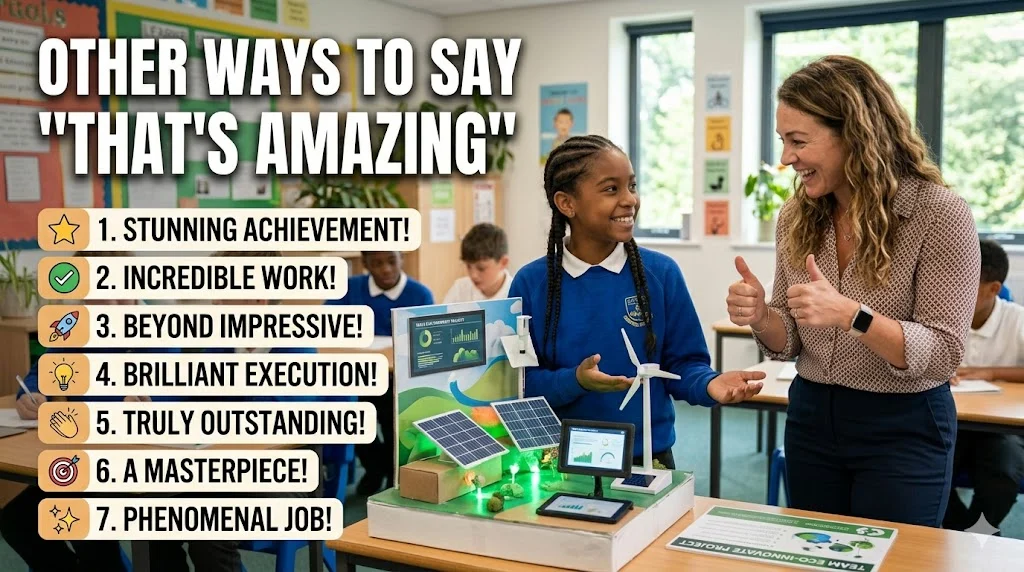
Some common other ways to say “that’s amazing” include: that’s incredible, that’s impressive, that’s fantastic, that’s outstanding, that’s remarkable. These phrases help you sound more expressive and natural when giving praise or reacting to something impressive.
The phrase “that’s amazing” is a common way to show admiration, surprise, or excitement about something impressive. It’s widely used in everyday conversations and positive reactions.
However, repeating the same phrase can make your English sound limited. Learning alternatives to “that’s amazing” helps you communicate enthusiasm more clearly and naturally.
Expanding your vocabulary also helps you express excitement in English and use stronger professional reaction phrases when giving feedback or praise.
Quick Categories Section
Formal Alternatives to “That’s Amazing”
- That’s remarkable
- That’s outstanding
- That’s exceptional
- That’s extraordinary
Pro Tip: Use formal expressions when praising achievements in professional or academic settings.
Casual Alternatives
- That’s awesome
- That’s fantastic
- That’s great
- That’s really cool
Pro Tip: Casual phrases sound friendly and enthusiastic in everyday conversations.
Professional Alternatives
- That’s impressive
- That’s excellent work
- That’s very well done
- That’s outstanding work
Pro Tip: In the workplace, clear and professional praise builds motivation and trust.
Informal Expressions
- That’s mind-blowing
- That’s unbelievable
- That’s incredible
- That’s epic
Pro Tip: Informal expressions in English are great for excitement but may sound too casual in formal situations.
“The right words can make your praise more memorable.”
Common Mistakes
- Overusing “that’s amazing”
Example: Saying it repeatedly in every conversation. - Using slang in formal situations
Example: “That’s epic” in a professional report. - Sounding exaggerated
Example: Calling something small “amazing.” - Using sarcasm unintentionally
Example: Saying “That’s amazing” with a negative tone. - Not being specific in praise
Example: Saying “That’s amazing” without explaining why.
What Does “That’s Amazing” Mean?
Definition:
“That’s amazing” is an expression used to show admiration, surprise, or excitement about something impressive.
Grammar:
It functions as an exclamatory phrase expressing a strong positive reaction.
Example Sentence:
“That’s amazing! I didn’t know you could do that.”
When to Use “That’s Amazing”
- Reacting to good news
- Complimenting achievements
- Showing excitement or admiration
- Responding to impressive skills or results
Spoken vs Written: Mostly spoken but also used in casual writing
Formal vs Informal: Mostly informal
Is It Professional or Polite to Say “That’s Amazing”?
Polite? ✔️ Yes
Professional? ⚠️ Sometimes
Business Example:
“That’s impressive work on the presentation.”
Pros and Cons of Using “That’s Amazing”
Pros
- Positive and enthusiastic
- Easy to understand
- Common in everyday English
- Encourages others
Cons
- Overused in casual speech
- Sometimes too informal
- Can sound exaggerated
- Less precise than specific praise
“Strong reactions make conversations more engaging.”
Other Ways to Say “That’s Amazing” With Examples
These other ways to say “that’s amazing” will help you sound more fluent, confident, and natural in different situations.
Use them depending on tone, audience, and context to express excitement in English more effectively.
1. Phrase: That’s incredible
Meaning: Extremely impressive or surprising.
Explanation: Shows strong admiration or surprise.
Example Sentence: That’s incredible you finished the project in one day!
Best Use: strong praise
Worst Use: minor events
Tone: enthusiastic, impressed
Context Variability: casual / spoken
2. Phrase: That’s impressive
Meaning: Something worthy of admiration.
Explanation: A professional and balanced compliment.
Example Sentence: That’s impressive work on the design.
Best Use: workplace praise
Worst Use: sarcasm
Tone: professional, positive
Context Variability: professional / spoken
3. Phrase: That’s fantastic
Meaning: Extremely good or exciting.
Explanation: Shows strong positive reaction.
Example Sentence: That’s fantastic news!
Best Use: celebrations
Worst Use: formal reports
Tone: enthusiastic, friendly
Context Variability: casual
4. Phrase: That’s remarkable
Meaning: Worth noticing for its excellence.
Explanation: More formal than “amazing.”
Example Sentence: That’s a remarkable achievement.
Best Use: formal praise
Worst Use: casual jokes
Tone: formal, respectful
Context Variability: professional
5. Phrase: That’s outstanding
Meaning: Exceptionally good.
Explanation: Strong praise often used in professional contexts.
Example Sentence: That’s outstanding work on the report.
Best Use: workplace
Worst Use: casual slang
Tone: professional, strong
Context Variability: professional
6. Phrase: That’s awesome
Meaning: Very impressive or exciting.
Explanation: Common casual reaction.
Example Sentence: That’s awesome! Congratulations.
Best Use: casual talk
Worst Use: formal meetings
Tone: informal, enthusiastic
Context Variability: casual
7. Phrase: That’s brilliant
Meaning: Extremely clever or impressive.
Explanation: Often used in British English.
Example Sentence: That’s brilliant you solved the problem quickly.
Best Use: praise
Worst Use: sarcasm
Tone: enthusiastic, positive
Context Variability: casual / spoken
8. Phrase: That’s extraordinary
Meaning: Very unusual and impressive.
Explanation: Strong formal admiration.
Example Sentence: That’s an extraordinary achievement.
Best Use: formal praise
Worst Use: casual chat
Tone: formal, impressive
Context Variability: professional
9. Phrase: That’s unbelievable
Meaning: Hard to believe because it’s so impressive.
Explanation: Shows surprise and excitement.
Example Sentence: That’s unbelievable you won first place!
Best Use: excitement
Worst Use: professional reports
Tone: surprised, enthusiastic
Context Variability: casual
10. Phrase: That’s wonderful
Meaning: Very pleasing or delightful.
Explanation: Warm and friendly praise.
Example Sentence: That’s wonderful news.
Best Use: positive reactions
Worst Use: sarcastic tone
Tone: warm, supportive
Context Variability: casual / spoken
11. Phrase: That’s stunning
Meaning: Extremely impressive or visually striking.
Explanation: Often used when something is surprisingly beautiful or remarkable.
Example Sentence: That’s stunning the design looks incredible.
Best Use: creative praise
Worst Use: minor achievements
Tone: enthusiastic, admiring
Context Variability: casual / spoken
12. Phrase: That’s phenomenal
Meaning: Exceptionally impressive or extraordinary.
Explanation: Strong praise for outstanding results.
Example Sentence: That’s phenomenal work on the project.
Best Use: major achievements
Worst Use: small tasks
Tone: enthusiastic, powerful
Context Variability: casual / professional
13. Phrase: That’s spectacular
Meaning: Extremely impressive or exciting.
Explanation: Often used when something stands out dramatically.
Example Sentence: That’s spectacular performance tonight.
Best Use: events or performances
Worst Use: routine tasks
Tone: enthusiastic, expressive
Context Variability: casual / spoken
14. Phrase: That’s impressive work
Meaning: Work that deserves admiration.
Explanation: A professional way to recognize effort and quality.
Example Sentence: That’s impressive work on the presentation.
Best Use: workplace feedback
Worst Use: sarcasm
Tone: professional, positive
Context Variability: professional / spoken
15. Phrase: That’s magnificent
Meaning: Extremely beautiful or impressive.
Explanation: Strong praise often used for achievements or creations.
Example Sentence: That’s a magnificent piece of art.
Best Use: creative accomplishments
Worst Use: casual jokes
Tone: expressive, admiring
Context Variability: spoken / formal
16. Phrase: That’s marvelous
Meaning: Very pleasing or impressive.
Explanation: A warm and friendly expression of admiration.
Example Sentence: That’s marvelous news about your promotion.
Best Use: positive news
Worst Use: sarcastic tone
Tone: warm, positive
Context Variability: casual / spoken
17. Phrase: That’s exceptional
Meaning: Much better than usual.
Explanation: Formal praise for high-quality work.
Example Sentence: That’s exceptional performance from the team.
Best Use: professional recognition
Worst Use: casual slang
Tone: formal, respectful
Context Variability: professional
18. Phrase: That’s first-rate
Meaning: Of the highest quality.
Explanation: A classic expression for excellent results.
Example Sentence: That’s first-rate work on the report.
Best Use: workplace praise
Worst Use: informal jokes
Tone: professional, approving
Context Variability: professional / spoken
19. Phrase: That’s top-notch
Meaning: Extremely high quality.
Explanation: Informal but positive praise.
Example Sentence: That’s top-notch editing on the video.
Best Use: creative feedback
Worst Use: formal documents
Tone: informal, positive
Context Variability: casual
20. Phrase: That’s incredible work
Meaning: Work that is extremely impressive.
Explanation: Combines admiration with recognition of effort.
Example Sentence: That’s incredible work on the research.
Best Use: achievements
Worst Use: minor updates
Tone: enthusiastic, appreciative
Context Variability: casual / professional
21. Phrase: That’s truly remarkable
Meaning: Very impressive and noteworthy.
Explanation: A stronger and more formal compliment.
Example Sentence: That’s truly remarkable progress.
Best Use: professional praise
Worst Use: casual slang
Tone: formal, admiring
Context Variability: professional
22. Phrase: That’s very impressive
Meaning: Clearly deserving admiration.
Explanation: A balanced and professional compliment.
Example Sentence: That’s very impressive analysis.
Best Use: workplace
Worst Use: sarcasm
Tone: professional, positive
Context Variability: professional / spoken
23. Phrase: That’s fantastic work
Meaning: Extremely good work.
Explanation: Expresses enthusiastic appreciation.
Example Sentence: That’s fantastic work on the project.
Best Use: encouragement
Worst Use: strict evaluations
Tone: enthusiastic, friendly
Context Variability: casual / spoken
24. Phrase: That’s really impressive
Meaning: Truly admirable or skillful.
Explanation: Slightly informal but sincere praise.
Example Sentence: That’s really impressive you learned that quickly.
Best Use: casual praise
Worst Use: formal reports
Tone: friendly, approving
Context Variability: casual
25. Phrase: That’s unbelievable work
Meaning: So good it’s hard to believe.
Explanation: Shows strong admiration and surprise.
Example Sentence: That’s unbelievable work on the design.
Best Use: big achievements
Worst Use: routine tasks
Tone: surprised, enthusiastic
Context Variability: casual
26. Phrase: That’s extraordinary work
Meaning: Work that is far above normal standards.
Explanation: Formal praise for exceptional performance.
Example Sentence: That’s extraordinary work from the team.
Best Use: professional recognition
Worst Use: casual chat
Tone: formal, admiring
Context Variability: professional
27. Phrase: That’s quite impressive
Meaning: Moderately strong praise.
Explanation: Slightly softer than “very impressive.”
Example Sentence: That’s quite impressive for your first attempt.
Best Use: polite praise
Worst Use: sarcasm
Tone: polite, balanced
Context Variability: professional / spoken
28. Phrase: That’s brilliant work
Meaning: Extremely clever or skillful work.
Explanation: Common in British English.
Example Sentence: That’s brilliant work on the solution.
Best Use: praise
Worst Use: strict reports
Tone: enthusiastic, approving
Context Variability: casual / spoken
29. Phrase: That’s amazing work
Meaning: Work that is extremely impressive.
Explanation: Slightly stronger variation of the original phrase.
Example Sentence: That’s amazing work on the project.
Best Use: encouragement
Worst Use: repetitive praise
Tone: enthusiastic, positive
Context Variability: casual / professional
30. Phrase: That’s seriously impressive
Meaning: Very strongly impressive.
Explanation: Emphasizes genuine admiration.
Example Sentence: That’s seriously impressive you finished in half the time.
Best Use: genuine praise
Worst Use: formal writing
Tone: enthusiastic, sincere
Context Variability: casual / spoken
Mini Quiz / Self-Check
1. Which phrase sounds most professional?
A. That’s awesome
B. That’s outstanding
C. That’s epic
✅ Answer: B. That’s outstanding
2. Which phrase is best for casual excitement?
A. That’s awesome
B. That’s remarkable
C. That’s exceptional
✅ Answer: A. That’s awesome
3. Which phrase may sound too informal in business communication?
A. That’s epic
B. That’s impressive
C. That’s outstanding
✅ Answer: A. That’s epic
4. Which phrase expresses strong admiration in formal situations?
A. That’s extraordinary
B. That’s cool
C. That’s awesome
✅ Answer: A. That’s extraordinary
“Choosing the right praise makes your English sound confident and natural.”
Comparison Table: Top Alternatives
| Phrase | Tone | Best Use |
|---|---|---|
| That’s incredible | Enthusiastic | Strong reactions |
| That’s impressive | Professional | Workplace praise |
| That’s fantastic | Friendly | Celebrations |
| That’s remarkable | Formal | Achievements |
| That’s outstanding | Professional | Work performance |
| That’s brilliant | Enthusiastic | Casual praise |
| That’s extraordinary | Formal | Exceptional success |
| That’s awesome | Informal | Friendly conversations |
| That’s wonderful | Warm | Positive news |
| That’s phenomenal | Strong praise | Big achievements |
FAQs
1. What are the best alternatives to “that’s amazing”?
Some common alternatives include “that’s incredible,” “that’s impressive,” and “that’s fantastic.”
2. Is “that’s amazing” professional?
It can be polite, but phrases like “that’s impressive” or “that’s outstanding” sound more professional.
3. How can I express excitement in English?
Use expressive phrases like “that’s incredible,” “that’s phenomenal,” or “that’s fantastic.”
4. What is a formal way to say “that’s amazing”?
“That’s remarkable” or “that’s extraordinary” are formal alternatives.
5. Why learn other ways to say “that’s amazing”?
Learning other ways to say that’s amazing improves fluency, vocabulary, and communication skills.
Conclusion
Learning other ways to say “that’s amazing” helps you express admiration and excitement more naturally. It also allows you to adjust your tone depending on the situation.
Practice these alternatives to “that’s amazing” in conversations, feedback, and professional communication. Over time, your English will sound more fluent, expressive, and confident.