Last Updated on April 11, 2026
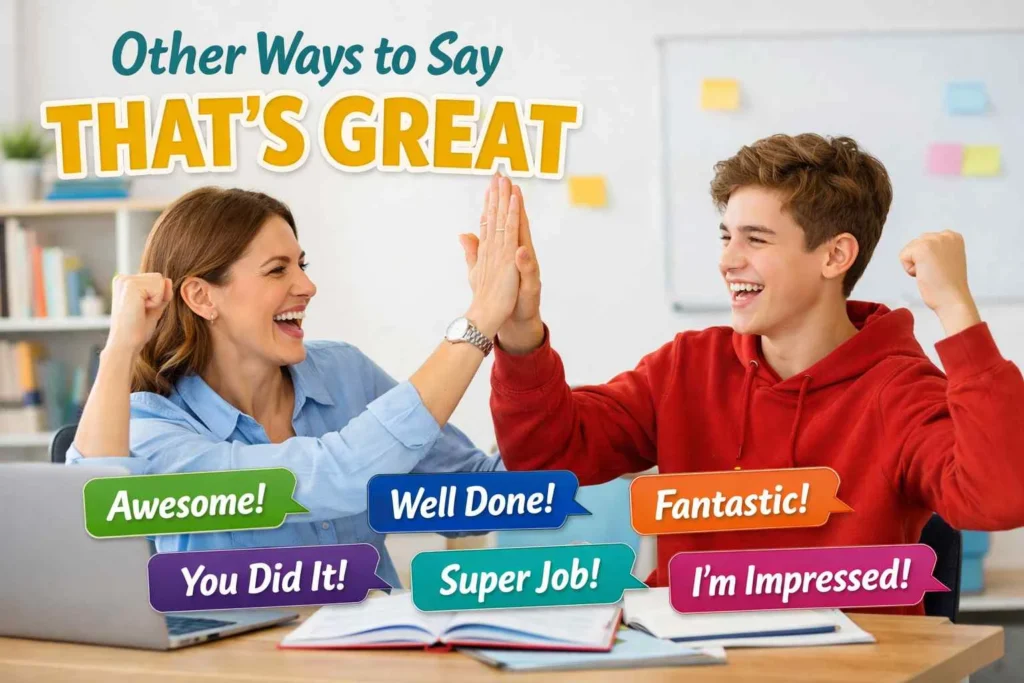
If you want alternatives to “that’s great,” try: that’s excellent, that’s fantastic, well done, that’s impressive, that’s wonderful. These options help you sound more expressive, professional, and natural.
The phrase “that’s great” is commonly used to show approval, happiness, or appreciation. It’s simple and effective, but it can become repetitive if used too often.
Learning alternatives to “that’s great” helps you communicate with more variety and precision. It also allows you to match your tone to different situations, whether formal, casual, or professional.
Expanding your vocabulary helps you express excitement in English more clearly and confidently in both spoken and written communication.
Quick Categories Section
Formal Alternatives to “That’s Great”
- That is excellent
- That is commendable
- That is outstanding
- That is remarkable
Pro Tip: Use formal phrases in presentations, reports, or professional praise.
Casual Alternatives
- Awesome
- Nice
- Cool
- Sweet
Pro Tip: These are perfect for everyday conversations with friends.
Professional Alternatives
- That’s impressive
- Great work
- Well done
- That’s a strong result
Pro Tip: Focus on encouragement and recognition in workplace communication.
Informal Expressions
- That rocks
- That’s amazing
- Love that
- That’s awesome
Pro Tip: Informal expressions in English can sound enthusiastic but avoid them in formal writing.
“The right words make your praise sound more genuine and impactful.”
Common Mistakes
- Overusing the phrase
Example: “That’s great” in every situation - Using it in formal writing repeatedly
Example: “That’s great performance in the report” - Sounding insincere
Example: Saying “that’s great” without emotion - Using casual tone in professional settings
Example: “That’s awesome” in a formal email - Not matching intensity
Example: Saying “that’s great” for a major achievement
What Does “That’s Great” Mean?
Definition: It expresses approval, satisfaction, or happiness about something.
Grammar: It’s a declarative expression used as a reaction.
Example: “That’s great! You passed the exam.”
When to Use “That’s Great”
- When someone shares good news
- To show approval
- In casual conversations
- In friendly workplace interactions
Spoken vs Written: Both
Formal vs Informal: Mostly informal
Is It Professional or Polite to Say “That’s Great”?
Polite? ✔️ Yes
Professional? ✔️ Yes (in moderation)
Business Example:
“That’s a great result well done on completing the project successfully.”
Pros and Cons of Using “That’s Great”
Pros
- Simple and natural
- Friendly tone
- Common usage
- Easy to understand
Cons
- Overused
- Can sound generic
- Lacks specificity
- Limited emotional impact
“Specific praise sounds more powerful than general praise.”
Other Ways to Say “That’s Great” With Examples
These other ways to say “that’s great” will help you sound more fluent, confident, and natural in different situations.
Use them according to tone, context, and audience to express excitement, admiration, or approval.
1. Phrase: That’s excellent
Meaning: Very high quality or success
Explanation: Stronger and more formal than “great”
Example Sentence: That’s excellent work on the report
Best Use: professional praise
Worst Use: casual slang
Tone: formal, positive
Context Variability: professional
2. Phrase: That’s fantastic
Meaning: Extremely good
Explanation: Expresses high enthusiasm
Example Sentence: That’s fantastic news!
Best Use: celebrations
Worst Use: serious critique
Tone: enthusiastic, positive
Context Variability: casual / spoken
3. Phrase: Well done
Meaning: Praise for achievement
Explanation: Recognizes effort and success
Example Sentence: Well done on finishing the project
Best Use: recognition
Worst Use: sarcasm
Tone: supportive, positive
Context Variability: professional / spoken
4. Phrase: That’s impressive
Meaning: Worth admiration
Explanation: Highlights achievement
Example Sentence: That’s impressive progress
Best Use: workplace
Worst Use: casual jokes
Tone: professional, appreciative
Context Variability: professional
5. Phrase: That’s wonderful
Meaning: Very pleasing or delightful
Explanation: Warm and expressive
Example Sentence: That’s wonderful to hear
Best Use: personal news
Worst Use: strict business tone
Tone: warm, positive
Context Variability: casual / spoken
6. Phrase: Great job
Meaning: Praise for effort
Explanation: Common encouragement phrase
Example Sentence: Great job on the presentation
Best Use: feedback
Worst Use: formal report
Tone: friendly, supportive
Context Variability: casual / professional
7. Phrase: That’s amazing
Meaning: Extremely impressive
Explanation: Shows strong excitement
Example Sentence: That’s amazing you did it!
Best Use: big achievements
Worst Use: minor updates
Tone: enthusiastic, emotional
Context Variability: casual
8. Phrase: That’s outstanding
Meaning: Exceptionally good
Explanation: High-level praise
Example Sentence: That’s outstanding performance
Best Use: formal praise
Worst Use: casual chat
Tone: formal, strong
Context Variability: professional
9. Phrase: That’s brilliant
Meaning: Very clever or impressive
Explanation: Common in British English
Example Sentence: That’s a brilliant idea
Best Use: ideas
Worst Use: criticism
Tone: positive, enthusiastic
Context Variability: casual / spoken
10. Phrase: That’s perfect
Meaning: Exactly right
Explanation: Shows complete satisfaction
Example Sentence: That’s perfect for our needs
Best Use: approval
Worst Use: exaggeration
Tone: confident, positive
Context Variability: professional / spoken
“Variety in language shows confidence and fluency.”
11. Phrase: That’s terrific
Meaning: Very good
Explanation: Positive and energetic
Example Sentence: That’s terrific news
Best Use: casual praise
Worst Use: formal writing
Tone: upbeat, positive
Context Variability: casual
12. Phrase: That’s exceptional
Meaning: Unusually good
Explanation: Strong formal praise
Example Sentence: That’s exceptional work
Best Use: professional
Worst Use: casual chat
Tone: formal, strong
Context Variability: professional
13. Phrase: That’s remarkable
Meaning: Worth noticing
Explanation: Highlights uniqueness
Example Sentence: That’s remarkable progress
Best Use: achievements
Worst Use: minor tasks
Tone: formal, appreciative
Context Variability: professional
14. Phrase: That’s impressive work
Meaning: High-quality effort
Explanation: Specific praise
Example Sentence: That’s impressive work on this task
Best Use: workplace
Worst Use: casual chat
Tone: professional, positive
Context Variability: professional
15. Phrase: Love that
Meaning: Strong approval
Explanation: Informal and expressive
Example Sentence: Love that idea
Best Use: casual
Worst Use: formal email
Tone: informal, enthusiastic
Context Variability: casual
16. Phrase: That’s first-rate
Meaning: Top quality
Explanation: Formal praise
Example Sentence: That’s first-rate performance
Best Use: formal
Worst Use: casual
Tone: formal, strong
Context Variability: professional
17. Phrase: That’s top-notch
Meaning: Excellent quality
Explanation: Informal but strong
Example Sentence: That’s top-notch work
Best Use: casual praise
Worst Use: formal reports
Tone: informal, positive
Context Variability: casual
18. Phrase: That’s a great result
Meaning: Positive outcome
Explanation: Professional tone
Example Sentence: That’s a great result for the team
Best Use: workplace
Worst Use: casual jokes
Tone: professional, positive
Context Variability: professional
19. Phrase: That’s incredible
Meaning: Hard to believe (in a good way)
Explanation: Strong excitement
Example Sentence: That’s incredible news
Best Use: big news
Worst Use: minor updates
Tone: enthusiastic, emotional
Context Variability: casual
20. Phrase: That’s very good
Meaning: Clearly positive
Explanation: Neutral praise
Example Sentence: That’s very good progress
Best Use: general feedback
Worst Use: high praise
Tone: neutral, polite
Context Variability: professional
21. Phrase: That’s excellent work
Meaning: High-quality effort
Explanation: Specific and formal
Example Sentence: That’s excellent work on this project
Best Use: workplace
Worst Use: casual chat
Tone: formal, positive
Context Variability: professional
22. Phrase: That’s a win
Meaning: Success
Explanation: Informal and modern
Example Sentence: That’s a win for us
Best Use: casual
Worst Use: formal writing
Tone: informal, positive
Context Variability: casual
23. Phrase: That’s something special
Meaning: Unique and impressive
Explanation: Highlights uniqueness
Example Sentence: That’s something special
Best Use: praise
Worst Use: formal writing
Tone: warm, expressive
Context Variability: casual
24. Phrase: That’s outstanding work
Meaning: Exceptional effort
Explanation: Strong professional praise
Example Sentence: That’s outstanding work from the team
Best Use: workplace
Worst Use: casual talk
Tone: formal, strong
Context Variability: professional
25. Phrase: That’s fantastic work
Meaning: Very high quality
Explanation: Enthusiastic praise
Example Sentence: That’s fantastic work
Best Use: encouragement
Worst Use: formal reports
Tone: enthusiastic, positive
Context Variability: casual / professional
26. Phrase: That’s a great achievement
Meaning: Important success
Explanation: Recognizes effort
Example Sentence: That’s a great achievement
Best Use: milestones
Worst Use: small tasks
Tone: respectful, positive
Context Variability: professional
27. Phrase: That’s impressive work
Meaning: High-quality output
Explanation: Professional tone
Example Sentence: That’s impressive work
Best Use: workplace
Worst Use: casual jokes
Tone: professional, appreciative
Context Variability: professional
28. Phrase: That’s excellent news
Meaning: Very good update
Explanation: Positive reaction
Example Sentence: That’s excellent news
Best Use: updates
Worst Use: criticism
Tone: formal, positive
Context Variability: professional / spoken
29. Phrase: That’s great to hear
Meaning: Positive response
Explanation: Friendly acknowledgment
Example Sentence: That’s great to hear
Best Use: conversation
Worst Use: formal report
Tone: warm, polite
Context Variability: casual / spoken
30. Phrase: That’s really good
Meaning: Strong approval
Explanation: Slightly more emphasis
Example Sentence: That’s really good work
Best Use: general praise
Worst Use: formal reports
Tone: friendly, positive
Context Variability: casual / professional
“Small changes in wording create big improvements in fluency.”
Mini Quiz / Self-Check
1. Which is the most professional alternative to “that’s great”?
A. That’s awesome
B. That’s excellent
C. That’s cool
2. Which phrase is best for casual conversation?
A. That’s outstanding
B. That’s remarkable
C. That’s amazing
3. Which option sounds too informal for a business email?
A. That’s impressive
B. Love that
C. That’s a great result
4. What should you say for a major achievement?
A. That’s really good
B. That’s exceptional
C. That’s nice
Comparison Table: Top Alternatives
| Phrase | Tone | Best Use |
|---|---|---|
| That’s excellent | Formal | Business |
| That’s impressive | Professional | Workplace |
| Well done | Supportive | Feedback |
| That’s amazing | Enthusiastic | Big news |
| That’s outstanding | Formal | High praise |
| That’s fantastic | Energetic | Celebrations |
| Great job | Friendly | Encouragement |
| That’s remarkable | Formal | Achievements |
| That’s perfect | Confident | Approval |
| That’s wonderful | Warm | Personal news |
FAQs
1. What are the best alternatives to “that’s great”?
Some of the best alternatives include “that’s excellent,” “that’s impressive,” and “well done,” depending on context.
2. Is “that’s great” professional?
Yes, but it can sound generic. More specific praise is better in professional settings.
3. How can I express excitement in English more naturally?
Use varied phrases like “that’s amazing,” “that’s fantastic,” or “that’s incredible.”
4. What is a formal way to say “that’s great”?
“That is excellent” or “that is outstanding” are strong formal options.
5. Why should I learn other ways to say “that’s great”?
It improves fluency, avoids repetition, and helps match tone to context.
Conclusion
Learning other ways to say “that’s great” helps you communicate with more precision, confidence, and variety. It allows you to match your tone to different situations, from casual conversations to professional settings.
Practice these alternatives to “that’s great” daily to improve your fluency. The more you use varied professional reaction phrases and informal expressions in English, the more natural and confident you’ll sound.