Last Updated on April 2, 2026
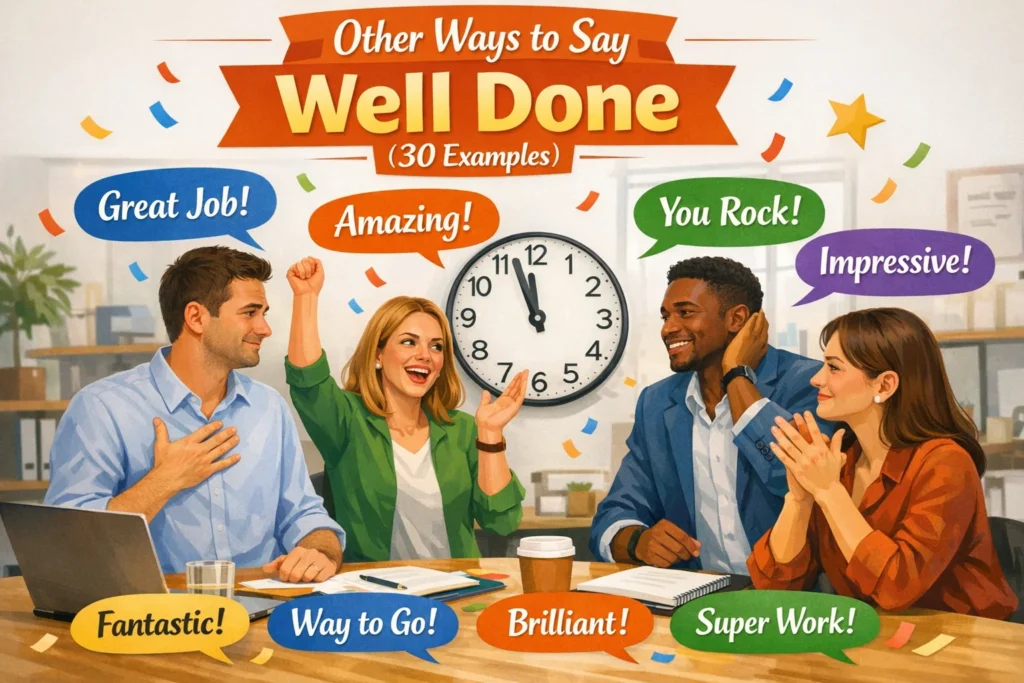
If you want other ways to say well done, try: Great job, Excellent work, Nicely done, Outstanding performance, Keep it up.
These alternatives help you sound more expressive, professional, and encouraging in English.
The phrase “well done” is commonly used to praise someone for completing a task successfully. It is simple, polite, and widely understood across both personal and professional contexts.
However, relying on the same phrase repeatedly can limit your expression. Learning alternatives to other ways to say well done allows you to sound more natural, engaging, and precise.
If you want to express excitement in English or use better professional reaction phrases, expanding your vocabulary is essential.
“The way you praise others reflects your communication skills.”
Quick Categories Section
Formal Alternatives to “other ways to say well done”
- Excellent work
- Outstanding performance
- Commendable effort
- Remarkable achievement
Pro Tip: Use these in reports, presentations, or formal recognition.
Casual Alternatives
- Great job
- Nice one
- Good going
- Way to go
Pro Tip: Perfect for everyday conversations and friendly praise.
Professional Alternatives
- Impressive work
- Strong performance
- Well executed
- Great contribution
Pro Tip: Focus on clarity and impact in workplace communication.
Informal Expressions
- You nailed it
- That was awesome
- You smashed it
- You crushed it
Pro Tip: Use these in relaxed environments with friends or teammates.
“Specific praise sounds more genuine than generic compliments.”
Common Mistakes Section
- Using “well done” too often
Example: Well done well done again well done always ❌ - Using informal phrases in formal settings
Example: You crushed it in the meeting ❌ - Giving vague praise
Example: Good job (without context) ❌ - Over-exaggerating praise
Example: This is the best thing ever created ❌ - Wrong tone in professional emails
Example: Awesome work dude ❌
What Does “other ways to say well done” Mean?
It refers to different expressions used to praise, congratulate, or appreciate someone’s effort or achievement.
Grammar Note:
“Well done” is a fixed phrase used as an exclamation.
Example:
Well done on completing the project.
When to Use “other ways to say well done”
- Praising achievements
- Encouraging someone
- Recognizing effort
- Workplace feedback
Spoken vs Written:
Used in both
Formal vs Informal:
Depends on the alternative used
Is It Professional or Polite to Say “well done”?
Polite? ✔️ Yes
Professional? ✔️ Yes (but basic)
Business Example:
Well done on successfully delivering the presentation. ✔️
Pros and Cons of Using “well done”
Pros
- Simple and natural
- Universally understood
- Positive tone
- Easy to use
Cons
- Overused
- Lacks specificity
- Less impactful
- Not very expressive
“Great communicators choose praise that fits the moment.”
Other Ways to Say “well done” With Examples
These alternatives will help you sound more fluent, confident, and natural in different situations.
Use them based on tone, context, and audience to express excitement in English.
1. Phrase: Great job
Meaning: Praise for good work
Explanation: Common and versatile expression
Example Sentence: Great job on finishing the report
Best Use: general praise
Worst Use: very formal
Tone: positive, friendly
Context Variability: casual / professional
2. Phrase: Excellent work
Meaning: High-quality performance
Explanation: Stronger and more formal praise
Example Sentence: Excellent work on the presentation
Best Use: workplace
Worst Use: jokes
Tone: professional, strong
Context Variability: professional
3. Phrase: Nicely done
Meaning: Skillful completion
Explanation: Slightly softer than “well done”
Example Sentence: Nicely done, that was smooth
Best Use: casual
Worst Use: formal reports
Tone: warm, friendly
Context Variability: casual
4. Phrase: Outstanding performance
Meaning: Exceptional work
Explanation: Highlights excellence
Example Sentence: That was an outstanding performance
Best Use: formal praise
Worst Use: casual chat
Tone: formal, strong
Context Variability: professional
5. Phrase: Keep it up
Meaning: Continue doing well
Explanation: Encouragement for future effort
Example Sentence: Keep it up, you’re doing great
Best Use: motivation
Worst Use: formal evaluation
Tone: encouraging
Context Variability: casual
6. Phrase: Impressive work
Meaning: Work that stands out
Explanation: Shows admiration
Example Sentence: Impressive work on this project
Best Use: professional
Worst Use: jokes
Tone: respectful
Context Variability: professional
7. Phrase: You nailed it
Meaning: Did something perfectly
Explanation: Informal and expressive
Example Sentence: You nailed that presentation
Best Use: casual
Worst Use: formal
Tone: energetic
Context Variability: informal
8. Phrase: Fantastic job
Meaning: Very good performance
Explanation: Strong positive praise
Example Sentence: Fantastic job on the design
Best Use: general
Worst Use: formal writing
Tone: enthusiastic
Context Variability: casual
9. Phrase: Brilliant work
Meaning: Very clever or skillful
Explanation: Common in British English
Example Sentence: Brilliant work on solving that problem
Best Use: semi-formal
Worst Use: overly formal
Tone: positive
Context Variability: casual / professional
10. Phrase: Well executed
Meaning: Done with precision
Explanation: Focuses on process quality
Example Sentence: That strategy was well executed
Best Use: workplace
Worst Use: casual
Tone: professional
Context Variability: professional
11. Phrase: You crushed it
Meaning: You performed extremely well
Explanation: Strong, energetic praise
Example Sentence: You crushed it in that presentation
Best Use: casual praise
Worst Use: formal meetings
Tone: energetic, informal
Context Variability: casual / spoken
12. Phrase: You smashed it
Meaning: You did exceptionally well
Explanation: Similar to “crushed it,” very expressive
Example Sentence: You smashed it on stage today
Best Use: friends, teams
Worst Use: formal emails
Tone: lively, informal
Context Variability: casual
13. Phrase: Great effort
Meaning: Appreciation for trying hard
Explanation: Focuses on effort, not just results
Example Sentence: Great effort on completing that task
Best Use: encouragement
Worst Use: high-level praise
Tone: supportive, neutral
Context Variability: casual / professional
14. Phrase: Superb job
Meaning: Excellent performance
Explanation: Stronger than “great job”
Example Sentence: Superb job on the final report
Best Use: workplace
Worst Use: casual jokes
Tone: positive, strong
Context Variability: professional
15. Phrase: Remarkable work
Meaning: Work that stands out
Explanation: Highlights uniqueness and quality
Example Sentence: Remarkable work on this project
Best Use: formal praise
Worst Use: casual talk
Tone: formal, appreciative
Context Variability: professional
16. Phrase: That was awesome
Meaning: Very impressive
Explanation: Informal and enthusiastic praise
Example Sentence: That was awesome, well done
Best Use: friends
Worst Use: formal situations
Tone: excited, casual
Context Variability: informal
17. Phrase: Top-notch work
Meaning: High-quality work
Explanation: Emphasizes excellence
Example Sentence: This is top-notch work
Best Use: semi-formal
Worst Use: very casual jokes
Tone: confident, positive
Context Variability: casual / professional
18. Phrase: Exceptional job
Meaning: Outstanding performance
Explanation: Strong formal praise
Example Sentence: You did an exceptional job
Best Use: professional
Worst Use: casual slang
Tone: formal, strong
Context Variability: professional
19. Phrase: Hats off to you
Meaning: Respect and admiration
Explanation: Classic expression of praise
Example Sentence: Hats off to you for your effort
Best Use: semi-formal
Worst Use: strict business writing
Tone: respectful, warm
Context Variability: casual / semi-formal
20. Phrase: You did a fantastic job
Meaning: Very good performance
Explanation: Emphasizes enthusiasm
Example Sentence: You did a fantastic job on this
Best Use: general praise
Worst Use: formal reports
Tone: enthusiastic
Context Variability: casual / professional
21. Phrase: Way to go
Meaning: Encouragement and praise
Explanation: Common motivational phrase
Example Sentence: Way to go, keep it up
Best Use: encouragement
Worst Use: formal writing
Tone: cheerful, supportive
Context Variability: casual
22. Phrase: Solid work
Meaning: Reliable and good performance
Explanation: Suggests consistency
Example Sentence: Solid work on the assignment
Best Use: workplace
Worst Use: high praise situations
Tone: neutral, professional
Context Variability: casual / professional
23. Phrase: First-class job
Meaning: High-quality work
Explanation: Emphasizes top-level performance
Example Sentence: That was a first-class job
Best Use: formal praise
Worst Use: casual slang
Tone: formal, positive
Context Variability: professional
24. Phrase: You did great
Meaning: Simple praise
Explanation: Slightly more casual than “great job”
Example Sentence: You did great today
Best Use: general
Worst Use: formal reports
Tone: friendly
Context Variability: casual
25. Phrase: Incredible work
Meaning: Very impressive work
Explanation: Strong emotional praise
Example Sentence: Incredible work on this design
Best Use: strong praise
Worst Use: minor tasks
Tone: enthusiastic
Context Variability: casual / professional
26. Phrase: That was impressive
Meaning: Work that stands out
Explanation: Focuses on impact
Example Sentence: That was impressive, well done
Best Use: general
Worst Use: formal documents
Tone: positive
Context Variability: casual / professional
27. Phrase: You handled it perfectly
Meaning: Managed something very well
Explanation: Focuses on execution
Example Sentence: You handled that situation perfectly
Best Use: professional
Worst Use: casual jokes
Tone: respectful, precise
Context Variability: professional
28. Phrase: You’ve done a great job
Meaning: Strong positive feedback
Explanation: Slightly more formal structure
Example Sentence: You’ve done a great job on this project
Best Use: workplace
Worst Use: informal slang
Tone: professional, warm
Context Variability: professional
29. Phrase: Excellent execution
Meaning: Task completed perfectly
Explanation: Focus on how something was done
Example Sentence: That was excellent execution
Best Use: business
Worst Use: casual talk
Tone: formal, precise
Context Variability: professional
30. Phrase: Proud of your work
Meaning: Appreciation and emotional support
Explanation: Shows deeper recognition
Example Sentence: I’m proud of your work on this
Best Use: mentoring
Worst Use: strict formal
Tone: warm, supportive
Context Variability: casual / semi-formal
“The right praise motivates people and builds stronger connections.”
Mini Quiz / Self-Check
1. Which phrase is most professional?
A. You nailed it
B. Excellent work ✔️
C. You crushed it
2. Which is most informal?
A. Outstanding performance
B. You smashed it ✔️
C. Well executed
3. Which works in both contexts?
A. Great job ✔️
B. You nailed it
C. Top-notch
Comparison Table: Top Alternatives
| Phrase | Tone | Best Use |
|---|---|---|
| Great job | Friendly | General |
| Excellent work | Professional | Workplace |
| Impressive work | Respectful | Business |
| Well executed | Formal | Reports |
| Nicely done | Warm | Casual |
| Outstanding performance | Formal | Recognition |
| You nailed it | Informal | Friends |
| Fantastic job | Enthusiastic | Daily use |
| Brilliant work | Positive | Mixed |
| Keep it up | Encouraging | Motivation |
FAQs
1. What are the best other ways to say well done?
Try Great job, Excellent work, or You nailed it depending on context.
2. Is “well done” professional?
Yes, but it is basic and less impactful than other phrases.
3. What is a formal alternative?
Outstanding performance or Excellent work.
4. Can I use informal praise at work?
Only in relaxed environments; otherwise use professional reaction phrases.
5. Why use alternatives?
They improve fluency and help you express excitement in English more effectively.
Conclusion
Learning other ways to say well done helps you communicate praise more effectively and naturally. It allows you to match your tone with the situation, whether formal, casual, or professional.
Practice these phrases daily and focus on choosing the right expression for each context. This will make your English more fluent, confident, and impactful.
CTA: Which phrase will you start using today? Try one in your next conversation.