
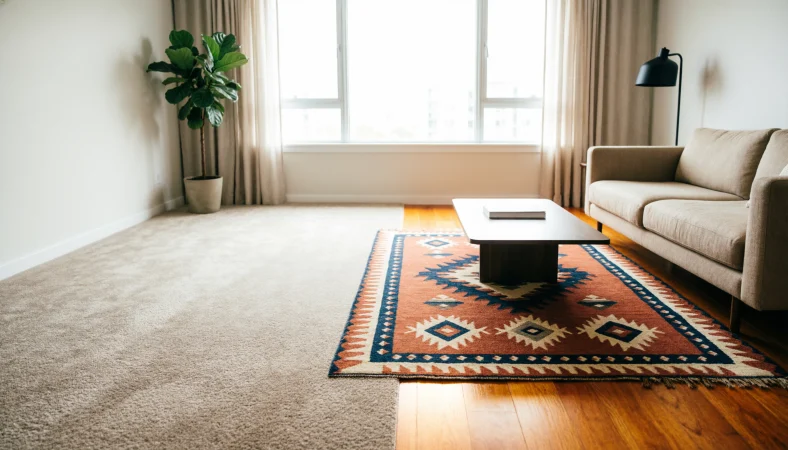
Rug vs Carpet refers to the difference between two types of textile floor coverings. A rug is a movable piece of fabric that covers part of a floor, while a carpet usually refers to a fixed or wall to wall floor covering. Understanding the distinction helps avoid confusion when discussing interior design, buying home furnishings, or writing accurately about flooring.
Understanding the Rug vs Carpet Confusion
The exact search query rug vs carpet is surprisingly common because many people use the terms interchangeably. In everyday speech both refer to soft textile floor coverings, yet they are not the same.
A rug is typically a smaller movable floor covering that does not extend across an entire room. A carpet generally refers to a larger floor covering that is installed or fitted across most or all of a floor surface.
This confusion leads to real mistakes. Home buyers may order the wrong product. Designers may misunderstand specifications. Writers and students may also misuse the terms in articles or academic work.
Understanding the difference ensures clearer communication in interior design, retail, architecture, and everyday language.
Rug vs Carpet: What’s the Difference?
At the core, the difference comes down to size, installation, and function.
| Feature | Rug | Carpet |
|---|---|---|
| Part of speech | Noun | Noun |
| Coverage | Partial floor coverage | Usually full room coverage |
| Installation | Portable and movable | Installed or wall to wall |
| Size | Smaller decorative piece | Larger continuous surface |
| Cleaning | Can be lifted and washed or shaken | Requires vacuuming or professional cleaning |
| Common use | Decoration and zoning spaces | Comfort and insulation across rooms |
Mini Recap
A rug covers a portion of the floor and can be moved easily.
A carpet usually covers an entire floor area and is installed in place.
Rugs add decoration and flexibility while carpets provide full room coverage and insulation.
Both serve comfort and aesthetic purposes but are used differently.
Rug vs Carpet: Is It a Grammar, Vocabulary, or Usage Issue?
The difference between rug vs carpet is primarily a vocabulary and usage distinction rather than a grammar rule.
Are the Terms Interchangeable?
In casual conversation people often use them interchangeably. However, professionals in interior design, architecture, and retail use the terms precisely.
Using the wrong word may not cause grammatical errors, but it can create misunderstanding about the type of flooring being discussed.
Formal vs Informal Usage
In formal contexts such as design documentation, product listings, and architectural plans, the distinction matters.
For example:
A catalog describing a Persian rug is referring to a decorative piece placed on top of flooring.
A specification for carpet installation means the flooring will be fixed across the room.
Academic vs Casual Usage
In academic writing about architecture or interior design, the difference must be accurate. In casual speech someone might say carpet when they mean rug without causing major confusion.
Understanding this vocabulary difference improves clarity in both professional and everyday communication.
What Is a Rug?
A rug is a movable textile floor covering designed to cover a specific area of a floor rather than the entire room.
Rugs are often used to create visual zones inside a space. For example, a living room rug might sit beneath a coffee table and sofa to anchor the seating area.
Workplace Example
In an office lobby a designer may place a large decorative rug beneath the reception desk to create a welcoming focal point without permanently altering the flooring.
Academic Example
Interior design students often study historical rug styles such as Persian or Turkish rugs when learning about textile traditions and decorative patterns.
Technology Example
In virtual interior design software users often drag and drop rugs onto digital room layouts to test color combinations and spatial balance.
Usage Recap
A rug is portable.
It covers part of a floor rather than the entire space.
It is often decorative and easy to reposition.
What Is a Carpet?
A carpet is a textile floor covering that usually extends across most or all of a room and is commonly installed in place.
Carpets are designed for comfort, warmth, and acoustic insulation. They are often attached to the floor using adhesive, tack strips, or padding.
Workplace Example
Corporate offices often install carpet flooring across entire floors to reduce noise and create a consistent professional appearance.
Academic Example
Architecture textbooks frequently discuss carpet as a flooring material alongside tile, hardwood, and laminate surfaces.
Technology Example
Real estate visualization tools allow property developers to preview rooms with installed carpet flooring to demonstrate warmth and comfort in marketing images.
Usage Recap
A carpet covers a large area or entire room.
It is often installed rather than simply placed.
It focuses on comfort, insulation, and continuous flooring.
Rug vs Carpet: Key Design and Functional Differences
Although both rugs and carpets are floor coverings, they serve different roles in interior spaces.
Mobility
Rugs can be moved or replaced easily. Carpets are usually permanent installations.
Room Coverage
Rugs define specific zones such as dining areas or reading corners. Carpets cover entire rooms for consistent flooring.
Decorative Impact
Rugs often feature intricate patterns or statement designs. Carpets are usually more uniform.
Maintenance
Rugs can be cleaned individually. Carpets require vacuuming and sometimes professional cleaning across large surfaces.
Understanding these distinctions helps homeowners choose the right option for comfort, design, and practicality.
When You Should NOT Use Rug or Carpet
Misusing these terms can cause confusion in design discussions or product purchases. Here are common situations where using the wrong term leads to mistakes.
- Calling a small decorative floor piece carpet when it clearly covers only a small area.
- Describing installed wall to wall flooring as a rug.
- Using rug when referring to office wide flooring installation.
- Using carpet when discussing portable decorative floor textiles.
- Confusing outdoor patio rugs with indoor carpeting.
- Labeling hallway runners as carpet instead of rugs.
- Using rug when discussing large hotel ballroom carpeting.
- Describing layered decorative rugs as carpet flooring.
Choosing the right term improves clarity in design planning and product descriptions.
Common Mistakes and Correct Usage
| Correct Sentence | Incorrect Sentence | Explanation |
|---|---|---|
| We placed a colorful rug under the coffee table. | We installed a colorful carpet under the coffee table. | Rugs are movable decorative pieces. |
| The hotel replaced the carpet in all guest rooms. | The hotel replaced the rugs in all guest rooms. | Wall to wall flooring is carpet. |
| She bought a Persian rug for the living room. | She bought a Persian carpet for the living room table area. | Rugs typically cover partial spaces. |
| The office installed new carpet flooring. | The office installed new rugs across the entire floor. | Installed flooring is carpet. |
Decision Rule Box
If you mean a movable decorative floor covering, use rug.
If you mean installed wall to wall flooring that covers most of a room, use carpet.
Rug vs Carpet in Modern Technology and AI Tools
Digital design platforms and artificial intelligence based interior planning tools increasingly distinguish between rugs and carpets.
Room planning applications categorize rugs as movable decor objects. Carpets are categorized as flooring materials that define the entire room surface.
AI based interior visualization tools also use this distinction to generate realistic room designs. Selecting rug produces a layered decorative element. Selecting carpet changes the base floor texture.
As digital design systems grow more advanced, correct terminology becomes even more important.
Word Origins and Etymology
The word rug entered English in the late sixteenth century and originally referred to coarse wool coverings or blankets.
The word carpet comes from the Old French term carpite, meaning thick decorative cloth. Early carpets were used as table coverings before becoming floor coverings.
Over time carpet came to refer specifically to large textile floor installations, while rug remained associated with smaller movable coverings.
Expert Insight
Interior designer Sarah Richardson once noted:
“Rugs shape the personality of a room, while carpet shapes the comfort of the entire floor.”
This observation captures the difference perfectly. Rugs provide style and focal points, while carpets provide continuous comfort.
Case Studies: Real World Examples
Case Study 1: Living Room Design Transformation
A homeowner in Toronto redesigned a living room using a large patterned rug placed over hardwood flooring.
Results:
The rug defined the seating area.
The room felt visually organized.
Furniture placement became clearer.
The rug acted as a design anchor without replacing the existing flooring.
Case Study 2: Office Renovation Using Carpet
A technology company renovated its workspace with full room carpet installation.
Results:
Noise levels dropped by nearly thirty percent.
Employee comfort improved during long work hours.
The office gained a cohesive visual style.
In this case carpet provided functional benefits that rugs alone could not deliver.
Error Prevention Checklist
Always use rug when:
A movable decorative floor covering is being described
The floor piece covers only part of a room
The item can be rolled or relocated
Never use rug when:
The flooring is permanently installed
The entire room is covered
The material is attached to the floor
Always use carpet when:
The floor covering spans most or all of the room
The material is installed or fixed
You are discussing flooring in architecture or construction
Related Home Design Confusions You Should Master
Understanding rug vs carpet helps clarify several other interior design and vocabulary distinctions.
Area rug vs runner
Carpet vs flooring
Rug pile vs carpet pile
Wool rug vs synthetic rug
Handwoven rug vs machine made rug
Carpet padding vs rug pad
Shag rug vs plush carpet
Indoor rug vs outdoor rug
Wall to wall carpet vs modular carpet tiles
Learning these distinctions strengthens both design knowledge and vocabulary accuracy.
FAQs
What is the main difference between rug vs carpet?
A rug is a movable floor covering that covers part of a room. A carpet is usually installed and covers most or all of the floor area.
Can a rug be considered a carpet?
In casual speech some people use carpet as a general term, but technically a rug refers to a smaller movable covering while carpet usually refers to installed flooring.
Why do designers distinguish rug vs carpet?
Interior designers use precise terms because rugs affect decoration and layout while carpets affect flooring structure, comfort, and insulation.
Is an area rug different from a carpet?
Yes. An area rug sits on top of existing flooring and covers a limited space. Carpet usually replaces the visible floor surface.
Are rugs easier to clean than carpets?
Generally yes. Rugs can be lifted, shaken, or washed depending on the material. Carpets require vacuuming and sometimes professional cleaning.
Can you place a rug on top of carpet?
Yes. Designers sometimes layer rugs on top of carpet to add texture, color, or visual focus in a room.
Do rugs last longer than carpets?
Longevity depends on material and usage. High quality rugs can last decades if maintained properly, while carpets may wear faster in high traffic areas.
Which is better for sound insulation?
Carpet typically provides better sound absorption because it covers a larger continuous surface area.
Are rugs cheaper than carpets?
Rugs can be cheaper because they are smaller, though handmade or luxury rugs may cost more than standard carpeting.
Conclusion
The difference between rug vs carpet comes down to coverage, installation, and function. Rugs are movable decorative floor pieces that cover part of a room, while carpets are usually installed and provide continuous flooring across an entire space.
Using the correct term improves clarity in design discussions, shopping decisions, and professional communication. Once you understand the distinction, choosing the right floor covering becomes much easier.