
Last Updated on June 19, 2026
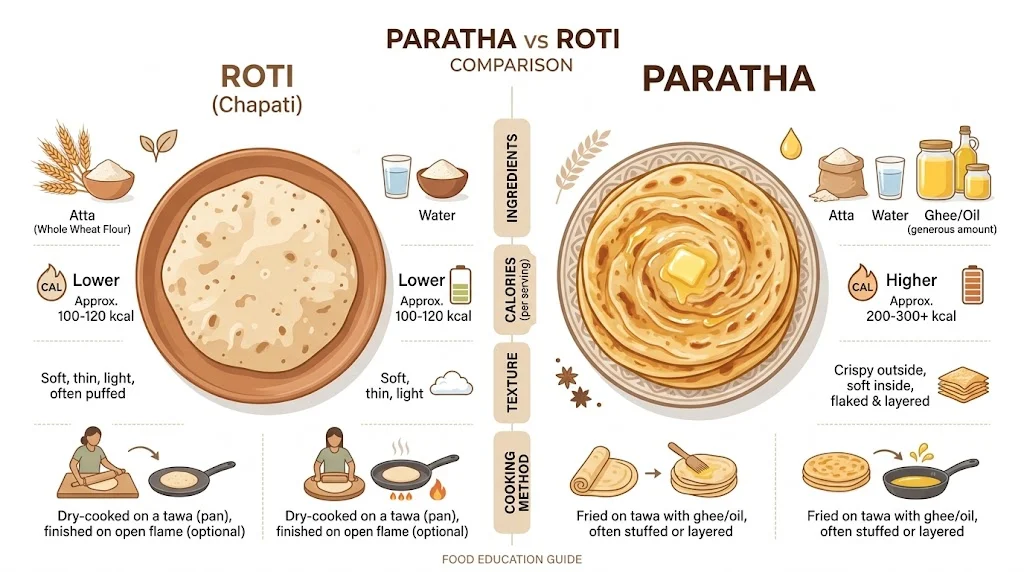
Paratha vs roti (roti vs paratha) is a comparison between two popular South Asian flatbreads made from wheat flour. Roti is simple, dry, and low in fat, while paratha is layered, flaky, and usually cooked with oil or ghee. The main difference lies in texture, ingredients, and cooking method.
Paratha vs roti is one of the most common food comparisons in South Asian cuisine. Both are everyday foods in countries like Pakistan, India, and Bangladesh. Yet many people still confuse them or use the names interchangeably.
This confusion is natural. Both are made from wheat flour. Both are eaten with curry, vegetables or yogurt. But the truth is simple. They are not the same.
Roti is light, soft, and usually made without oil. Paratha is richer, layered, and cooked with oil or ghee. This small difference changes taste, texture, nutrition, and even how they are eaten.
Understanding paratha vs roti is important for health, diet planning, and cooking choices. Some people prefer roti for weight control. Others enjoy paratha for its flavor and energy.
In this guide, we will explore everything about paratha vs roti in a simple way. You will learn definitions, differences, nutrition, cooking methods, and real-life uses. You will also see common mistakes, practice exercises, and FAQs to help you fully understand the topic.
Quick Answer Overview
Paratha vs roti can be summarized in one line.
Roti is a plain wheat flatbread cooked without oil, while paratha is a layered or stuffed flatbread cooked with oil or ghee for extra flavor and richness.
What is Roti
Roti is a simple flatbread made from whole wheat flour and water. It is a staple food in South Asian households.
Key Features of Roti
- Made with whole wheat flour (atta)
- Cooked on a dry pan (tawa)
- No oil or very little oil used
- Soft, light texture
- Eaten fresh and warm
Roti is also known as chapati in many regions. It is considered a healthy everyday food because it is low in fat and easy to digest.
How Roti is Made
- Wheat flour is mixed with water
- Dough is kneaded until soft
- Small balls are rolled into flat circles
- Cooked on hot tawa
- Flipped until puffed and cooked evenly
What is Paratha
Paratha is a richer version of flatbread made from wheat flour but cooked with oil or ghee.
Key Features of Paratha
- Made from wheat flour dough
- Layered or stuffed
- Cooked with oil or ghee
- Crispy and flaky texture
- More filling and calorie-dense
Paratha can be plain, layered, or stuffed with vegetables, potatoes, or meat.
How Paratha is Made
- Dough is prepared like roti
- Rolled and layered with oil or ghee
- Folded multiple times for flakes
- Rolled again into a disc
- Fried on tawa with oil until golden
Paratha vs Roti Quick Comparison Table
| Feature | Roti | Paratha |
| Ingredients | Wheat flour, water | Wheat flour, water, oil/ghee |
| Cooking method | Dry roasting | Shallow frying |
| Texture | Soft, light | Crispy, flaky |
| Calories | Low | Higher |
| Taste | Mild | Rich and savory |
| Types | Plain roti | Plain, stuffed, layered |
| Health impact | Diet-friendly | Energy-rich |
Advantages and Disadvantages of Paratha vs Roti
Advantages of Roti
- Low in calories
- Easy to digest
- Suitable for daily meals
- Helps in weight control
- Simple ingredients
Disadvantages of Roti
- Less flavorful
- Not very filling alone
- May feel dry without curry
Advantages of Paratha
- Rich taste
- Very filling
- Can include stuffing
- Great for breakfast or travel meals
- High energy food
Disadvantages of Paratha
- High in calories
- Contains more fat
- Not ideal for strict diets
- Can feel heavy if eaten in excess
Nutritional Comparison of Paratha vs Roti
Nutrition varies based on size and ingredients, but here is a general comparison.
Roti Nutrition (1 medium)
- Calories: 70–100
- Protein: 3 g
- Fat: 1 g or less
- Carbohydrates: 15–20 g
Paratha Nutrition (1 medium plain)
- Calories: 180–300
- Protein: 4–6 g
- Fat: 8–15 g
- Carbohydrates: 25–35 g
Paratha vs roti clearly shows that paratha provides more energy but also more fat.
Real-World Examples of Paratha vs Roti Usage
Breakfast
- Paratha: Often eaten with yogurt, pickles, or tea
- Roti: Rarely used for breakfast unless leftover
Lunch
- Roti: Served with curry, lentils, vegetables
- Paratha: Sometimes used for special lunch meals
Travel Food
- Paratha: Popular because it stays soft longer
- Roti: Less preferred for travel
Restaurant Menus
- Roti: Budget-friendly option
- Paratha: Premium and variety-based option
Regional and Global Usage of Paratha vs Roti
Pakistan
- Roti is daily staple
- Paratha is breakfast favorite
India
- Both are widely used
- Paratha is more diverse in stuffing types
Bangladesh
- Roti is common in households
- Paratha used during special meals
Middle East Influence
Flatbreads similar to roti exist, but paratha-style layered breads are less common.
Global Popularity
South Asian restaurants worldwide serve both, but paratha is often more popular among non-South Asian customers due to its rich taste.
Common Mistakes in Paratha vs Roti Preparation
Mistakes in Roti
- Hard dough makes roti stiff
- Overcooking leads to dryness
- Uneven rolling causes puffing issues
Mistakes in Paratha
- Too much oil makes it greasy
- Poor layering reduces flakiness
- Thick dough makes it raw inside
Fixes
- Use soft dough for both
- Control heat properly
- Roll evenly
Exercises with Answers: Paratha vs Roti Understanding
Exercise 1
What is the main difference between paratha and roti?
Answer: Paratha uses oil or ghee and has layers, while roti is plain and dry.
Exercise 2
Which is healthier for daily consumption?
Answer: Roti is healthier due to lower fat and calories.
Exercise 3
Which is more filling?
Answer: Paratha is more filling because it has higher fat and calories.
Exercise 4
Name one stuffed paratha example.
Answer: Aloo paratha (potato-stuffed paratha)
Exercise 5
Why is paratha popular for breakfast?
Answer: It provides more energy and keeps you full longer.
Related Concepts or Comparisons
Paratha vs Naan
Naan is made with yeast and cooked in a tandoor, while paratha is pan-fried.
Roti vs Chapati
They are almost the same, with minor regional differences.
Paratha vs Puri
Puri is deep-fried, making it more oily than paratha.
FAQs
What is the main difference between paratha vs roti?
Paratha is cooked with oil or ghee, while roti is dry-cooked and lighter.
Is paratha healthier than roti?
No, roti is generally healthier due to lower fat content.
Can I eat paratha daily?
Yes, but in moderation, especially if you are managing weight.
Why is roti more common than paratha?
Because it is quicker, cheaper, and healthier for daily meals.
Which is better for weight loss, paratha vs roti?
Roti is better for weight loss due to fewer calories.
What is stuffed paratha?
It is a paratha filled with ingredients like potatoes, paneer, or vegetables.
Does paratha contain gluten?
Yes, both paratha and roti contain gluten because they are made from wheat.
Can roti be made soft like paratha?
Roti can be soft, but it will never be flaky like paratha due to lack of fat layers.
Which tastes better, paratha vs roti?
Taste is subjective, but paratha is richer and more flavorful.
Is paratha good for kids?
Yes, it is good for energy but should be balanced with other foods.
Conclusion
Paratha vs roti is not just a cooking difference. It reflects lifestyle, nutrition, and cultural habits. Roti is simple, healthy, and ideal for daily meals. Paratha is rich, flavorful, and better suited for energy-heavy meals or breakfast.
If your goal is health and weight control, roti is the better choice. If your goal is taste and energy, paratha is ideal in moderation.
Both foods have their place in a balanced diet. The best approach is to combine them wisely based on your needs. Understanding paratha vs roti helps you make smarter food choices every day.