Last Updated on May 15, 2026
Looking for other ways to say thank you for your attention? Try:
Thank you for your time, I appreciate your consideration, Thank you for listening, Many thanks for your focus, I appreciate your attention to this matter.
These alternatives help you sound more professional, engaging, polite, and natural in presentations, emails, meetings, and formal communication.
The phrase “thank you for your attention” is commonly used at the end of presentations, speeches, emails, and professional discussions. It politely acknowledges that people listened, focused, or considered your message.
Although professional and respectful, it can sound repetitive or overly formal when used too often. Learning alternatives to “thank you for your attention” helps you communicate more naturally and confidently while improving your professional English skills.
Using varied expressions also helps you express appreciation in English more effectively depending on the tone, audience, and context.
“Professional communication becomes more memorable when your appreciation sounds natural instead of repetitive.”
Quick Categories
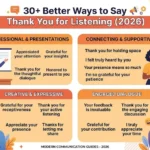
Formal alternatives to “thank you for your attention”
- I appreciate your consideration
- Thank you for your time and attention
- Your attention is greatly appreciated
- Thank you for your careful review
Pro Tip: Best for formal presentations, business proposals, and corporate communication.
Casual alternatives
- Thanks for listening
- Appreciate you taking the time
- Thanks for hearing me out
- Glad you listened
Pro Tip: Great for informal presentations, team discussions, or casual emails.
Professional alternatives
- Thank you for your time
- I appreciate your focus on this matter
- Thank you for reviewing this
- I value your attention to detail
Pro Tip: Perfect for workplace emails and client communication.
Presentation / Speech alternatives
- Thank you for being such a great audience
- I appreciate your engagement
- Thanks for your participation
- Thank you for staying attentive
Pro Tip: Use these to sound more dynamic during presentations or public speaking.
Common Mistakes
- Overusing the exact phrase
Example: Ending every email with “Thank you for your attention.” - Sounding robotic or stiff
Example: “Your attention is hereby appreciated.” - Using overly casual language professionally
Example: “Thanks for tuning in, guys!” in a formal presentation - Ignoring context
Example: Using speech-style phrases in legal emails - Making the message too long
Example: Writing multiple thank-you lines unnecessarily
What Does “Thank You for Your Attention” Mean?
The phrase means you appreciate someone for listening, focusing, reviewing, or considering your message carefully.
Grammar Tip
- “Attention” functions as a noun referring to focus or consideration.
- Common structure: Thank you for + noun phrase
Example Sentence
“Thank you for your attention during today’s presentation.”
When to Use “Thank You for Your Attention”
- At the end of presentations
- In professional emails
- During speeches or seminars
- After proposals or reports
- In workplace communication
Spoken vs Written
- Spoken: often used in speeches and presentations
- Written: common in formal emails and reports
Formal vs Informal
- Formal: “I appreciate your consideration.”
- Informal: “Thanks for listening.”
Is It Professional or Polite to Say “Thank You for Your Attention”?
Polite? ✔️ Yes
Professional? ✔️ Yes
However, it can sound overly formal or generic if repeated frequently.
Business Example
“Thank you for your attention to this important matter.”
Pros and Cons of Using “Thank You for Your Attention”
Pros
- Professional and respectful
- Widely accepted
- Clear and polite
- Suitable for presentations and emails
Cons
- Can feel repetitive
- Slightly formal in casual situations
- Sometimes lacks personality
- Overused in business communication
“A thoughtful closing line can leave a stronger impression than the entire presentation.”
Other Ways to Say “Thank You for Your Attention” (With Examples)
These alternatives will help you sound more fluent, polished, and engaging in professional or casual situations.
Use them according to tone, audience, and context.
1. Phrase: Thank you for your time
Meaning: Appreciation for someone’s time
Explanation: Professional and versatile
Example Sentence: “Thank you for your time during today’s meeting.”
Best Use: business communication
Worst Use: emotional speeches
Tone: professional, polite
Context Variability: both
2. Phrase: I appreciate your consideration
Meaning: Gratitude for thoughtful review
Explanation: Formal and polished
Example Sentence: “I appreciate your consideration of my proposal.”
Best Use: formal emails
Worst Use: casual chats
Tone: formal, respectful
Context Variability: professional
3. Phrase: Thank you for listening
Meaning: Appreciation for hearing someone out
Explanation: Simple and conversational
Example Sentence: “Thank you for listening to my concerns.”
Best Use: discussions, speeches
Worst Use: highly formal reports
Tone: warm, direct
Context Variability: both
4. Phrase: Many thanks for your attention
Meaning: Formal appreciation
Explanation: Slightly more elegant wording
Example Sentence: “Many thanks for your attention to this matter.”
Best Use: formal correspondence
Worst Use: casual texting
Tone: polished, formal
Context Variability: professional
5. Phrase: I appreciate your attention to this matter
Meaning: Gratitude for focus and review
Explanation: Common in professional emails
Example Sentence: “I appreciate your attention to this matter.”
Best Use: workplace communication
Worst Use: casual conversations
Tone: professional, respectful
Context Variability: professional
6. Phrase: Thank you for taking the time
Meaning: Appreciation for effort and time
Explanation: Friendly and professional
Example Sentence: “Thank you for taking the time to review this.”
Best Use: emails, meetings
Worst Use: speeches
Tone: warm, professional
Context Variability: both
7. Phrase: Thanks for hearing me out
Meaning: Appreciation for listening patiently
Explanation: Casual and natural
Example Sentence: “Thanks for hearing me out today.”
Best Use: informal discussions
Worst Use: formal presentations
Tone: casual, sincere
Context Variability: casual
8. Phrase: I value your attention
Meaning: Respect for someone’s focus
Explanation: Formal and concise
Example Sentence: “I value your attention and feedback.”
Best Use: professional contexts
Worst Use: casual chat
Tone: respectful, formal
Context Variability: professional
9. Phrase: Thank you for your focus
Meaning: Appreciation for concentration
Explanation: More modern wording
Example Sentence: “Thank you for your focus during the workshop.”
Best Use: training sessions
Worst Use: emotional conversations
Tone: modern, professional
Context Variability: both
10. Phrase: I appreciate your time and effort
Meaning: Gratitude for involvement
Explanation: Adds warmth and appreciation
Example Sentence: “I appreciate your time and effort reviewing this.”
Best Use: teamwork
Worst Use: speeches
Tone: appreciative, professional
Context Variability: professional
11. Phrase: Thank you for your careful review
Meaning: Appreciation for detailed attention
Explanation: Ideal for documents or proposals
Example Sentence: “Thank you for your careful review of the report.”
Best Use: reports, proposals
Worst Use: casual contexts
Tone: formal, professional
Context Variability: professional
12. Phrase: Thanks for your consideration
Meaning: Gratitude for thoughtful attention
Explanation: Common in applications and requests
Example Sentence: “Thanks for your consideration regarding my request.”
Best Use: emails
Worst Use: speeches
Tone: polite, professional
Context Variability: professional
13. Phrase: I appreciate your engagement
Meaning: Appreciation for active participation
Explanation: Great for presentations
Example Sentence: “I appreciate your engagement throughout the session.”
Best Use: seminars, webinars
Worst Use: casual texting
Tone: energetic, professional
Context Variability: professional
14. Phrase: Thank you for staying attentive
Meaning: Appreciation for continued focus
Explanation: Audience-focused wording
Example Sentence: “Thank you for staying attentive during the presentation.”
Best Use: public speaking
Worst Use: email closings
Tone: appreciative, formal
Context Variability: spoken
15. Phrase: I appreciate you listening
Meaning: Personal appreciation
Explanation: More conversational tone
Example Sentence: “I appreciate you listening to my ideas.”
Best Use: team discussions
Worst Use: formal proposals
Tone: warm, conversational
Context Variability: casual
16. Phrase: Thank you for your participation
Meaning: Gratitude for involvement
Explanation: Useful for group settings
Example Sentence: “Thank you for your participation in today’s workshop.”
Best Use: events, training
Worst Use: one-on-one emails
Tone: professional, appreciative
Context Variability: professional
17. Phrase: Your attention is greatly appreciated
Meaning: Strong formal gratitude
Explanation: Highly professional wording
Example Sentence: “Your attention is greatly appreciated.”
Best Use: official communication
Worst Use: casual conversation
Tone: formal, respectful
Context Variability: professional
18. Phrase: Thank you for your interest
Meaning: Appreciation for curiosity/engagement
Explanation: Often used in business communication
Example Sentence: “Thank you for your interest in our proposal.”
Best Use: sales, applications
Worst Use: emotional talks
Tone: professional
Context Variability: professional
19. Phrase: I appreciate your patience and attention
Meaning: Gratitude for focus and patience
Explanation: Good for lengthy discussions
Example Sentence: “I appreciate your patience and attention today.”
Best Use: meetings, presentations
Worst Use: casual chats
Tone: respectful, warm
Context Variability: professional
20. Phrase: Thank you for following along
Meaning: Appreciation for audience engagement
Explanation: Modern and conversational
Example Sentence: “Thank you for following along with the presentation.”
Best Use: workshops, tutorials
Worst Use: legal documents
Tone: friendly, engaging
Context Variability: both
21. Phrase: I’m grateful for your attention
Meaning: Warm appreciation
Explanation: More emotional tone
Example Sentence: “I’m grateful for your attention and support.”
Best Use: speeches
Worst Use: casual emails
Tone: sincere, formal
Context Variability: both
22. Phrase: Thank you for reviewing this
Meaning: Gratitude for checking materials
Explanation: Common in workplace communication
Example Sentence: “Thank you for reviewing this document.”
Best Use: emails, reports
Worst Use: public speeches
Tone: professional, concise
Context Variability: professional
23. Phrase: I value your feedback and attention
Meaning: Appreciation for engagement and opinions
Explanation: Encourages collaboration
Example Sentence: “I value your feedback and attention on this matter.”
Best Use: teamwork
Worst Use: casual texting
Tone: collaborative, professional
Context Variability: professional
24. Phrase: Thank you for being such a great audience
Meaning: Appreciation toward listeners
Explanation: Dynamic presentation closing
Example Sentence: “Thank you for being such a great audience today.”
Best Use: speeches, presentations
Worst Use: business emails
Tone: energetic, friendly
Context Variability: spoken
25. Phrase: I appreciate your willingness to listen
Meaning: Gratitude for openness
Explanation: More personal and thoughtful
Example Sentence: “I appreciate your willingness to listen.”
Best Use: discussions
Worst Use: formal reports
Tone: sincere, warm
Context Variability: both
26. Phrase: Thank you for your valuable time
Meaning: Respectful appreciation
Explanation: Emphasizes importance of audience’s time
Example Sentence: “Thank you for your valuable time today.”
Best Use: corporate meetings
Worst Use: casual chats
Tone: formal, respectful
Context Variability: professional
27. Phrase: I appreciate your thoughtful attention
Meaning: Gratitude for careful focus
Explanation: Slightly elegant wording
Example Sentence: “I appreciate your thoughtful attention to this issue.”
Best Use: formal emails
Worst Use: casual conversations
Tone: polished, respectful
Context Variability: professional
28. Phrase: Thanks for paying attention
Meaning: Direct appreciation
Explanation: Casual and straightforward
Example Sentence: “Thanks for paying attention during the training.”
Best Use: informal groups
Worst Use: executive presentations
Tone: casual, friendly
Context Variability: casual
29. Phrase: Thank you for your continued attention
Meaning: Ongoing appreciation
Explanation: Useful for long-term projects
Example Sentence: “Thank you for your continued attention to this project.”
Best Use: project communication
Worst Use: speeches
Tone: professional, appreciative
Context Variability: professional
30. Phrase: I appreciate your attentiveness
Meaning: Gratitude for focus and awareness
Explanation: Sophisticated alternative
Example Sentence: “I appreciate your attentiveness throughout the discussion.”
Best Use: formal speaking
Worst Use: casual texting
Tone: polished, elegant
Context Variability: professional
“The best professional closings sound appreciative without sounding repetitive.”
Mini Quiz / Self-Check
1. Which phrase is most formal?
A. Thanks for hearing me out
B. Your attention is greatly appreciated
C. Thanks for listening
Answer: B
2. Best for a presentation audience?
A. Thank you for being such a great audience
B. Thank you for reviewing this
C. I appreciate your consideration
Answer: A
3. Best for workplace email?
A. Thanks for paying attention
B. I appreciate your attention to this matter
C. Glad you listened
Answer: B
Comparison Table: Top Alternatives
| Phrase | Tone | Best Use |
| Thank you for your time | Professional | Meetings, emails |
| I appreciate your consideration | Formal | Proposals, requests |
| Thank you for listening | Warm | Speeches, discussions |
| I appreciate your attention to this matter | Professional | Workplace emails |
| Thank you for your careful review | Formal | Reports, documents |
| I appreciate your engagement | Energetic | Presentations |
| Thank you for your participation | Professional | Workshops, training |
| Thank you for being such a great audience | Friendly | Public speaking |
| Thank you for reviewing this | Concise | Business emails |
| I appreciate your attentiveness | Elegant | Formal presentations |
FAQs
1. What is the most professional alternative to “thank you for your attention”?
“I appreciate your consideration” or “Thank you for your time and attention.”
2. What can I say instead after a presentation?
Try “Thank you for being such a great audience.”
3. Is “thank you for your attention” outdated?
Not outdated, but it can sound repetitive if overused.
4. What’s a less formal alternative?
“Thanks for listening” or “Thanks for hearing me out.”
5. How can I sound more engaging in presentations?
Use audience-focused phrases like “I appreciate your engagement.”
Conclusion
Learning other ways to say thank you for your attention helps you communicate with more variety, professionalism, and personality. Different phrases allow you to match the tone of presentations, workplace communication, speeches, and casual discussions more naturally.
Practice these alternatives regularly to improve your English fluency and make your professional communication sound more polished and engaging. A thoughtful closing line can leave a lasting impression long after your message ends.