
Last Updated on May 23, 2026
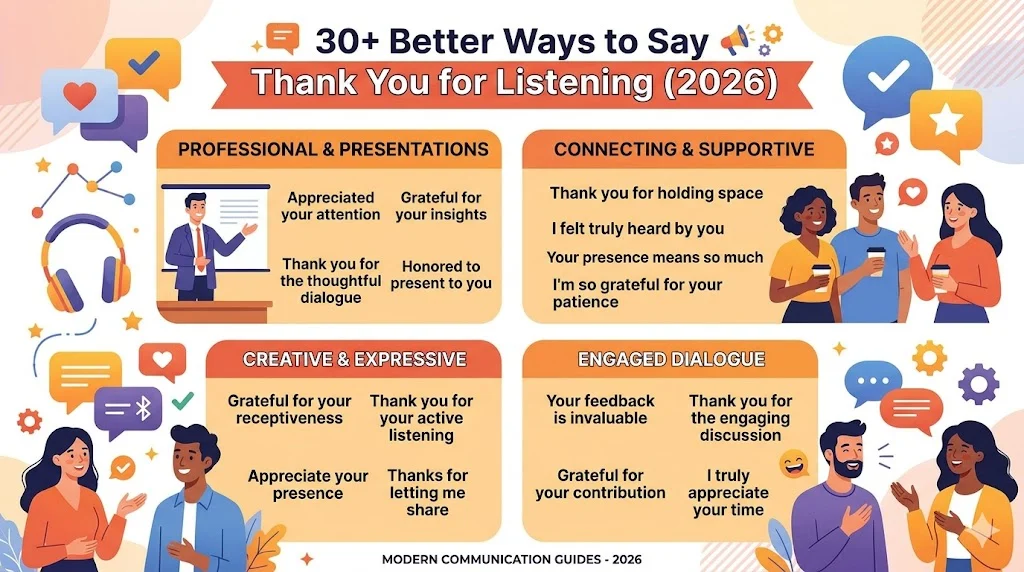
Looking for other ways to say thank you for listening? Try:
I appreciate your time, Thanks for hearing me out, I’m grateful you listened, Thank you for your attention, I appreciate you being here.
These alternatives help you sound more sincere, professional, thoughtful, or emotionally expressive depending on the situation.
The phrase “thank you for listening” is commonly used after conversations, presentations, emotional discussions, speeches, or meetings. It expresses gratitude toward someone for giving attention, understanding, or emotional support.
Although polite and widely accepted, repeating the same phrase can sound repetitive or generic. Learning alternatives to “thank you for listening” helps you communicate appreciation with more personality, emotional intelligence, and professionalism. It also improves your ability to express gratitude in English naturally in different social and workplace situations.
Whether you’re ending a presentation, thanking a friend, or appreciating someone during a difficult conversation, choosing the right wording can make your communication feel more genuine and memorable.
“People remember how appreciated and heard they felt after a conversation.”
Quick Categories
Formal alternatives to “thank you for listening”
- Thank you for your attention
- I appreciate your time
- Thank you for hearing my perspective
- Your attention is appreciated
Pro Tip: Use these in presentations, meetings, or professional emails.
Casual alternatives
- Thanks for hearing me out
- Appreciate you listening
- Thanks for being here
- Glad you listened
Pro Tip: Best for friends, coworkers, and relaxed conversations.
Professional alternatives
- Thank you for your time and attention
- I appreciate your thoughtful consideration
- Thank you for taking the time to listen
- I value your feedback
Pro Tip: Perfect for presentations, interviews, and workplace communication.
Emotional / Warm expressions
- I’m grateful you listened
- Thank you for understanding
- Your support means a lot
- Thanks for being there for me
Pro Tip: Ideal for emotional or supportive conversations.
Common Mistakes
- Using the phrase repeatedly
Example: Ending every presentation with the same wording - Being too casual in professional situations
Example: “Thanks for hanging out and listening!” in a business presentation - Sounding robotic
Example: “Your listening has been acknowledged.” - Ignoring emotional tone
Example: Giving a cold response after a heartfelt conversation - Overcomplicating the message
Example: Writing long formal paragraphs for simple appreciation
What Does “Thank You for Listening” Mean?
The phrase means you appreciate someone for giving you their attention, hearing your thoughts, or emotionally supporting you through listening.
Grammar Tip
- “Listening” functions as a gerund (verb + ing used as a noun).
- Common structure: Thank you for + gerund
Example Sentence
“Thank you for listening to my concerns today.”
When to Use “Thank You for Listening”
- After presentations or speeches
- During emotional conversations
- In meetings or interviews
- At the end of podcasts or videos
- When someone listens patiently or supportively
Spoken vs Written
- Spoken: often more emotional or conversational
- Written: can sound formal and polished
Formal vs Informal
- Formal: “Thank you for your attention.”
- Informal: “Thanks for hearing me out.”
Is It Professional or Polite to Say “Thank You for Listening”?
Polite? ✔️ Yes
Professional? ✔️ Yes
However, it may sound too simple or repetitive in presentations or formal communication.
Business Example
“Thank you for listening to my proposal today.”
Pros and Cons of Using “Thank You for Listening”
Pros
- Polite and respectful
- Easy to understand
- Universally accepted
- Works in many contexts
Cons
- Can sound generic
- Repetitive if overused
- Limited emotional variety
- Slightly basic in professional settings
“A thoughtful closing line can make your message more memorable and impactful.”
Other Ways to Say “Thank You for Listening” (With Examples)
These alternatives will help you sound more fluent, sincere, and emotionally aware in different situations.
Use them according to tone, audience, and context to express appreciation naturally.
1. Phrase: I appreciate your time
Meaning: Gratitude for attention and effort
Explanation: Professional and versatile
Example Sentence: “I appreciate your time and attention today.”
Best Use: meetings, presentations
Worst Use: emotional support talks
Tone: professional, respectful
Context Variability: professional
2. Phrase: Thanks for hearing me out
Meaning: Appreciation for patient listening
Explanation: Casual and conversational
Example Sentence: “Thanks for hearing me out about everything.”
Best Use: personal conversations
Worst Use: formal presentations
Tone: warm, casual
Context Variability: casual
3. Phrase: I’m grateful you listened
Meaning: Emotional appreciation
Explanation: More heartfelt than the original phrase
Example Sentence: “I’m grateful you listened when I needed support.”
Best Use: emotional conversations
Worst Use: formal meetings
Tone: sincere, emotional
Context Variability: personal
4. Phrase: Thank you for your attention
Meaning: Appreciation for focus and interest
Explanation: Common in speeches and presentations
Example Sentence: “Thank you for your attention this afternoon.”
Best Use: presentations
Worst Use: casual chats
Tone: formal, polished
Context Variability: professional
5. Phrase: I appreciate you being here
Meaning: Gratitude for presence and support
Explanation: Warm and inclusive
Example Sentence: “I appreciate you being here and listening.”
Best Use: emotional settings
Worst Use: highly formal emails
Tone: warm, appreciative
Context Variability: both
6. Phrase: Thank you for hearing my perspective
Meaning: Appreciation for openness
Explanation: Professional and thoughtful
Example Sentence: “Thank you for hearing my perspective on the issue.”
Best Use: workplace discussions
Worst Use: casual texting
Tone: respectful, professional
Context Variability: professional
7. Phrase: I value your attention
Meaning: Appreciation for engagement
Explanation: More formal and polished
Example Sentence: “I value your attention and feedback.”
Best Use: presentations
Worst Use: emotional conversations
Tone: formal, respectful
Context Variability: professional
8. Phrase: Thanks for being there for me
Meaning: Emotional gratitude
Explanation: Focuses on emotional support
Example Sentence: “Thanks for being there for me and listening.”
Best Use: close relationships
Worst Use: workplace presentations
Tone: heartfelt, personal
Context Variability: personal
9. Phrase: Thank you for taking the time to listen
Meaning: Gratitude for effort and patience
Explanation: Professional and sincere
Example Sentence: “Thank you for taking the time to listen to my concerns.”
Best Use: professional communication
Worst Use: quick casual chats
Tone: respectful, sincere
Context Variability: both
10. Phrase: I appreciate your understanding
Meaning: Gratitude for empathy
Explanation: Common in emotional or professional discussions
Example Sentence: “I appreciate your understanding and patience.”
Best Use: sensitive conversations
Worst Use: entertaining presentations
Tone: thoughtful, calm
Context Variability: both
11. Phrase: Thank you for your patience
Meaning: Appreciation for calm listening
Explanation: Often used after long explanations
Example Sentence: “Thank you for your patience while I explained everything.”
Best Use: support conversations
Worst Use: celebratory speeches
Tone: respectful, professional
Context Variability: both
12. Phrase: I’m thankful for your support
Meaning: Appreciation for emotional listening
Explanation: Combines gratitude and support
Example Sentence: “I’m thankful for your support during this difficult time.”
Best Use: emotional support
Worst Use: formal presentations
Tone: warm, emotional
Context Variability: personal
13. Phrase: Thank you for your thoughtful attention
Meaning: Appreciation for focused listening
Explanation: Elegant and formal
Example Sentence: “Thank you for your thoughtful attention today.”
Best Use: conferences, speeches
Worst Use: casual chats
Tone: polished, formal
Context Variability: professional
14. Phrase: I appreciate your willingness to listen
Meaning: Gratitude for openness
Explanation: Highlights emotional support
Example Sentence: “I appreciate your willingness to listen without judgment.”
Best Use: emotional discussions
Worst Use: short presentations
Tone: sincere, thoughtful
Context Variability: both
15. Phrase: Thanks for listening to me
Meaning: Simple appreciation
Explanation: Natural conversational wording
Example Sentence: “Thanks for listening to me vent.”
Best Use: friends/family
Worst Use: formal business settings
Tone: casual, warm
Context Variability: casual
16. Phrase: Your attention means a lot
Meaning: Appreciation for focus and care
Explanation: More emotional than standard phrase
Example Sentence: “Your attention means a lot to me.”
Best Use: emotional or supportive contexts
Worst Use: formal legal communication
Tone: heartfelt, appreciative
Context Variability: personal
17. Phrase: I value your feedback and attention
Meaning: Gratitude for engagement
Explanation: Great for workplace discussions
Example Sentence: “I value your feedback and attention during this presentation.”
Best Use: meetings, presentations
Worst Use: emotional support chats
Tone: professional, appreciative
Context Variability: professional
18. Phrase: Thank you for understanding me
Meaning: Appreciation for empathy
Explanation: Emotional and supportive
Example Sentence: “Thank you for understanding me during this situation.”
Best Use: personal conversations
Worst Use: formal conferences
Tone: emotional, warm
Context Variability: personal
19. Phrase: I appreciate your compassion
Meaning: Gratitude for empathetic listening
Explanation: More refined and emotional
Example Sentence: “I appreciate your compassion and support.”
Best Use: serious conversations
Worst Use: playful situations
Tone: sincere, elegant
Context Variability: both
20. Phrase: Thanks for giving me your attention
Meaning: Appreciation for focus
Explanation: Friendly and direct
Example Sentence: “Thanks for giving me your attention today.”
Best Use: conversations
Worst Use: highly formal presentations
Tone: friendly, appreciative
Context Variability: casual
21. Phrase: Your support means the world
Meaning: Deep emotional gratitude
Explanation: Very heartfelt expression
Example Sentence: “Your support means the world to me.”
Best Use: emotional support
Worst Use: business presentations
Tone: heartfelt, emotional
Context Variability: personal
22. Phrase: Thank you for your consideration
Meaning: Formal appreciation
Explanation: Common in professional communication
Example Sentence: “Thank you for your consideration and attention.”
Best Use: emails, interviews
Worst Use: emotional conversations
Tone: professional, formal
Context Variability: professional
23. Phrase: I appreciate your empathy
Meaning: Gratitude for emotional understanding
Explanation: More emotionally intelligent phrasing
Example Sentence: “I appreciate your empathy during this conversation.”
Best Use: emotional support
Worst Use: casual banter
Tone: thoughtful, warm
Context Variability: both
24. Phrase: Thank you for sticking with me
Meaning: Appreciation for patience
Explanation: Informal and supportive
Example Sentence: “Thank you for sticking with me through this.”
Best Use: personal struggles
Worst Use: corporate meetings
Tone: casual, emotional
Context Variability: personal
25. Phrase: I appreciate your thoughtful listening
Meaning: Gratitude for attentive listening
Explanation: More polished alternative
Example Sentence: “I appreciate your thoughtful listening today.”
Best Use: counseling or professional discussions
Worst Use: casual texting
Tone: respectful, sincere
Context Variability: professional
26. Phrase: Thank you for giving me a chance to speak
Meaning: Appreciation for opportunity
Explanation: Great for discussions and debates
Example Sentence: “Thank you for giving me a chance to speak openly.”
Best Use: group discussions
Worst Use: emotional comfort situations
Tone: respectful, professional
Context Variability: both
27. Phrase: Your understanding means a lot
Meaning: Emotional appreciation
Explanation: Warm and meaningful
Example Sentence: “Your understanding means a lot during this time.”
Best Use: personal conversations
Worst Use: presentations
Tone: heartfelt, calm
Context Variability: personal
28. Phrase: Thank you for your support and attention
Meaning: Combined gratitude
Explanation: Professional and versatile
Example Sentence: “Thank you for your support and attention throughout the project.”
Best Use: workplace communication
Worst Use: highly casual chats
Tone: respectful, appreciative
Context Variability: professional
29. Phrase: I truly appreciate you listening
Meaning: Sincere gratitude
Explanation: Emotional and genuine
Example Sentence: “I truly appreciate you listening without judgment.”
Best Use: emotional discussions
Worst Use: formal presentations
Tone: heartfelt, warm
Context Variability: both
30. Phrase: Thanks for listening and understanding
Meaning: Appreciation for empathy and attention
Explanation: Friendly and supportive
Example Sentence: “Thanks for listening and understanding my situation.”
Best Use: supportive conversations
Worst Use: academic presentations
Tone: warm, sincere
Context Variability: both
“The best listeners deserve appreciation that feels personal and sincere.”
Mini Quiz / Self-Check
1. Which phrase is most formal?
A. Thanks for hearing me out
B. Thank you for your attention
C. Thanks for sticking with me
Answer: B
2. Best option for emotional support?
A. I appreciate your time
B. Your support means the world
C. Thank you for your consideration
Answer: B
3. Best phrase for a business presentation?
A. Thank you for your thoughtful attention
B. Thanks for listening to me vent
C. Glad you listened
Answer: A
Comparison Table: Top Alternatives
| Phrase | Tone | Best Use |
| I appreciate your time | Professional | Meetings |
| Thanks for hearing me out | Casual | Personal conversations |
| Thank you for your attention | Formal | Presentations |
| I’m grateful you listened | Emotional | Supportive talks |
| Thank you for taking the time to listen | Respectful | Emails/discussions |
| I appreciate your understanding | Thoughtful | Sensitive conversations |
| Your support means the world | Heartfelt | Emotional support |
| Thank you for your consideration | Formal | Workplace communication |
| I appreciate your empathy | Warm | Emotional discussions |
| I truly appreciate you listening | Sincere | Personal conversations |
FAQs
1. What is the most professional alternative to “thank you for listening”?
“Thank you for your attention” is one of the best formal options.
2. What can I say casually instead?
Try “Thanks for hearing me out” or “Thanks for listening to me.”
3. What sounds more emotional and heartfelt?
“Your support means the world” or “I’m grateful you listened.”
4. Is “thank you for listening” appropriate in presentations?
Yes, but alternatives like “Thank you for your attention” sound more polished.
5. Why should I use alternatives?
They help your communication sound more natural, expressive, and less repetitive.
Conclusion
Learning other ways to say thank you for listening helps you sound more professional, sincere, and emotionally aware in English communication. Different phrases allow you to adapt your tone depending on the situation—whether formal, casual, supportive, or professional.
Practice these alternatives in conversations, presentations, emails, and personal discussions to make your gratitude sound more meaningful and memorable. A thoughtful expression of appreciation can leave a lasting positive impression.