Last Updated on May 15, 2026
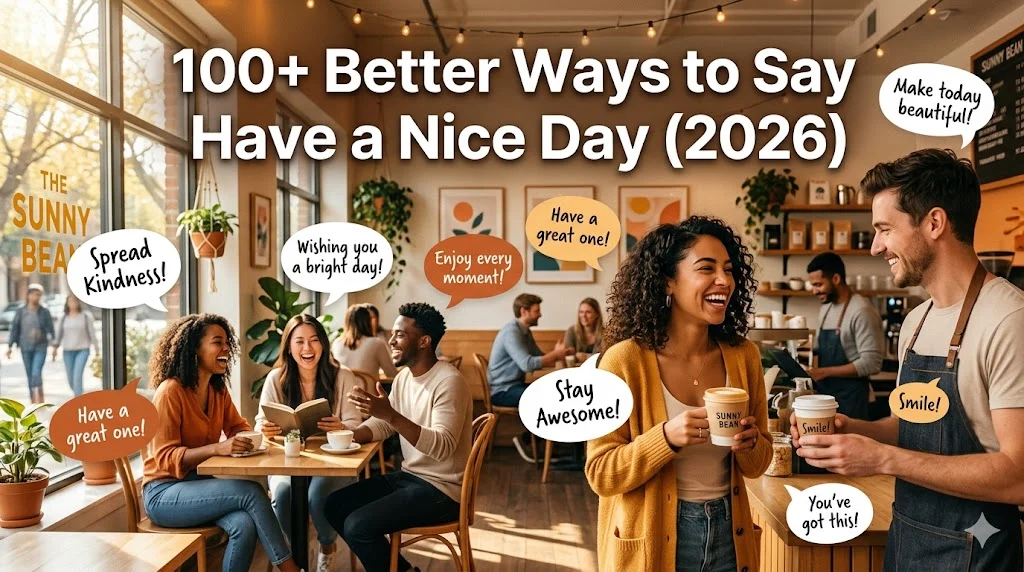
Looking for better ways to say have a nice day? Try:
Have a great day, Take care, Enjoy your day, Wishing you a wonderful day, Hope your day goes well.
These alternatives help you sound more natural, warm, professional, or friendly depending on the situation.
The phrase “have a nice day” is one of the most common polite expressions in English. People use it at the end of conversations, emails, customer interactions, and casual chats to wish someone well.
While it’s polite and universally understood, it can also sound generic or repetitive if used too often. Learning alternatives to “have a nice day” helps improve fluency and makes your communication feel more thoughtful and natural. It also helps you express positivity in English with better tone and personality.
Whether you’re speaking professionally, casually, or warmly, choosing the right phrase can make a stronger impression and create more engaging conversations.
“Simple closing phrases can make your English sound warmer, friendlier, and more polished.”
Quick Categories
Formal alternatives to “have a nice day”
- Wishing you a pleasant day
- Have a wonderful day ahead
- I hope your day goes smoothly
- Wishing you all the best today
Pro Tip: Best for professional emails and customer communication.
Casual alternatives
- Take care
- Enjoy your day
- Have a good one
- Catch you later
Pro Tip: Great for everyday conversations with friends and coworkers.
Professional alternatives
- Have a productive day
- Wishing you a successful day
- Hope everything goes well today
- Have a great rest of your day
Pro Tip: Ideal for workplace emails and meetings.
Warm / Friendly expressions
- Hope your day is amazing
- Sending positive vibes your way
- Make today awesome
- Enjoy every moment today
Pro Tip: Use these to sound more personal and uplifting.
Common Mistakes
- Overusing the exact same phrase
Example: Ending every email with “Have a nice day.” - Using overly casual phrases professionally
Example: “Catch ya later!” in a business email - Sounding robotic
Example: “Have a pleasant daytime experience.” - Ignoring tone/context
Example: Saying “Have fun!” during a serious discussion - Using phrases that sound forced
Example: “May your day be extraordinarily magnificent.”
What Does “Have a Nice Day” Mean?
The phrase means you hope someone experiences a pleasant, positive, or enjoyable day. It is commonly used as a polite closing expression.
Grammar Tip
- Structure: Have + adjective + noun
- Similar phrases: “Have a good evening,” “Have a great weekend”
Example Sentence
“Thanks for your help today. Have a nice day!”
When to Use “Have a Nice Day”
- At the end of conversations
- In customer service interactions
- In professional emails
- After meetings or phone calls
- During casual chats
Spoken vs Written
- Spoken: often casual and friendly
- Written: polite and professional
Formal vs Informal
- Formal: “Wishing you a pleasant day.”
- Informal: “Have a good one!”
Is It Professional or Polite to Say “Have a Nice Day”?
Polite? ✔️ Yes
Professional? ✔️ Yes
However, it may sound generic or impersonal in some situations.
Business Example
“Thank you for your time. Have a productive day ahead.”
Pros and Cons of Using “Have a Nice Day”
Pros
- Polite and respectful
- Universally understood
- Simple and versatile
- Appropriate in most situations
Cons
- Overused
- Can sound generic
- Limited emotional warmth
- Less memorable than personalized alternatives
“Small changes in everyday phrases can make your communication feel more authentic.”
Better Ways to Say “Have a Nice Day” With Examples
These alternatives will help you sound more fluent, thoughtful, and expressive in different situations.
Use them according to tone, audience, and context to communicate positivity naturally.
1. Phrase: Have a great day
Meaning: Wish someone a positive day
Explanation: More enthusiastic than “nice”
Example Sentence: “Thanks again, have a great day!”
Best Use: general conversations
Worst Use: very formal writing
Tone: friendly, positive
Context Variability: both
2. Phrase: Take care
Meaning: Wish someone wellbeing
Explanation: Warm and versatile
Example Sentence: “Take care and stay safe.”
Best Use: personal conversations
Worst Use: highly formal contexts
Tone: caring, warm
Context Variability: both
3. Phrase: Enjoy your day
Meaning: Encourage enjoyment
Explanation: Casual and cheerful
Example Sentence: “Enjoy your day at the beach!”
Best Use: casual conversations
Worst Use: formal emails
Tone: upbeat, relaxed
Context Variability: casual
4. Phrase: Wishing you a wonderful day
Meaning: Formal positive wish
Explanation: More polished and elegant
Example Sentence: “Wishing you a wonderful day ahead.”
Best Use: professional emails
Worst Use: quick casual chats
Tone: professional, warm
Context Variability: professional
5. Phrase: Hope your day goes well
Meaning: Positive expectation
Explanation: Natural and conversational
Example Sentence: “Hope your day goes well today.”
Best Use: coworkers, friends
Worst Use: highly formal letters
Tone: friendly, sincere
Context Variability: both
6. Phrase: Have a good one
Meaning: Casual goodbye wish
Explanation: Informal but common
Example Sentence: “See you tomorrow, have a good one!”
Best Use: friends, coworkers
Worst Use: business reports
Tone: casual, relaxed
Context Variability: informal
7. Phrase: Have an amazing day
Meaning: Strong positive wish
Explanation: More energetic and enthusiastic
Example Sentence: “Have an amazing day at work!”
Best Use: personal messages
Worst Use: very formal emails
Tone: enthusiastic, upbeat
Context Variability: casual
8. Phrase: Wishing you the best today
Meaning: Positive encouragement
Explanation: Professional and warm
Example Sentence: “Wishing you the best today and always.”
Best Use: workplace communication
Worst Use: overly casual settings
Tone: professional, thoughtful
Context Variability: professional
9. Phrase: Have a productive day
Meaning: Wish for successful work
Explanation: Workplace-focused phrase
Example Sentence: “Have a productive day at the office.”
Best Use: business communication
Worst Use: vacations or relaxing events
Tone: professional, motivating
Context Variability: professional
10. Phrase: Have a lovely day
Meaning: Warm positive wish
Explanation: Softer and more personal
Example Sentence: “It was nice meeting you. Have a lovely day.”
Best Use: polite interactions
Worst Use: highly corporate emails
Tone: warm, gentle
Context Variability: both
11. Phrase: Enjoy the rest of your day
Meaning: Positive continuation wish
Explanation: Common after midday conversations
Example Sentence: “Enjoy the rest of your day!”
Best Use: customer service
Worst Use: early morning greetings
Tone: polite, friendly
Context Variability: both
12. Phrase: Hope you have a fantastic day
Meaning: Strong enthusiasm
Explanation: More expressive than “nice day”
Example Sentence: “Hope you have a fantastic day ahead!”
Best Use: friends/family
Worst Use: legal documents
Tone: cheerful, energetic
Context Variability: casual
13. Phrase: Stay safe
Meaning: Wish for safety and wellbeing
Explanation: Common caring expression
Example Sentence: “Take care and stay safe.”
Best Use: supportive contexts
Worst Use: celebratory events
Tone: caring, thoughtful
Context Variability: both
14. Phrase: Have a beautiful day
Meaning: Warm emotional wish
Explanation: Slightly poetic and uplifting
Example Sentence: “Have a beautiful day wherever you are.”
Best Use: personal messages
Worst Use: strict business emails
Tone: warm, emotional
Context Variability: personal
15. Phrase: Have a blessed day
Meaning: Spiritual positive wish
Explanation: Often used in religious or heartfelt contexts
Example Sentence: “Have a blessed day and take care.”
Best Use: supportive conversations
Worst Use: secular corporate settings
Tone: warm, spiritual
Context Variability: personal
16. Phrase: Have a wonderful rest of your day
Meaning: Positive continuation wish
Explanation: Polished professional phrase
Example Sentence: “Thank you for your time. Have a wonderful rest of your day.”
Best Use: professional emails
Worst Use: quick casual chats
Tone: professional, friendly
Context Variability: professional
17. Phrase: Make today awesome
Meaning: Encouraging positivity
Explanation: Motivational and upbeat
Example Sentence: “Go crush it and make today awesome!”
Best Use: friends, motivation
Worst Use: formal settings
Tone: energetic, motivational
Context Variability: casual
18. Phrase: Catch you later
Meaning: Informal goodbye
Explanation: Casual friendly closing
Example Sentence: “Catch you later, have fun!”
Best Use: close friends
Worst Use: business communication
Tone: casual, relaxed
Context Variability: informal
19. Phrase: Hope everything goes smoothly today
Meaning: Wish for ease/success
Explanation: Professional and supportive
Example Sentence: “Hope everything goes smoothly today.”
Best Use: workplace conversations
Worst Use: party invitations
Tone: supportive, professional
Context Variability: professional
20. Phrase: Have fun today
Meaning: Wish enjoyment
Explanation: Casual and playful
Example Sentence: “Have fun today at the concert!”
Best Use: social events
Worst Use: serious situations
Tone: playful, casual
Context Variability: casual
21. Phrase: Sending positive vibes your way
Meaning: Emotional encouragement
Explanation: Modern uplifting phrase
Example Sentence: “Sending positive vibes your way today.”
Best Use: supportive texts
Worst Use: formal emails
Tone: uplifting, modern
Context Variability: personal
22. Phrase: Hope today treats you well
Meaning: Wish for a positive experience
Explanation: Creative conversational phrase
Example Sentence: “Hope today treats you well!”
Best Use: friendly conversations
Worst Use: corporate reports
Tone: conversational, warm
Context Variability: both
23. Phrase: Enjoy every moment today
Meaning: Encourage mindfulness/enjoyment
Explanation: Warm and inspirational
Example Sentence: “Enjoy every moment today and smile often.”
Best Use: inspirational messages
Worst Use: business emails
Tone: uplifting, positive
Context Variability: personal
24. Phrase: Wishing you a pleasant day
Meaning: Formal polite wish
Explanation: Elegant professional alternative
Example Sentence: “Wishing you a pleasant day ahead.”
Best Use: customer service emails
Worst Use: casual slang conversations
Tone: formal, polite
Context Variability: professional
25. Phrase: Have an awesome day
Meaning: Energetic positivity
Explanation: Informal and enthusiastic
Example Sentence: “Have an awesome day at school!”
Best Use: casual settings
Worst Use: executive emails
Tone: energetic, casual
Context Variability: casual
26. Phrase: Hope your day is amazing
Meaning: Strong positive wish
Explanation: Warm and expressive
Example Sentence: “Hope your day is amazing from start to finish.”
Best Use: close relationships
Worst Use: strict formal communication
Tone: warm, enthusiastic
Context Variability: personal
27. Phrase: Take it easy
Meaning: Relax and enjoy
Explanation: Casual laid-back phrase
Example Sentence: “Take it easy and enjoy the weekend.”
Best Use: friends
Worst Use: professional contexts
Tone: relaxed, informal
Context Variability: casual
28. Phrase: Keep smiling today
Meaning: Encourage positivity
Explanation: Motivational and warm
Example Sentence: “Keep smiling today no matter what.”
Best Use: supportive messages
Worst Use: formal writing
Tone: uplifting, friendly
Context Variability: personal
29. Phrase: Wishing you joy today
Meaning: Emotional positivity
Explanation: More heartfelt and elegant
Example Sentence: “Wishing you joy today and always.”
Best Use: thoughtful messages
Worst Use: casual business chats
Tone: warm, elegant
Context Variability: personal
30. Phrase: Hope you have a relaxing day
Meaning: Wish for peace/rest
Explanation: Great after stressful situations
Example Sentence: “Hope you have a relaxing day after all that work.”
Best Use: supportive conversations
Worst Use: productivity-focused contexts
Tone: caring, calm
Context Variability: both
“Warm closing phrases leave lasting positive impressions in both personal and professional conversations.”
Mini Quiz / Self-Check
1. Which phrase is most professional?
A. Catch you later
B. Wishing you a pleasant day
C. Have an awesome day
Answer: B
2. Best casual alternative?
A. Have a productive day
B. Take care
C. Wishing you joy today
Answer: B
3. Best for workplace emails?
A. Make today awesome
B. Have fun today
C. Have a wonderful rest of your day
Answer: C
Comparison Table: Top Alternatives
| Phrase | Tone | Best Use |
| Have a great day | Friendly | Everyday use |
| Take care | Warm | Personal conversations |
| Wishing you a pleasant day | Formal | Professional emails |
| Enjoy your day | Casual | Friends/coworkers |
| Have a productive day | Professional | Workplace |
| Have a lovely day | Warm | Polite interactions |
| Stay safe | Caring | Supportive conversations |
| Hope today treats you well | Conversational | Friendly chats |
| Sending positive vibes your way | Emotional | Personal texts |
| Have an awesome day | Energetic | Casual settings |
FAQs
1. What is the most professional alternative to “have a nice day”?
“Wishing you a pleasant day” is one of the best formal alternatives.
2. What’s a casual way to say “have a nice day”?
“Have a good one” or “Take care.”
3. Is “have a nice day” outdated?
Not outdated, but it can sound generic if overused.
4. What’s a warmer alternative?
“Hope your day is amazing” or “Have a lovely day.”
5. What should I avoid in professional emails?
Avoid slangy expressions like “Catch ya later” or “Have an awesome one!”
Conclusion
Learning better ways to say have a nice day helps you sound more natural, thoughtful, and expressive in English communication. Different alternatives allow you to adapt your tone depending on the situation whether formal, professional, casual, or emotional.
Practice these phrases in daily conversations, emails, and social interactions to make your English sound more polished and engaging. Even small wording changes can create stronger and more memorable connections.