
Last Updated on June 9, 2026
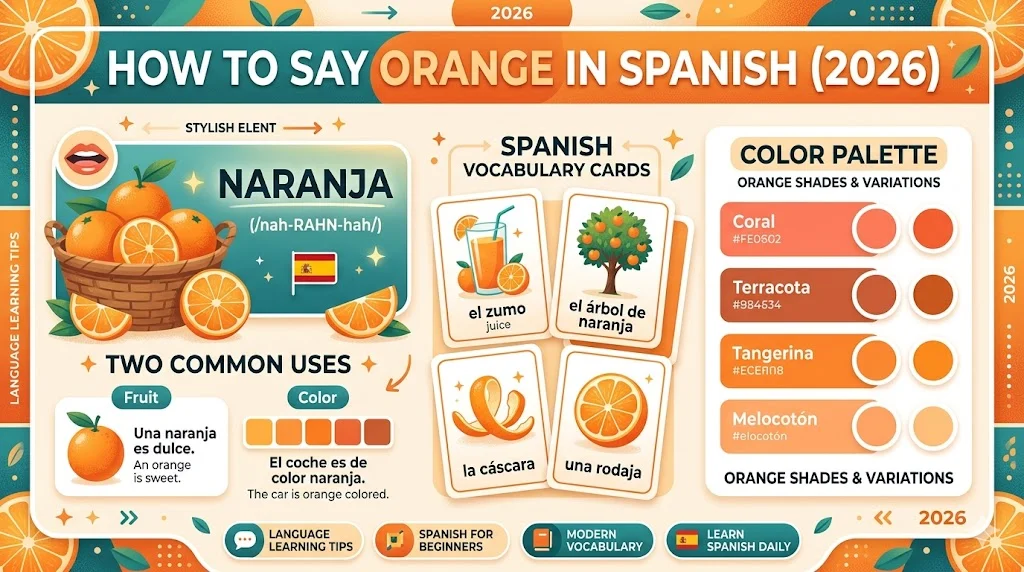
The word “orange” in Spanish is usually translated as:
Naranja
Examples:
- La naranja = The orange (fruit)
- El color naranja = The color orange
Spanish speakers use “naranja” for both the fruit and the color in most situations.
If you’re learning Spanish, one of the first colors and fruits you’ll encounter is “orange.” In Spanish, the most common translation is “naranja.”
However, Spanish learners are often confused because the same word is used for:
- The fruit
- The color
Understanding how native speakers use “naranja” helps improve vocabulary, pronunciation, and everyday fluency. Learning alternatives and related expressions also helps you express colors naturally in Spanish conversations.
Whether you’re studying basic Spanish, traveling, or improving professional language skills, this guide explains everything you need to know.
“Learning colors in Spanish builds the foundation for natural conversation and description.”
Quick Categories
Formal Ways to Refer to Orange in Spanish
- Color naranja
- Tono naranja
- Anaranjado
- De color naranja
Pro Tip: Use these in writing, education, or professional settings.
Casual Everyday Expressions
- Naranja
- Anaranjado
- Naranjita
- Súper naranja
Pro Tip: Native speakers often shorten phrases casually in conversation.
Professional / Educational Usage
- El color naranja representa
- Tono anaranjado
- Pigmento naranja
- Señal naranja
Pro Tip: Common in design, art, education, and branding contexts.
Informal Expressions
- Naranja brillante
- Muy naranja
- Color mandarina
- Naranja intenso
Pro Tip: Great for fashion, food, and social media descriptions.
Common Mistakes
1. Confusing the fruit and color
❌ La camisa es naranja fruta.
✔ La camisa es naranja.
2. Incorrect gender agreement
❌ La pared es naranjo.
✔ La pared es naranja.
3. Mispronouncing “naranja”
Incorrect pronunciation can confuse listeners.
Correct pronunciation:
nah-RAHN-hah
4. Overusing “anaranjado”
While correct, it’s less common in casual speech.
5. Translating literally from English
❌ Orange color → Color orange
✔ Color naranja
What Does “Orange” Mean in Spanish?
In Spanish, “orange” is generally translated as:
Naranja
Meaning:
- The fruit “orange”
- The color orange
Example Sentence
Mi coche es naranja.
(My car is orange.)
Grammar Explanation
“Naranja” as a Color
When used as a color adjective, naranja usually does not change form.
Examples:
- Zapatos naranja
- Camisas naranja
“Anaranjado” as an Adjective
“Anaranjado” behaves like a normal adjective and changes gender/number.
Examples:
- Anaranjado (masculine)
- Anaranjada (feminine)
When to Use “Naranja” vs “Anaranjado”
Use “Naranja” When:
- Speaking casually
- Describing colors generally
- Talking about fruit
- Using everyday vocabulary
Use “Anaranjado” When:
- Writing formally
- Describing shades/tones
- Talking about design/art
- Wanting more descriptive language
Spoken vs Written Usage
Spoken Spanish
Most common: naranja
Written/Formal Spanish
More descriptive: anaranjado
Is “Naranja” Professional or Polite?
Polite? ✔️ Yes
Professional? ✔️ Yes
“Naranja” is universally accepted in both professional and casual contexts.
Business Example
El logotipo tiene detalles en color naranja.
(The logo has orange details.)
Pros and Cons of Using “Naranja”
Pros
- Easy to remember
- Commonly used
- Works for fruit and color
- Natural in conversation
Cons
- Less descriptive than “anaranjado”
- Can sound basic in creative writing
- Limited shade variation
- Repetitive in design contexts
“Native fluency comes from understanding not just words, but when and how they’re used.”
Other Ways to Say “Orange” in Spanish (With Examples)
These alternatives help you sound more fluent, descriptive, and natural in Spanish conversations and writing.
Use them according to context, tone, and audience.
1. Phrase: Naranja
Meaning: Orange (fruit/color)
Explanation: Most common translation
Example Sentence: La pared es naranja.
Best Use: everyday speech
Worst Use: none
Tone: neutral, common
Context Variability: casual / professional
2. Phrase: Anaranjado
Meaning: Orange-colored
Explanation: More descriptive adjective
Example Sentence: El cielo está anaranjado.
Best Use: writing, art
Worst Use: very casual speech
Tone: descriptive, formal
Context Variability: professional
3. Phrase: Color naranja
Meaning: Orange color
Explanation: Explicitly references color
Example Sentence: Prefiero el color naranja.
Best Use: education, design
Worst Use: repetitive casual use
Tone: neutral
Context Variability: professional
4. Phrase: Tono naranja
Meaning: Orange tone
Explanation: Used in fashion/design
Example Sentence: Tiene un tono naranja brillante.
Best Use: creative contexts
Worst Use: daily casual talk
Tone: artistic, descriptive
Context Variability: professional
5. Phrase: Naranja brillante
Meaning: Bright orange
Explanation: Strong vibrant orange
Example Sentence: La chaqueta es naranja brillante.
Best Use: fashion descriptions
Worst Use: formal reports
Tone: vivid, expressive
Context Variability: casual
6. Phrase: Naranja intenso
Meaning: Deep orange
Explanation: Rich orange shade
Example Sentence: El atardecer tiene un naranja intenso.
Best Use: photography/art
Worst Use: beginner learning
Tone: dramatic, descriptive
Context Variability: professional
7. Phrase: Color mandarina
Meaning: Tangerine color
Explanation: Orange shade variation
Example Sentence: Eligió un vestido color mandarina.
Best Use: fashion/design
Worst Use: basic color lessons
Tone: stylish, modern
Context Variability: professional
8. Phrase: Ámbar
Meaning: Amber
Explanation: Orange-yellow shade
Example Sentence: Sus ojos son color ámbar.
Best Use: literary description
Worst Use: basic translation
Tone: elegant
Context Variability: professional
9. Phrase: Durazno
Meaning: Peach tone
Explanation: Soft orange-pink shade
Example Sentence: Las paredes son color durazno.
Best Use: interior design
Worst Use: fruit discussions
Tone: soft, aesthetic
Context Variability: professional
10. Phrase: Coral
Meaning: Coral orange-pink
Explanation: Fashion and beauty term
Example Sentence: Me encanta el lápiz labial coral.
Best Use: beauty/fashion
Worst Use: generic orange descriptions
Tone: trendy
Context Variability: professional
11. Phrase: Cobrizo
Meaning: Copper-colored
Explanation: Metallic orange-brown shade
Example Sentence: Tiene cabello cobrizo.
Best Use: appearance descriptions
Worst Use: beginner contexts
Tone: elegant
Context Variability: both
12. Phrase: Melocotón
Meaning: Peach color
Explanation: Soft pastel orange
Example Sentence: La decoración es melocotón.
Best Use: design
Worst Use: fruit-only contexts
Tone: soft, modern
Context Variability: professional
13. Phrase: Dorado anaranjado
Meaning: Golden orange
Explanation: Warm luxurious tone
Example Sentence: El cielo tiene tonos dorado anaranjado.
Best Use: creative writing
Worst Use: daily conversation
Tone: artistic
Context Variability: professional
14. Phrase: Terracota
Meaning: Terracotta
Explanation: Earthy orange-brown tone
Example Sentence: Las macetas son terracota.
Best Use: decor/design
Worst Use: elementary learning
Tone: earthy, stylish
Context Variability: professional
15. Phrase: Naranjita
Meaning: Little orange/cute orange
Explanation: Diminutive casual form
Example Sentence: Qué color tan naranjita.
Best Use: playful speech
Worst Use: professional communication
Tone: playful, cute
Context Variability: informal
16. Phrase: Zanahoria
Meaning: Carrot-orange
Explanation: Strong orange shade
Example Sentence: El coche es color zanahoria.
Best Use: descriptive casual talk
Worst Use: formal settings
Tone: playful
Context Variability: casual
17. Phrase: Fuego
Meaning: Fire-orange
Explanation: Fiery orange-red tone
Example Sentence: El vestido tiene tonos fuego.
Best Use: artistic contexts
Worst Use: beginner Spanish
Tone: dramatic
Context Variability: creative
18. Phrase: Atardecer
Meaning: Sunset orange
Explanation: Inspired by sunsets
Example Sentence: La pintura usa colores atardecer.
Best Use: poetry/design
Worst Use: direct translation
Tone: artistic
Context Variability: professional
19. Phrase: Calabaza
Meaning: Pumpkin orange
Explanation: Autumn orange shade
Example Sentence: Decoraron con tonos calabaza.
Best Use: seasonal decor
Worst Use: generic use
Tone: festive
Context Variability: casual
20. Phrase: Mango
Meaning: Mango-orange
Explanation: Tropical orange-yellow tone
Example Sentence: Lleva una blusa color mango.
Best Use: fashion
Worst Use: formal education
Tone: vibrant
Context Variability: casual
21. Phrase: Sol naranja
Meaning: Orange sun tone
Explanation: Poetic usage
Example Sentence: El sol naranja iluminaba la playa.
Best Use: literature
Worst Use: direct translation lessons
Tone: poetic
Context Variability: creative
22. Phrase: Anaranjado claro
Meaning: Light orange
Explanation: Softer shade
Example Sentence: Prefiero el anaranjado claro.
Best Use: design/color palettes
Worst Use: casual shortcuts
Tone: descriptive
Context Variability: professional
23. Phrase: Anaranjado oscuro
Meaning: Dark orange
Explanation: Deeper orange tone
Example Sentence: La pintura es anaranjado oscuro.
Best Use: design/art
Worst Use: casual speech
Tone: precise
Context Variability: professional
24. Phrase: Naranja pastel
Meaning: Pastel orange
Explanation: Soft muted orange
Example Sentence: Las flores son naranja pastel.
Best Use: aesthetics/decor
Worst Use: beginner vocabulary
Tone: trendy
Context Variability: professional
25. Phrase: Neón naranja
Meaning: Neon orange
Explanation: Bright electric orange
Example Sentence: Lleva zapatos neón naranja.
Best Use: fashion/streetwear
Worst Use: formal business writing
Tone: bold, modern
Context Variability: casual
26. Phrase: Cítrico
Meaning: Citrus orange
Explanation: Fresh citrus-inspired tone
Example Sentence: La campaña usa tonos cítricos.
Best Use: branding/marketing
Worst Use: fruit naming
Tone: modern
Context Variability: professional
27. Phrase: Mandarina brillante
Meaning: Bright tangerine
Explanation: Fashionable orange tone
Example Sentence: La falda es mandarina brillante.
Best Use: style discussions
Worst Use: beginner lessons
Tone: stylish
Context Variability: both
28. Phrase: Naranja quemado
Meaning: Burnt orange
Explanation: Dark earthy orange
Example Sentence: Me gusta el naranja quemado.
Best Use: interior design
Worst Use: direct translation exercises
Tone: sophisticated
Context Variability: professional
29. Phrase: Oro cobrizo
Meaning: Copper gold
Explanation: Metallic orange tone
Example Sentence: Tiene reflejos oro cobrizo.
Best Use: beauty/fashion
Worst Use: casual learning
Tone: elegant
Context Variability: professional
30. Phrase: Bronce anaranjado
Meaning: Bronze-orange
Explanation: Warm metallic orange
Example Sentence: El maquillaje tiene tonos bronce anaranjado.
Best Use: cosmetics/fashion
Worst Use: elementary use
Tone: luxurious
Context Variability: professional
“Expanding color vocabulary helps your Spanish sound more vivid and native-like.”
Mini Quiz / Self-Check
1. What is the most common word for orange in Spanish?
A. Coral
B. Naranja
C. Ámbar
Answer: B
2. Which option sounds more formal/descriptive?
A. Naranja
B. Anaranjado
C. Naranjita
Answer: B
3. Which phrase is best for fashion/design?
A. Tono naranja
B. Mango
C. Coral
Answer: C
Comparison Table: Top Alternatives
| Phrase | Tone | Best Use |
| Naranja | Neutral | Everyday Spanish |
| Anaranjado | Formal | Writing/design |
| Color naranja | Professional | Education/art |
| Coral | Trendy | Fashion/beauty |
| Ámbar | Elegant | Literature |
| Naranja brillante | Expressive | Clothing/style |
| Naranja quemado | Sophisticated | Interior design |
| Mandarina | Stylish | Fashion |
| Terracota | Earthy | Home decor |
| Neón naranja | Bold | Streetwear |
FAQs
1. How do you say orange in Spanish?
The most common translation is “naranja.”
2. Is “anaranjado” correct in Spanish?
Yes. It’s a more descriptive adjective meaning “orange-colored.”
3. Do Spanish speakers use “naranja” for both fruit and color?
Yes, native speakers commonly use the same word for both.
4. What’s the difference between “naranja” and “anaranjado”?
“Naranja” is more common in conversation, while “anaranjado” sounds more descriptive or formal.
5. What are stylish alternatives for orange shades in Spanish?
Try “coral,” “ámbar,” “terracota,” or “mandarina.”
Conclusion
Learning how to say orange in Spanish goes beyond simply memorizing “naranja.” Understanding related shades, descriptive alternatives, and context helps your Spanish sound more fluent, expressive, and natural.
Practice these alternatives in conversations, writing, fashion discussions, and color descriptions to improve vocabulary and confidence. The more nuanced your language becomes, the more native-like your Spanish will sound.