
Last Updated on August 9, 2026
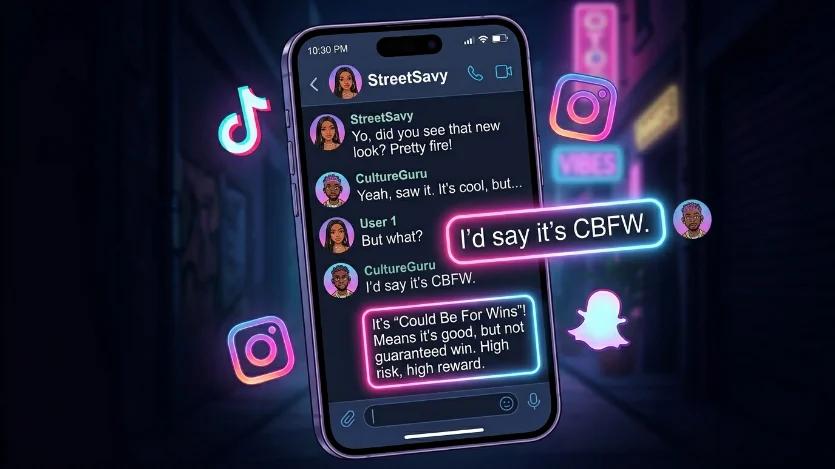
CBFW meaning slang refers to an informal internet abbreviation used in texting and social media. It is most commonly interpreted as “can’t be f*ed with”** or contextually related expressions that show disinterest, confidence, or emotional detachment.
Why “CBFW Meaning Slang” Confuses So Many People
You’re scrolling through a chat or comment section and suddenly you see it.
CBFW.
No context. No explanation. Just four letters sitting in the middle of a sentence like they own the place.
And your brain immediately goes, what on earth does that mean?
That’s exactly why people search for cbfw meaning slang in the first place. Internet language moves fast. People don’t stop to explain every abbreviation they use. Instead, they assume you already know.
But here’s the thing.
You’re not supposed to know everything. Slang evolves like fashion trends. One day it’s everywhere, and the next day it gets replaced.
CBFW is one of those terms that lives in that messy, flexible space between confidence, attitude, and casual internet shorthand. It doesn’t always carry a single rigid meaning. Context decides everything.
So let’s break it down properly. No guesswork. No confusion.
What Does CBFW Mean in Slang?
At its core, CBFW meaning slang usually connects to the phrase:
“Can’t be f*ed with”**
That’s the most widely accepted interpretation in modern online communication.
But the meaning shifts depending on tone.
CBFW can express:
- Confidence or dominance
- Emotional detachment
- Disinterest in effort or drama
- A “don’t mess with me” attitude
Think of it like a verbal shield. People use it when they want to show they’re either above something or simply not willing to engage.
Simple breakdown
- “I’m not interested” → lazy or disengaged tone
- “I don’t tolerate nonsense” → strong or assertive tone
- “I’m on another level” → confident or intimidating tone
So instead of being a fixed dictionary definition, CBFW works more like a mood indicator.
Variations and Related Forms of CBFW Slang
Slang rarely stays in one form. It mutates depending on how people type, where they are online, and even how fast they’re texting.
Common variations
- CBFW → standard abbreviation form
- CBF W → spaced variation for readability
- CBF → shortened version without the final letter
- CBFW 😂 / 😎 → emotional tone added through emojis
Each variation still carries the same core idea, but the emotional weight changes slightly.
Closely related slang terms
Here are expressions that often overlap in meaning:
- CBF → “can’t be f***ed” (more casual, less intense)
- IDGAF → “I don’t give a f***” (more aggressive tone)
- IDC → “I don’t care” (neutral version)
- Whatever → softer emotional withdrawal
CBFW sits somewhere between confidence and dismissal, depending on usage.
Origin of CBFW Slang: Where It Came From
CBFW didn’t appear from nowhere. It evolved from a broader slang culture built around shortened expressions.
Texting culture influence
Early mobile texting encouraged people to shorten words due to:
- Limited character space
- Faster typing habits
- Informal communication styles
That environment created abbreviations like CBF, IDK, BRB, and eventually more expressive slang like CBFW.
Regional slang influence
CBFW is strongly tied to:
- UK informal speech patterns
- Australian slang expressions like “can’t be bothered / f***ed”
- Urban online communities where blunt expression is common
Social media expansion
Platforms like:
- TikTok
- Snapchat
- Instagram DMs
- Discord chats
helped push slang like CBFW into global usage.
People started copying phrases without always understanding their exact origin, which expanded its meaning range even further.
How CBFW Is Used in Real Conversations
CBFW is not just a definition. It’s a reaction.
People use it to express attitude instantly.
1. Disinterest in activity
“I cbfw going out tonight.”
Meaning: I don’t feel like putting in effort to go out.
2. Emotional boundary setting
“Don’t try that with him, he’s cbfw.”
Meaning: He won’t tolerate nonsense or disrespect.
3. Frustration or exhaustion
“I cbfw explaining this again.”
Meaning: I don’t have the patience to repeat myself.
4. Confidence expression
“She’s cbfw energy today.”
Meaning: She’s acting untouchable or confident.
CBFW works like emotional shorthand. Instead of explaining feelings in full sentences, people compress the entire mood into four letters.
Real-Life Examples of CBFW in Texting
Let’s look at real conversational patterns so you can actually feel how it works.
Example 1: Casual chat
A: “Wanna join us later?”
B: “Nah, I cbfw tonight.”
👉 Translation: I’m not in the mood to go out.
Example 2: Group drama
A: “He keeps talking behind your back.”
B: “He better stop. I’m cbfw that behavior.”
👉 Translation: I won’t tolerate that behavior.
Example 3: Frustration
A: “Can you explain again?”
B: “CBFW honestly, just rewatch it.”
👉 Translation: I’m too tired to explain again.
Example 4: Confidence tone
“She walked in like she’s cbfw anyone’s opinion.”
👉 Translation: She’s acting confident and unaffected.
Tone and Intent: Why Context Changes Everything
CBFW is a perfect example of context-driven slang.
Same words. Different meaning.
Tone types
- Lazy tone → lack of motivation
- Angry tone → frustration or rejection
- Confident tone → dominance or self-assurance
- Detached tone → emotional distance
Why interpretation shifts
Because online text lacks:
- Voice tone
- Facial expressions
- Body language
So readers rely on surrounding words, emojis, and timing.
Even something as simple as a period can change how CBFW feels.
Compare:
- “I cbfw.” → flat, possibly serious
- “I cbfw 😂” → joking, casual
Where You’ll Commonly See CBFW
CBFW doesn’t show up everywhere equally. It thrives in informal digital spaces.
Most common platforms
- TikTok comments (reaction culture)
- Snapchat streak chats (fast replies)
- Instagram DMs (casual conversations)
- Discord servers (gaming and communities)
- Twitter/X replies (hot takes and debates)
Why these platforms?
Because they reward:
- Speed over formality
- Short responses
- Emotional expression in compact form
CBFW fits perfectly into that environment.
Common Misunderstandings About CBFW
A lot of confusion comes from misreading the abbreviation.
Mistake 1: Thinking it has one fixed meaning
CBFW does not lock into one definition. It flexes based on usage.
Mistake 2: Over-literal interpretation
Some people try to break it word by word, which doesn’t work in slang.
Mistake 3: Confusing it with similar acronyms
People often mistake it for:
- unrelated corporate abbreviations
- random coded messages
- or completely different slang phrases
Why confusion happens
Because CBFW is not officially standardized. It lives entirely in informal digital speech.
Is CBFW Offensive?
CBFW sits in a gray area.
It can be harmless or sharp depending on context.
Neutral usage
- “I cbfw going out.”
👉 No offense. Just personal mood.
Strong usage
- “I cbfw your attitude.”
👉 This becomes confrontational.
Why tone matters
The phrase contains a censored swear word, so it already carries intensity. But intention decides how sharp it feels.
Alternatives to CBFW (Cleaner Ways to Say It)
Not everyone wants to use slang with strong language. Here are softer versions:
- “I don’t feel like it.”
- “Not in the mood.”
- “I can’t deal with this right now.”
- “I’m not interested.”
- “I’ll pass on that.”
Each one replaces CBFW depending on emotional tone.
Quick Reference Table for CBFW Meaning Slang
| Term | Meaning | Tone | Usage |
| CBFW | Can’t be f***ed with | Confident / dismissive | Texting, social media |
| CBF | Can’t be f***ed | Casual / lazy | Informal chats |
| IDGAF | I don’t give a f*** | Strong / aggressive | Arguments |
| IDC | I don’t care | Neutral | Everyday texting |
Final Thoughts
CBFW isn’t just another internet abbreviation.
It’s a flexible expression of attitude.
Sometimes it means you’re tired and don’t want to engage. Other times it signals confidence and emotional distance. The meaning doesn’t sit in the letters themselves. It sits in how people use them.
So next time you see cbfw meaning slang pop up in a chat, don’t overthink it. Look at the mood, the sentence, and the situation around it.
That’s where the real meaning lives.