
Last Updated on June 8, 2026
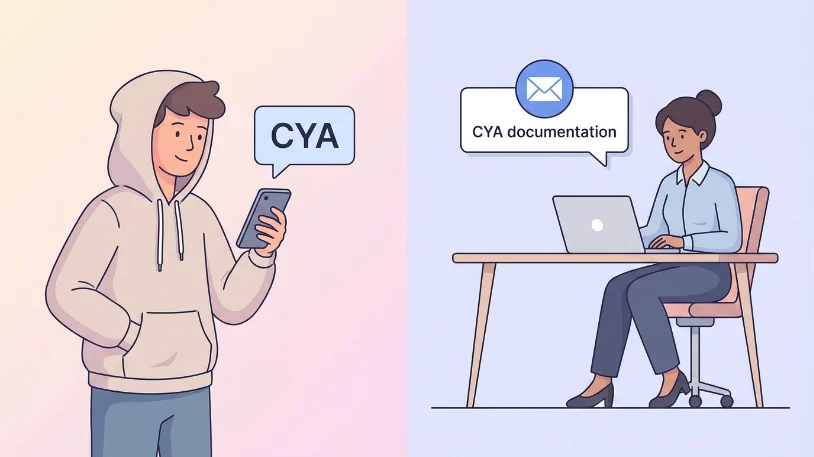
CYA meaning depends on context. It usually stands for “Cover Your Ass” in professional or workplace settings, meaning to protect yourself from blame. In casual texting, it often means “See Ya”, used as a friendly goodbye. Understanding the context is key to using CYA correctly.
If you’ve seen “CYA” in a message or email, you might pause for a second. Is it rude? Friendly? Professional? The truth is, CYA carries two completely different meanings, and context decides everything.
On one hand, it’s casual and harmless. On the other, it can signal workplace politics or subtle defensiveness.
Let’s break it down so you never misread it again.
Quick Definition: What Does CYA Mean?
At its core, CYA is an acronym with two main interpretations:
- CYA = “Cover Your Ass”
- CYA = “See Ya”
Both meanings show up daily in conversations, emails, and chats. However, they carry very different tones.
Simple Breakdown
| Acronym | Meaning | Tone | Context |
|---|---|---|---|
| CYA | Cover Your Ass | Defensive / Strategic | Workplace, business |
| CYA | See Ya | Friendly / Casual | Texting, chat |
Key Insight:
The same three letters can sound either professional or playful. It all depends on how you use them.
CYA Meaning in Text and Chat
When you’re texting, things stay light. Nobody is thinking about legal risk or documentation. In this setting, CYA usually means “See Ya.”
How It’s Used in Texting
You’ll often spot it at the end of a conversation.
- “Gotta go now, CYA later!”
- “CYA tomorrow!”
- “Heading out, CYA!”
Short. Friendly. Easy.
Why People Use CYA in Text Messages
- Saves time typing
- Feels relaxed and informal
- Fits naturally in fast conversations
CYA vs Other Goodbye Texts
| Phrase | Tone | Usage |
|---|---|---|
| CYA | Casual | Friends, quick chats |
| Bye | Neutral | General use |
| See you later | Friendly | Slightly more formal |
| Catch you later | Relaxed | Informal |
Important Tip
If you’re texting someone new or in a professional setting, skip CYA. It might confuse them or come off too casual.
CYA Slang Meaning: “Cover Your Ass” Explained
Now let’s switch gears.
In business or workplace conversations, CYA slang meaning changes completely.
Here, it stands for:
“Cover Your Ass”
It sounds blunt. Because it is.
What Does “Cover Your Ass” Really Mean?
It means taking steps to protect yourself from:
- Blame
- Mistakes
- Miscommunication
- Legal risk
Real-Life Example
Imagine you complete a task. Later, someone questions it.
Instead of relying on memory, you send a follow-up email summarizing what you did.
That’s CYA in action.
Common Workplace Situations
- Sending confirmation emails
- Keeping written records
- Copying managers on decisions
- Documenting approvals
Example Sentences
- “I’m documenting this just to CYA.”
- “Add that to the email thread for CYA.”
- “He looped in legal to CYA.”
What It Signals
CYA behavior often suggests:
- Awareness of risk
- Lack of full trust
- Desire for accountability
CYA Meaning in Workplace Communication
Walk into any corporate environment and you’ll see it. Not always spoken out loud. Still, it’s there.
CYA is a survival tactic.
Why CYA Exists in Business
Workplaces involve:
- Multiple stakeholders
- High expectations
- Pressure to perform
When things go wrong, people look for answers. That’s where CYA comes in.
Typical CYA Actions
- Writing detailed reports
- Confirming instructions in email
- Saving chat logs
- Clarifying decisions
Example Scenario
A manager gives you verbal instructions.
Instead of relying on memory, you follow up:
“Just confirming our discussion earlier”
That single message protects you later.
CYA Email Meaning
In email communication, CYA shows up as:
- Documentation
- Clarification
- Evidence
Common Phrases That Mean CYA (Without Saying It)
- “For documentation purposes”
- “Just to confirm”
- “As discussed earlier”
- “Following up in writing”
Pro Insight:
Smart professionals use CYA quietly. They don’t say it. They practice it.
CYA Meaning in Business vs Casual Conversation
Let’s put the difference side by side.
| Context | Meaning | Tone | Risk Level |
|---|---|---|---|
| Texting | See Ya | Friendly | Low |
| Workplace | Cover Your Ass | Strategic | Medium to High |
Why This Difference Matters
Using the wrong meaning can:
- Create confusion
- Sound unprofessional
- Offend someone
Example Misunderstanding
A junior employee texts a manager:
“CYA!”
They meant “See Ya.”
The manager might read it as sarcasm or even disrespect.
When to Use CYA (And When to Avoid It)
Timing matters. Audience matters more.
When You Should Use CYA
- Talking with friends
- Casual texting
- Informal conversations
- Light social media chats
When You Should Avoid CYA
- Business emails
- Client communication
- Job interviews
- Formal writing
Golden Rule
If the situation feels even slightly formal, skip it.
Professional Alternatives to CYA
You don’t need slang to sound clear. In fact, avoiding it often makes you look more polished.
Instead of “Cover Your Ass”
Use these:
- “For clarity”
- “To confirm”
- “For record-keeping”
- “To ensure alignment”
Instead of “See Ya”
Try:
- “Talk soon”
- “See you later”
- “Catch you soon”
- “Looking forward to it”
Quick Comparison Table
| Informal | Professional Alternative |
|---|---|
| CYA | Talk soon |
| CYA | See you later |
| CYA (Cover Your Ass) | For documentation purposes |
Examples of CYA in Sentences
Let’s make this real.
Slang Meaning (Cover Your Ass)
- “Send that summary email to CYA.”
- “He documented everything to CYA.”
- “Loop in the team so you CYA.”
Casual Meaning (See Ya)
- “CYA at the party!”
- “Alright, CYA later.”
- “CYA tomorrow morning.”
Is CYA Rude or Polite?
Short answer: it depends.
When It Feels Polite
- Used as “See Ya”
- Friendly tone
- Casual setting
When It Feels Rude
- Used sarcastically
- In formal situations
- With people unfamiliar with slang
Why “Cover Your Ass” Can Sound Harsh
The phrase includes implied profanity. Even if shortened, the tone still carries weight.
Quick Rule:
If you wouldn’t say it in a meeting, don’t type it.
CYA vs Other Common Acronyms
Acronyms can get confusing fast. Here’s how CYA compares.
| Acronym | Meaning | Use Case |
|---|---|---|
| CYA | See Ya / Cover Your Ass | Casual / Workplace |
| FYI | For Your Information | Informational |
| ASAP | As Soon As Possible | Urgency |
| BRB | Be Right Back | Chat |
| TTYL | Talk To You Later | Informal |
Why This Matters
Mixing these up can change tone completely.
Why Do People Say CYA? (The Psychology Behind It)
Language reflects behavior. CYA tells a deeper story.
Reasons People Use CYA
- Fear of blame
- Workplace pressure
- Desire for control
- Need for documentation
In High-Stakes Environments
CYA becomes more common when:
- Deadlines are tight
- Accountability is high
- Mistakes are costly
Interesting Insight
People rarely admit they’re using CYA. Yet they rely on it every day.
CYA Meaning in Social Media and Internet Culture
Online spaces blur the lines between formal and informal language.
Where You’ll See CYA
- Twitter/X posts
- Instagram captions
- Gaming chats
- Online forums
Tone Online
Usually casual.
Example:
- “Had fun today, CYA next time!”
But Be Careful
Tone doesn’t always translate well in text. Without context, meaning gets lost.
CYA Usage Guide for Beginners
If you’re new to this acronym, keep it simple.
Do This
- Use it casually
- Understand the audience
- Keep tone friendly
Avoid This
- Using it in formal writing
- Assuming everyone understands it
- Using it sarcastically
Common Mistakes People Make with CYA
Even simple acronyms cause problems.
Top Mistakes
- Using it in professional emails
- Misreading its meaning
- Overusing it in conversation
- Sending it without context
How to Avoid These Mistakes
- Think about tone
- Consider your audience
- Choose clarity over slang
Final Thoughts
At first glance, CYA looks simple. Three letters. Quick message.
Yet beneath that simplicity lies two very different meanings.
- One protects you
- One signs off a conversation
Understanding that difference makes all the difference.
Bottom Line
- Use CYA = “See Ya” in casual chats
- Avoid CYA = “Cover Your Ass” in formal settings
- When in doubt, choose clarity over slang
Frequently Asked Questions
What does CYA mean in texting?
It usually means “See Ya”, a casual way to say goodbye.
What does CYA stand for in business?
It stands for “Cover Your Ass”, meaning to protect yourself from blame.
Is CYA rude?
It can be, depending on context. It’s safe in casual chats but risky in professional settings.
How do you use CYA in a sentence?
- “CYA later!”
- “Document that email to CYA.”
What is the full form of CYA?
- Cover Your Ass
- See Ya
Why do people say CYA?
They use it to either say goodbye casually or protect themselves professionally.