Last Updated on June 8, 2026
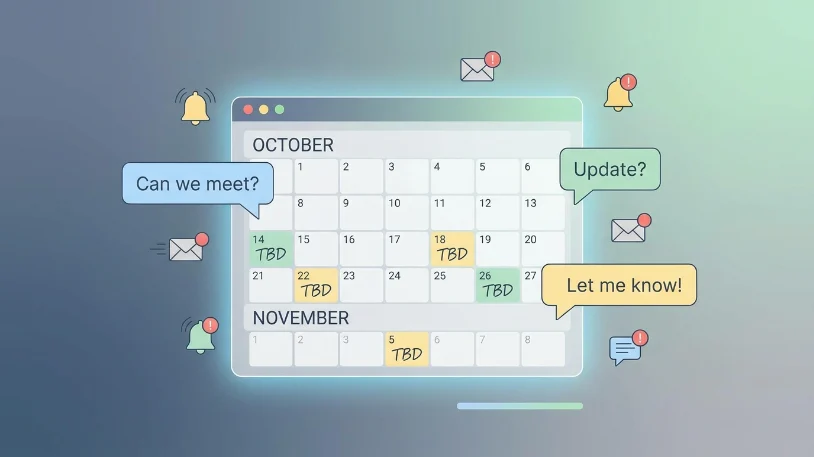
TBD means “To Be Determined.” It’s a common slang abbreviation used in texting, business, and social media when a decision hasn’t been made yet. People use TBD as a placeholder for missing details like time, date, or location. Unlike TBA (To Be Announced), TBD means the information is not finalized yet.
TBD means “To Be Determined.”
You’ll see it everywhere texts, emails, schedules, even event posters. It acts like a placeholder. Something isn’t decided yet, so instead of leaving a blank space, people write TBD.
“We’re working on it. Details coming soon.”
Simple. Clear. Efficient.
Here’s how it works in real life:
- “Meeting time: TBD”
- “Location: TBD”
- “Final decision: TBD”
Each one tells you the same thing. The answer exists, just not yet.
TBD Meaning in Slang and Everyday Language
At first glance, TBD sounds formal. It came from structured environments like business and planning.
But here’s the twist.
People pulled it into casual conversations. Now, it feels completely normal in everyday slang.
You might text:
- “Dinner tonight? Time TBD.”
- “Trip plans are TBD lol.”
Notice the tone. It’s relaxed, not stiff.
That shift happened because of digital communication. Short messages dominate. People want speed. Abbreviations like TBD fit perfectly.
Why TBD Became Popular in Slang
Several reasons explain its rise:
- Efficiency – Three letters replace a full sentence
- Clarity – Everyone understands it instantly
- Neutral tone – It doesn’t sound emotional or uncertain
- Versatility – Works in both casual and formal settings
In short, TBD saves time without losing meaning.
TBD Meaning in Text, Chat, and Social Media
Scroll through any messaging app. You’ll spot TBD quickly.
It appears in:
- WhatsApp messages
- Instagram captions
- Group chats
- Work Slack channels
TBD Meaning in Texting
When used in texting, TBD signals pending decisions.
Examples:
- “Movie night this weekend. Place TBD.”
- “We’ll meet tomorrow. Time TBD.”
Short. Direct. No confusion.
TBD Meaning in Chat Conversations
In chats, tone matters. TBD keeps things flexible.
It avoids commitment without sounding unsure.
Compare these:
- “I don’t know yet.”
- “Details TBD.”
The second sounds more organized. It implies progress.
TBD Meaning in Social Media
On platforms like Instagram, TBD often appears in announcements:
- “New drop date: TBD”
- “Event lineup: TBD”
- “Big news coming soon details TBD”
It builds anticipation. That’s why brands love it.
Common Contexts Where TBD Is Used
You’ll notice patterns. TBD shows up in specific situations.
Let’s break them down.
Event Planning and Scheduling
This is where TBD shines.
Organizers use it when details aren’t finalized yet.
Examples:
- Event date: TBD
- Venue: TBD
- Guest list: TBD
It keeps communication clean. No guessing.
Work and Business Communication
In professional settings, TBD helps structure uncertainty.
You’ll see it in:
- Meeting agendas
- Project timelines
- Reports
Example:
- “Budget approval: TBD”
- “Launch date: TBD”
However, use it carefully. Too much TBD can signal poor planning.
Personal Conversations
Friends use TBD casually.
Examples:
- “Let’s hang out. Plans TBD.”
- “Road trip soon. Route TBD.”
It keeps things open-ended.
TBD vs TBA Meaning (Clear Differences)
People often confuse these two.
Let’s fix that.
| Term | Full Form | Meaning | Key Difference |
|---|---|---|---|
| TBD | To Be Determined | Not decided yet | Decision pending |
| TBA | To Be Announced | Already decided but not shared | Information withheld |
Simple Way to Remember
- TBD = We haven’t decided yet
- TBA = We decided but won’t tell you yet
Real Examples
- “Event date TBD” → still choosing
- “Speaker TBA” → already selected, not announced
That distinction matters, especially in business and marketing.
When to Use TBD (And When Not To)
TBD works well but only in the right context.
When You Should Use TBD
Use it when:
- A decision is in progress
- You expect to finalize details soon
- You want to keep communication structured
When You Should NOT Use TBD
Avoid it when:
- You have no idea at all
- The situation requires clarity
- Deadlines are critical
Better Alternatives in Those Cases
Instead of TBD, say:
- “Not confirmed yet”
- “Still deciding”
- “Will update soon”
These feel more transparent.
Real-Life TBD Usage Examples
Examples make everything clearer.
Correct Usage
- “Meeting time: TBD”
- “Menu options: TBD”
- “Final guest list: TBD”
Incorrect Usage
- “I’m TBD about going” ❌
- “TBD if I like it” ❌
Why wrong?
Because TBD applies to details, not feelings.
Why People Use TBD Instead of “I Don’t Know”
There’s a subtle difference.
“I don’t know” sounds uncertain. It lacks direction.
TBD suggests progress.
It implies:
- A decision will happen
- Someone is responsible
- The situation is under control
That’s powerful, especially in professional settings.
Is TBD Formal or Informal?
Here’s the interesting part.
TBD lives in both worlds.
Formal Use
- Business reports
- Corporate emails
- Project documentation
Informal Use
- Text messages
- Social media posts
- Casual conversations
Tone Comparison
| Context | Example | Tone |
|---|---|---|
| Formal | “Deadline: TBD” | Professional |
| Informal | “Plans TBD lol” | Casual |
TBD Meaning in Different Languages
Even though TBD is English-based, people use it globally.
TBD Meaning in English
- To Be Determined
- Decision pending
TBD Meaning in Urdu
- “فیصلہ ہونا باقی ہے”
- Meaning: decision not finalized yet
TBD Meaning in Hindi
- “निर्धारित किया जाना है”
- Meaning: yet to be decided
TBD Meaning in Business and Professional Settings
In business, TBD acts like a placeholder.
It keeps documents structured.
Where You’ll See It
- Project plans
- Meeting schedules
- Financial forecasts
Example Table in Business Context
| Section | Status |
|---|---|
| Budget | TBD |
| Timeline | TBD |
| Team Members | Confirmed |
Important Insight
Too many TBDs signal weak planning.
Use it sparingly.
TBD Meaning in Emails
Emails rely on clarity.
TBD helps but don’t overuse it.
Good Email Example
- “Meeting location: TBD. I’ll confirm by Friday.”
Bad Email Example
- “Everything TBD.”
That creates confusion.
TBD Meaning in Schedules, Events, and Meetings
Schedules often change. That’s where TBD fits best.
Typical Usage
- “Workshop date: TBD”
- “Speaker list: TBD”
- “Session timing: TBD”
Why It Works Here
Because planning is ongoing.
No one expects final answers immediately.
Alternatives to TBD (When You Want Variety)
Sometimes, you want different wording.
Here are solid alternatives:
- To be decided
- Pending confirmation
- Not finalized
- Coming soon
- Details to follow
Comparison Table
| Phrase | Best Use Case |
|---|---|
| TBD | General placeholder |
| Pending | Formal situations |
| Coming soon | Marketing |
| Not finalized | Transparent tone |
Common Chat Acronyms Related to TBD
TBD belongs to a larger group.
Here are similar abbreviations:
Popular Internet Slang Acronyms
- TBH – To Be Honest
- IDK – I Don’t Know
- IMO – In My Opinion
- FYI – For Your Information
- BRB – Be Right Back
Why These Matter
They shape modern communication.
Short. Fast. Efficient.
Deep Dive: Linguistic Perspective of TBD
Let’s go deeper.
TBD isn’t just slang. It’s a linguistic shortcut.
Semantic Role
TBD acts as a placeholder token.
It represents missing information.
In NLP (Natural Language Processing)
TBD falls under:
- Abbreviation recognition
- Context-based interpretation
- Informal language processing
Why That Matters
Machines and humans both understand it quickly.
That’s rare.
TBD Usage Patterns and Trends
TBD usage has grown significantly.
Key Trends
- Increased use in digital communication
- Adoption in global contexts
- Expansion beyond business into everyday slang
Interesting Fact
Short-form communication increases comprehension speed by up to 30% in digital environments.
TBD plays a role in that efficiency.
Mistakes People Make with TBD
Even simple terms get misused.
Common Errors
- Using TBD for emotions
- Overusing it in documents
- Confusing it with TBA
Quick Fix
Ask yourself:
“Is this a decision that hasn’t been made yet?”
If yes, use TBD.
Practical Scenarios Using TBD
Let’s look at real-life situations.
Scenario One: Event Planning
- Date: TBD
- Venue: TBD
- Speakers: Confirmed
Scenario Two: Work Project
- Deadline: TBD
- Budget: Approved
- Team: Assigned
Scenario Three: Personal Plan
- Trip date: TBD
- Destination: TBD
- Budget: Fixed
Why TBD Still Matters in 2026
Language evolves fast.
Yet, TBD remains relevant.
Reasons It Stays Popular
- Universally understood
- Works across industries
- Fits digital communication perfectly
FAQs
What does TBD mean in slang?
TBD means “To Be Determined.” People use it in slang when something hasn’t been decided yet. You’ll often see it in texts, chats, and social media when details are still pending.
What does TBD mean in text messages?
In texting, TBD means the details aren’t finalized yet. For example, “Meeting time TBD” means the time will be decided later.
What is the full form of TBD in slang?
The full form of TBD is “To Be Determined.” It’s a widely used abbreviation across both casual and professional communication.
Is TBD formal or informal?
TBD works in both formal and informal contexts. You can use it in business emails or casual chats. However, tone matters, so avoid overusing it in formal writing.
What is the difference between TBD and TBA?
- TBD (To Be Determined): Not decided yet
- TBA (To Be Announced): Already decided but not shared
This difference is small but important.
When should you use TBD?
Use TBD when:
- A decision is still in progress
- You expect to finalize details soon
- You want to keep communication structured
When should you not use TBD?
Avoid TBD when:
- You truly have no idea yet
- The situation needs clear answers
- It may confuse the reader
What does TBD mean in business?
In business, TBD acts as a placeholder for pending decisions. You’ll see it in schedules, reports, and project plans.
What does TBD mean in meetings and schedules?
It means specific details like time, location, or agenda are not finalized yet. For example, “Agenda TBD” means it will be decided later.
What does TBD mean in social media?
On platforms like Instagram or WhatsApp, TBD signals upcoming information. It often builds anticipation, such as “Launch date TBD.”
Can TBD be used in emails?
Yes, but use it carefully. It works best when you also provide a timeline, like:
“Location TBD. I’ll confirm by tomorrow.”
Is TBD rude or unprofessional?
No, but it can feel vague if overused. Use it sparingly and always follow up with updates.
What are alternatives to TBD?
You can use:
- “To be decided”
- “Not finalized yet”
- “Pending confirmation”
- “Details coming soon”
What does TBD mean in Urdu and Hindi?
- Urdu: فیصلہ ہونا باقی ہے
- Hindi: निर्धारित किया जाना है
Both mean the decision hasn’t been made yet.
Is TBD still relevant in 2026?
Yes. TBD remains widely used in texting, business, and social media because it’s simple, clear, and efficient.
Can TBD be used for personal decisions?
Yes, but only for details, not feelings.
Correct:
- “Trip date TBD”
Incorrect:
- “I’m TBD about going”
What type of word is TBD?
TBD is an abbreviation (acronym) used as a placeholder in communication.
Why do people prefer TBD over “I don’t know”?
Because TBD sounds more structured and intentional. It suggests a decision will happen soon, not just uncertainty.
Final Thoughts
TBD looks simple. Yet, it carries real weight.
It tells people:
- A decision is coming
- The process is ongoing
- Information will be updated
Use it wisely. Don’t overdo it.
Keep communication clear.