Last Updated on June 3, 2026
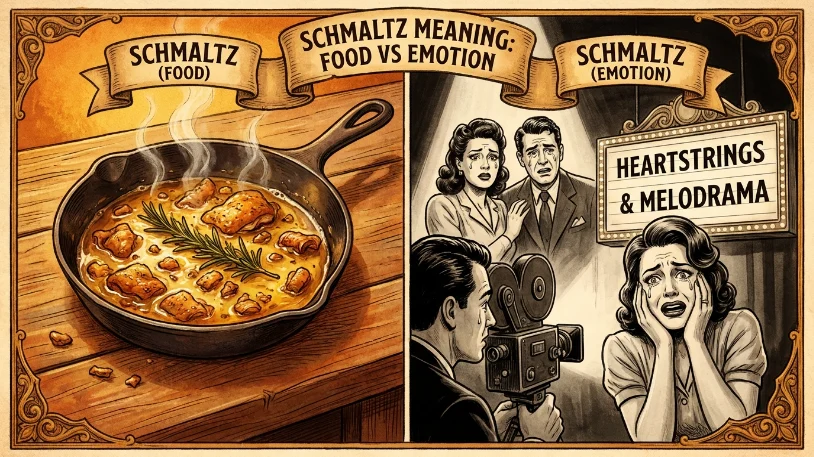
Schmaltz meaning: “Schmaltz” refers to two distinct ideas. Literally, it means rendered chicken or poultry fat used in cooking. Figuratively, it describes overly sentimental or exaggerated emotional expression, often seen in movies, speeches, or writing. The term comes from Yiddish and carries both cultural and linguistic significance.
Language has a funny way of packing multiple meanings into one word. “Schmaltz” does that brilliantly. At first glance, it sounds quirky. However, once you understand it, you start noticing it everywhere from kitchens to movie reviews.
So what does schmaltz mean?
In simple terms, schmaltz has two main meanings:
One word. Two worlds. Let’s unpack both.
Schmaltz Definition
Schmaltz (noun):
- Literal: Rendered chicken or poultry fat used in cooking
- Figurative: Excessive or exaggerated sentimentality
Quick Definition Table
| Context | Schmaltz Meaning | Example |
|---|---|---|
| Cooking | Rendered chicken fat | “Cook the onions in schmaltz” |
| Language | Overly emotional or sentimental expression | “That movie was pure schmaltz” |
Schmaltz Pronunciation and Meaning
Understanding pronunciation helps you use the word confidently.
- Pronunciation: shmalts
- Phonetic spelling: /ʃmɑːlts/
The “sch” sound comes from its Yiddish and Germanic roots, which gives it that distinct tone.
The Origin and History of Schmaltz
Words don’t appear out of nowhere. They travel, evolve, and pick up new meanings along the way.
Linguistic Roots
- Origin: Yiddish language
- Root word: German “Schmalz”
- Original meaning: Any rendered animal fat
How the Meaning Evolved
- Initially used in traditional Jewish cooking
- Gradually adopted into English-speaking communities
- Later developed a figurative meaning related to emotion
This shift didn’t happen overnight. It grew organically through storytelling, humor, and cultural exchange.
Literal Meaning of Schmaltz (Food Context)
Let’s step into the kitchen.
In its original sense, schmaltz refers to rendered chicken fat. Cooks make it by slowly heating chicken skin and fat until it melts into a rich, golden liquid.
Why Schmaltz Matters in Cooking
It’s not just fat. It’s flavor.
- Adds deep savory richness
- Enhances texture in dishes
- Has a higher smoke point than butter
- Brings authentic taste to traditional recipes
Common Foods Made with Schmaltz
- Matzo balls
- Chopped liver
- Roasted potatoes
- Traditional soups
Simple Schmaltz Preparation Process
- Cut chicken fat into small pieces
- Heat slowly over low flame
- Let the fat render naturally
- Strain and store
Cooking Facts About Schmaltz
- Rich in flavor compounds
- Used before vegetable oils became common
- Still valued in heritage cooking
Figurative Meaning of Schmaltz (Emotional Context)
Now shift gears.
In everyday language, schmaltz describes exaggerated emotional expression. Think of it as emotion turned up too high.
What Counts as Schmaltzy?
- Over-the-top romance
- Forced emotional speeches
- Predictable tear-jerking scenes
Examples of Schmaltz in Real Life
- A movie ending where everything magically works out
- A speech loaded with clichés
- Songs that try too hard to be emotional
“Schmaltz isn’t just emotion. It’s emotion that feels pushed, not earned.”
Schmaltz vs Sentimentality vs Melodrama
People often mix these terms. Let’s clear that up.
Comparison Table
| Term | Meaning | Tone | Usage Context |
|---|---|---|---|
| Sentimentality | Emotional expression | Neutral/Positive | General writing |
| Melodrama | Dramatic exaggeration | Intense | Theater/film |
| Schmaltz | Excessive, forced sentimentality | Negative | Criticism/media |
Schmaltz Synonyms and Antonyms
Synonyms (Similar Meaning)
- Corniness
- Cheesiness
- Emotional exaggeration
- Sentimental overload
Antonyms (Opposite Meaning)
- Subtlety
- Authentic emotion
- Restraint
- Minimalism
How to Use Schmaltz in a Sentence
Using the word correctly makes your language sharper.
Examples
- “The film started well but ended in pure schmaltz.”
- “His speech was full of unnecessary schmaltz.”
- “These potatoes taste amazing cooked in schmaltz.”
Quick Tip
Use it when you want to critique emotional excess, not genuine feeling.
Schmaltz in Movies, Music, and Literature
You’ll often hear critics use this word.
In Movies
- Predictable happy endings
- Emotional manipulation
- Overused tropes
In Music
- Lyrics filled with clichés
- Overly dramatic love songs
In Literature
- Excessive emotional narration
- Forced sentimental moments
Why Schmaltz Works (Sometimes)
Here’s the twist.
Not all schmaltz is bad.
When It Works
- Creates comfort
- Appeals to nostalgia
- Connects with wide audiences
When It Fails
- Feels fake
- Lacks depth
- Becomes repetitive
Schmaltz Meaning in Different Languages
Schmaltz Meaning in Urdu
- چکن کی چربی
- حد سے زیادہ جذباتی انداز
Schmaltz Meaning in Hindi
- पिघली हुई चिकन की चर्बी
- अत्यधिक भावुकता
Schmaltzy Meaning Explained
“Schmaltzy” is the adjective form.
Definition
- Overly sentimental
- Excessively emotional
Example
- “That was a schmaltzy ending.”
When to Use and Avoid Schmaltz
Use It When
- Reviewing movies or books
- Describing emotional exaggeration
Avoid It When
- Writing formal reports
- Describing genuine emotions
Cultural Meaning of Schmaltz
This word carries history.
- Rooted in Jewish culinary traditions
- Reflects migration and language blending
- Became part of modern pop culture
Modern Usage Trends
Today, you’ll hear “schmaltz” in:
- Film reviews
- Online discussions
- Casual conversations
It remains niche but recognizable.
Key Facts About Schmaltz
- Originates from Yiddish
- Has both literal and figurative meanings
- Often used critically in modern language
- Still widely used in traditional cooking
FAQs
What does schmaltz mean in slang?
It refers to overly sentimental or emotional expression.
Is schmaltz always negative?
Not always. It’s negative in language but positive in cooking.
What is schmaltz in simple words?
It means chicken fat or too much emotion.
Final Thoughts
Words like “schmaltz” carry more than definition. They carry culture, history and attitude.
In the kitchen, it adds richness.
In conversation, it signals excess.
Use it wisely. Context is everything.