
Last Updated on May 25, 2026
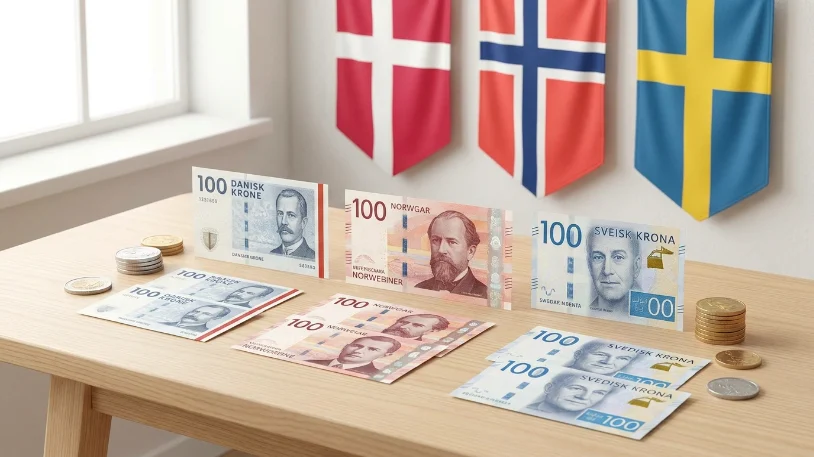
Kroner meaning refers to the plural form of krone, a currency unit used in Scandinavian countries like Denmark and Norway. It comes from the word “crown” and represents official money systems such as the Danish krone (DKK) and Norwegian krone (NOK). Each country has its own version with different values and exchange rates.
Kroner is the plural form of “krone”, which is a unit of currency used mainly in Scandinavian countries. When you hear someone say “100 kroner,” they simply mean 100 units of that country’s money.
Think of it like this:
- 1 dollar → 10 dollars
- 1 krone → 10 kroner
That’s the core kroner definition.
Now here’s where things get interesting. The word kroner doesn’t belong to just one country. Instead, multiple countries use it, each with its own version of the currency.
Kroner Definition in English
In plain English:
Kroner means the plural form of a Scandinavian currency unit called “krone,” used in countries like Denmark and Norway.
It represents money, just like dollars, euros, or pounds.
Quick Example of Kroner in Real Life
Imagine you’re visiting Norway.
- Coffee: 40 kroner
- Taxi ride: 200 kroner
- Dinner: 250 kroner
You’re not dealing with dollars or euros here. You’re using Norwegian kroner.
Simple, right?
What Currency Is Kroner? (Countries That Use Kroner)
Here’s where most people get confused.
Kroner is not one single currency. It’s a name shared by several currencies across Northern Europe.
Let’s break it down.
Countries That Use Kroner (Main List)
| Country | Currency Name | Code | Symbol |
|---|---|---|---|
| Denmark | Danish krone | DKK | kr |
| Norway | Norwegian krone | NOK | kr |
| Sweden | Swedish krona | SEK | kr |
| Iceland | Icelandic króna | ISK | kr |
Danish Kroner Meaning
The Danish krone (DKK) is the official currency of Denmark.
- Used in everyday transactions
- Stable currency tied closely to the euro
- Commonly written as: kr 100
Example:
- A sandwich might cost 50 kroner
Norwegian Krone Meaning
The Norwegian krone (NOK) is Norway’s official currency.
- Influenced by oil prices (important detail)
- Strong economy keeps it relatively stable
- Used everywhere in Norway
Example:
- Coffee: 35–50 kroner
Swedish Krona vs Kroner
Sweden uses krona, not kroner.
Here’s the difference:
- Singular: krona
- Plural: kronor
Still, it comes from the same root word. That’s why people often group them together.
Icelandic Króna (Quick Note)
Iceland uses króna, but it’s less commonly discussed globally.
- Lower value compared to others
- Still part of the Scandinavian currency family
Origin of the Word Kroner (Why It Means “Crown”)
Now let’s dig deeper.
The word krone comes from the Latin word for “crown.”
Why crown?
Because historically, currency symbolized royal authority. Kings literally stamped their power onto coins.
Money wasn’t just money. It was a symbol of control.
Historical Context
Back in the 19th century:
- Scandinavian countries formed a monetary union
- They adopted a shared currency name: krone
- Even after the union ended, the name stuck
Simple Analogy
Think of it like this:
- “Dollar” is used in multiple countries (USA, Canada, Australia)
- “Krone” works the same way in Scandinavia
Different countries. Same naming tradition.
Difference Between Krone and Krona (Clear Breakdown)
This confuses a lot of people, so let’s clear it up fast.
| Term | Language | Meaning | Example |
|---|---|---|---|
| Krone | Danish/Norwegian | Singular | 1 krone |
| Kroner | Danish/Norwegian | Plural | 50 kroner |
| Krona | Swedish | Singular | 1 krona |
| Kronor | Swedish | Plural | 50 kronor |
Key Takeaway
- Krone → Denmark & Norway
- Krona → Sweden
- Kroner → plural form
Same idea. Slight language differences.
Kroner Currency Meaning in Real Value Terms
Understanding the value of kroner matters more than the definition.
So how much is it worth?
Approximate Exchange Rates (General Range)
| Currency | Value in USD | Value in PKR (Approx) |
|---|---|---|
| 1 DKK | ~0.14 USD | ~40 PKR |
| 1 NOK | ~0.09 USD | ~25 PKR |
| 1 SEK | ~0.095 USD | ~27 PKR |
(Values fluctuate daily, but this gives a realistic range.)
Why Kroner Values Differ
Not all kroner are equal. Here’s why:
- Economic strength
- Inflation rates
- Oil exports (Norway especially)
- Central bank policies
Important Insight
Norwegian krone often fluctuates with oil prices.
That’s a key detail many articles miss.
Kroner Exchange Rate Explained Simply
Exchange rates show how much one currency equals another.
Example Conversion
- 100 Norwegian kroner ≈ 9 USD
- 100 Danish kroner ≈ 14 USD
That’s a noticeable difference.
How to Convert Kroner to PKR
Simple method:
- Check current exchange rate
- Multiply amount
Example:
- 100 NOK × 25 PKR ≈ 2,500 PKR
Quick Tip
Use reliable apps or bank rates. Airport exchanges often give worse rates.
Abbreviation for Kroner (Currency Codes Explained)
Every currency has a standard code.
ISO Currency Codes
| Currency | Code |
|---|---|
| Danish krone | DKK |
| Norwegian krone | NOK |
| Swedish krona | SEK |
| Icelandic króna | ISK |
Symbol for Kroner
Most use:
kr
Simple and consistent across countries.
Everyday Use of Kroner (Real-Life Examples)
Let’s bring this to life.
Typical Prices in Scandinavia
| Item | Price in Kroner |
|---|---|
| Coffee | 30–60 kroner |
| Fast food | 80–120 kroner |
| Public transport | 25–50 kroner |
| Dinner | 150–300 kroner |
Example Sentences
- “That costs 200 kroner.”
- “I paid 50 kroner for coffee.”
- “The ticket is 120 kroner.”
Local Behavior
Most people:
- Use cards instead of cash
- Rarely carry large amounts of physical kroner
- Expect contactless payments everywhere
Kroner vs Euro (Why Scandinavia Didn’t Switch)
This is a big question.
Why not use euros?
Reasons
- Strong independent economies
- Control over monetary policy
- National identity
Important Fact
Denmark is tied to the euro, but it still uses kroner.
That balance gives flexibility.
History of Kroner Currency (Brief but Powerful)
Let’s keep it tight but meaningful.
Scandinavian Monetary Union
- Started: 1873
- Countries involved: Denmark, Sweden, Norway
- Shared gold standard
What Happened Next
- Union dissolved during World War I
- Countries kept the krone name
- Systems became independent
Timeline Snapshot
- 1800s → Currency created
- Early 1900s → Union ends
- Today → Separate but similar systems
Is Kroner Still Used Today?
Yes. Absolutely.
Modern Usage
- Fully active currencies
- Digitally integrated
- Strong global recognition
Fun Fact
Scandinavian countries are moving toward cashless economies, but kroner still exists in both digital and physical forms.
Common Misunderstandings About Kroner
Let’s clear the myths.
Myth vs Reality
- Myth: All kroner are the same
→ Reality: Each country has its own value - Myth: Kroner is part of the euro
→ Reality: It’s separate - Myth: You can use Norwegian kroner in Denmark
→ Reality: You can’t
Kroner Pronunciation (Simple Guide)
Pronounced as:
“KROH-ner”
Soft “r” sound at the end.
Scandinavian Currencies List (Quick Reference)
- Danish krone (DKK)
- Norwegian krone (NOK)
- Swedish krona (SEK)
- Icelandic króna (ISK)
Quick Summary of Kroner Meaning
- Kroner = plural of krone
- Used in Denmark and Norway
- Related to Swedish krona
- Means “crown”
- Represents official currency units
FAQs
What is kroner in English?
It means the plural form of a Scandinavian currency unit called krone.
What currency is kroner?
It refers to currencies like Danish krone and Norwegian krone.
How much is 1 kroner worth?
It depends on the country, but usually ranges between 0.09–0.14 USD.
What is the difference between krone and krona?
Krone is used in Denmark and Norway. Krona is used in Sweden.
Which countries use kroner?
Denmark and Norway mainly use “kroner,” while Sweden uses “krona.”
How to convert kroner to PKR?
Multiply the kroner amount by the current exchange rate to Pakistani Rupees.
Final Thoughts
At first glance, kroner meaning seems simple. Just another currency term.
But once you dig deeper, you see a rich mix of:
- History
- Language
- Economics
- Cultural identity
And that’s what makes it interesting.
If you travel, trade, or simply stay curious about global money, understanding kroner gives you a clearer picture of how the world handles value.
It’s not just currency.
It’s history you can spend.