
Last Updated on May 19, 2026
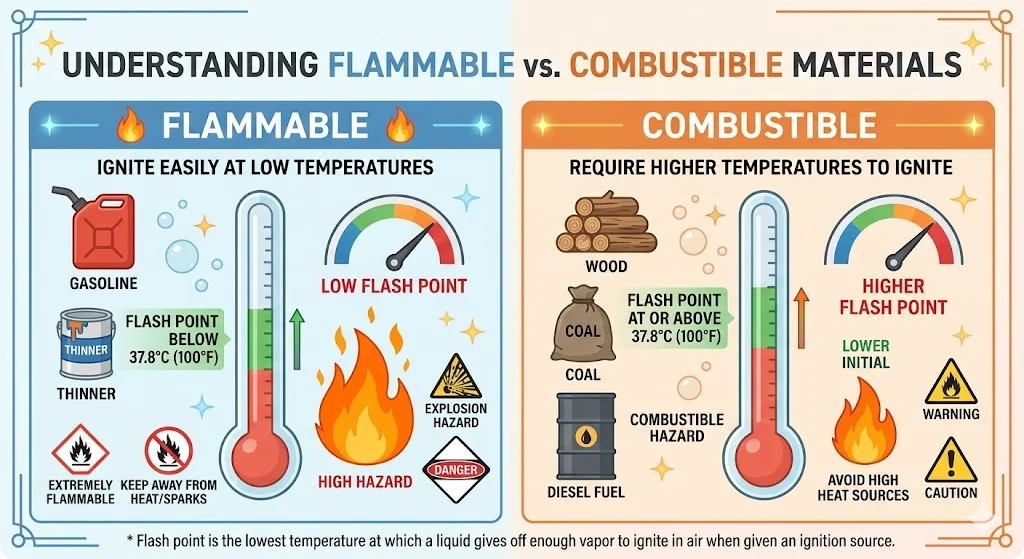
Flammable vs combustible refers to how easily a substance catches fire. Flammable materials ignite quickly at lower temperatures, while combustible materials require higher temperatures to catch fire. Understanding the difference is critical for safety, storage, and fire prevention.
Fire safety is something we all need to understand. But many people get confused between combustible vs flammable. These words sound similar. They both relate to fire. Yet they are not the same.
This confusion can lead to real danger. Imagine storing fuel the wrong way. Or using the wrong label in a workplace. Small mistakes can cause big fires.
In simple terms, both flammable and combustible materials can burn. The key difference is how easily they ignite. Some catch fire very fast. Others need more heat.
This guide explains everything in clear, simple language. You will learn definitions, examples, safety tips, and common mistakes. Whether you are a student, worker, or homeowner, this knowledge can help protect lives and property.
Quick Answer / Overview
| Feature | Flammable | Combustible |
| Ignition temperature | Low | Higher |
| Ease of catching fire | Very easy | Less easy |
| Flash point | Below 37.8°C (100°F) | Above 37.8°C (100°F) |
| Examples | Gasoline, alcohol | Diesel, wood |
| Risk level | High | Moderate |
Quick summary:
Flammable materials ignite quickly at low temperatures. Combustible materials need more heat before they burn.
Definition and Explanation
What Does Flammable Mean?
A flammable substance is a material that can catch fire easily. It needs only a small spark or low heat.
- Flash point is below 37.8°C (100°F)
- Vapors can ignite quickly
- High fire risk
Simple example:
Gasoline can catch fire from a tiny spark. That makes it flammable.
What Does Combustible Mean?
A combustible substance can burn, but not as easily. It needs higher heat to ignite.
- Flash point is above 37.8°C (100°F)
- Safer than flammable, but still risky
- Requires stronger heat source
Simple example:
Wood does not ignite instantly. It needs sustained heat. So it is combustible.
Understanding Flash Point
The flash point is the lowest temperature at which a liquid gives off enough vapor to ignite.
- Lower flash point = more dangerous
- Higher flash point = less sensitive to ignition
Combustible vs Flammable: Detailed Comparison
| Aspect | Flammable | Combustible |
| Definition | Easily ignites | Burns with more heat |
| Flash point | Below 100°F | Above 100°F |
| Fire risk | Very high | Moderate |
| Storage requirements | Strict | Moderate |
| Common use | Fuels, solvents | Building materials |
| Examples | Petrol, ethanol | Diesel, paper |
Advantages and Disadvantages
Flammable Materials
Advantages
- Ignite quickly for energy use
- Efficient for engines and fuel systems
- Useful in industries like transportation
Disadvantages
- Extremely dangerous
- Require strict storage rules
- High risk of explosion
Combustible Materials
Advantages
- Safer than flammable materials
- Easier to store and handle
- Common in daily life
Disadvantages
- Still pose fire risk
- Can cause slow-burning fires
- Harder to extinguish once ignited
Real-World Examples
Flammable Examples
- Gasoline
- Alcohol
- Propane
- Paint thinner
Scenario:
A small spark near gasoline vapors can cause an explosion instantly.
Combustible Examples
- Wood
- Paper
- Diesel fuel
- Cloth
Scenario:
A wooden table needs continuous heat before it starts burning.
Everyday Analogy
Think of it like cooking:
- Flammable = dry paper (lights instantly)
- Combustible = thick log (needs time and heat)
Regional and Global Usage
Different countries use similar standards, but terms may vary slightly.
United States
- Uses OSHA and NFPA standards
- Clear flash point classification
Europe
- Uses GHS (Globally Harmonized System)
- Labels focus on hazard levels
Asia and Other Regions
- Many follow GHS guidelines
- Safety labels becoming standardized
Common Mistakes
Mixing Up the Terms
Many people think flammable and combustible mean the same. They do not.
Correction:
Flammable is more dangerous than combustible.
Ignoring Labels
People often overlook safety labels on containers.
Correction:
Always check the label before use or storage.
Improper Storage
Storing flammable materials in open or hot areas.
Correction:
Keep them in cool, ventilated spaces.
Underestimating Combustible Materials
Assuming combustible items are safe.
Correction:
They can still burn and cause fire hazards.
Safety Guidelines
For Flammable Materials
- Store in sealed containers
- Keep away from heat and sparks
- Use proper ventilation
- Follow safety codes
For Combustible Materials
- Keep away from open flames
- Avoid heat buildup
- Store in dry areas
- Maintain fire extinguishers nearby
Exercises with Answers
Exercise 1
Question:
Is gasoline flammable or combustible?
Answer:
Flammable
Exercise 2
Question:
Which has a higher flash point: diesel or alcohol?
Answer:
Diesel (combustible)
Exercise 3
Question:
True or False: All flammable materials are combustible.
Answer:
True
Exercise 4
Question:
Which material is safer to store?
A. Gasoline
B. Wood
Answer:
B. Wood
Exercise 5
Question:
Define flash point in simple terms.
Answer:
The lowest temperature at which a substance can catch fire.
Related Concepts and Comparisons
Ignition Temperature
- Minimum temperature needed to start burning
- Different from flash point
Fire Triangle
Fire needs three elements:
- Heat
- Fuel
- Oxygen
Remove one, and fire stops.
Volatility
- Flammable substances are more volatile
- They release vapors quickly
Hazard Classification
Used in industries to:
- Label chemicals
- Define safety measures
- Prevent accidents
FAQs
What is the main difference between combustible vs flammable?
Flammable materials ignite easily at low temperatures, while combustible materials need higher heat to catch fire.
Is gasoline combustible or flammable?
Gasoline is flammable because it ignites quickly at low temperatures.
Are all flammable substances also combustible?
Yes, all flammable materials are combustible, but not all combustible materials are flammable.
Why is flash point important in combustible vs flammable classification?
Flash point determines how easily a substance can ignite and helps classify fire risk.
Is diesel flammable or combustible?
Diesel is combustible because it requires higher heat to ignite.
Which is more dangerous: flammable or combustible materials?
Flammable materials are more dangerous due to their low ignition temperature.
Can combustible materials become flammable?
Under certain conditions like heating, combustible materials can release flammable vapors.
How should flammable materials be stored safely?
Store them in cool, sealed containers away from heat, sparks, and open flames.
What are common examples of combustible materials?
Wood, paper, cloth, and diesel are common combustible materials.
Why do people confuse combustible vs flammable?
Because both terms relate to burning, but they differ in ignition temperature and risk level.
Conclusion
Understanding combustible vs flammable is essential for safety at home, school, and work. While both types of materials can burn, the key difference lies in how easily they ignite. Flammable materials are more dangerous because they catch fire quickly at low temperatures. Combustible materials require more heat, but they are still not risk-free.
Knowing this difference helps you store materials correctly, follow safety rules, and reduce fire hazards. Always read labels carefully and handle substances with caution. Even common items like wood or paper can become dangerous under the right conditions.
For best safety practices, treat all burnable materials with respect. Use proper storage, maintain ventilation, and keep fire extinguishing tools nearby. A small step in awareness can prevent major accidents.