
Last Updated on May 17, 2026
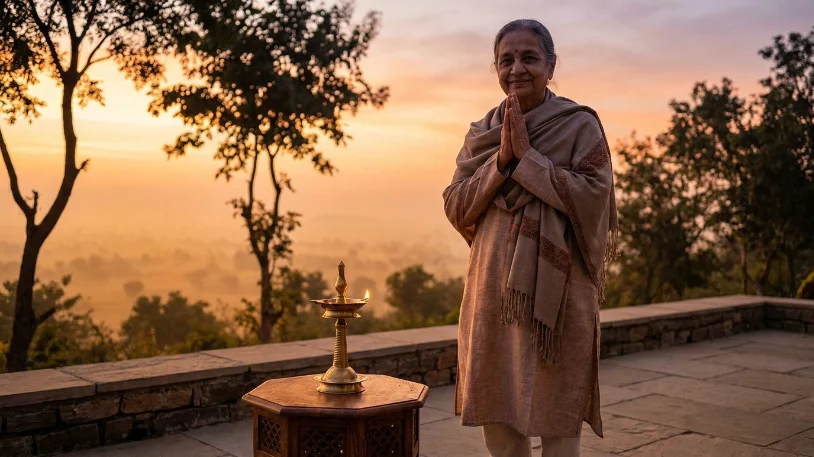
Namaste means “I bow to you.” It’s a respectful greeting from Sanskrit, often said with hands joined to show respect and humility.
You’ve probably heard the word “namaste” before. Maybe in a yoga class. Maybe while watching a travel vlog about India. Or perhaps someone greeted you with folded hands and a gentle smile.
At first glance, it seems simple. A greeting. A polite way to say hello.
But here’s the truth: the namaste meaning runs much deeper than a casual greeting.
It carries history. It reflects respect. And in many cases, it expresses a quiet acknowledgment of something profound something human, something shared.
In this guide, you’ll uncover:
- The real meaning of namaste
- Its Sanskrit origin and word breakdown
- Its spiritual and cultural significance
- How it’s used in daily life and yoga
- And most importantly, how to use it correctly
Let’s start with the basics before we dig deeper.
What Does Namaste Mean?
At its core, namaste is a respectful greeting.
Namaste Meaning in English
The most accurate and direct translation is:
“I bow to you.”
That’s it. Simple, respectful, and grounded.
Namaste Meaning in Hindi
In Hindi, namaste (नमस्ते) carries the same respectful tone:
- It is used to greet someone politely
- It reflects humility and courtesy
Namaste Meaning in Urdu
In Urdu, the closest interpretation would be:
- “میں آپ کو سلام کرتا ہوں” (Main aap ko salaam karta hoon)
Meaning: I respectfully greet you
Namaste Word Breakdown (Sanskrit Origin Explained)
To fully understand the meaning of namaste, you need to break the word into its original Sanskrit components.
| Sanskrit Word | Meaning |
|---|---|
| Namaḥ | Bow, reverence, respect |
| Te | To you |
So when you combine them:
Namaste = “I bow to you” or “I show respect to you.”
This breakdown comes directly from the Sanskrit language, one of the oldest known languages in human history.
Why This Matters
This isn’t just a greeting. It’s an expression of humility.
Instead of placing yourself above someone, you lower your ego just a little and acknowledge the other person.
That small shift changes everything.
The Deeper Spiritual Meaning of Namaste
Now things get interesting.
You’ve probably heard this version before:
“The divine in me honors the divine in you.”
It sounds beautiful. And it is.
But here’s the important distinction:
- This is not the literal translation
- It is a philosophical interpretation
Where This Idea Comes From
In Hindu philosophy, there’s a concept called Atman the inner self or soul.
The belief goes like this:
- Every person carries a divine essence
- That essence connects all living beings
So when someone says namaste, they’re not just greeting you.
They’re recognizing that shared inner light.
Simple Analogy
Think of it like this:
Two people meet. Instead of focusing on status, wealth, or differences, they silently say:
“I see you. Not just your surface but your essence.”
That’s the deeper namaste spiritual meaning.
Origins of Namaste: Language, History, and Cultural Roots
The namaste origin traces back thousands of years.
Key Facts About Its Origin
- Rooted in ancient Sanskrit
- Used in Vedic texts and traditions
- Common across India, Nepal, and South Asia
Historical Context
In ancient times, greetings weren’t casual. They reflected:
- Social hierarchy
- Respect
- Cultural values
Namaste became a universal greeting that worked across all levels of society.
Whether greeting a teacher, elder, or stranger, it conveyed respect without needing elaborate words.
How Namaste Is Used in Daily Life
In India and Nepal
In everyday life, namaste functions as:
- A greeting
- A farewell
- A sign of respect
Common Situations
- Meeting elders
- Greeting guests
- Speaking to strangers
- Formal interactions
Tone Matters
Unlike casual greetings like “hey,” namaste carries intention.
It feels:
- Polite
- Warm
- Grounded
The Namaste Gesture Meaning (Anjali Mudra Explained)
Words alone don’t tell the full story.
The namaste gesture completes the meaning.
How It’s Done
- Press your palms together
- Keep fingers pointing upward
- Hold hands near your chest
- Slightly bow your head
This gesture is known as Anjali Mudra.
Symbolism Behind the Gesture
| Element | Meaning |
|---|---|
| Hands together | Unity and connection |
| Bowed head | Humility |
| Heart position | Sincerity |
Why Gesture + Word Matters
You could say “namaste” without the gesture.
But when you combine both, the message becomes stronger:
Respect is not just spoken it’s shown.
Namaste Meaning in Yoga: Global Popularity Explained
If you’ve attended a yoga class, you’ve heard it.
At the end, the instructor says:
“Namaste.”
Why It’s Used in Yoga
Yoga isn’t just physical exercise. It includes:
- Mindfulness
- Awareness
- Inner connection
So ending with namaste signals:
- Gratitude
- Respect
- Closure
Namaste Meaning in Yoga Context
- Acknowledging the shared practice
- Honoring teacher and students
- Recognizing inner peace
Western Adaptation vs Traditional Use
| Aspect | Traditional Use | Modern Yoga Use |
|---|---|---|
| Purpose | Greeting | Closing ritual |
| Context | Social/cultural | Spiritual/wellness |
| Meaning | Respect | Gratitude + connection |
Common Misconceptions About Namaste
Let’s clear things up.
❌ “Namaste just means hello”
- Not entirely true
- It carries respect and humility
❌ “It’s only used in yoga”
- It existed long before yoga became global
❌ “It’s always spiritual”
- In daily life, it’s often just polite
❌ “Anyone can use it casually”
- Context and tone matter
Is It Okay to Say Namaste? (Cultural Sensitivity Guide)
Short answer: Yes but with awareness.
When It’s Appropriate
- Greeting respectfully
- Engaging with South Asian culture
- Practicing yoga mindfully
When to Avoid
- Mocking tone
- Overuse without understanding
- Using it as a stereotype
Golden Rule
Use it with respect, and you’re fine.
Namaste vs Other Indian Greetings
There isn’t just one greeting.
Comparison Table
| Greeting | Meaning | Usage |
|---|---|---|
| Namaste | I bow to you | General use |
| Namaskar | Formal respect | Formal settings |
| Pranam | Deep respect | Elders, spiritual |
Namaste Around the World
Over time, namaste crossed borders.
Global Adoption
- Yoga communities
- Meditation practices
- Cultural exchange
During COVID-19
- Became a contactless greeting
- Adopted worldwide as a safer alternative to handshakes
How to Properly Say and Use Namaste
Pronunciation Guide
- Correct: Nuh-muh-stay
- Avoid exaggeration or mispronunciation
Practical Examples
- Greeting an elder → Namaste with slight bow
- Ending yoga class → Namaste calmly
- Cultural interaction → Use respectfully
FAQs
What does namaste mean literally?
“I bow to you.”
Is namaste religious?
Not always. It can be cultural or spiritual.
Can non-Indians say namaste?
Yes, if used respectfully.
Why do yoga teachers say namaste?
To show gratitude and connection.
Conclusion
In a world full of rushed greetings and distracted conversations, namaste slows things down.
It reminds you to:
- Show respect
- Be present
- Acknowledge others
It’s just one word.
Yet somehow, it says more than most.