Last Updated on June 11, 2026
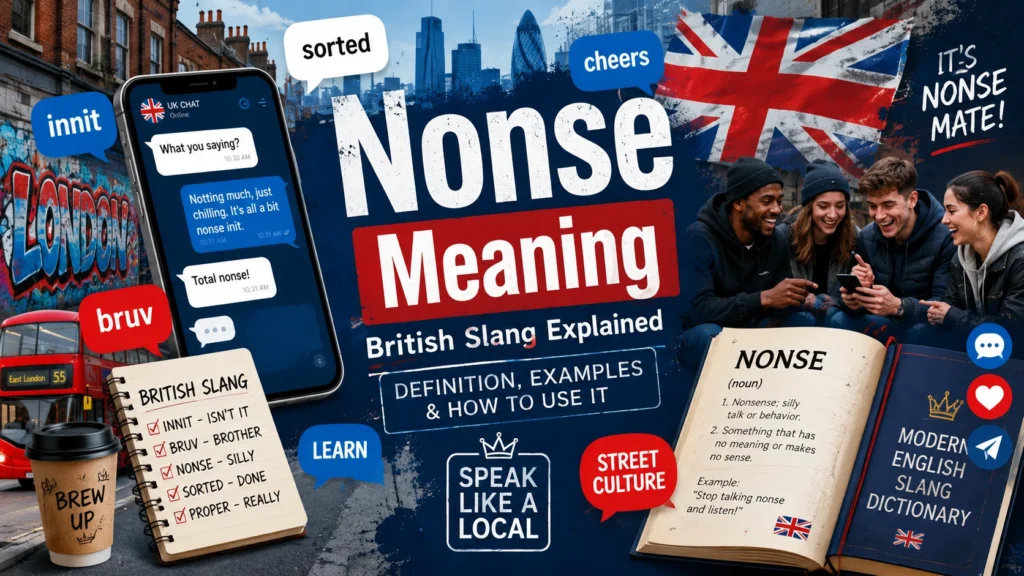
Language changes constantly. A word that starts with one meaning can develop new interpretations as people use it in different situations. The term nonse is a perfect example. Many people encounter this word on social media, in online games, in memes, or while talking with friends from the United Kingdom. Naturally, they wonder: what does nonse mean?
The answer isn’t always straightforward.
Depending on the context, nonse may refer to a very serious accusation, a casual insult, or internet slang used jokingly among friends. Understanding the meaning requires looking at its origin, cultural background, and modern usage.
This guide explains everything you need to know about the nonse meaning, including where the term came from, how people use it today, why it can be offensive, and what it means in online conversations.
What Is the Nonse Meaning?
The word nonse is generally understood as a variation or alternate spelling of nonce, a term commonly found in British slang.
In traditional UK slang, the word refers to a person who has committed sexual offenses against children. Because of this association, it is considered one of the most serious insults in British English.
Over time, however, internet culture changed the way some people use the term.
Today, especially on social media, people sometimes use nonse more casually to describe someone who is:
- Weird
- Suspicious
- Creepy
- Foolish
- Embarrassing
- Socially awkward
Even though casual usage has become more common online, the original meaning remains widely recognized.
Quick Definition of Nonse
| Term | Meaning |
|---|---|
| Nonse | A British slang insult traditionally referring to a child sex offender, though sometimes used online as a broader insult |
| Nonse slang meaning | An offensive term used to criticize or insult someone |
| Nonse internet slang | A word occasionally used jokingly or casually to call someone weird or suspicious |
Simple Explanation for Beginners
Imagine hearing someone say:
“That guy is acting like a nonse.”
The speaker may not literally mean the person committed a crime.
Instead, they may be suggesting that the person is behaving in a strange, creepy, or suspicious way.
However, because the original meaning is so serious, many people view the term as highly offensive regardless of context.
Why People Search for Nonse Meaning
Search interest around this term has grown because:
- Social media platforms expose users to UK slang.
- Gaming communities often use British expressions.
- Viral memes spread regional language globally.
- International audiences encounter unfamiliar slang terms.
As online communities become increasingly global, words that once belonged to local dialects now appear everywhere.
Nonse Definition Explained
Understanding the nonse definition requires separating its traditional meaning from its modern slang usage.
The Traditional Meaning of Nonse
Historically, the term referred to an individual associated with crimes involving children.
This remains the primary meaning in many parts of the United Kingdom.
As a result, calling someone a nonse can be interpreted as making an extremely serious allegation.
Unlike ordinary insults such as “idiot” or “jerk,” this word carries substantial social stigma.
The Modern Slang Meaning
Online culture often reshapes language.
Many younger users now employ the term less literally. In casual conversations, it may simply suggest that someone is:
- Acting oddly
- Behaving suspiciously
- Making others uncomfortable
- Saying something inappropriate
For example:
“Why are you messaging random people at 3 a.m.? You’re such a nonse.”
In this example, the speaker may not be making a literal accusation. Instead, they are criticizing unusual behavior.
Differences Between Literal and Casual Usage
| Literal Usage | Casual Usage |
|---|---|
| Refers to criminal behavior | Refers to odd behavior |
| Extremely serious accusation | Often used as an insult |
| Common in traditional UK contexts | Common online |
| Carries legal and social implications | Usually intended as mockery |
This distinction is important because misunderstandings can easily occur.
Why Context Matters
Context changes everything.
A word spoken among close friends may carry a completely different meaning than the same word used publicly.
Factors that affect interpretation include:
- Tone of voice
- Relationship between speakers
- Cultural background
- Online versus offline communication
- Regional language differences
Because of these factors, understanding context is essential whenever you encounter unfamiliar slang.
Where Did the Word Nonse Come From?
The history of this term remains the subject of debate.
Language experts, slang historians, and cultural commentators have proposed multiple explanations for its origin.
Origin of the Word
One popular theory suggests the word emerged within British prison culture.
According to this explanation, inmates used the term to identify individuals convicted of certain crimes against children.
Because prison communities often create unique vocabulary, the term eventually spread beyond correctional institutions.
Over time, it entered mainstream British slang.
Early Usage in British English
During the late twentieth century, the word became increasingly recognized throughout the United Kingdom.
Media coverage, public discussions, and everyday conversations contributed to its spread.
As awareness grew, so did its use as an insult.
How the Meaning Changed Over Time
Language rarely stays frozen.
Many words evolve as society changes.
The journey of nonse followed a familiar pattern:
- Specialized group usage
- Wider public adoption
- Use as an insult
- Internet adaptation
- Meme culture integration
Each stage expanded the audience and altered the meaning slightly.
Evolution Through UK Street Slang
Street slang often develops faster than formal language.
Younger generations borrow words, reshape meanings, and create entirely new contexts.
As a result, today’s usage can differ significantly from earlier interpretations.
Nonse Meaning in British Slang
British slang has always been colorful, direct, and deeply connected to local culture. Some expressions remain lighthearted, while others carry significant social weight. The term nonse falls firmly into the second category.
When discussing the nonse meaning in British slang, it’s important to understand that many people in the UK view the word as extremely offensive. Unlike ordinary insults, it often implies behavior associated with criminal misconduct or inappropriate actions.
Because of this, using the term casually can cause serious offense.
How the Word Is Used Across the UK
The meaning remains relatively consistent throughout England, Scotland, Wales, and Northern Ireland. However, the frequency of use varies by region, age group, and social environment.
You might hear the term:
- In casual conversations
- During arguments
- On social media platforms
- In online gaming communities
- Within meme culture
- In television and comedy discussions
In many cases, people use it to mock suspicious or socially awkward behavior rather than make a literal accusation.
Nonse UK Slang Meaning
In modern UK slang, the term may describe someone who:
- Acts in a creepy way
- Makes others uncomfortable
- Behaves strangely around younger people
- Displays inappropriate social behavior
- Seems suspicious or untrustworthy
For example:
“Why are you hanging around there all day? You look like a nonse.”
The speaker is criticizing behavior rather than presenting evidence of wrongdoing.
Still, the seriousness of the original meaning remains in the background.
Regional Differences in Usage
Although the core definition stays similar, regional slang culture influences how often the term appears.
| Region | Typical Usage |
|---|---|
| England | Common in slang conversations |
| Scotland | Used but often mixed with local expressions |
| Wales | Generally understood nationwide |
| Northern Ireland | Recognized through UK media and internet culture |
The internet has reduced many regional differences, making the word recognizable throughout the English-speaking world.
Why the Word Became Popular in Youth Slang
Several factors helped spread the term among younger generations:
- Viral videos
- Online gaming
- Meme pages
- Social media influencers
- Group chat culture
- Streaming communities
As slang travels through digital spaces, meanings often broaden.
That is exactly what happened here.
Many younger users now apply the term to people they simply find weird, awkward, or annoying.
Nonse Meaning on Social Media and the Internet
Social media has transformed language faster than any previous communication medium.
Words that once belonged to specific communities can now spread globally within hours.
The nonse meaning on social media reflects this evolution.
Nonse Meaning on TikTok
On TikTok, users frequently employ the term as a humorous insult.
It often appears in:
- Reaction videos
- Comedy sketches
- Comment sections
- Viral memes
- Prank content
A typical comment might read:
“Bro really thought that would work. Absolute nonse.”
In this situation, the word functions more like a criticism of poor judgment or embarrassing behavior.
Nonse Meaning on Instagram
Instagram users often encounter the term in:
- Story replies
- Reels comments
- Meme pages
- Group chats
The word generally appears when someone wants to mock unusual actions.
However, many users outside the UK may not fully understand its original meaning.
This creates occasional misunderstandings.
Nonse Meaning in Online Gaming
Gaming communities frequently develop their own slang vocabulary.
In multiplayer games, players sometimes use nonse to describe someone who is:
- Acting strangely
- Trolling teammates
- Behaving suspiciously
- Making inappropriate comments
The meaning often becomes detached from its historical context.
Instead, it functions as a generic insult.
Nonse Meaning in Memes
Internet memes thrive on exaggeration.
As a result, words with strong emotional impact often gain popularity.
The term appears in memes because it:
- Sounds distinctive
- Carries shock value
- Is widely recognized in UK internet culture
- Works as a quick insult
Meme culture tends to simplify language. Unfortunately, this can sometimes obscure the original meaning of words.
How Internet Culture Changes Slang
Internet language evolves rapidly.
A typical progression looks like this:
| Stage | Description |
|---|---|
| Original meaning | Specific definition |
| Community adoption | Used by a small group |
| Viral spread | Shared widely online |
| Meaning expansion | Applied to broader situations |
| Mainstream usage | Recognized globally |
Nonse follows this exact pattern.
What Does Calling Someone a Nonse Mean?
One of the most common questions people ask is:
“What does being called a nonse mean?”
The answer depends heavily on context.
Literal Interpretation
In its most serious sense, the term carries an accusation related to criminal behavior involving children.
This interpretation remains highly offensive and potentially damaging.
Many people still understand the word primarily in this way.
Casual Insult Interpretation
In modern slang conversations, someone might use the term simply to suggest that another person is:
- Creepy
- Weird
- Awkward
- Suspicious
- Embarrassing
For example:
“You keep liking your own posts. Stop being a nonse.”
The speaker is expressing annoyance rather than making a literal allegation.
Why It Is Considered an Insult
The insult gains its power from the seriousness of its original meaning.
Words become effective insults when they carry strong emotional associations.
Because society views the underlying behavior as particularly unacceptable, the term remains highly offensive.
Social Consequences of Using the Word
Using the term carelessly can lead to:
- Arguments
- Misunderstandings
- Damaged relationships
- Workplace issues
- Online moderation actions
Many platforms monitor harmful language closely.
Even when used jokingly, some audiences may react negatively.
Serious Accusation Versus Casual Mockery
This distinction cannot be overstated.
| Serious Usage | Casual Usage |
|---|---|
| Direct allegation | Mocking behavior |
| Potentially defamatory | Usually intended as humor |
| Strong social impact | Lower impact among friends |
| Highly offensive | Sometimes playful |
The challenge arises because listeners may interpret the word differently than the speaker intended.
How Nonse Is Used in Conversation
Real-world examples often make slang easier to understand.
Example Sentences in Everyday Speech
Here are common examples:
Example 1
“That comment was a bit nonse.”
Meaning: The comment seemed inappropriate or strange.
Example 2
“Stop acting like a nonse.”
Meaning: Stop behaving oddly or making people uncomfortable.
Example 3
“Everyone in the chat called him a nonse.”
Meaning: Participants criticized his behavior.
Example Sentences on Social Media
You may see comments such as:
- “That’s proper nonse behavior.”
- “Why would anyone do that? Nonse.”
- “Chat is calling him a nonse again.”
- “This meme is full of nonse energy.”
These examples show how internet culture broadens slang meanings.
Formal Versus Informal Contexts
The word belongs almost entirely to informal language.
You should avoid using it in:
- Business communication
- Academic writing
- Professional settings
- Formal presentations
- Customer interactions
Its strong negative associations make it inappropriate for professional environments.
When Not to Use the Term
Avoid using the word when:
- You do not understand the context.
- You are speaking with unfamiliar audiences.
- The conversation is professional.
- Cultural misunderstandings are likely.
- The topic involves sensitive issues.
Many people react strongly to the term because of its original meaning.
Understanding Audience Matters
A key principle of communication is audience awareness.
The same word can produce very different reactions depending on who hears it.
For example:
| Audience | Likely Reaction |
|---|---|
| Close friends | May interpret it as a joke |
| UK internet users | Usually understand the slang context |
| International audience | May be confused |
| Professional audience | May find it inappropriate |
| Older generations | More likely to focus on the original meaning |
This is why context remains essential.
Nonse Pronunciation and Spelling
People often search for nonse pronunciation after encountering the word online.
How to Pronounce Nonse
The word is commonly pronounced similarly to:
“nonss”
It typically rhymes with:
- Once
- Response (partial ending sound)
- Dense (depending on accent)
British accents may vary slightly.
Common Misspellings
Because the term often spreads through social media posts and comments, alternative spellings are common.
Examples include:
- Nonse
- Nonce
- Nons
- Noncey
The spelling nonce remains the more traditional version in British English.
Why People Spell It as Nonse
Online users frequently spell words phonetically.
Reasons include:
- Simpler typing
- Internet slang habits
- Regional pronunciation
- Meme culture adaptation
This explains why searches for nonse meaning continue growing despite the traditional spelling being different.
Nonse Compared With Other British Slang Terms
British slang is famous for its creativity. Some expressions are playful. Others are sarcastic. A few carry strong social stigma. Understanding how nonse meaning compares with other UK slang terms helps explain why the word attracts so much attention.
Many British insults target intelligence, appearance, or behavior. Nonse is different because it historically refers to conduct that society considers especially serious.
Common British Slang Insults
The UK has hundreds of slang insults that appear in everyday conversation.
| Slang Term | General Meaning | Severity |
|---|---|---|
| Idiot | Unintelligent person | Low |
| Muppet | Foolish person | Low |
| Plonker | Silly person | Low |
| Tosser | Annoying or foolish person | Medium |
| Wally | Clumsy or silly person | Low |
| Nonse | Traditionally a serious accusation, now also used as a strong insult | High |
The table highlights an important difference.
Most slang insults criticize behavior. Nonse carries a historical meaning that extends far beyond ordinary mockery.
Why Nonse Carries More Weight
Words gain power from social associations.
Calling someone a fool usually suggests poor judgment. Calling someone a nonse can imply something much more serious.
That is why many people consider it one of the strongest insults in modern British slang.
Several factors contribute to its impact:
- Historical meaning
- Cultural awareness
- Media coverage
- Social stigma
- Public sensitivity
Even when used jokingly, these associations remain present.
Similar Expressions in UK Street Slang
Some people use the term interchangeably with words that describe suspicious or creepy behavior.
However, nonse typically carries stronger implications than:
- Weird
- Creepy
- Dodgy
- Strange
- Sketchy
Those alternatives often communicate the same general idea without carrying the same level of offense.
Slang Evolution and Meaning Expansion
Language constantly adapts.
A word that originally described one thing can gradually develop broader meanings.
Examples exist throughout English vocabulary.
The journey often follows this pattern:
Original Meaning
       ↓
Community Usage
       ↓
Slang Adoption
       ↓
Internet Spread
       ↓
Broader Interpretation
The nonse term meaning has followed a similar path in many online spaces.
Why the Word Is Controversial
Few slang words generate as much debate.
The controversy surrounding the nonse definition comes from the tension between traditional meaning and modern usage.
Some people view it exclusively through its original definition.
Others use it as a casual insult with little awareness of its history.
The Original Meaning Still Matters
Language carries memory.
Even when meanings expand, original definitions often remain influential.
For many UK speakers, the term immediately brings to mind its traditional association.
As a result, hearing the word can provoke strong reactions.
Social Media Has Changed Perceptions
Internet culture often weakens the seriousness of words.
Memes, jokes, and viral content encourage people to use language in exaggerated ways.
Over time, younger users may encounter a term repeatedly without learning its background.
This creates a gap between generations.
Older speakers often interpret the word differently than younger internet users.
Offensive Language and Cultural Context
Words rarely exist in isolation.
Their meaning depends on:
- History
- Culture
- Community standards
- Social expectations
- Communication context
A phrase that seems harmless within one group may be deeply offensive elsewhere.
This is particularly true for slang that originated in specific cultural environments.
Why Context Changes Interpretation
Consider these two statements:
“That person is a nonse.”
and
“The chat keeps calling everyone a nonse.”
The first sounds like a direct accusation.
The second describes internet behavior.
Although the same word appears in both sentences, the meaning changes dramatically.
Media Influence on Modern Usage
Television, streaming content, podcasts, and social media have all contributed to the spread of British slang.
Popular creators often introduce regional expressions to international audiences.
As a result:
- More people recognize the term.
- More people search for its meaning.
- More people use it casually.
- More misunderstandings occur.
This explains why searches for what does nonse mean continue increasing worldwide.
Nonse Meaning in Text Messages and Online Chats
Digital communication changes language faster than almost anything else.
Text messages, online forums, gaming servers, and social media comments create environments where slang evolves rapidly.
Nonse Meaning in Text Messages
When someone uses the term in a text message, they usually intend it as an insult or criticism.
Examples include:
“Why did you send that message? Nonse.”
“Stop acting like a nonse.”
“That’s proper nonse behavior.”
In these examples, the word functions as shorthand criticism.
Nonse Meaning in Online Conversations
Online communication encourages brevity.
People often choose short, emotionally charged words that quickly express opinions.
Nonse fits this pattern because it:
- Is short
- Is recognizable
- Has strong emotional impact
- Works as a quick insult
This makes it appealing in fast-moving conversations.
Group Chat Usage
Group chats frequently create their own language.
Friends may use exaggerated insults without intending serious harm.
Common examples include:
- Friendly teasing
- Gaming banter
- Meme sharing
- Joke responses
However, outsiders may interpret the same language differently.
Gaming Communities and Slang
Gaming culture contributes heavily to slang development.
Players often create nicknames and insults that spread between platforms.
You may encounter the term in:
- Voice chats
- Discord servers
- Multiplayer games
- Livestream communities
- Competitive gaming forums
Within these spaces, the meaning often shifts away from the original definition.
Meme Culture and Slang Adaptation
Memes act as language accelerators.
A single viral joke can expose millions of people to a previously unfamiliar expression.
The process usually works like this:
Local Slang
      ↓
Online Joke
      ↓
Viral Meme
      ↓
Global Recognition
      ↓
Meaning Expansion
Many modern slang expressions follow this exact path.
Language, Slang, and Cultural Evolution
The story of nonse reveals broader truths about language itself.
Why Slang Changes So Quickly
Several factors drive slang evolution:
- Social media
- Youth culture
- Online gaming
- Entertainment content
- Internet communities
- Global communication
Previous generations relied on local conversations.
Today’s slang spreads across continents within minutes.
The Internet Creates Global Slang
Many users encounter British slang despite never visiting the UK.
They learn words through:
- TikTok videos
- YouTube creators
- Twitch streams
- Online games
- Meme pages
- Comment sections
This creates an international audience for regional expressions.
How Meanings Drift Over Time
Linguists often describe a process called semantic shift.
This occurs when a word gradually develops new meanings.
The process typically includes:
| Stage | Description |
|---|---|
| Original meaning | Initial definition |
| Secondary usage | New context emerges |
| Popular adoption | More people begin using it |
| Meaning expansion | Definition broadens |
| Cultural normalization | New meaning becomes common |
The evolution of nonse demonstrates this process clearly.
Why Understanding Context Matters
Context is often more important than the word itself.
When interpreting slang, consider:
- Who said it?
- Where was it said?
- What was the tone?
- Who was the audience?
- What was the situation?
These questions help determine the intended meaning.
Without context, slang can easily be misunderstood.
Common Misconceptions About Nonse Meaning
Many misconceptions surround the word.
Let’s clear up some of the most common ones.
Misconception: It Always Means the Same Thing
Reality: Meaning varies by context.
Some people use it literally.
Others use it as a casual insult.
Misconception: It Is Harmless Slang
Reality: Many people consider it highly offensive.
Its traditional meaning remains widely recognized.
Misconception: It Is Only Used in the UK
Reality: Social media has spread the term globally.
People now use it throughout many English-speaking online communities.
Misconception: Young People Always Know the Original Meaning
Reality: Many internet users encounter the word through memes before learning its history.
This contributes to changing usage patterns.
Quick Reference Guide
Nonse Meaning at a Glance
| Question | Answer |
|---|---|
| What does nonse mean? | A British slang insult traditionally associated with serious misconduct, now also used more broadly online |
| Is nonse British slang? | Yes |
| Is it offensive? | Yes, often highly offensive |
| Is it used online? | Frequently |
| Is it common on social media? | Yes |
| Can context change the meaning? | Absolutely |
| Is it used in texting? | Yes |
| Does everyone use it literally? | No |
Essential Facts About Nonse Meaning
Before moving to the FAQ section and conclusion, remember these key facts:
- Nonse is closely connected to British slang culture.
- The traditional meaning remains serious.
- Internet communities often use it differently.
- Social media has broadened awareness of the term.
- Context determines interpretation.
- Many people still consider the word highly offensive.
- Understanding its history helps avoid confusion.
- Online slang continues to reshape language worldwide.
The rise of the internet has transformed how slang develops, spreads, and evolves. Nonse serves as a fascinating example of how a regional expression can become part of global online vocabulary while still retaining traces of its original meaning.
Frequently Asked Questions
Many people encounter this word for the first time online and immediately search for answers. The following questions address the most common searches related to nonse meaning, nonse slang meaning, and what does nonse mean.
What Does Nonse Mean?
Nonse is a British slang term that traditionally refers to a person associated with sexual offenses against children. In modern internet culture, some people also use it more loosely as an insult aimed at someone they consider strange, creepy, suspicious, awkward, or foolish.
The intended meaning depends heavily on context.
What Is a Nonse?
A nonse is generally someone being described with the slang term nonse or nonce.
Historically, the label carried a very serious meaning. Today, especially on social media and in online gaming communities, some users apply it more broadly to criticize behavior they view as odd or inappropriate.
What Does Calling Someone a Nonse Mean?
Calling someone a nonse usually means the speaker is insulting them.
The exact meaning varies depending on the situation:
| Context | Intended Meaning |
|---|---|
| Traditional UK usage | Serious accusation |
| Social media | Weird or suspicious person |
| Gaming chat | Insult directed at another player |
| Meme culture | Mocking behavior |
| Group chat banter | Joke or teasing insult |
The same word can carry very different meanings depending on who uses it and where.
Is Nonse a Bad Word?
Yes.
Many people consider it highly offensive because of its traditional meaning.
Even when used casually, the term can cause offense because listeners may associate it with its original definition rather than the speaker’s intended joke or criticism.
Why Do People Say Nonse?
People use the term for several reasons:
- To criticize behavior
- To mock someone
- To express disapproval
- To participate in online slang culture
- To imitate language seen in memes or videos
The rise of social media has significantly increased exposure to the term.
Is Nonse British Slang?
Yes.
The word is strongly associated with British English and UK slang culture.
Although internet culture has spread it internationally, its roots remain firmly connected to British slang vocabulary.
What Does Nonse Mean in the UK?
In the UK, many people still understand the term primarily through its traditional meaning.
As a result, it often carries stronger social consequences there than in countries where users encounter it mainly through memes or gaming communities.
What Does Nonse Mean on Social Media?
On social media platforms, nonse often appears as a general insult.
Users may apply it to people they view as:
- Strange
- Creepy
- Embarrassing
- Suspicious
- Socially awkward
This broader internet usage differs from the term’s traditional meaning.
What Does Nonse Mean in Texting?
In text messages, the term usually functions as a quick insult.
Examples include:
“Stop being a nonse.”
“That’s nonse behavior.”
“Why would you do that? Nonse.”
The exact interpretation depends on the conversation and relationship between participants.
Can Nonse Be Used Jokingly?
Yes.
Friends sometimes use the term jokingly during casual conversations or online banter.
However, because of its history and seriousness, not everyone will interpret it as a joke.
Audience awareness remains important.
What Does Nonse Mean on TikTok?
On TikTok, the term often appears in:
- Comments
- Reaction videos
- Comedy content
- Meme pages
- Livestream chats
Most usage on the platform involves criticism, teasing, or humorous mockery rather than literal accusations.
What Does Nonse Mean in Online Gaming?
Gaming communities frequently use the term as a generic insult.
Players may call someone a nonse if they:
- Act strangely
- Troll teammates
- Behave suspiciously
- Make inappropriate comments
- Annoy other players
This usage reflects broader internet slang rather than the original definition.
Final Thoughts
The nonse meaning is more complex than many people realize.
At its core, the word originated as a serious British slang term with highly negative associations. Over time, internet culture, social media platforms, online gaming communities, and meme pages expanded its usage. Today, some people use it as a broad insult aimed at someone they view as weird, suspicious, awkward, or inappropriate.
Despite this shift, the original meaning remains widely recognized.
That is why the term continues to generate controversy and confusion.
If you encounter the word online, remember these key points:
- It originated in British slang.
- It is generally considered offensive.
- Context determines interpretation.
- Social media has broadened its usage.
- Many people still associate it with its traditional meaning.
- Understanding cultural background helps avoid misunderstandings.
Language evolves constantly. Slang evolves even faster.
The story of nonse demonstrates how a regional British expression can move from local conversations to global internet culture while retaining traces of its original meaning. Understanding that evolution gives you a clearer picture of not only this word but also how modern slang spreads, changes, and survives in the digital age.