Last Updated on August 9, 2026
“Ion” in slang means “I don’t.” It is a casual internet abbreviation used in texting, TikTok captions, and social media chats. The phrase comes from fast spoken English where “I don’t” is phonetically shortened. In digital communication, “ion” is used to express negation quickly, especially in informal conversations.
Ion Meaning Slang Explained in Simple Words
The slang term “ion” looks strange at first glance. If you’re reading a chat and see someone say “ion know” or “ion care,” it can feel confusing.
But here’s the simple truth.
“Ion” = “I don’t.”
That’s it.
It’s a fast, casual, and phonetic way people type in online conversations. Instead of writing the full phrase, users compress it into something quicker and more relaxed.
You’ll see it a lot in:
- Text messages
- TikTok comments
- Snapchat chats
- Twitter (X) posts
- Instagram captions
It belongs to the world of internet slang shortcuts, where speed and tone matter more than grammar rules.
What Does Ion Mean in Slang? Core Definition and Use
Ion Slang Meaning in One Line
“Ion” is a shortened form of “I don’t” used in informal digital communication.
How It Works Linguistically
This slang comes from spoken English patterns. When people talk fast, “I don’t” often sounds like:
- “I dunno”
- “I don’”
- “ion”
Over time, that pronunciation turned into a typed form online.
Basic Meaning Breakdown
| Slang Word | Full Form | Function | Example |
| ion | I don’t | Negation | ion care = I don’t care |
| ion know | I don’t know | Uncertainty | ion know what happened |
| ion want | I don’t want | refusal | ion want that |
Key Idea
It always expresses negation or refusal. If you see “ion,” think “I don’t” immediately.
Where Does Ion Come From? Origin of Ion Slang
From Spoken Language to Internet Text
The origin of “ion” is not random. It comes from real speech patterns, especially in informal English dialects and fast conversation styles.
When spoken quickly, “I don’t” can lose clarity:
- I don’t → “I dun”
- I don’t know → “I dunno”
- I don’t → “ion”
The brain naturally simplifies sound into easier chunks. That’s how slang is born.
Influence of Internet Culture
Social media accelerated this transformation. Platforms like TikTok and Twitter reward:
- Fast typing
- Short captions
- Emotional tone
- Viral language patterns
So “ion” became a perfect fit.
Important Linguistic Note
Linguists classify this as:
- Phonetic spelling variation
- Internet slang contraction
- Non-standard negation marker
It’s part of how language evolves online.
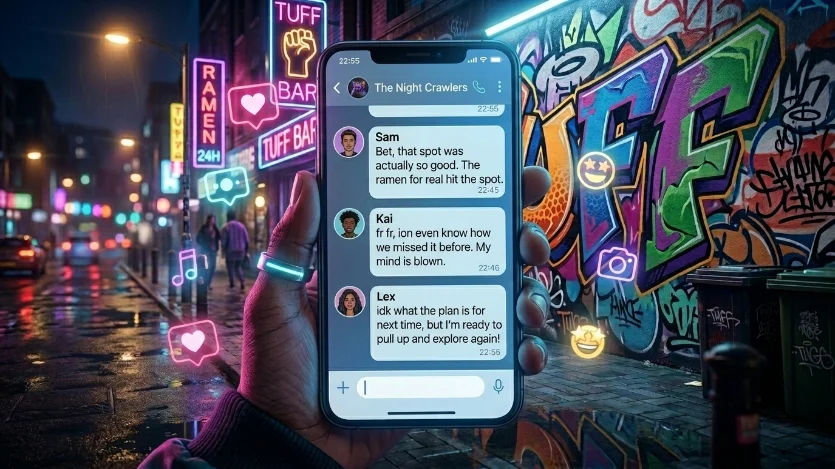
Ion in Text Messages and Chat Conversations
How People Actually Use Ion in Chats
In real conversations, “ion” always appears inside full phrases.
You rarely see it alone.
Common Text Examples
- “ion know what you talking about”
- “ion care honestly”
- “ion think that’s true”
- “ion want to go out today”
- “ion got time for that”
Why People Use It in Chats
There are three main reasons:
- Speed: faster typing
- Style: sounds casual and relaxed
- Identity: fits Gen Z internet tone
Tone It Creates
“Ion” changes tone instantly. Compare:
- “I don’t care.” → direct and slightly formal
- “ion care.” → casual and emotionally relaxed
It makes speech feel more conversational.
Ion on TikTok and Social Media Culture
Why TikTok Loves the Word Ion
TikTok thrives on short, punchy language. “Ion” fits perfectly because:
- It saves characters
- It sounds natural in voiceovers
- It matches meme-style captions
Popular TikTok Uses
You’ll often see captions like:
- “ion even know anymore 💀”
- “ion got energy for this”
- “ion trust nobody fr”
Emotional Expression in Memes
“Ion” is not just grammar. It’s emotion.
It can express:
- Frustration
- Confusion
- Indifference
- Humor
Example in Context
A TikTok video shows someone failing at something repeatedly:
Caption:
“ion even try no more 😭”
The slang adds personality and humor.
Ion vs “I Don’t” — What’s the Real Difference?
Grammar vs Internet Language
“I don’t” is grammatically correct English.
“Ion” is internet slang.
They mean the same thing but feel very different.
Comparison Table
| Feature | I Don’t | Ion |
| Formality | Formal | Informal |
| Usage | Writing, speech | Text, social media |
| Tone | Neutral | Casual, expressive |
| Speed | Slower | Faster |
| Grammar | Correct | Non-standard |
Why People Prefer Ion Online
Because internet communication is not formal writing.
People want:
- Speed
- Personality
- Humor
- Relatability
“Ion” delivers all of that.
Different Ways Ion Is Used (With Real Examples)
Negative Statements
This is the most common use.
- “ion like that movie”
- “ion agree with you”
- “ion understand this”
Expressions of Indifference
- “ion care tbh”
- “ion mind it”
- “ion even notice”
Confusion or Uncertainty
- “ion know what happened”
- “ion get it”
- “ion understand the point”
Refusal or Rejection
- “ion want that”
- “ion go there”
- “ion feel like it”
Table of Usage Contexts
| Context | Meaning | Example |
| Negation | I don’t + verb | ion like it |
| Confusion | I don’t know | ion know bro |
| Rejection | I don’t want | ion want that |
| Indifference | I don’t care | ion care |
Common Variations and Related Slang Words
Other Slang Connected to Ion
“Ion” doesn’t exist alone. It sits inside a bigger slang ecosystem.
Related Terms
- fr → for real
- idk → I don’t know
- tbh → to be honest
- iont → variation of “ion” + “t” (I don’t)
- ain’t → informal negation
- nah → no / not really
Example Combination Usage
- “ion know fr”
- “ion care tbh”
- “ion want that ngl”
Why Slang Clusters Matter
Internet language often stacks slang words together. This creates:
- Tone
- Identity
- Emotional expression
Misunderstandings About Ion Slang
People Think It Means Something Else
A common mistake is assuming:
- “ion” = ion in science (charged particle)
But that’s completely different.
Scientific Ion vs Slang Ion
| Type | Meaning | Field |
| Ion (science) | Charged atom | Chemistry |
| ion (slang) | I don’t | Internet language |
Context Is Everything
If you see “ion” in:
- Chemistry class → scientific ion
- TikTok comments → slang ion
Simple rule: context decides meaning.
Ion in AAVE and Internet Linguistics
Cultural Linguistic Influence
“Ion” is strongly influenced by spoken English patterns, especially within informal speech communities.
It reflects:
- Rapid pronunciation
- Dialectal variation
- Oral-to-text transformation
AAVE and Digital Slang Connection
Many internet slang terms come from African American Vernacular English (AAVE) or influenced speech styles.
“Ion” fits into this broader linguistic shift where:
- Spoken language shapes online writing
- Grammar becomes flexible
- Expression becomes more important than correctness
Important Note
It’s not “wrong English.” It’s different English used in different spaces.
How to Respond When Someone Uses Ion
Understanding the Meaning First
Don’t overthink it. Just translate it in your head:
- ion = I don’t
How to Reply Naturally
If someone says:
- “ion know what happened”
You can respond:
- “No worries, we’ll figure it out.”
Matching Tone Matters
If you respond too formally, it can feel off.
Example mismatch:
- “ion care lol”
- “That is inappropriate and lacks concern.” ❌
Better:
- “lol same honestly” ✔
Why Ion Became So Popular
Speed Wins Online
Typing speed shapes internet language.
Short forms always win because:
- People text fast
- Attention spans are short
- Platforms reward brevity
Identity and Group Language
Using “ion” signals:
- You understand internet culture
- You speak casually
- You belong in the online community
Meme Culture Effect
Memes spread language faster than grammar rules ever could.
Once a word goes viral:
- It spreads globally
- It gets copied
- It becomes normal
The Future of Ion and Internet Slang
Language keeps evolving. “Ion” is part of a bigger trend:
- Compression of words
- Phonetic spelling online
- Emotion-based communication
What Might Happen Next
We may see:
- Even shorter forms replacing “ion”
- Emoji-based negation
- Voice-to-text slang evolution
But for now, “ion” is still widely used across social platforms.
Final Thoughts
“Ion” is more than just internet slang. It shows how language adapts when people want to speak faster, feel more natural, and connect online.
It replaces “I don’t” in casual speech. It adds tone, personality, and emotion to digital conversations.
Once you understand it, online chats suddenly make a lot more sense. You stop decoding words and start reading meaning.