
Last Updated on October 2, 2026
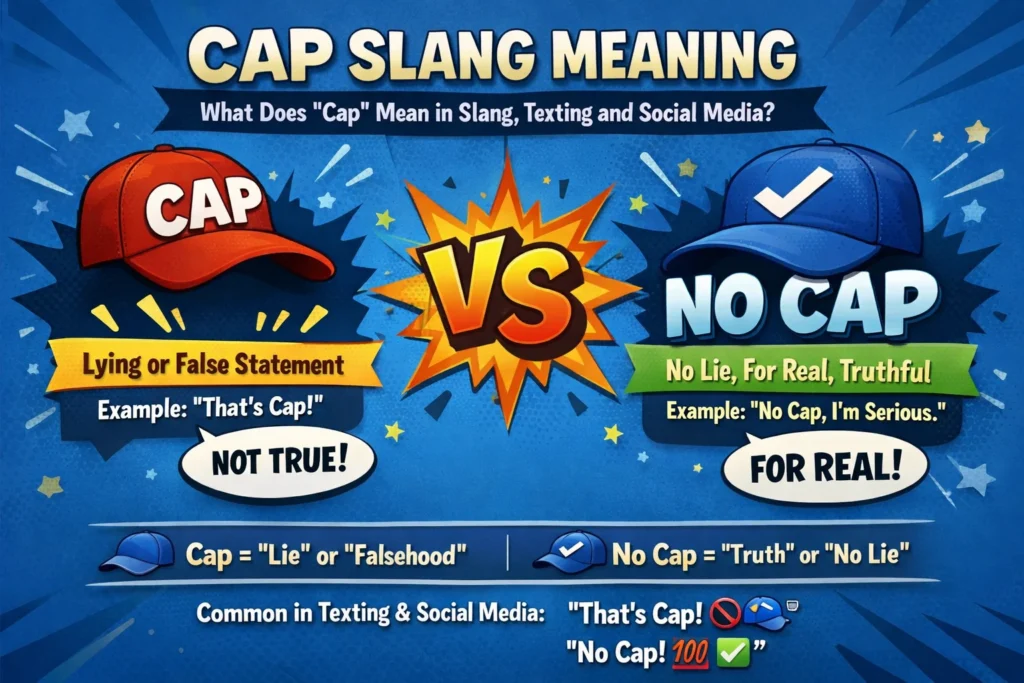
Cap is a popular slang term meaning a lie, false statement, exaggeration, or something untrue. When someone says “that’s cap,” they mean they believe a claim is false or exaggerated, while “no cap” means they are being truthful, honest, or serious. The term is widely associated with AAVE, hip-hop culture, social media, Gen Z communication, texting, and internet slang.
If you’ve spent time on TikTok, Instagram, Snapchat, gaming chats, or text messages, you’ve probably seen people saying phrases like “that’s cap,” “no cap,” or “stop capping.” For someone unfamiliar with internet slang, these expressions can be confusing because the traditional meaning of “cap” refers to a hat. However, in modern online culture, the word has a completely different meaning.
The term “cap” has become one of the most popular slang words used by Gen Z and social media users. It appears in comments, memes, conversations, gaming communities, and viral content across multiple platforms.
In this guide, you’ll learn the complete cap slang meaning, its origin, how it’s used on social media, examples, related expressions, and why it became so popular online.
What Does Cap Mean in Slang?
Simple Definition of Cap
In modern slang, cap means a lie, false statement, exaggeration, or something that isn’t true.
When someone says:
“That’s cap.”
They mean:
- That’s not true.
- I don’t believe you.
- You’re exaggerating.
- That sounds fake.
The word is commonly used to challenge the credibility of a statement.
What Does “That’s Cap” Mean?
The phrase “that’s cap” is used when someone doubts a claim.
Example:
Person A: “I scored 100 points in every basketball game this season.”
Person B: “That’s cap.”
In this example, Person B believes the statement is false or exaggerated.
Why People Say Cap Instead of Lie
Modern internet communication values speed and simplicity.
Instead of writing:
“I don’t believe that statement because it seems exaggerated.”
People simply write:
“Cap.”
One word communicates the same idea instantly.
Cap Slang Meaning Explained
Cap as a False Statement
The most common meaning of cap is a lie.
Example:
“I own ten luxury cars.”
Response:
“Cap.”
The listener believes the statement is false.
Cap as an Exaggeration
Not every use of cap involves intentional lying.
Sometimes it refers to exaggeration.
Example:
“That was the greatest meal in human history.”
Someone may respond:
“Cap.”
The listener simply thinks the claim is overstated.
Cap as a Question of Credibility
Many people use cap when evaluating:
- Personal stories
- Viral content
- Social media claims
- Online rumors
- Achievements
- Opinions
Whenever something seems unbelievable, people often respond with cap.
What Does No Cap Mean?
Understanding No Cap
If cap means a lie, then no cap means the opposite.
No cap means honestly, truthfully, genuinely, or no lie.
Examples:
- “No cap, that was the hardest exam I’ve ever taken.”
- “No cap, she’s incredibly talented.”
- “No cap, that movie was amazing.”
Why No Cap Became So Popular
Online audiences often question exaggerated claims.
As a result, people use no cap to emphasize honesty and sincerity.
The phrase tells listeners:
- I’m serious.
- I’m being honest.
- I’m not exaggerating.
- You can trust me.
Examples of No Cap
- “No cap, I’m exhausted.”
- “No cap, that restaurant has the best burgers.”
- “No cap, he’s one of the smartest people I know.”
What Does Capping Mean?
Definition of Capping
Capping is the verb form of cap.
It means:
- Lying
- Exaggerating
- Stretching the truth
- Making unbelievable claims
Examples:
- “You’re capping.”
- “He’s always capping.”
- “Stop capping.”
Stop Capping Meaning
The phrase “stop capping” means:
“Stop lying.”
or
“Stop exaggerating.”
It’s commonly used among friends and on social media.
Big Cap Meaning
Big cap refers to a major exaggeration or an obvious lie.
Example:
Person A: “I never use social media.”
Person B: “Big cap.”
The response suggests the statement is clearly false.
Origin of Cap Slang
Where Did Cap Come From?
The term originated in African American Vernacular English (AAVE).
Long before social media existed, variations of cap and capping were already used in spoken language within African American communities.
Influence of Hip-Hop Culture
Hip-hop culture played a major role in popularizing the term.
Artists used cap and no cap in:
- Song lyrics
- Interviews
- Social media posts
Fans adopted the language and helped spread it worldwide.
How Social Media Accelerated Its Growth
Platforms like:
- TikTok
- Snapchat
- X
- YouTube
helped turn cap into a global slang expression.
Cap Meaning on Social Media
Cap Meaning on TikTok
TikTok users often comment “cap” when they don’t believe a story, challenge, or claim.
Cap Meaning on Instagram
Instagram users use cap in:
- Comments
- Stories
- Reels
- Direct messages
to express disbelief.
Cap Meaning on Snapchat
Snapchat conversations frequently include:
- That’s cap
- No cap
- Stop capping
because the platform focuses on casual communication.
Cap Meaning on X
On X, users often reply with cap when discussing sports, celebrities, politics, or trending topics they find questionable.
Cap vs No Cap
Key Differences Between Cap and No Cap
| Term | Meaning |
|---|---|
| Cap | Lie or exaggeration |
| No Cap | Truth or honesty |
| Capping | Lying |
| Stop Capping | Stop lying |
| Big Cap | Major exaggeration |
Quick Comparison
Think of no cap as the complete opposite of cap.
One questions honesty.
The other confirms honesty.
Related Slang Terms
Popular Alternatives to Cap
Several slang expressions share similar meanings:
- No lie
- Facts
- For real
- Legit
- Real talk
- Straight up
- Keeping it real
Similar Expressions Used Online
These terms often appear alongside cap and no cap in modern internet culture.
Why Cap Became One of the Most Popular Slang Words Online
The Need for Quick Communication
People constantly evaluate whether information is true or false.
Instead of writing long explanations, users simply type:
“Cap.”
How Digital Culture Helped Cap Spread
The rise of:
- Memes
- Social media
- Influencers
- Short-form videos
helped cap become one of the most recognizable internet slang terms.
Why Gen Z Uses Cap So Frequently
Short Expressions Work Better Online
Modern communication favors speed.
Typing “cap” is much faster than writing a detailed response.
Meme Culture Encourages Slang
Many viral memes use phrases such as:
- That’s cap.
- No cap.
- Stop the cap.
- Big cap detected.
Social Identity and Community
Understanding popular slang helps users feel connected to online communities and internet culture.
Frequently Asked Questions
What Does Cap Mean in Slang?
Cap means a lie, exaggeration, or false statement.
What Does No Cap Mean?
No cap means honestly, truthfully, or no lie.
What Does Capping Mean?
Capping means lying or exaggerating.
What Does Stop Capping Mean?
It means stop lying or stop exaggerating.
Is Cap a Bad Word?
No. Cap is not considered a swear word or profanity.
What Does Cap Mean on TikTok?
It usually means a statement is false or difficult to believe.
Where Did Cap Slang Originate?
It originated in African American Vernacular English (AAVE) and later became popular through hip-hop culture and social media.
Final Thoughts
The phrase cap slang meaning has become an important part of modern internet vocabulary. Millions of people use the term every day across social media platforms, text messages, gaming communities, and online discussions.
At its core, the meaning is simple:
- Cap = Lie
- No Cap = Truth
- Capping = Lying
- Stop Capping = Stop Lying
Understanding these expressions makes it easier to follow modern online conversations and stay connected with contemporary internet culture.