Last Updated on June 10, 2026
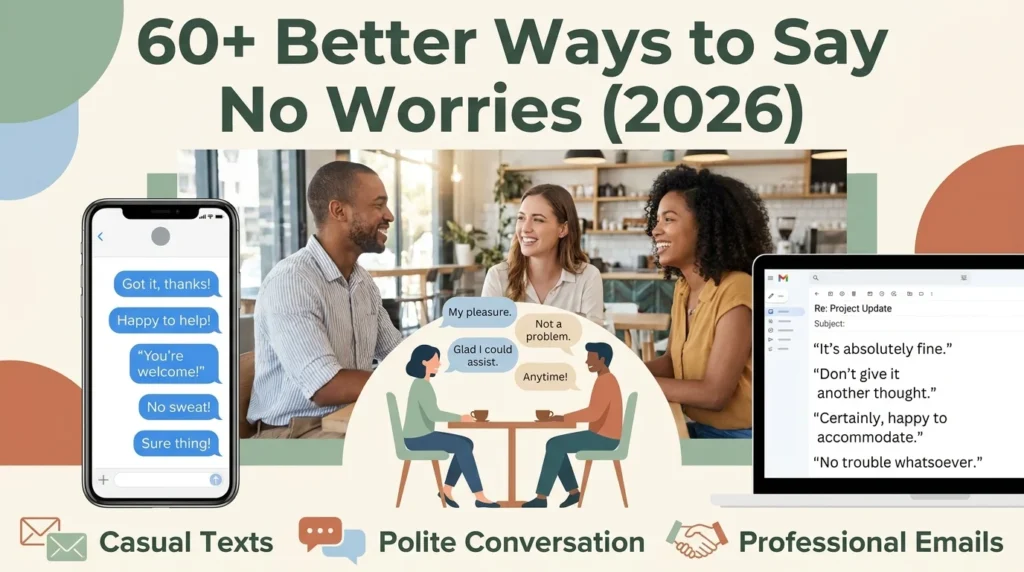
Looking for other ways to say no worries? Try:
No problem, It’s all good, Don’t mention it, Happy to help, Think nothing of it.
These alternatives help you sound more natural, professional, friendly, or polite depending on the situation.
The phrase “no worries” is commonly used in English to reassure someone, respond to an apology, or show that something isn’t a problem. It’s friendly and conversational, but it can sound too casual in professional or formal settings.
Learning alternatives to “no worries” helps you communicate more effectively in emails, meetings, customer service interactions, and daily conversations. It also improves your ability to express reassurance in English naturally and confidently.
Whether you’re replying to “thank you,” accepting an apology, or easing someone’s concern, using varied expressions can make your communication sound more polished and emotionally intelligent.
“The right reassurance phrase can instantly make conversations feel warmer and more professional.”
Quick Categories
Formal alternatives to “no worries”
- Certainly
- Not a problem at all
- Please don’t worry about it
- It was my pleasure
Pro Tip: Use these in workplace emails or customer service communication.
Casual alternatives
- No problem
- It’s all good
- Sure thing
- Don’t sweat it
Pro Tip: Great for texting, conversations, and relaxed situations.
Professional alternatives
- Happy to help
- Absolutely
- My pleasure
- Glad to assist
Pro Tip: Ideal for clients, colleagues, and workplace communication.
Informal expressions
- You’re good
- No big deal
- All good
- Forget about it
Pro Tip: Keep these for close friends and informal social settings.
Common Mistakes
- Using overly casual phrases professionally
Example: “No biggie!” in a corporate email - Overusing “no worries” repeatedly
Example: Using it in every reply - Sounding dismissive instead of reassuring
Example: “Whatever, no worries.” - Using slang in formal communication
Example: “Don’t sweat it, boss.” - Not matching emotional tone
Example: Casual response during a serious apology
What Does “No Worries” Mean?
“No worries” means there is no problem, concern, or issue. It’s often used to reassure someone after they apologize, thank you, or express concern.
Grammar Tip
- Commonly used as a standalone response
- Functions similarly to “it’s okay” or “don’t worry about it”
Example Sentence
“Sorry I’m late.”
“No worries, we just started.”
When to Use “No Worries”
- Responding to apologies
- Replying to “thank you”
- Reassuring someone
- Casual workplace conversations
- Customer service interactions
Spoken vs Written
- Spoken: extremely common
- Written: acceptable but often casual
Formal vs Informal
- Formal: “Not a problem at all.”
- Informal: “No worries!”
Is It Professional or Polite to Say “No Worries”?
Polite? ✔️ Yes
Professional? ⚠️ Sometimes
While friendly and polite, “no worries” can sound too informal in highly professional communication.
Business Example
Instead of: “No worries about the delay.”
Try: “Please don’t worry about the delay.”
Pros and Cons of Using “No Worries”
Pros
- Friendly and approachable
- Easy to understand
- Common in spoken English
- Reassuring tone
Cons
- Too casual for formal settings
- Overused
- Can sound dismissive
- Not ideal for professional emails
“Choosing the right reassurance phrase helps you sound calm, confident, and considerate.”
Other Ways to Say “No Worries” (With Examples)
These alternatives will help you sound more fluent, natural, and professional in different situations.
Use them based on tone, audience, and context to reassure someone effectively.
1. Phrase: No problem
Meaning: It’s not an issue
Explanation: One of the most common alternatives
Example Sentence: “No problem, happy to help.”
Best Use: everyday conversations
Worst Use: highly formal writing
Tone: casual, friendly
Context Variability: both
2. Phrase: It’s all good
Meaning: Everything is fine
Explanation: Informal reassurance
Example Sentence: “It’s all good, don’t worry about it.”
Best Use: friends
Worst Use: corporate emails
Tone: relaxed, casual
Context Variability: informal
3. Phrase: Don’t mention it
Meaning: No thanks needed
Explanation: Often used after someone says thank you
Example Sentence: “Don’t mention it; it was nothing.”
Best Use: polite conversations
Worst Use: serious apologies
Tone: warm, polite
Context Variability: both
4. Phrase: Happy to help
Meaning: Glad to assist
Explanation: Friendly and professional
Example Sentence: “Happy to help anytime.”
Best Use: workplace communication
Worst Use: emotional apologies
Tone: professional, positive
Context Variability: professional
5. Phrase: Think nothing of it
Meaning: It wasn’t a burden
Explanation: Slightly formal and classic
Example Sentence: “Think nothing of it.”
Best Use: polite interactions
Worst Use: casual slang-heavy chats
Tone: refined, polite
Context Variability: professional
6. Phrase: Not a problem at all
Meaning: Completely okay
Explanation: More professional than “no problem”
Example Sentence: “It’s not a problem at all.”
Best Use: workplace
Worst Use: very casual texting
Tone: professional, reassuring
Context Variability: professional
7. Phrase: Sure thing
Meaning: Certainly
Explanation: Casual agreement/reassurance
Example Sentence: “Sure thing, I’ll handle it.”
Best Use: casual work chats
Worst Use: formal business letters
Tone: friendly, relaxed
Context Variability: casual
8. Phrase: My pleasure
Meaning: I was glad to do it
Explanation: Professional and polite
Example Sentence: “My pleasure, glad I could assist.”
Best Use: customer service
Worst Use: casual apologies
Tone: polished, warm
Context Variability: professional
9. Phrase: Absolutely
Meaning: Of course
Explanation: Confident reassurance
Example Sentence: “Absolutely, no issue at all.”
Best Use: workplace communication
Worst Use: emotional situations
Tone: confident, positive
Context Variability: both
10. Phrase: Don’t worry about it
Meaning: It’s fine
Explanation: Direct reassurance
Example Sentence: “Don’t worry about it; mistakes happen.”
Best Use: apologies
Worst Use: formal business communication
Tone: supportive, casual
Context Variability: casual
11. Phrase: Glad to assist
Meaning: Happy to provide help
Explanation: Formal and professional
Example Sentence: “Glad to assist with the project.”
Best Use: clients, coworkers
Worst Use: social texting
Tone: professional, courteous
Context Variability: professional
12. Phrase: It was nothing
Meaning: The help was minimal
Explanation: Humble reassurance
Example Sentence: “It was nothing, really.”
Best Use: friendly conversations
Worst Use: formal communication
Tone: modest, warm
Context Variability: casual
13. Phrase: Anytime
Meaning: I’m always willing to help
Explanation: Friendly and casual
Example Sentence: “Anytime, just let me know.”
Best Use: friends, coworkers
Worst Use: formal emails
Tone: approachable, casual
Context Variability: both
14. Phrase: You’re welcome
Meaning: Standard polite response
Explanation: Traditional reply to thanks
Example Sentence: “You’re welcome!”
Best Use: all contexts
Worst Use: none
Tone: neutral, polite
Context Variability: universal
15. Phrase: Don’t sweat it
Meaning: Don’t stress about it
Explanation: Informal American English phrase
Example Sentence: “Don’t sweat it; it’s okay.”
Best Use: friends
Worst Use: professional emails
Tone: relaxed, informal
Context Variability: informal
16. Phrase: No big deal
Meaning: Not important/problematic
Explanation: Casual reassurance
Example Sentence: “No big deal, it happens.”
Best Use: casual conversations
Worst Use: serious workplace situations
Tone: relaxed, supportive
Context Variability: informal
17. Phrase: You’re good
Meaning: Everything is okay
Explanation: Modern conversational phrase
Example Sentence: “You’re good, don’t worry.”
Best Use: younger audiences
Worst Use: formal communication
Tone: casual, modern
Context Variability: informal
18. Phrase: It’s perfectly fine
Meaning: Completely acceptable
Explanation: More formal reassurance
Example Sentence: “It’s perfectly fine; no issue at all.”
Best Use: workplace
Worst Use: slang-heavy conversations
Tone: polite, calm
Context Variability: professional
19. Phrase: Forget about it
Meaning: Don’t think about it anymore
Explanation: Casual reassurance phrase
Example Sentence: “Forget about it; everything’s okay.”
Best Use: informal conversations
Worst Use: professional communication
Tone: casual, comforting
Context Variability: informal
20. Phrase: Of course
Meaning: Naturally/definitely
Explanation: Positive reassurance
Example Sentence: “Of course, happy to help.”
Best Use: all-purpose conversations
Worst Use: none
Tone: warm, confident
Context Variability: both
21. Phrase: Please don’t worry
Meaning: Calm reassurance
Explanation: Softer and more caring
Example Sentence: “Please don’t worry about the situation.”
Best Use: emotional conversations
Worst Use: playful chats
Tone: caring, polite
Context Variability: both
22. Phrase: It’s okay
Meaning: Everything is fine
Explanation: Simple reassurance
Example Sentence: “It’s okay, these things happen.”
Best Use: apologies
Worst Use: formal business writing
Tone: supportive, calm
Context Variability: universal
23. Phrase: Happy to be of help
Meaning: Glad to assist
Explanation: Slightly formal variation
Example Sentence: “Happy to be of help whenever needed.”
Best Use: workplace
Worst Use: casual slang settings
Tone: professional, friendly
Context Variability: professional
24. Phrase: No harm done
Meaning: No damage or issue occurred
Explanation: Often used after small mistakes
Example Sentence: “No harm done; everything worked out.”
Best Use: apologies
Worst Use: serious situations
Tone: reassuring, casual
Context Variability: both
25. Phrase: All good
Meaning: Everything’s fine
Explanation: Short informal reassurance
Example Sentence: “All good, no stress.”
Best Use: texting, casual talk
Worst Use: professional emails
Tone: relaxed, informal
Context Variability: informal
26. Phrase: Certainly
Meaning: Of course/absolutely
Explanation: Very professional and polite
Example Sentence: “Certainly, happy to assist.”
Best Use: customer service
Worst Use: casual friend chats
Tone: formal, courteous
Context Variability: professional
27. Phrase: It was my pleasure
Meaning: I enjoyed helping
Explanation: More elegant than “my pleasure”
Example Sentence: “It was my pleasure to help.”
Best Use: formal interactions
Worst Use: casual slang conversations
Tone: polished, respectful
Context Variability: professional
28. Phrase: You got it
Meaning: Consider it handled
Explanation: Casual reassuring response
Example Sentence: “You got it, no worries.”
Best Use: informal teamwork
Worst Use: executive communication
Tone: casual, confident
Context Variability: casual
29. Phrase: No need to apologize
Meaning: Reassurance after apology
Explanation: Kind and calming response
Example Sentence: “No need to apologize; it’s okay.”
Best Use: emotional situations
Worst Use: sarcastic contexts
Tone: caring, understanding
Context Variability: both
30. Phrase: I completely understand
Meaning: Empathetic reassurance
Explanation: Shows emotional understanding
Example Sentence: “I completely understand; don’t worry about it.”
Best Use: professional or emotional situations
Worst Use: very casual jokes
Tone: empathetic, professional
Context Variability: both
“Professional reassurance sounds calm, respectful, and emotionally aware.”
Mini Quiz / Self-Check
1. Which phrase is most professional?
A. Don’t sweat it
B. Glad to assist
C. All good
Answer: B
2. Best phrase for a friend apologizing?
A. Certainly
B. No big deal
C. My pleasure
Answer: B
3. Best option in customer service?
A. You’re good
B. My pleasure
C. Forget about it
Answer: B
Comparison Table: Top Alternatives
| Phrase | Tone | Best Use |
| No problem | Casual | Everyday conversations |
| Happy to help | Professional | Workplace communication |
| My pleasure | Polished | Customer service |
| Don’t mention it | Warm | Polite interactions |
| It’s perfectly fine | Professional | Business settings |
| Don’t worry about it | Supportive | Apologies |
| Anytime | Friendly | Casual relationships |
| Glad to assist | Formal | Professional support |
| No need to apologize | Caring | Emotional reassurance |
| I completely understand | Empathetic | Sensitive situations |
FAQs
1. What is the most professional alternative to “no worries”?
“Happy to help” or “Glad to assist” are excellent professional alternatives.
2. Is “no worries” rude?
No, it’s generally friendly and polite, but it may sound too casual in formal situations.
3. What can I say instead of “no worries” in emails?
Use “Not a problem at all,” “My pleasure,” or “Please don’t worry about it.”
4. What’s a warm response to an apology?
Try “No need to apologize” or “It’s okay.”
5. What phrase sounds most natural casually?
“No problem” is one of the most common and natural alternatives.
Conclusion
Learning other ways to say no worries helps you communicate with more confidence, professionalism, and emotional awareness. Different alternatives allow you to adapt your tone depending on the situation, relationship, and level of formality.
Practice these expressions in emails, conversations, and customer interactions to sound more natural and polished in English. Small wording choices can make your communication feel significantly warmer and more effective.