
Last Updated on May 18, 2026
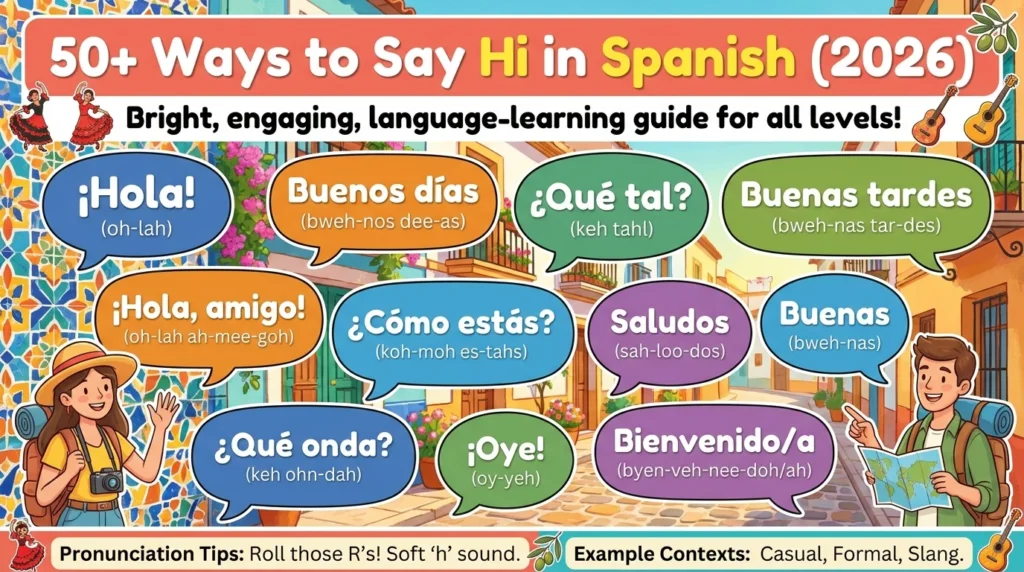
Wondering how to say hi in Spanish? The most common greetings are:
Hola, Buenas, ¿Qué tal?, ¿Cómo estás?, Mucho gusto.
These Spanish greetings help you sound more natural, friendly, and confident in conversations, travel, school, or professional settings.
Learning how to say hi in Spanish is one of the first and most useful steps when studying the language. Greetings are essential because they help you start conversations politely and build positive connections.
While many learners know the word “Hola”, Spanish offers many other greetings depending on the region, level of formality, and situation. Learning different greetings helps you sound more fluent and culturally aware. It also improves your ability to express friendliness in Spanish naturally.
Whether you are traveling, meeting coworkers, chatting online, or speaking with native speakers, knowing multiple greetings makes your Spanish sound more authentic and engaging.
“The right greeting instantly makes conversations feel warmer and more natural.”
Quick Categories
Formal ways to say hi in Spanish
- Buenos días
- Buenas tardes
- Mucho gusto
- Encantado/a
Pro Tip: Use formal greetings in workplaces, schools, or with older people.
Casual ways to say hi in Spanish
- Hola
- ¿Qué tal?
- ¿Cómo va?
- Buenas
Pro Tip: These are common among friends and everyday conversations.
Friendly slang greetings
- ¿Qué pasa?
- ¿Qué onda?
- ¿Qué hubo?
- ¿Qué más?
Pro Tip: Slang varies by country, so use it carefully depending on region.
Professional greetings
- Es un placer conocerle
- Mucho gusto
- Buenos días
- ¿Cómo se encuentra?
Pro Tip: Best for business meetings and formal introductions.
Common Mistakes
- Using slang in formal situations
Example: Saying “¿Qué onda?” in a job interview - Ignoring regional differences
Example: Using Mexican slang in Spain may sound unusual - Mispronouncing “Hola”
Example: Pronouncing the “H” loudly - Using only one greeting repeatedly
Example: Saying only “Hola” in every situation - Confusing formal and informal “you”
Example: Using “¿Cómo estás?” with senior professionals
What Does “Hi” Mean in Spanish?
The most direct translation of “hi” in Spanish is “Hola.”
However, Spanish speakers use many greetings depending on:
- Formality
- Country/region
- Time of day
- Relationship with the person
Example Sentence
“Hola, ¿cómo estás?”
(Hi, how are you?)
When to Use Spanish Greetings
- Meeting new people
- Starting conversations
- Traveling in Spanish-speaking countries
- Workplace communication
- Social media or texting
Spoken vs Written
- Spoken greetings are often shorter and more casual
- Written greetings may sound more formal or complete
Formal vs Informal
- Formal: “Buenos días”
- Informal: “¿Qué tal?”
Is It Important to Learn Different Spanish Greetings?
Polite? ✔️ Yes
Professional? ✔️ Yes
Using varied greetings makes your Spanish sound more natural and culturally appropriate.
Business Example
“Buenos días, mucho gusto en conocerle.”
(Good morning, pleased to meet you.)
Pros and Cons of Using Only “Hola”
Pros
- Simple and universal
- Easy to remember
- Appropriate in most situations
- Commonly understood
Cons
- Can sound repetitive
- Lacks cultural nuance
- Not always formal enough
- Doesn’t show advanced fluency
“Native-like greetings help your Spanish sound more confident and authentic.”
30+ Ways to Say Hi in Spanish (With Examples)
These greetings will help you sound more fluent, natural, and confident in different Spanish-speaking situations.
Use them according to context, region, and level of formality.
1. Phrase: Hola
Meaning: Hi / Hello
Explanation: The most universal Spanish greeting
Example Sentence: “Hola, ¿cómo estás?”
Best Use: everyday conversations
Worst Use: none
Tone: neutral, friendly
Context Variability: all contexts
2. Phrase: Buenos días
Meaning: Good morning
Explanation: Used before noon
Example Sentence: “Buenos días, señor.”
Best Use: formal mornings
Worst Use: nighttime
Tone: polite, professional
Context Variability: formal
3. Phrase: Buenas tardes
Meaning: Good afternoon
Explanation: Used during afternoon/evening
Example Sentence: “Buenas tardes, ¿cómo está?”
Best Use: professional settings
Worst Use: early morning
Tone: respectful
Context Variability: formal
4. Phrase: Buenas noches
Meaning: Good evening/night
Explanation: Evening greeting or goodbye
Example Sentence: “Buenas noches a todos.”
Best Use: evenings
Worst Use: daytime
Tone: polite
Context Variability: formal
5. Phrase: Buenas
Meaning: Hi there
Explanation: Shortened casual greeting
Example Sentence: “¡Buenas! ¿Todo bien?”
Best Use: casual conversations
Worst Use: formal meetings
Tone: relaxed, friendly
Context Variability: casual
6. Phrase: ¿Qué tal?
Meaning: How’s it going?
Explanation: Very common informal greeting
Example Sentence: “¿Qué tal tu día?”
Best Use: friends, coworkers
Worst Use: highly formal situations
Tone: conversational
Context Variability: casual
7. Phrase: ¿Cómo estás?
Meaning: How are you?
Explanation: Informal greeting question
Example Sentence: “Hola, ¿cómo estás?”
Best Use: friends
Worst Use: formal interviews
Tone: warm
Context Variability: casual
8. Phrase: ¿Cómo está usted?
Meaning: How are you? (formal)
Explanation: Respectful version
Example Sentence: “Buenos días, ¿cómo está usted?”
Best Use: elders, professionals
Worst Use: close friends
Tone: respectful
Context Variability: formal
9. Phrase: Mucho gusto
Meaning: Nice to meet you
Explanation: Common introduction phrase
Example Sentence: “Mucho gusto, soy Carlos.”
Best Use: first meetings
Worst Use: casual repeated greetings
Tone: polite
Context Variability: professional
10. Phrase: Encantado/a
Meaning: Delighted to meet you
Explanation: Formal introduction phrase
Example Sentence: “Encantado de conocerle.”
Best Use: business introductions
Worst Use: texting friends
Tone: elegant, professional
Context Variability: formal
11. Phrase: ¿Qué pasa?
Meaning: What’s up?
Explanation: Casual slang greeting
Example Sentence: “¿Qué pasa, amigo?”
Best Use: close friends
Worst Use: formal situations
Tone: relaxed
Context Variability: informal
12. Phrase: ¿Qué onda?
Meaning: What’s up?
Explanation: Common in Mexico
Example Sentence: “¿Qué onda, bro?”
Best Use: Mexican slang
Worst Use: formal settings
Tone: trendy, casual
Context Variability: informal
13. Phrase: ¿Qué hubo?
Meaning: What’s going on?
Explanation: Popular in Colombia
Example Sentence: “¿Qué hubo, parcero?”
Best Use: Colombian Spanish
Worst Use: formal workplaces
Tone: regional, casual
Context Variability: informal
14. Phrase: ¿Qué más?
Meaning: What’s new?
Explanation: Friendly casual greeting
Example Sentence: “¿Qué más? Todo bien?”
Best Use: friends
Worst Use: interviews
Tone: conversational
Context Variability: casual
15. Phrase: ¿Cómo va?
Meaning: How’s it going?
Explanation: Informal but polite
Example Sentence: “Hola, ¿cómo va todo?”
Best Use: coworkers
Worst Use: highly formal meetings
Tone: friendly
Context Variability: both
16. Phrase: ¿Qué hay de nuevo?
Meaning: What’s new?
Explanation: Similar to English equivalent
Example Sentence: “¿Qué hay de nuevo contigo?”
Best Use: casual catch-ups
Worst Use: formal settings
Tone: curious, relaxed
Context Variability: casual
17. Phrase: Saludos
Meaning: Greetings
Explanation: Often used in writing
Example Sentence: “Saludos desde Madrid.”
Best Use: emails/messages
Worst Use: spoken greetings
Tone: polite
Context Variability: professional
18. Phrase: Bienvenido/a
Meaning: Welcome
Explanation: Greeting for arrivals
Example Sentence: “¡Bienvenido a nuestra casa!”
Best Use: hosting guests
Worst Use: casual daily greeting
Tone: warm
Context Variability: both
19. Phrase: ¿Todo bien?
Meaning: Everything good?
Explanation: Casual wellbeing check
Example Sentence: “Hola, ¿todo bien?”
Best Use: friendly chats
Worst Use: formal emails
Tone: caring
Context Variability: casual
20. Phrase: ¿Cómo te va?
Meaning: How’s life treating you?
Explanation: Slightly more personal
Example Sentence: “¿Cómo te va en el trabajo?”
Best Use: acquaintances
Worst Use: professional introductions
Tone: conversational
Context Variability: casual
21. Phrase: Hey
Meaning: Hey
Explanation: Borrowed from English
Example Sentence: “Hey, ¿qué haces?”
Best Use: younger speakers
Worst Use: formal communication
Tone: modern, casual
Context Variability: informal
22. Phrase: Hola a todos
Meaning: Hello everyone
Explanation: Group greeting
Example Sentence: “Hola a todos, gracias por venir.”
Best Use: meetings/groups
Worst Use: one-on-one greetings
Tone: friendly
Context Variability: both
23. Phrase: ¿Qué cuentas?
Meaning: What’s new with you?
Explanation: Common in Spain
Example Sentence: “¿Qué cuentas últimamente?”
Best Use: friends
Worst Use: business settings
Tone: conversational
Context Variability: casual
24. Phrase: ¿Cómo amaneciste?
Meaning: How did you wake up?
Explanation: Friendly morning greeting
Example Sentence: “Hola, ¿cómo amaneciste?”
Best Use: close relationships
Worst Use: strangers
Tone: caring
Context Variability: personal
25. Phrase: ¿Qué dices?
Meaning: What’s up?
Explanation: Casual slang
Example Sentence: “¿Qué dices, amigo?”
Best Use: peers
Worst Use: professional communication
Tone: relaxed
Context Variability: informal
26. Phrase: ¿Qué haces?
Meaning: What are you doing?
Explanation: Informal greeting opener
Example Sentence: “Hola, ¿qué haces hoy?”
Best Use: texting friends
Worst Use: formal meetings
Tone: casual
Context Variability: informal
27. Phrase: ¿Cómo andas?
Meaning: How are you doing?
Explanation: Common in Latin America
Example Sentence: “¿Cómo andas últimamente?”
Best Use: acquaintances
Worst Use: formal introductions
Tone: friendly
Context Variability: casual
28. Phrase: Es un placer conocerle
Meaning: It’s a pleasure to meet you
Explanation: Highly formal greeting
Example Sentence: “Es un placer conocerle, señor.”
Best Use: business meetings
Worst Use: casual chats
Tone: professional, elegant
Context Variability: formal
29. Phrase: Hola amigo/amiga
Meaning: Hi friend
Explanation: Friendly direct greeting
Example Sentence: “Hola amiga, ¿cómo estás?”
Best Use: friends
Worst Use: strangers professionally
Tone: warm
Context Variability: casual
30. Phrase: ¿Qué tal todo?
Meaning: How’s everything?
Explanation: Friendly conversation starter
Example Sentence: “¿Qué tal todo en casa?”
Best Use: casual interactions
Worst Use: formal business emails
Tone: conversational
Context Variability: casual
“Learning greetings by context helps you sound more fluent than memorizing vocabulary alone.”
Mini Quiz / Self-Check
1. Which greeting is most formal?
A. ¿Qué onda?
B. Buenos días
C. Hey
Answer: B
2. Which greeting is Mexican slang?
A. ¿Qué onda?
B. Buenas tardes
C. Encantado
Answer: A
3. Best greeting for a business meeting?
A. ¿Qué pasa?
B. Es un placer conocerle
C. ¿Qué haces?
Answer: B
Comparison Table: Top Spanish Greetings
| Phrase | Tone | Best Use |
| Hola | Neutral | Everyday conversations |
| Buenos días | Formal | Morning greetings |
| ¿Qué tal? | Casual | Friends/coworkers |
| Mucho gusto | Polite | First meetings |
| Encantado/a | Formal | Professional introductions |
| ¿Qué onda? | Slang | Friends |
| Buenas | Casual | Quick greetings |
| ¿Cómo está usted? | Respectful | Elders/professionals |
| Saludos | Professional | Emails/messages |
| ¿Qué más? | Casual | Friendly chats |
FAQs
1. What is the most common way to say hi in Spanish?
“Hola” is the most common and universal greeting.
2. How do you greet someone formally in Spanish?
Use “Buenos días” or “Mucho gusto.”
3. What’s a casual Spanish greeting?
“¿Qué tal?” or “¿Qué pasa?” are common informal greetings.
4. Is “Hola” formal or informal?
It works in both formal and informal situations.
5. Which Spanish greeting is best for travel?
“Hola” and “Buenos días” are safest and most useful everywhere.
Conclusion
Learning how to say hi in Spanish using different greetings helps you sound more natural, culturally aware, and confident in conversations. From formal introductions to casual slang, each expression fits a different social situation.
Practice these greetings daily while texting, traveling, or speaking with native speakers. The more variety you use, the more fluent and authentic your Spanish will sound.