Last Updated on June 18, 2026
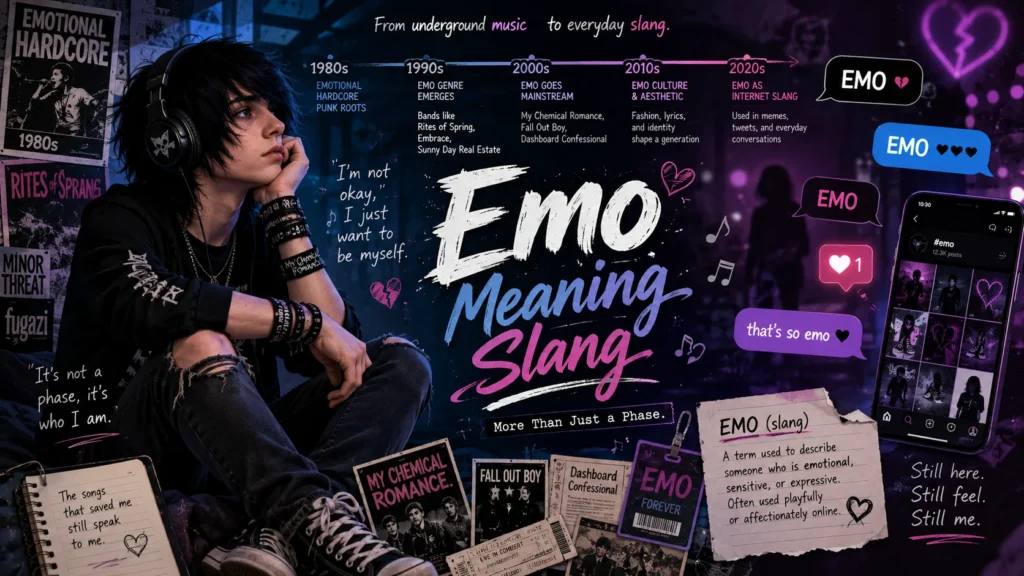
When people search for emo meaning slang, they usually want a quick answer. So here it is in plain language. Emo in slang means a person who shows strong emotions, especially sadness, sensitivity, or emotional intensity. Online, it can also describe a mood, vibe, or aesthetic that feels dark, emotional, or dramatic.
You might hear it in sentences like:
- “Why are you so emo today?”
- “That song is giving emo vibes.”
- “He’s in his emo phase again.”
In modern internet culture, emo is not just about personality. It’s about expression. Sometimes serious. Sometimes joking. Sometimes just a meme.
And that’s where things get interesting.
The meaning of emo has changed a lot over time. Today, it usually falls into three main uses:
Emo as a personality label
People use emo to describe someone who:
- Feels emotions deeply
- Gets sad or reflective easily
- Overthinks situations
- Expresses feelings openly
Example:
“She’s a bit emo after the breakup.”
Emo as a mood or vibe
Here, emo doesn’t describe a person. It describes a moment or atmosphere.
Example:
“This rainy weather feels so emo.”
Emo as internet humor
Gen Z often uses emo sarcastically.
Example:
“My WiFi stopped working. I’m emo now.”
So the meaning depends heavily on tone. That’s why emo slang meaning can feel confusing at first.
Where the Word Emo Actually Comes From
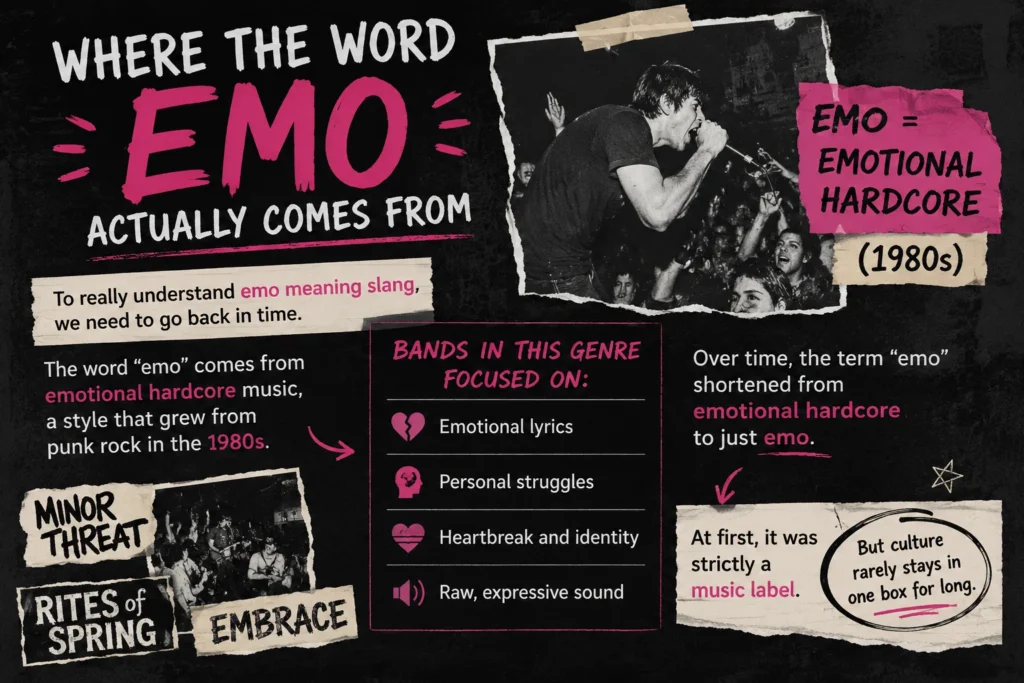
To really understand emo meaning slang, we need to go back in time.
The word “emo” comes from emotional hardcore music, a style that grew from punk rock in the 1980s.
Bands in this genre focused on:
- Emotional lyrics
- Personal struggles
- Heartbreak and identity
- Raw, expressive sound
Over time, the term “emo” shortened from emotional hardcore to just emo.
At first, it was strictly a music label. But culture rarely stays in one box for long.
Emo Music and Its Influence on the Slang Meaning
Emo music played a huge role in shaping how people use the word today.
Key influences include:
- Punk rock energy
- Emotional storytelling
- Youth frustration
- Personal vulnerability
As emo bands became popular in the early 2000s, fans started building a lifestyle around the music.
That lifestyle included:
- Black clothing
- Emotional journaling
- Intense self-expression
- Strong identity around music taste
So when people today say “emo,” they’re still unconsciously borrowing from this culture.
How Emo Became a Youth Identity
At some point, emo stopped being just music.
It became a youth identity and subculture.
Teenagers who connected with emo music started expressing themselves through:
- Fashion choices
- Hairstyles (like side bangs covering one eye)
- Emotional openness
- Online communities
This is where the emo culture meaning expanded into something bigger.
It wasn’t just about listening to songs anymore. It was about saying:
“This is who I am emotionally.”
That idea still influences how emo is used today in slang and social media.
Emo Lifestyle Meaning (Then vs Now)
The emo lifestyle has changed a lot over time.
Here’s a simple comparison:
| Era | Emo Lifestyle Meaning |
|---|---|
| Early 2000s | Music-driven subculture with strict fashion and identity |
| 2010s | Internet stereotype and aesthetic trend |
| 2020s–2026 | Meme, vibe, and emotional expression online |
Today, most people don’t live a “true emo lifestyle” in the old sense. Instead, they use emo as a flexible emotional label.
Emo Meaning in Slang vs Original Meaning
This is where confusion usually happens.
Let’s break it down clearly:
Original meaning
- A music genre
- A subculture
- A lifestyle tied to punk and emotional hardcore
Modern slang meaning
- A mood
- A personality trait
- A joke or meme
- An aesthetic vibe
So when someone says “I’m emo,” they might mean:
- “I’m emotionally overwhelmed”
- “I’m joking about being sad”
- “I like dark aesthetics”
Context decides everything.
Why Emo Became Popular Again Online
Emo didn’t disappear. It evolved.
Social media brought it back in new ways:
TikTok
- Sad edits
- Emotional storytelling
- Nostalgic emo music trends
- Dark aesthetic feeds
- Black-and-white emotional posts
- Mood-based captions
Snapchat
- Casual slang use
- Emotional jokes between friends
Memes
- “Me being emo over nothing”
- Overdramatic emotional humor
This is why emo meaning on social media is so fluid.
It’s no longer a fixed identity. It’s a digital emotion language.
Emo Meaning on Social Media Explained (Real Usage Today)
When you see emo meaning on social media, it doesn’t always point to the old-school emo subculture anymore. Instead, platforms like TikTok, Instagram, and Snapchat have reshaped the word into something more flexible and emotional.
On social media, emo meaning slang usually refers to:
- A sad or emotional mood
- A dark or aesthetic vibe
- Someone being overly expressive
- A relatable emotional moment
- A meme-style exaggeration of feelings
So instead of a strict identity, emo becomes a shortcut for emotional expression online.
For example:
- “This post is so emo 😭” → The content feels sad or emotional
- “I’m in my emo era” → I’m feeling emotional or dramatic lately
That flexibility is exactly why the word still trends today.
Emo Meaning TikTok: How Gen Z Redefined Emo Culture
TikTok completely reshaped emo meaning slang.
Instead of just a music-related identity, TikTok turned emo into a visual and emotional storytelling style.
Common Emo TikTok Themes
You’ll usually see emo used in TikTok content like:
- Sad POV videos
- Breakup edits with emotional songs
- Nostalgic 2000s emo throwbacks
- “crying alone at night” style content
- Dark aesthetic transitions
Example captions:
- “POV: you’re in your emo phase again”
- “This song brings out my emo side”
On TikTok, emo doesn’t always mean a person. It often means a moment, mood, or aesthetic vibe.
Why Emo Became a TikTok Trend Again
The rise of emo on TikTok isn’t random. It connects to deeper internet behavior.
Here’s why it blew up again:
1. Nostalgia culture
Gen Z loves reviving 2000s trends. Emo music, fashion, and hairstyles became nostalgic content.
2. Emotional storytelling
TikTok rewards emotional content. Emo naturally fits because it focuses on feelings.
3. Music-driven emotion
Many emo TikToks use:
- Alternative rock
- Sad indie songs
- Early 2000s emo bands
Music makes the emotional impact stronger.
4. Meme culture blending
TikTok doesn’t take emo too seriously. It mixes sadness with humor.
Example:
“Me acting emo over a 3-second text delay”
Emo Meaning in Instagram Culture
On Instagram, emo meaning slang shows up in a more aesthetic form.
It is less about jokes and more about visual identity.
How Emo Appears on Instagram
You’ll often see emo used in:
- Dark aesthetic feeds
- Black-and-white photography
- Rainy mood visuals
- Emotional quote posts
- Sad lyric captions
Example captions:
- “feeling a little emo today”
- “lost in my thoughts again”
Instagram emo culture leans heavily toward visual storytelling and mood expression.
Emo Meaning on Snapchat (Casual and Direct Usage)
Snapchat uses emo in a more relaxed and conversational way.
Unlike TikTok or Instagram, Snapchat is private and chat-based, so emo slang becomes more personal.
Common Snapchat Emo Usage
- “Why are you looking emo?”
- “Stop being emo lol”
- “You’re in your emo era again 💀”
Here, emo is often:
- A joke between friends
- A way to describe mood changes
- A casual emotional label
It’s less aesthetic and more real-time emotional commentary.
Emo Meaning in Text Messages (Chat Usage Breakdown)
In texting, emo meaning in chat depends heavily on tone.
It can mean serious emotional expression or playful teasing.
Serious Use
- “I feel emo today” → I feel sad or overwhelmed
- “I’ve been so emo lately” → I’ve been emotional or reflective
Joking Use
- “Stop being emo bro 😂” → Don’t overreact emotionally
- “You’re so emo rn” → You’re being dramatic
Comforting Use
Sometimes emo is used empathetically:
- “It’s okay to feel emo sometimes”
So in chat, emo is not fixed. It adapts to emotion and relationship context.
Emo Meaning Online: Internet Slang Evolution
Across the internet, emo meaning online has expanded into a flexible slang term.
It now overlaps with:
- Mood-based language
- Meme culture
- Emotional identity expression
- Aesthetic trends
Online Emo Categories
We can break emo usage online into three main categories:
Emo as emotion
Used to describe sadness or sensitivity.
Emo as aesthetic
Used for dark visuals and styling.
Emo as humor
Used sarcastically in memes.
Example meme usage:
“My bank account is so emo it cries every time I open it”
Emo Meme Meaning Explained (Why It Went Viral)
Memes played a huge role in keeping emo alive in modern slang.
What Emo Memes Usually Show
- Overdramatic sadness
- Funny emotional reactions
- Relatable teenage struggles
- Nostalgic emo culture references
Example Emo Memes
- “Me listening to one sad song and becoming emo for 3 days”
- “When the group chat ignores me: instant emo mode”
These memes exaggerate emotions for humor.
That’s why emo now feels both serious and funny at the same time.
Emo Trend Meaning: How It Became a Viral Identity Online
The emo trend meaning on platforms like TikTok and Instagram refers to recurring emotional aesthetics and behaviors.
Popular Emo Trends
- “My emo phase is back” videos
- 2000s emo nostalgia edits
- Sad song transformations
- Dark outfit aesthetic reels
Why Emo Trends Keep Returning
Because emo connects to something universal:
- Everyone feels emotional sometimes
- Everyone has mood swings
- Everyone relates to sadness or overthinking
So emo trends are easy to recreate and relate to.
Emo Expression Meaning in Digital Communication
At its core, emo is about expression.
In digital culture, emo expression meaning refers to:
- Showing emotions openly online
- Sharing vulnerable thoughts
- Using aesthetics to reflect feelings
- Communicating mood through visuals or slang
Examples of Emo Expression Online
- Posting sad lyrics
- Sharing dark aesthetic photos
- Writing emotional captions
- Using memes to express sadness
Unlike older communication styles, modern emo expression is public, fast, and visual.
Emo vs Other Emotional Slang Terms
Emo is often confused with other slang words that describe emotions.
| Term | Meaning | Difference from Emo |
|---|---|---|
| Sad | Feeling unhappy | Emo is broader and aesthetic |
| Moody | Emotionally unstable | Emo includes culture + identity |
| Edgy | Dark or rebellious | Emo is more emotional than rebellious |
| Dramatic | Overreacting | Emo can be serious or aesthetic |
So emo is not just sadness. It’s a blend of emotion, identity, and style.
Emo Aesthetic Meaning: What Emo Looks Like in Real Life and Online
When people talk about emo aesthetic meaning, they’re usually describing a very specific emotional style that blends fashion, mood, and visual expression.
The emo aesthetic isn’t random. It’s built around one core idea:
Emotion becomes a visual identity.
That means what you wear, how you style your hair, and even how your photos look all reflect how you feel inside.
Core Elements of Emo Aesthetic
You’ll usually recognize emo aesthetic through:
- Dark clothing (especially black)
- Emotional or melancholic expressions
- Low-light or moody photography
- Handwritten-style text or lyrics
- Rain, night, or cloudy visuals
- Expressive facial emotions in photos
For example, an emo aesthetic Instagram post might show:
- A blurred street at night
- A person in black hoodie looking down
- A sad lyric overlay like “I feel too much sometimes”
That’s the emo aesthetic in action.
Emo Fashion Meaning: Style That Reflects Emotion
Emo fashion meaning goes beyond clothes. It represents emotional identity through appearance.
Classic Emo Fashion Elements
Here’s what defines traditional emo fashion:
- Skinny black jeans
- Band t-shirts (emo or punk bands)
- Studded belts
- Converse or Vans shoes
- Hoodies layered over tees
- Fingerless gloves (less common now, but iconic)
Modern Emo Fashion Trends (2020s–2026)
Today’s emo fashion is more flexible:
- Oversized black hoodies
- Minimalist dark streetwear
- Chains and subtle accessories
- Dyed hair in muted tones (black, red, purple)
- Soft grunge + emo blend styles
So modern emo fashion is less strict and more about personal interpretation of mood.
Emo Hairstyle Meaning: Why Hair Matters in Emo Culture
Hair plays a huge role in emo identity.
Traditional Emo Hairstyles
- Long side-swept bangs covering one eye
- Straight black hair
- Layered cuts for a messy look
- Bright streaks (red, blue, blonde highlights)
This hairstyle became a symbol of emotional expression in the 2000s emo scene.
Modern Emo Hair Trends
Now, emo hairstyles include:
- Wolf cuts
- Messy layered styles
- Dyed black with subtle color accents
- Natural but intentionally “undone” looks
Hair still signals identity, but it’s less rigid than before.
Emo Expression Meaning: How Emotion Becomes Identity
At the heart of emo culture is one idea:
Feelings are not hidden — they are shown.
What Emo Expression Looks Like
Emo expression can show up in:
- Clothing choices
- Social media posts
- Music taste
- Writing or journaling
- Facial expressions in photos
- Online captions and memes
For example:
- Posting a sad lyric instead of explaining feelings
- Sharing a dark aesthetic photo to reflect mood
- Using memes to express emotional overload
Emo expression is basically emotional communication without filters.
Emo Person Meaning: Traits, Behavior, and Identity
When someone says emo person meaning in slang, they are usually describing personality traits linked to emotional intensity.
Common Emo Personality Traits
- Highly sensitive to emotions
- Deep thinkers and overthinkers
- Strong connection to music or art
- Introverted or reflective behavior
- Emotionally expressive online or offline
Emo Teenager Meaning
Teenagers labeled as emo are often:
- Exploring identity
- Expressing emotions through style or music
- Experimenting with alternative aesthetics
It’s usually a phase of self-discovery, not a permanent identity.
Emo Girl Meaning
Often associated with:
- Emotional openness
- Aesthetic-focused expression
- Artistic personality
- Interest in alternative music or fashion
Emo Boy Meaning
Often described as:
- Quiet but emotionally deep
- Music-driven identity
- Sensitive or introspective personality
- Dark aesthetic preferences
Important note: these labels are stereotypes, not rules.
Emo Culture Meaning: More Than Just Style or Music
Emo culture meaning goes far beyond fashion or slang.
It is built on three core pillars:
1. Emotional openness
Emo culture encourages expressing feelings instead of hiding them.
2. Music influence
Genres like emo rock, punk rock, and alternative rock shaped the identity.
3. Identity exploration
People use emo to explore who they are emotionally and socially.
Emo Music Genre Meaning: The Foundation of the Culture
To understand emo slang, you must understand its music roots.
What Is Emo Music?
Emo music is a style of rock that focuses on:
- Emotional lyrics
- Personal storytelling
- Relationship struggles
- Identity confusion
- Mental health themes
Emo Rock Meaning
Emo rock blends:
- Punk energy
- Emotional vulnerability
- Raw vocal expression
It became the backbone of emo identity.
Emo vs Goth vs Scene: Clear Breakdown (No Confusion)
People often mix up emo, goth, and scene culture. They are very different.
Emo vs Goth
| Feature | Emo | Goth |
|---|---|---|
| Focus | Emotional expression | Dark, mysterious aesthetic |
| Music | Emo rock, punk | Gothic rock, industrial |
| Fashion | Skinny jeans, black hoodies | Victorian, lace, leather |
| Mood | Sensitive, expressive | Dark, detached |
Emo vs Scene
| Feature | Emo | Scene |
|---|---|---|
| Colors | Mostly black | Bright neon colors |
| Energy | Emotional, introspective | Loud, chaotic |
| Fashion | Minimal dark aesthetic | Bold, flashy outfits |
| Personality | Sensitive | Hyper-social |
Simple Difference
- Emo = feelings and emotional depth
- Goth = dark aesthetic and mystery
- Scene = colorful chaos and energy
Emo Identity in Modern Internet Culture
Today, emo identity is no longer fixed.
It is fluid and shaped by online behavior.
Modern Emo Identity Includes:
- Mood-based expression
- Aesthetic-driven posts
- Meme-based humor
- Emotional openness online
- Nostalgic 2000s references
People don’t “become emo” permanently anymore. Instead, they enter emo moods or phases.
Example:
“I’m in my emo phase again after listening to that playlist”
Emo Stereotypes (And Why They’re Not Always Accurate)
Emo culture has been heavily stereotyped over time.
Common Stereotypes
- Always sad or depressed
- Dresses only in black
- Overly dramatic personality
- Obsessed with sadness
Reality Check
In reality:
- Emo people can be happy
- Emo fashion is diverse
- Emo is often aesthetic, not identity
- Emo humor exists in memes
So stereotypes only show part of the picture.
Emo Vibe Meaning: What People Actually Mean
When someone says “emo vibes,” they usually mean:
- A sad or emotional atmosphere
- Dark aesthetic visuals
- Nostalgic or reflective mood
- Soft melancholy energy
Example:
“This rainy night has emo vibes”
It’s less about identity and more about feeling and atmosphere.
Emo Trend Meaning Today (2026 Perspective)
The emo trend is no longer one fixed style.
It cycles through:
- TikTok nostalgia edits
- 2000s emo fashion revivals
- Sad music trends
- Meme-based emotional content
Why Emo Keeps Coming Back
Because it connects to something universal:
- Everyone feels emotional highs and lows
- Everyone relates to heartbreak or overthinking
- Everyone enjoys nostalgic aesthetics
That makes emo timeless in internet culture
Emo Meme Meaning Explained: Why the Internet Loves Emo Humor
When people search for emo meme meaning, they usually expect something serious. But the truth is simpler.
Emo memes are not just about sadness. They’re about exaggerated emotion used for humor.
In internet culture, emo becomes a joke format that says:
“I’m so emotional about something small and I know it’s dramatic.”
Common Emo Meme Themes
Emo memes usually include:
- Overreacting to small problems
- Dramatic sadness over everyday situations
- Relatable emotional breakdowns
- Nostalgic 2000s emo references
- Fake deep emotional captions
Example Emo Memes
- “Me after one bad text message: full emo phase activated”
- “When my playlist hits one sad song: I disappear emotionally”
- “I’m not okay. I’m just emo about WiFi lag”
These memes work because they turn emotional intensity into humor.
And that’s the key shift in modern emo slang.
Emo Meaning in Gen Z Culture: How Language Evolved
Gen Z completely reshaped emo meaning slang.
It no longer stays tied to music or fashion alone. Instead, it becomes a fluid emotional label.
How Gen Z Uses Emo Today
Gen Z uses emo in three main ways:
1. Emotional reaction
- “I’m so emo today” → feeling sensitive or overwhelmed
2. Aesthetic label
- “That edit is emo vibes” → dark or emotional visual style
3. Joke or sarcasm
- “My sandwich fell. I’m emo now.” → playful exaggeration
This shows how emo shifted from identity to communication style.
Emo Expression Meaning in Modern Internet Language
In today’s digital world, emo expression meaning is not just about how someone feels.
It is about how they communicate feelings online.
Forms of Emo Expression Online
- Posting sad lyrics instead of explaining emotions
- Using dark aesthetic photos
- Sharing emotional memes
- Writing short, poetic captions
- Using emojis like 😭💔🥀
Example Emo Expression
“I feel sad and overwhelmed”
Someone might post:
“it is what it is 💔”
That’s emo expression in modern slang.
Short. Emotional. Indirect.
Emo Meaning in Real Life Conversations
Even offline, people still use emo slang naturally.
Everyday Examples
- “Don’t get emo, it’s not that deep.”
- “He’s acting emo again after the argument.”
- “I was emo all night thinking about it.”
Tone Changes Everything
The same word can mean different things depending on tone:
- Serious → emotional state
- Casual → mild sadness
- Funny → exaggeration or joke
That flexibility is why emo slang survives in everyday speech.
Emo Lifestyle Meaning Today: Is It Still a Thing?
The traditional emo lifestyle has changed a lot.
But it hasn’t disappeared.
Instead, it evolved into something more flexible.
Old Emo Lifestyle
- Strong subculture identity
- Strict fashion style
- Music-centered community
- Clear emotional identity
Modern Emo Lifestyle (2026)
- Mood-based identity
- Aesthetic-driven expression
- Online emotional communication
- Meme culture integration
So today, emo is less of a “lifestyle rulebook” and more of a personal expression style.
Emo Meaning Online vs Offline: Key Difference
Understanding emo slang requires separating online and offline usage.
| Context | Emo Meaning |
|---|---|
| Online | Mood, meme, aesthetic, joke |
| Offline | Emotional personality or behavior |
Simple Explanation
- Online emo = flexible and humorous
- Offline emo = descriptive and emotional
That’s why confusion happens. The same word behaves differently depending on platform.
Emo Trend Meaning: Why It Keeps Coming Back
The emo trend meaning changes over time, but it always returns.
Why Emo Trends Go Viral Again
1. Nostalgia effect
People miss early 2000s culture and revive emo fashion and music.
2. Emotional relatability
Everyone experiences emotional highs and lows.
3. Aesthetic appeal
Dark visuals and emotional edits perform well on social media.
4. Meme adaptability
Emo works perfectly in humor formats.
FAQs
What does emo mean in slang?
Emo means emotionally expressive, often linked to sadness, sensitivity, or aesthetic emotional style in internet culture.
What does emo mean on TikTok?
On TikTok, emo refers to emotional edits, sad music trends, or dark aesthetic content.
Is emo a slang word or culture?
It is both. Emo started as a music subculture and evolved into internet slang.
What is emo personality meaning?
It describes someone who is emotionally expressive, sensitive, or introspective.
What does emo vibe mean?
It means a mood or atmosphere that feels emotional, dark, or nostalgic.
Conclusion:
The meaning of emo slang has changed more than almost any other internet term.
It started as a music-driven subculture, moved into a youth identity, and now exists as a flexible internet emotion language.
Today, emo can mean:
- A mood
- A personality trait
- A meme
- An aesthetic style
- A nostalgic cultural reference
But at its core, emo still connects to one idea:
Emotion expressed openly, whether serious or joking.
That’s why it continues to live in TikTok trends, Instagram aesthetics, Snapchat chats, and everyday Gen Z conversations.
Emo didn’t disappear. It simply learned how to speak internet.