
Last Updated on May 15, 2026
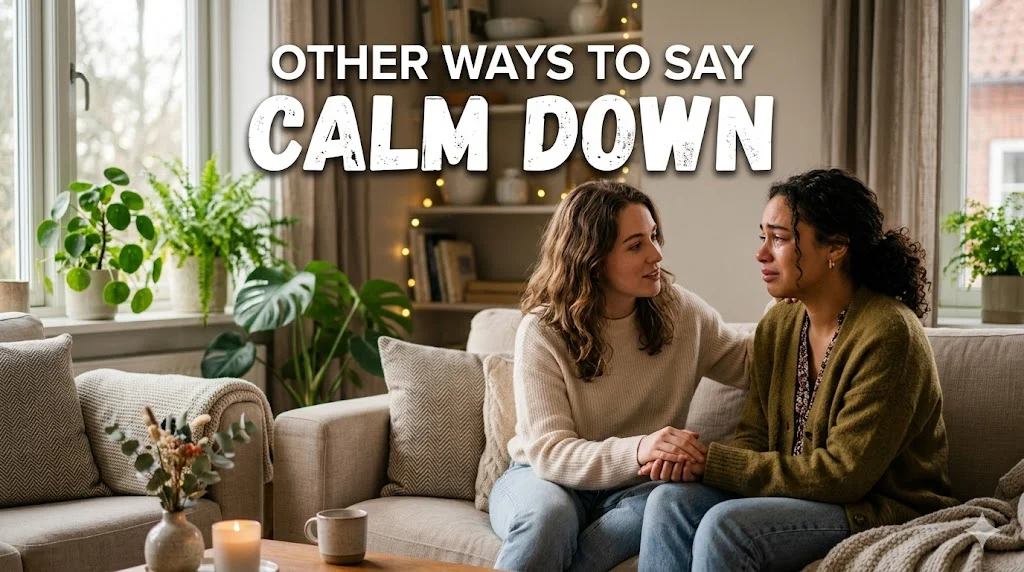
If you want alternatives to “calm down,” try: relax, take it easy, stay calm, keep your cool, don’t worry. These options help you sound more polite, supportive, and natural in different situations.
The phrase “calm down” is commonly used to tell someone to relax or reduce their stress, anger, or excitement. While it’s widely understood, it can sometimes sound dismissive or insensitive depending on tone.
Learning alternatives to “calm down” helps you communicate empathy and emotional intelligence. It allows you to respond more thoughtfully in both personal and professional conversations.
Expanding your vocabulary also helps you express excitement in English or manage emotions more effectively, especially when tone matters.
Quick Categories Section
Formal Alternatives to “Calm Down”
- Please remain calm
- Kindly stay composed
- Maintain your composure
- Try to remain composed
Pro Tip: Use formal phrases in professional or serious situations where respect and clarity matter.
Casual Alternatives
- Relax
- Take it easy
- Chill
- Don’t stress
Pro Tip: These are great for friendly conversations but avoid them in sensitive situations.
Professional Alternatives
- Let’s stay focused
- Take a moment to regroup
- Let’s approach this calmly
- Please remain professional
Pro Tip: In the workplace, focus on solutions rather than emotions.
Informal Expressions
- Chill out
- Cool off
- Keep your cool
- Settle down
Pro Tip: Informal expressions in English can sound natural but may feel rude if tone is not soft.
“The way you respond to emotions defines your communication skills.”
Common Mistakes
- Sounding dismissive
Example: “Just calm down.” - Using it in emotional situations
Example: Saying “calm down” to someone upset - Wrong tone in professional settings
Example: “Calm down, it’s not a big deal.” - Overusing the phrase
Example: Repeating “calm down” in arguments - Ignoring emotional context
Example: Saying it without understanding feelings
What Does “Calm Down” Mean?
Definition: It means to become less upset, angry, or excited.
Grammar: It is an imperative phrase (a command or suggestion).
Example: “Calm down and listen carefully.”
When to Use “Calm Down”
- When someone is stressed or upset
- During emotional conversations
- In casual settings
- When giving reassurance
Spoken vs Written: Mostly spoken
Formal vs Informal: Informal
Is It Professional or Polite to Say “Calm Down”?
Polite? ✔️ Sometimes (depends on tone)
Professional? ❌ No (in most cases)
Business Example:
“Let’s take a moment and approach this calmly.”
Pros and Cons of Using “Calm Down”
Pros
- Simple and clear
- Common usage
- Easy to understand
- Direct message
Cons
- Can sound rude
- Emotionally dismissive
- Too informal for work
- May escalate situations
“Empathy matters more than words in emotional communication.”
Other Ways to Say “Calm Down” (With Examples)
These other ways to say “calm down” will help you sound more fluent, confident, and natural in different situations.
Use them according to tone, context, and audience to manage emotions effectively.
1. Phrase: Relax
Meaning: Become less tense
Explanation: Simple and widely used
Example Sentence: Relax, everything will be fine
Best Use: friendly talk
Worst Use: serious conflict
Tone: casual, soft
Context Variability: casual / spoken
2. Phrase: Take it easy
Meaning: Stay relaxed
Explanation: Gentle and reassuring
Example Sentence: Take it easy, there’s no rush
Best Use: casual comfort
Worst Use: urgent stress
Tone: friendly, calming
Context Variability: casual
3. Phrase: Please remain calm
Meaning: Stay composed
Explanation: Formal and respectful
Example Sentence: Please remain calm during the situation
Best Use: formal setting
Worst Use: casual talk
Tone: formal, serious
Context Variability: professional
4. Phrase: Keep your cool
Meaning: Stay in control
Explanation: Encourages emotional control
Example Sentence: Try to keep your cool during the meeting
Best Use: workplace
Worst Use: emotional distress
Tone: neutral, supportive
Context Variability: casual / professional
5. Phrase: Don’t worry
Meaning: Reduce anxiety
Explanation: Reassures someone
Example Sentence: Don’t worry, we’ll handle it
Best Use: reassurance
Worst Use: major problems
Tone: warm, supportive
Context Variability: casual / spoken
6. Phrase: Stay calm
Meaning: Remain relaxed
Explanation: Direct but softer
Example Sentence: Stay calm and think clearly
Best Use: guidance
Worst Use: arguments
Tone: neutral, steady
Context Variability: professional / spoken
7. Phrase: Let’s stay focused
Meaning: Redirect attention
Explanation: Useful in professional settings
Example Sentence: Let’s stay focused on the solution
Best Use: meetings
Worst Use: emotional conflict
Tone: professional, calm
Context Variability: professional
8. Phrase: Take a deep breath
Meaning: Relax physically and mentally
Explanation: Encourages self-control
Example Sentence: Take a deep breath and try again
Best Use: stress relief
Worst Use: sarcasm
Tone: supportive, calming
Context Variability: casual / spoken
9. Phrase: Settle down
Meaning: Become less excited
Explanation: Often used with children or groups
Example Sentence: Please settle down, everyone
Best Use: group control
Worst Use: professionals
Tone: firm, guiding
Context Variability: casual
10. Phrase: Let’s approach this calmly
Meaning: Handle situation peacefully
Explanation: Collaborative and professional
Example Sentence: Let’s approach this calmly and find a solution
Best Use: workplace
Worst Use: casual chat
Tone: professional, composed
Context Variability: professional
11. Phrase: Chill out
Meaning: Relax completely
Explanation: Very informal
Example Sentence: Chill out, it’s not a big deal
Best Use: friends
Worst Use: formal situations
Tone: casual, relaxed
Context Variability: informal
12. Phrase: Cool off
Meaning: Reduce anger
Explanation: Suggests taking time
Example Sentence: Take a moment to cool off
Best Use: conflict
Worst Use: urgent decisions
Tone: neutral, calming
Context Variability: casual
13. Phrase: Try to relax
Meaning: Make an effort to calm down
Explanation: Gentle encouragement
Example Sentence: Try to relax before the presentation
Best Use: support
Worst Use: intense emotion
Tone: soft, supportive
Context Variability: casual / spoken
14. Phrase: Maintain your composure
Meaning: Stay controlled
Explanation: Formal expression
Example Sentence: Please maintain your composure
Best Use: formal events
Worst Use: casual talk
Tone: formal, serious
Context Variability: professional
15. Phrase: Take a moment
Meaning: Pause briefly
Explanation: Indirect calming suggestion
Example Sentence: Take a moment before responding
Best Use: workplace
Worst Use: urgency
Tone: polite, calm
Context Variability: professional
16. Phrase: Don’t stress
Meaning: Avoid worrying
Explanation: Casual reassurance
Example Sentence: Don’t stress, it’s under control
Best Use: friendly talk
Worst Use: serious issue
Tone: casual, supportive
Context Variability: informal
17. Phrase: Breathe
Meaning: Focus on breathing
Explanation: Very short calming cue
Example Sentence: Just breathe, you’ve got this
Best Use: emotional support
Worst Use: formal writing
Tone: gentle, encouraging
Context Variability: spoken
18. Phrase: Let it go
Meaning: Release tension
Explanation: Encourages emotional release
Example Sentence: Let it go, it’s not worth it
Best Use: advice
Worst Use: unresolved conflict
Tone: reflective, calm
Context Variability: casual
19. Phrase: Stay composed
Meaning: Remain controlled
Explanation: Professional tone
Example Sentence: Stay composed during the discussion
Best Use: workplace
Worst Use: casual
Tone: formal, steady
Context Variability: professional
20. Phrase: Keep calm
Meaning: Remain relaxed
Explanation: Simple and widely used
Example Sentence: Keep calm and continue
Best Use: general
Worst Use: sarcasm
Tone: neutral, calm
Context Variability: casual / professional
21. Phrase: Ease up
Meaning: Relax intensity
Explanation: Informal suggestion
Example Sentence: Ease up, you’re overthinking
Best Use: friends
Worst Use: formal
Tone: casual, light
Context Variability: informal
22. Phrase: Take it slow
Meaning: Slow down actions
Explanation: Encourages patience
Example Sentence: Take it slow and focus
Best Use: guidance
Worst Use: urgency
Tone: calm, supportive
Context Variability: casual
23. Phrase: Don’t panic
Meaning: Avoid fear
Explanation: Direct reassurance
Example Sentence: Don’t panic, we’ll figure it out
Best Use: emergencies
Worst Use: dismissive tone
Tone: direct, calming
Context Variability: spoken
24. Phrase: Let’s stay calm
Meaning: Group reassurance
Explanation: Inclusive phrasing
Example Sentence: Let’s stay calm and think clearly
Best Use: teamwork
Worst Use: casual jokes
Tone: cooperative, calm
Context Variability: professional / spoken
25. Phrase: Think clearly
Meaning: Focus rationally
Explanation: Redirects attention
Example Sentence: Try to think clearly before reacting
Best Use: advice
Worst Use: emotional moment
Tone: neutral, guiding
Context Variability: professional
26. Phrase: No need to worry
Meaning: Reduce concern
Explanation: Reassuring phrase
Example Sentence: There’s no need to worry about it
Best Use: support
Worst Use: serious issues
Tone: warm, calming
Context Variability: casual
27. Phrase: Stay relaxed
Meaning: Remain at ease
Explanation: Gentle suggestion
Example Sentence: Stay relaxed during the interview
Best Use: preparation
Worst Use: crisis
Tone: soft, encouraging
Context Variability: casual / spoken
28. Phrase: Don’t get worked up
Meaning: Avoid emotional stress
Explanation: Informal warning
Example Sentence: Don’t get worked up over small things
Best Use: advice
Worst Use: sensitive emotions
Tone: casual, cautionary
Context Variability: informal
29. Phrase: Take control
Meaning: Manage emotions
Explanation: Encourages self-regulation
Example Sentence: Take control and respond calmly
Best Use: leadership
Worst Use: casual talk
Tone: strong, guiding
Context Variability: professional
30. Phrase: Please remain composed
Meaning: Stay calm and controlled
Explanation: Very formal expression
Example Sentence: Please remain composed during the discussion
Best Use: formal setting
Worst Use: casual talk
Tone: formal, respectful
Context Variability: professional
“Small changes in wording create big improvements in fluency.”
Mini Quiz / Self-Check
1. Which is the most professional alternative to “calm down”?
A. Chill out
B. Please remain composed
C. Relax
2. Which phrase is best for friends?
A. Maintain your composure
B. Chill out
C. Please remain calm
3. Which sounds rude in a workplace?
A. Let’s stay focused
B. Calm down
C. Let’s approach this calmly
4. Best phrase for emotional support?
A. Don’t panic
B. Take a deep breath
C. Maintain your composure
“Tone is everything when handling emotions in English.”
Comparison Table: Top Alternatives
| Phrase | Tone | Best Use |
|---|---|---|
| Please remain calm | Formal | Emergencies |
| Take a deep breath | Supportive | Stress relief |
| Let’s stay focused | Professional | Work |
| Keep your cool | Neutral | General use |
| Relax | Casual | Friends |
| Don’t worry | Warm | Reassurance |
| Stay composed | Formal | Workplace |
| Let’s approach this calmly | Professional | Meetings |
| Chill out | Informal | Friends |
| Don’t panic | Direct | Urgent situations |
FAQs
1. What are polite alternatives to “calm down”?
Use phrases like “please remain calm” or “take a moment.”
2. Is “calm down” rude?
It can sound dismissive, especially in emotional situations.
3. What is a professional way to say “calm down”?
“Let’s approach this calmly” or “please remain composed.”
4. How can I calm someone politely in English?
Use supportive phrases like “take a deep breath” or “don’t worry.”
5. Why should I avoid saying “calm down”?
Because it may escalate emotions instead of reducing them.
Conclusion
Learning other ways to say “calm down” helps you communicate with empathy and professionalism. The right phrase can make conversations smoother and more respectful.
Practice these alternatives to “calm down” daily to improve your fluency. Always focus on tone and context to sound natural and supportive.