Last Updated on August 9, 2026
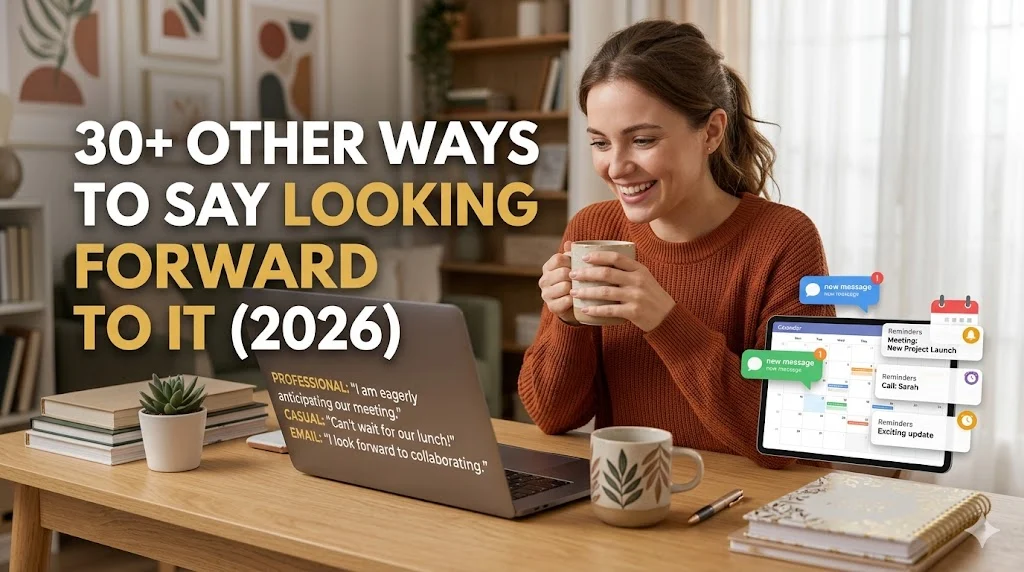
Looking for other ways to say looking forward to it? Try:
I can’t wait, I’m excited about it, I eagerly anticipate it, I’m thrilled about it, I’m counting down the days.
These alternatives help you sound more natural, expressive, professional, or enthusiastic depending on the situation.
The phrase “looking forward to it” is one of the most common expressions in English. People use it to show excitement, anticipation, or positive expectations about future events.
While it’s polite and versatile, repeating the same phrase can sound repetitive in emails, conversations, or social media posts. Learning alternatives to “looking forward to it” improves your vocabulary, helps you sound more fluent, and allows you to express excitement in English with greater personality and confidence.
Whether you’re writing a professional email, chatting with friends, or preparing for an event, these alternatives will help you communicate more naturally and effectively.
“The right expression of anticipation can make your English sound warmer, smarter, and more engaging.”
Quick Categories
Formal alternatives to “looking forward to it”
- I eagerly anticipate it
- I await it with enthusiasm
- I’m keenly anticipating it
- I anticipate it with interest
Pro Tip: Use these in professional emails, interviews, or formal invitations.
Casual alternatives
- Can’t wait
- Super excited
- Sounds awesome
- Really pumped
Pro Tip: Perfect for texting, social media, and friendly conversations.
Professional alternatives
- I look forward to our collaboration
- I’m excited about the opportunity
- I appreciate the opportunity
- I anticipate our discussion
Pro Tip: Best for workplace communication and networking.
Informal expressions
- Counting down the days
- Hyped for it
- So ready for it
- Bring it on
Pro Tip: Keep these for close friends or relaxed settings.
Common Mistakes
- Repeating the same phrase too often
Example: “Looking forward to it” in every email - Using overly casual language professionally
Example: “Can’t wait!!!” in a formal interview email - Being too vague
Example: “Looking forward to it.” (without context) - Overusing exclamation marks
Example: “Really looking forward to it!!!!!” - Using expressions that don’t match tone
Example: “Hyped for it” in a corporate meeting email
What Does “Looking Forward to It” Mean?
“Looking forward to it” means feeling excited or positive about something that will happen in the future.
Grammar Tip
“Looking forward to” is followed by:
- A noun → “Looking forward to the event.”
- A gerund (verb + ing) → “Looking forward to meeting you.”
Example Sentence
“I’m looking forward to the conference next week.”
When to Use “Looking Forward to It”
- In professional emails
- Before events or meetings
- In social conversations
- During travel or vacation planning
- In interview communication
Spoken vs Written
- Spoken: often casual and enthusiastic
- Written: usually more structured and professional
Formal vs Informal
- Formal: “I eagerly anticipate it.”
- Informal: “Can’t wait!”
Is It Professional or Polite to Say “Looking Forward to It”?
Polite? ✔️ Yes
Professional? ✔️ Yes
However, it can sound generic if overused in workplace communication.
Business Example
“I’m looking forward to discussing the project further.”
Pros and Cons of Using “Looking Forward to It”
Pros
- Polite and professional
- Easy to understand
- Commonly accepted
- Versatile in many situations
Cons
- Overused
- Can sound repetitive
- Limited emotional variety
- Sometimes lacks personality
“Small wording changes can instantly make your emails sound more polished and memorable.”
Other Ways to Say “Looking Forward to It” (With Examples)
These alternatives will help you sound more fluent, confident, and expressive in different situations.
Use them based on tone, audience, and context to express excitement, anticipation, or professionalism naturally.
1. Phrase: I can’t wait
Meaning: Strong excitement
Explanation: Very common casual expression
Example Sentence: “I can’t wait for the concert.”
Best Use: friends, events
Worst Use: formal emails
Tone: enthusiastic, casual
Context Variability: casual / spoken
2. Phrase: I’m excited about it
Meaning: Positive anticipation
Explanation: Neutral and versatile
Example Sentence: “I’m excited about the upcoming project.”
Best Use: work or personal
Worst Use: very formal writing
Tone: positive, friendly
Context Variability: both
3. Phrase: I eagerly anticipate it
Meaning: Formal excitement
Explanation: Professional and polished
Example Sentence: “I eagerly anticipate our meeting.”
Best Use: business communication
Worst Use: texting friends
Tone: formal, refined
Context Variability: professional
4. Phrase: I’m thrilled about it
Meaning: Strong enthusiasm
Explanation: Expresses high excitement
Example Sentence: “I’m thrilled about the opportunity.”
Best Use: interviews
Worst Use: serious/legal writing
Tone: energetic, positive
Context Variability: both
5. Phrase: I’m counting down the days
Meaning: Excited anticipation
Explanation: Often used for major events
Example Sentence: “I’m counting down the days until vacation.”
Best Use: travel, events
Worst Use: formal emails
Tone: excited, playful
Context Variability: casual
6. Phrase: I’m looking ahead to it
Meaning: Positive future focus
Explanation: Slightly formal variation
Example Sentence: “I’m looking ahead to the workshop.”
Best Use: work communication
Worst Use: casual slang contexts
Tone: professional, optimistic
Context Variability: professional
7. Phrase: I’m eager for it
Meaning: Strong interest
Explanation: Short and professional
Example Sentence: “I’m eager for the discussion.”
Best Use: interviews
Worst Use: casual chat
Tone: confident, professional
Context Variability: professional
8. Phrase: I’m really excited
Meaning: Personal enthusiasm
Explanation: Very common conversational phrase
Example Sentence: “I’m really excited for tomorrow.”
Best Use: personal communication
Worst Use: formal documents
Tone: enthusiastic, warm
Context Variability: casual
9. Phrase: I await it with enthusiasm
Meaning: Formal anticipation
Explanation: Elegant and polished
Example Sentence: “I await the event with enthusiasm.”
Best Use: formal invitations
Worst Use: texting
Tone: formal, sophisticated
Context Variability: professional
10. Phrase: Sounds amazing
Meaning: Positive reaction
Explanation: Informal and conversational
Example Sentence: “Sounds amazing, I’m in!”
Best Use: friends
Worst Use: formal work emails
Tone: casual, upbeat
Context Variability: casual
11. Phrase: I’m pumped for it
Meaning: Energetic excitement
Explanation: Informal American English expression
Example Sentence: “I’m pumped for the game tonight.”
Best Use: social settings
Worst Use: professional emails
Tone: energetic, informal
Context Variability: casual
12. Phrase: I’m enthusiastic about it
Meaning: Professional excitement
Explanation: Balanced formal enthusiasm
Example Sentence: “I’m enthusiastic about this collaboration.”
Best Use: workplace
Worst Use: casual texting
Tone: professional, positive
Context Variability: professional
13. Phrase: I’m keen on it
Meaning: Interested and excited
Explanation: Common in British English
Example Sentence: “I’m keen on attending the seminar.”
Best Use: professional conversations
Worst Use: slang-heavy contexts
Tone: polite, professional
Context Variability: both
14. Phrase: Bring it on
Meaning: Ready and excited
Explanation: Informal confident phrase
Example Sentence: “Vacation next week? Bring it on!”
Best Use: friends
Worst Use: formal business communication
Tone: playful, confident
Context Variability: informal
15. Phrase: I’m excited to see how it goes
Meaning: Curious anticipation
Explanation: Good for uncertain outcomes
Example Sentence: “I’m excited to see how the launch goes.”
Best Use: projects
Worst Use: highly formal writing
Tone: optimistic, thoughtful
Context Variability: both
16. Phrase: I’m so ready for it
Meaning: Strong readiness
Explanation: Casual excitement expression
Example Sentence: “I’m so ready for the weekend.”
Best Use: friends
Worst Use: formal interviews
Tone: relaxed, energetic
Context Variability: informal
17. Phrase: I anticipate it with excitement
Meaning: Formal enthusiasm
Explanation: Strong professional phrasing
Example Sentence: “I anticipate the conference with excitement.”
Best Use: corporate communication
Worst Use: casual texting
Tone: formal, polished
Context Variability: professional
18. Phrase: I’m hyped for it
Meaning: Extreme excitement
Explanation: Modern slang expression
Example Sentence: “I’m hyped for the concert!”
Best Use: social media
Worst Use: workplace
Tone: trendy, casual
Context Variability: informal
19. Phrase: I’m delighted about it
Meaning: Warm happiness
Explanation: More elegant than “excited”
Example Sentence: “I’m delighted about the opportunity.”
Best Use: interviews, networking
Worst Use: highly casual contexts
Tone: warm, professional
Context Variability: professional
20. Phrase: I’m anticipating it eagerly
Meaning: Strong anticipation
Explanation: Emphasizes enthusiasm
Example Sentence: “I’m anticipating it eagerly.”
Best Use: formal communication
Worst Use: casual slang contexts
Tone: formal, enthusiastic
Context Variability: professional
21. Phrase: I’m looking forward to seeing everyone
Meaning: Social anticipation
Explanation: Friendly and welcoming
Example Sentence: “I’m looking forward to seeing everyone at the reunion.”
Best Use: events
Worst Use: business reports
Tone: warm, social
Context Variability: both
22. Phrase: I’m happy about it
Meaning: Positive expectation
Explanation: Simple and natural
Example Sentence: “I’m happy about the upcoming changes.”
Best Use: neutral conversations
Worst Use: highly formal communication
Tone: friendly, relaxed
Context Variability: both
23. Phrase: I’m optimistic about it
Meaning: Positive expectation
Explanation: Focuses on confidence
Example Sentence: “I’m optimistic about the project.”
Best Use: business discussions
Worst Use: emotional events
Tone: thoughtful, professional
Context Variability: professional
24. Phrase: I’m excited for what’s ahead
Meaning: Future-focused enthusiasm
Explanation: Inspirational tone
Example Sentence: “I’m excited for what’s ahead this year.”
Best Use: motivational contexts
Worst Use: strict formal communication
Tone: positive, inspiring
Context Variability: both
25. Phrase: I’m eager to get started
Meaning: Ready and enthusiastic
Explanation: Common in workplace settings
Example Sentence: “I’m eager to get started on the project.”
Best Use: interviews, onboarding
Worst Use: casual events
Tone: professional, motivated
Context Variability: professional
26. Phrase: This should be great
Meaning: Positive expectation
Explanation: Casual and conversational
Example Sentence: “This should be great; I’m excited already.”
Best Use: social situations
Worst Use: formal writing
Tone: casual, optimistic
Context Variability: informal
27. Phrase: I’m intrigued by it
Meaning: Curious interest
Explanation: More intellectual tone
Example Sentence: “I’m intrigued by the idea.”
Best Use: discussions, projects
Worst Use: highly emotional events
Tone: thoughtful, curious
Context Variability: professional
28. Phrase: I’m excited to experience it
Meaning: Anticipation for experience
Explanation: Great for travel/events
Example Sentence: “I’m excited to experience the festival.”
Best Use: travel, entertainment
Worst Use: corporate emails
Tone: enthusiastic
Context Variability: casual
29. Phrase: I’m ready for it
Meaning: Prepared and positive
Explanation: Confident anticipation
Example Sentence: “I’m ready for the challenge.”
Best Use: work or personal goals
Worst Use: highly formal contexts
Tone: confident, direct
Context Variability: both
30. Phrase: I’m enthusiastic about what’s coming
Meaning: Future enthusiasm
Explanation: Positive and professional
Example Sentence: “I’m enthusiastic about what’s coming next quarter.”
Best Use: workplace motivation
Worst Use: casual texting
Tone: optimistic, professional
Context Variability: professional
“Using varied expressions of excitement makes your English sound more natural and emotionally intelligent.”
Mini Quiz / Self-Check
1. Which phrase is most formal?
A. I’m hyped for it
B. I eagerly anticipate it
C. Bring it on
Answer: B
2. Best option for a work email?
A. I’m pumped for it
B. I’m eager to get started
C. Can’t wait!!!
Answer: B
3. Best for social media caption?
A. I anticipate it with excitement
B. I’m hyped for it
C. I await it with enthusiasm
Answer: B
Comparison Table: Top Alternatives
| Phrase | Tone | Best Use |
|---|---|---|
| I can’t wait | Casual | Friends, events |
| I eagerly anticipate it | Formal | Professional emails |
| I’m thrilled about it | Enthusiastic | Interviews, opportunities |
| I’m counting down the days | Playful | Vacations, events |
| I’m eager to get started | Professional | Workplace |
| I’m enthusiastic about it | Professional | Business communication |
| Bring it on | Informal | Friends |
| I’m delighted about it | Warm | Networking |
| I’m optimistic about it | Thoughtful | Projects |
| I’m excited for what’s ahead | Inspirational | Career growth |
FAQs
1. What is the most professional alternative to “looking forward to it”?
“I eagerly anticipate it” or “I’m eager to get started.”
2. Can I use “can’t wait” in professional emails?
Usually no, unless the workplace culture is informal.
3. What phrase shows strong excitement?
“I’m thrilled about it” or “I’m hyped for it.”
4. What’s a polite way to express anticipation?
“I look forward to our discussion” or “I appreciate the opportunity.”
5. Why should I avoid repeating “looking forward to it”?
Overusing it can make your communication sound repetitive and less engaging.
Conclusion
Learning other ways to say looking forward to it helps you communicate with more variety, personality, and professionalism. Different phrases allow you to match your tone to the situation—whether formal, casual, enthusiastic, or thoughtful.
Practice these alternatives regularly in emails, conversations, and social media to sound more fluent and confident in English. The right expression of anticipation can leave a stronger and more memorable impression.