
Last Updated on June 11, 2026
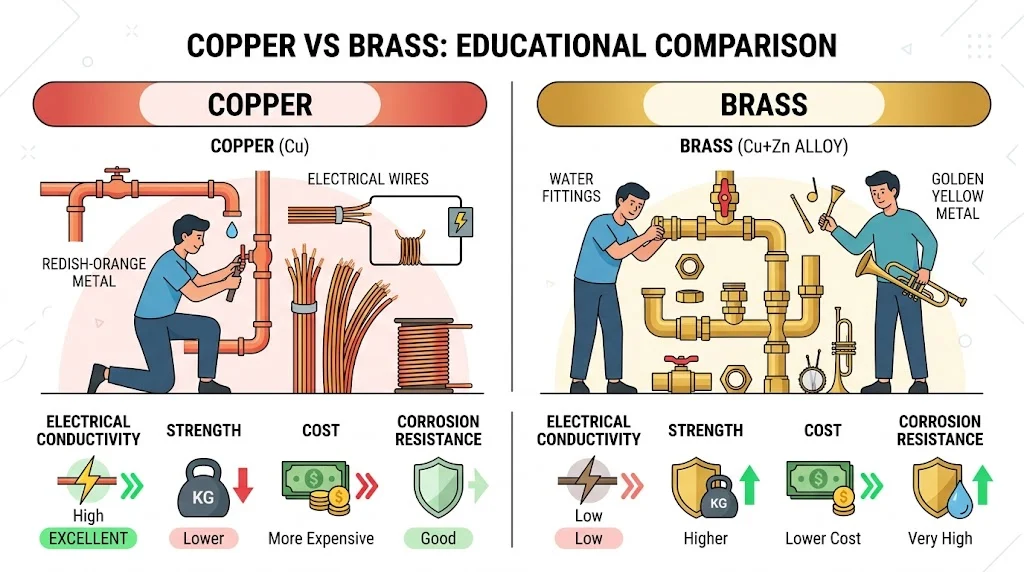
Copper vs brass: Copper is a pure metal known for high electrical conductivity and corrosion resistance, while brass is an alloy of copper and zinc valued for strength, durability, and decorative appeal. Copper is ideal for wiring and plumbing, while brass is widely used in fittings, musical instruments, and hardware.
When choosing between copper vs brass, many people feel confused. Both metals look similar. Both are used in homes, tools, and machines. But they are not the same.
Copper is a pure metal. Brass is a mix of copper and zinc. This small difference changes how they work. It affects strength, color, cost, and use.
You may ask: Which is better for plumbing? Which is stronger? Which lasts longer?
These questions matter. The wrong choice can lead to damage, extra cost, or poor performance.
This guide will help you understand everything in simple words. You will learn the key differences, real uses, and how to choose the right metal.
By the end, you will feel confident using copper or brass in any situation.
Quick Answer / Overview
| Feature | Copper | Brass |
| Type | Pure metal | Alloy (copper + zinc) |
| Color | Reddish-brown | Yellow-gold |
| Strength | Soft | Stronger than copper |
| Corrosion Resistance | Excellent | Good |
| Conductivity | Very high | Moderate |
| Cost | Higher | Lower |
| Common Uses | Wiring, pipes | Fittings, valves, instruments |
Simple idea:
- Use copper for electricity and water pipes
- Use brass for strong parts and decorative items
Definition / Explanation
What is Copper?
Copper is a natural metal found in the earth. It is soft, flexible, and easy to shape.
Key features:
- Reddish color
- High electrical conductivity
- High thermal conductivity
- Resistant to corrosion
Copper has been used for thousands of years. It is one of the oldest metals used by humans.
What is Brass?
Brass is not pure. It is made by mixing copper and zinc.
The amount of zinc changes its properties:
- More zinc = stronger brass
- Less zinc = softer brass
Key features:
- Yellow or gold color
- Stronger than copper
- Easy to machine
- Good corrosion resistance
Brass is often used when both strength and appearance matter.
Copper vs Brass: Key Differences Explained
Composition
- Copper: 100% natural metal
- Brass: Copper + zinc mixture
This is the main difference.
Color
- Copper: Red-orange
- Brass: Yellow-gold
This makes brass popular in decoration.
Strength
- Copper: Soft and flexible
- Brass: Harder and stronger
Brass is better for mechanical parts.
Conductivity
- Copper: Excellent conductor
- Brass: Lower conductivity
Copper is best for electrical work.
Corrosion Resistance
Both resist corrosion well, but:
- Copper forms a green layer (patina)
- Brass resists rust but may tarnish
Cost
- Copper is more expensive
- Brass is cheaper due to zinc
Advantages and Disadvantages
Advantages of Copper
- Excellent electrical conductivity
- Strong resistance to corrosion
- Long lifespan
- Easy to shape
Disadvantages of Copper
- Expensive
- Soft and can bend easily
- Heavy
Advantages of Brass
- Strong and durable
- Attractive appearance
- Easy to machine
- Lower cost than copper
Disadvantages of Brass
- Lower conductivity
- Can crack under stress (in some cases)
- May tarnish over time
Real-World Examples
Where Copper is Used
- Electrical wires in homes
- Water pipes
- Heat exchangers
- Roofing materials
Example:
Electric cables use copper because electricity flows easily through it.
Where Brass is Used
- Door handles
- Plumbing fittings
- Musical instruments like trumpets
- Screws and valves
Example:
Brass is used in taps because it is strong and does not rust easily.
Regional / Global Usage
In Developing Countries
- Copper is used in electrical systems
- Brass is used in affordable plumbing fixtures
In Developed Countries
- Copper is used in advanced electronics
- Brass is used in precision tools and decorative items
Industrial Use
- Copper: Power plants, electronics
- Brass: Machinery parts, marine equipment
Common Mistakes
Mistake 1: Thinking Copper and Brass Are the Same
They look similar but behave differently.
Correction:
Always check composition before use.
Mistake 2: Using Brass for Electrical Wiring
Brass does not conduct electricity as well as copper.
Correction:
Use copper for wiring.
Mistake 3: Ignoring Strength Needs
Copper bends easily.
Correction:
Use brass when strength is required.
Mistake 4: Not Considering Cost
Copper is more expensive.
Correction:
Use brass for budget projects.
Exercises with Answers
Exercise 1
Question:
Which metal is better for electrical wires?
Answer:
Copper
Exercise 2
Question:
Which metal is stronger, copper or brass?
Answer:
Brass
Exercise 3
Question:
What gives brass its yellow color?
Answer:
Zinc mixed with copper
Exercise 4
Question:
Which is more expensive?
Answer:
Copper
Exercise 5
Question:
Name one use of brass.
Answer:
Door handles or plumbing fittings
Related Concepts or Comparisons
Copper vs Bronze
- Bronze = copper + tin
- Stronger than copper
- Used in sculptures
Brass vs Bronze
| Feature | Brass | Bronze |
| Composition | Copper + zinc | Copper + tin |
| Color | Yellow | Brown |
| Use | Decorative | Industrial |
Copper vs Aluminum
- Copper conducts better
- Aluminum is lighter and cheaper
FAQs
What is the main difference between copper vs brass?
Copper is a pure metal, while brass is an alloy of copper and zinc, making brass stronger but less conductive.
Which is better for plumbing, copper or brass?
Both are good, but copper pipes and brass fittings often work best together in plumbing systems.
Is copper more expensive than brass?
Yes, copper usually costs more than brass due to its purity and high demand.
Can brass replace copper in electrical wiring?
No, brass has lower conductivity, so copper is preferred for electrical wiring.
Does brass rust like iron?
No, brass does not rust, but it can tarnish over time.
Which lasts longer, copper or brass?
Both last long, but copper has better corrosion resistance in harsh conditions.
How can you tell copper vs brass?
Copper is reddish, while brass is yellow. Brass is also harder.
Is brass safe for drinking water?
Yes, modern brass fittings are safe, but always check for lead-free certification.
Why is brass used in musical instruments?
Brass is strong, easy to shape, and produces good sound quality.
Is copper environmentally friendly?
Yes, copper is recyclable and widely reused.
Conclusion
Understanding copper vs brass is important for making the right choice in construction, plumbing, electronics, and design. While both metals share some similarities, their differences are clear when you look closely.
Copper stands out for its excellent conductivity and corrosion resistance. It is the best choice for electrical wiring and water pipes. However, it is softer and more expensive.
Brass, on the other hand, offers strength, durability, and a beautiful appearance. It is ideal for fittings, hardware, and decorative items. It is also more affordable than copper.
The best choice depends on your needs. If you need high performance in electricity or heat, go with copper. If you need strength and cost-efficiency, choose brass.
In professional settings, both metals are often used together to get the best results.
Make your decision based on function, budget, and environment.