
Last Updated on May 15, 2026
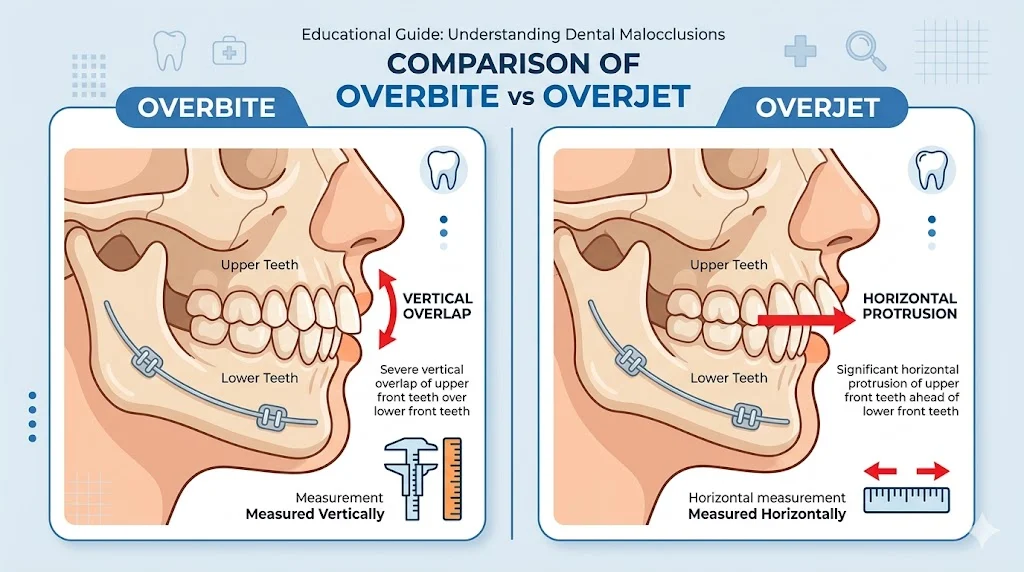
An overbite vs overjet comparison explains two common dental alignment issues that are often confused. An overbite refers to the vertical overlap of upper front teeth over lower teeth, while an overjet refers to the horizontal protrusion of upper teeth beyond lower teeth. Both conditions affect bite function, appearance, and oral health but differ in direction and cause.
Many people confuse overbite vs overjet because both involve how the upper and lower front teeth align. At first glance, they may look similar, but they describe two very different dental conditions. Understanding the difference is important for oral health, self-confidence, and choosing the right treatment.
Misalignment of teeth can affect chewing, speech, and even jaw comfort. Some people may notice their upper teeth look too far forward, while others see too much overlap when they bite down. These are often signs of overbite or overjet, but identifying which one is present is not always easy without proper knowledge.
This article explains overbite vs overjet in simple language. You will learn their definitions, causes, symptoms, and treatment options. We will also explore real-life examples, common mistakes, and exercises to better understand these conditions. Whether you are a student, patient, or just curious about dental health, this guide will help you clearly distinguish between the two and understand how modern dentistry corrects them effectively.
Quick Answer Overview
The difference between overbite vs overjet can be understood in one simple way:
- Overbite is a vertical overlap of the upper teeth over the lower teeth.
- Overjet is a horizontal distance between upper and lower front teeth.
In overbite, the issue is how much the teeth cover each other when biting down. In overjet, the issue is how far the upper teeth stick out forward.
Both conditions fall under malocclusion, which means improper alignment of teeth and jaws. They often occur together but require different diagnostic measurements and treatment approaches.
Definition and Explanation of Overbite vs Overjet
What Is an Overbite?
An overbite refers to how much the upper front teeth vertically overlap the lower front teeth when the mouth is closed. A small overbite is normal and healthy, usually covering about 10 to 30 percent of the lower teeth.
However, when the overlap becomes too deep, it is called a deep overbite. This can cause:
- Excessive wear on lower teeth
- Gum irritation
- Jaw discomfort
- A “collapsed” smile appearance
Overbite is measured in percentage or millimeters of vertical overlap.
What Is an Overjet?
An overjet refers to the horizontal distance between the upper front teeth and the lower front teeth. Instead of overlapping vertically, the upper teeth stick out forward.
A normal overjet is about 1 to 3 millimeters. When it becomes larger, it is called an increased overjet.
This condition can cause:
- Difficulty closing lips naturally
- Increased risk of front tooth injury
- Speech issues in some cases
- A protruding appearance of upper teeth
Key Concept in Overbite vs Overjet
The simplest way to remember the difference:
- Overbite = vertical overlap (up and down)
- Overjet = horizontal gap (front and back)
Differences Between Overbite and Overjet
Understanding overbite vs overjet becomes easier when comparing them side by side.
| Feature | Overbite | Overjet |
| Direction | Vertical overlap | Horizontal protrusion |
| Measurement | Percentage or mm overlap | Millimeters forward |
| Affected area | Upper teeth covering lower teeth | Upper teeth sticking forward |
| Main issue | Depth of bite | Distance between teeth |
| Common cause | Jaw growth imbalance, tooth wear | Thumb sucking, jaw misalignment |
| Appearance | “Deep bite” smile | “Buck teeth” look |
| Treatment focus | Adjust vertical bite height | Reduce forward tooth position |
Both conditions affect bite alignment but in different planes of movement.
Causes of Overbite vs Overjet
Causes of Overbite
Overbite can develop due to several reasons:
- Genetics and jaw structure
- Short lower jaw (mandibular deficiency)
- Excessive tooth eruption
- Missing lower teeth
- Poor oral habits like nail biting
A deep overbite often develops gradually over time if the lower jaw is underdeveloped or teeth shift downward.
Causes of Overjet
Overjet usually occurs due to forward positioning of upper teeth or backward positioning of lower teeth. Common causes include:
- Thumb sucking during childhood
- Tongue thrusting habit
- Genetic jaw differences
- Missing lower teeth support
- Long-term pacifier use in early childhood
In overjet, the upper jaw may grow more forward than the lower jaw, creating a visible gap.
Types of Overbite vs Overjet
Types of Overbite
- Normal overbite
Healthy overlap of 10–30% - Deep overbite
Excessive vertical overlap causing lower teeth to touch the roof of the mouth - Incomplete overbite
Upper teeth do not fully overlap lower teeth
Types of Overjet
- Normal overjet
Slight forward spacing (1–3 mm) - Increased overjet
Noticeable protrusion of upper teeth - Severe overjet
Large horizontal gap affecting speech and function
Clinical Effects of Overbite vs Overjet
Both conditions can impact oral health differently.
Effects of Overbite
- Tooth wear on lower front teeth
- Gum trauma on upper teeth
- Jaw muscle strain
- Difficulty biting certain foods
Effects of Overjet
- Higher risk of chipped front teeth
- Lip closure difficulty
- Speech distortion (especially “s” sounds)
- Self-esteem concerns due to appearance
While both affect function, overjet is more linked to trauma risk, while overbite is more linked to bite pressure issues.
Real-World Examples of Overbite vs Overjet
Example of Overbite
A person who bites down and the upper front teeth cover almost all of the lower teeth has a deep overbite. In severe cases, the lower teeth may touch the roof of the mouth.
Example of Overjet
A person whose upper front teeth stick noticeably forward, even when the mouth is relaxed, has an overjet. This is often visible from the side profile.
Combined Condition
Many patients experience both overbite and overjet at the same time. This is common in complex malocclusion cases.
Diagnosis of Overbite vs Overjet
Dentists diagnose these conditions through:
- Visual examination
- Dental measurements
- X-rays of jaw alignment
- Bite analysis
- 3D dental scans
Overbite is measured vertically, while overjet is measured horizontally.
Orthodontists also evaluate jaw relationships using cephalometric analysis, which helps determine skeletal causes.
Treatment Options for Overbite vs Overjet
Treatment depends on severity, age, and jaw structure.
Braces
Traditional metal braces are commonly used to correct both overbite and overjet. They gradually shift teeth into proper alignment.
Clear Aligners
Clear aligners are removable trays that gently move teeth. They are effective for mild to moderate cases.
Tooth Extraction
In severe overcrowding or protrusion, removing certain teeth may be necessary to create space.
Jaw Surgery
For skeletal problems, orthognathic surgery may be required to reposition the jaw.
Elastics and Appliances
Orthodontic rubber bands help adjust bite alignment between upper and lower jaws.
Early Treatment in Children
Interceptive orthodontics can guide jaw growth and reduce severity later in life.
Advantages and Disadvantages of Correction
Advantages of Treatment
- Improved smile appearance
- Better chewing function
- Reduced risk of tooth damage
- Improved speech clarity
- Better jaw balance
Possible Disadvantages
- Treatment time can be long
- Temporary discomfort with braces
- Cost considerations
- Need for consistent follow-up
Correcting overbite vs overjet usually leads to long-term oral health benefits.
Exercises and Awareness Practices
While exercises cannot fully correct skeletal issues, they can help with habits and awareness.
Exercise 1: Lip Closure Practice
Keep lips gently closed for 10 seconds, repeat 10 times. Helps improve lip strength in overjet cases.
Exercise 2: Tongue Position Training
Place the tongue on the roof of the mouth while resting. Helps reduce tongue thrust habits.
Exercise 3: Controlled Chewing
Chew food evenly on both sides to improve bite balance awareness.
Exercise 4: Posture Awareness
Maintain upright head posture to reduce jaw strain.
Answers Explanation
These exercises do not replace orthodontic treatment but support oral muscle balance and habit correction.
Common Mistakes About Overbite vs Overjet
Mistake 1: Thinking They Are the Same
Many people assume overbite and overjet are identical, but they are different dimensions.
Mistake 2: Ignoring Early Signs
Small misalignments in childhood often worsen without treatment.
Mistake 3: Self-Diagnosing Only by Appearance
Only a dentist can accurately measure severity.
Mistake 4: Delaying Treatment
Waiting too long can lead to more complex correction needs.
Related Concepts and Comparisons
Understanding overbite vs overjet is easier when comparing related dental terms:
- Malocclusion: General term for misaligned bite
- Crossbite: Teeth bite inside instead of outside
- Open bite: Gap between upper and lower teeth when biting
- Underbite: Lower teeth extend beyond upper teeth
All these conditions relate to jaw alignment and bite function.
FAQs
What is the main difference between overbite vs overjet?
Overbite is vertical overlap of teeth, while overjet is horizontal protrusion of upper teeth.
Can a person have both overbite and overjet?
Yes, many people have both conditions at the same time.
Is overbite more serious than overjet?
Both can be serious depending on severity, but overjet often increases injury risk.
What causes overbite vs overjet?
Genetics, jaw growth patterns, and childhood habits like thumb sucking are common causes.
Can overbite or overjet fix itself?
No, most cases require orthodontic treatment.
How is overjet measured?
It is measured in millimeters of horizontal distance between upper and lower teeth.
How is overbite measured?
It is measured by how much upper teeth vertically overlap lower teeth.
What is the best treatment for overbite vs overjet?
Braces and aligners are most common, with surgery for severe cases.
Can exercises fix overjet?
Exercises help habits but cannot fully correct structural issues.
At what age should treatment start?
Early teenage years are ideal, but adults can also be treated effectively.
Conclusion
Understanding overbite vs overjet is essential for recognizing common dental alignment problems. While both affect how teeth meet, they differ in direction, cause, and treatment approach. Overbite focuses on vertical overlap, while overjet focuses on horizontal protrusion.
Early diagnosis can prevent complications such as tooth wear, speech issues and jaw discomfort. Modern orthodontic treatments like braces and clear aligners make correction highly effective at any age.
If you notice signs of misalignment, consulting a dental professional is the best step. Proper treatment not only improves appearance but also enhances long-term oral health and function. Knowing the difference between overbite vs overjet empowers you to make informed decisions about your dental care.