
Last Updated on May 23, 2026
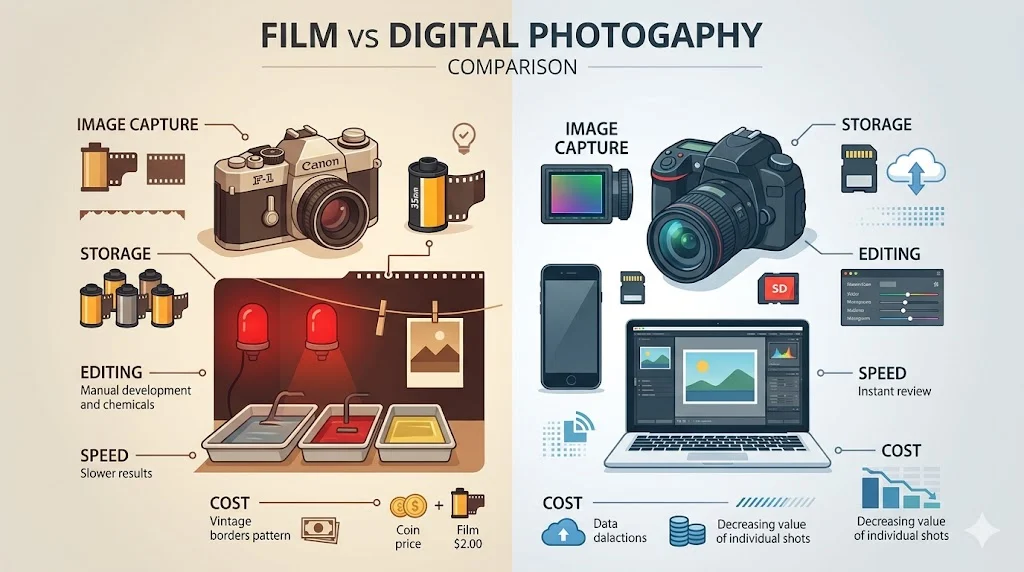
Film vs digital photography refers to two different methods of capturing images. Film photography uses light-sensitive chemical film, while digital photography uses electronic sensors to record images. The main difference lies in how images are captured, stored, and processed. Film offers a classic, organic look, while digital provides speed, convenience, and instant results.
Film vs digital photography is one of the most discussed topics in the world of imaging. Whether you are a beginner, student, or professional photographer, understanding this difference is very important. It helps you choose the right tool for your creative goals.
Film photography is the older method. It uses rolls of film that must be developed in a darkroom. Digital photography is modern. It uses sensors and memory cards to store images instantly.
Many people feel confused when choosing between the two. Some love the nostalgic look of film. Others prefer the speed and flexibility of digital. Both have strengths and weaknesses. Both can produce high quality results.
In today’s world, digital cameras are everywhere, from smartphones to professional DSLRs. Yet film photography is still alive and respected. Many artists still use film for its unique style and emotional depth.
This guide will explain film vs digital in simple language. You will learn how each works, their advantages, disadvantages, real world uses, mistakes to avoid, and how to decide which is best for you.
Quick Answer Overview
Film vs digital photography is mainly about how images are recorded.
Film photography captures images on light sensitive film that must be chemically processed. Digital photography captures images using electronic sensors and stores them as digital files.
Film is known for natural tones, grain texture, and artistic depth. Digital is known for instant results, easy editing, and convenience.
If you want creative control and traditional aesthetics, film is strong. If you want speed, flexibility, and modern workflow, digital is better.
What Is Film Photography
Film photography is the traditional method of capturing images using a plastic or acetate strip coated with light sensitive chemicals.
When light enters the camera, it exposes the film. This creates a hidden image that must be developed in a lab or darkroom.
Key components of film photography
- Film roll
- Light tight camera body
- Chemical development process
- Physical negatives or slides
Film comes in different types:
- Black and white film
- Color negative film
- Slide or transparency film
Each type creates a different visual effect and mood.
Film photography requires patience. You cannot see the result instantly. You must wait until the film is developed.
What Is Digital Photography
Digital photography is a modern method of capturing images using electronic sensors.
When you take a photo, the sensor records light and converts it into digital data. The image is stored on a memory card.
Key components of digital photography
- Image sensor (CMOS or CCD)
- Processor
- Memory card
- Digital display screen
Digital images can be viewed instantly. You can delete, edit, and share them within seconds.
Digital photography is widely used in smartphones, professional cameras, security systems, and social media platforms.
Film vs Digital Photography Quick Comparison
| Feature | Film Photography | Digital Photography |
| Image Capture | Chemical reaction on film | Electronic sensor |
| Result Time | Delayed (development needed) | Instant preview |
| Cost | Higher per shot | Lower per shot |
| Editing | Limited and manual | Easy and advanced |
| Storage | Physical negatives | Digital files |
| Learning Curve | Steeper | Easier |
| Image Style | Organic, grainy, artistic | Clean, sharp, flexible |
| Workflow | Slow | Fast |
How Film vs Digital Photography Works
How Film Photography Works
Film photography follows a chemical process.
Step by step:
- Light enters the camera lens
- Shutter opens briefly
- Light hits the film surface
- Chemical layer reacts to light
- Latent image is created
- Film is developed in chemicals
- Final image appears on paper or slide
This process is sensitive and requires careful handling.
How Digital Photography Works
Digital photography uses electronic processing.
Step by step:
- Light enters lens
- Sensor captures light information
- Processor converts it into digital data
- Image is saved on memory card
- Image is displayed on screen instantly
This system is fast and efficient.
Advantages of Film vs Digital Photography
Advantages of Film Photography
Film photography has unique strengths:
- Produces natural and timeless images
- Rich color depth and tones
- High dynamic range in many cases
- Encourages careful composition
- No need for software editing skills
- Strong artistic and emotional appeal
Many photographers say film creates more intentional photography because each shot costs money and time.
Advantages of Digital Photography
Digital photography dominates modern use because of:
- Instant image preview
- Easy editing using software
- Low cost per image
- Large storage capacity
- High shooting speed
- Easy sharing on social media
- Better low light performance in modern sensors
Digital is practical for everyday use and professional work.
Disadvantages of Film vs Digital Photography
Disadvantages of Film Photography
- Expensive film rolls and development
- Slow workflow
- No instant preview
- Limited shots per roll
- Requires lab processing
- Harder to store physical negatives
Disadvantages of Digital Photography
- Can feel too artificial
- Requires digital storage management
- Easy to overshoot and waste time
- Heavy reliance on software editing
- Risk of data loss if not backed up
Real World Examples of Film vs Digital Photography
Film Photography Examples
Film is often used in:
- Fine art photography
- Fashion editorials
- Wedding photography for vintage style
- Cinematic film production
- Personal hobby projects
Famous photographers still use film for artistic projects to maintain texture and mood.
Digital Photography Examples
Digital is used in:
- Smartphone photography
- Journalism and news reporting
- Wildlife photography
- Sports photography
- Commercial advertising
- Social media content creation
Digital cameras are essential for fast moving environments.
Regional and Global Usage of Film vs Digital Photography
Across the world, digital photography is the dominant form.
In most countries:
- Digital is used in education and media
- Smartphones are the primary camera
- Professional studios rely on digital workflows
However, film photography has a strong revival in:
- Japan
- United States
- United Kingdom
- Parts of Europe
Young photographers often explore film for artistic expression. Vintage aesthetics are popular in global social media culture.
Film labs are reopening in many cities due to renewed interest.
Common Mistakes in Film vs Digital Photography
Mistakes in Film Photography
- Loading film incorrectly
- Not checking ISO settings
- Underexposing shots
- Forgetting to rewind film
- Improper storage of negatives
Mistakes in Digital Photography
- Over editing images
- Ignoring lighting basics
- Shooting without composition planning
- Not backing up files
- Relying too much on auto mode
Understanding these mistakes improves overall photography skills.
Exercises with Answers for Film vs Digital Photography
Exercise 1
What is the main difference between film and digital photography?
Answer: Film uses chemical exposure on physical film, while digital uses electronic sensors to capture images.
Exercise 2
Which type gives instant results?
Answer: Digital photography provides instant image preview.
Exercise 3
Name one advantage of film photography.
Answer: Film produces natural, organic looking images with unique grain and tone.
Exercise 4
What is stored in digital photography?
Answer: Digital images are stored as electronic files on memory cards.
Exercise 5
Which is more cost effective per photo?
Answer: Digital photography is more cost effective.
Exercise 6
Why do some photographers still use film?
Answer: For artistic style, texture, and emotional depth.
Exercise 7
What is a common mistake in digital photography?
Answer: Over editing images and ignoring composition.
Exercise 8
Which photography type is better for fast moving subjects?
Answer: Digital photography is better for fast action and sports.
Related Concepts and Comparisons
Understanding film vs digital photography connects with other important topics:
ISO Sensitivity
- Film ISO is fixed per roll
- Digital ISO can be changed anytime
Dynamic Range
- Film often handles highlights naturally
- Digital cameras improve dynamic range with technology
Editing Workflow
- Film requires physical editing in darkroom
- Digital uses software like Lightroom or Photoshop
Storage Methods
- Film uses physical negatives
- Digital uses cloud or memory cards
Camera Types
- Film cameras: mechanical systems
- Digital cameras: electronic systems
FAQs
What is film vs digital photography?
Film vs digital photography refers to two methods of capturing images using chemical film or electronic sensors.
Which is better, film or digital photography?
It depends on your goal. Film is better for artistic style, while digital is better for speed and convenience.
Is film photography still used today?
Yes, film photography is still used by artists, students, and professionals for creative work.
Why is digital photography more popular?
Digital photography is popular because it is fast, affordable, and easy to use.
Does film photography produce better quality images?
Film can produce unique tones and texture, but digital offers higher resolution and flexibility.
Is digital photography easier to learn?
Yes, digital photography is easier for beginners due to instant feedback.
Can film photos be edited?
Yes, but editing is limited compared to digital software.
What is the biggest advantage of digital over film?
Instant results and easy editing are the biggest advantages.
What is the cost difference between film and digital?
Film photography has higher ongoing costs due to film rolls and development.
Will film photography disappear in the future?
Unlikely. Film remains popular in artistic and niche communities.
Conclusion
Film vs digital photography is not about which is better overall. It is about which tool suits your purpose. Film offers a classic, emotional, and artistic experience. Digital offers speed, flexibility, and modern convenience.
For beginners, digital photography is usually the best starting point. It allows learning without extra cost. For creative professionals, film photography can add depth and uniqueness to their work.
The best photographers often understand both. They choose based on situation, style, and purpose. Learning film vs digital helps you become more aware of light, composition, and storytelling.
In the end, photography is not just about equipment. It is about vision. Whether film or digital, your creativity defines the final image.