
Last Updated on April 24, 2026
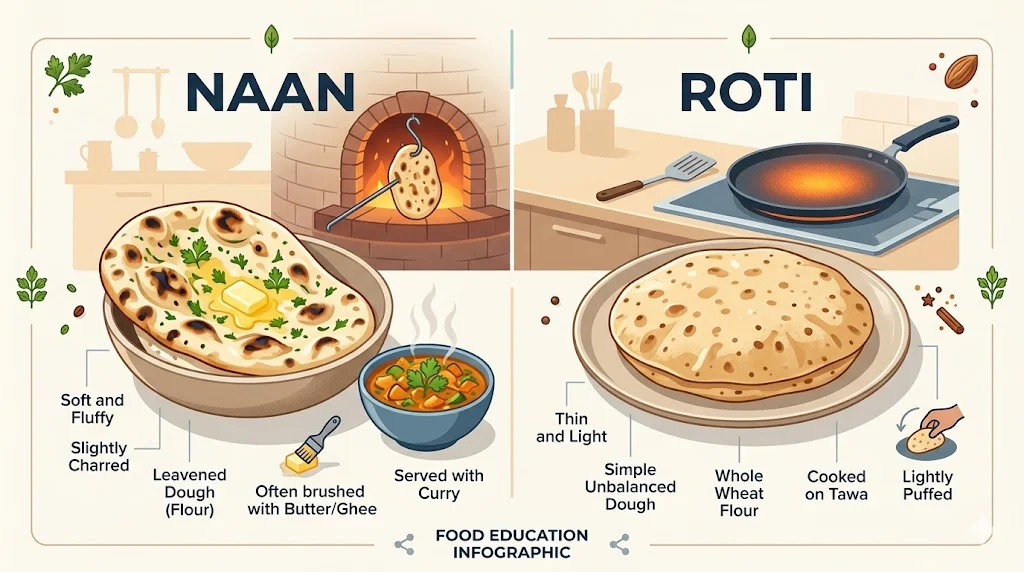
Naan vs roti refers to two popular South Asian flatbreads that differ in ingredients, cooking method, texture, and taste. Naan is soft, rich, and often made with yeast and dairy, while roti is simple, unleavened, and made from whole wheat flour. Both are staples in Indian, Pakistani, and other South Asian cuisines but serve different culinary purposes.
Naan vs roti is one of the most common food comparisons in South Asian cuisine. Both are flatbreads, both are delicious, and both are served with curries, vegetables, and meats. Yet, they are not the same.
Many people get confused when choosing between naan and roti, especially in restaurants or when cooking at home. Naan feels soft, rich, and slightly chewy. Roti is light, thin, and simple. One is often seen as a special treat, while the other is a daily staple.
Understanding naan vs roti is important for anyone interested in food, nutrition, or South Asian culture. It helps you make better dietary choices and also deepens your appreciation of traditional cooking methods.
In this guide, we will explore everything about naan vs roti, including ingredients, preparation methods, nutrition, advantages, disadvantages, and real-world usage. You will also learn common mistakes, practical exercises, and frequently asked questions to build a complete understanding of these two iconic breads.
Quick Answer / Overview of Naan vs Roti
Naan vs roti can be summarized simply:
- Naan is a soft, leavened flatbread made with yeast, refined flour, milk, or yogurt, and often cooked in a tandoor (clay oven).
- Roti is a simple unleavened flatbread made with whole wheat flour and water, cooked on a flat pan called a tawa.
Key Difference in One Line:
Naan is rich and soft, while roti is light and healthy.
Definition and Explanation of Naan vs Roti
What is Naan?
Naan is a traditional South Asian flatbread made using refined flour (maida), yeast or baking powder, yogurt, milk, and sometimes butter or ghee. It is typically cooked in a tandoor, giving it a slightly charred, smoky flavor.
Common types of naan include:
- Butter naan
- Garlic naan
- Cheese naan
- Plain naan
Naan is often served in restaurants and special meals.
What is Roti?
Roti, also known as chapati, is a simple flatbread made from whole wheat flour (atta) and water. It is rolled thin and cooked on a flat pan called a tawa without oil or very little oil.
Roti is a daily staple in many South Asian households.
Common types include:
- Chapati
- Phulka
- Tandoori roti (variation cooked in tandoor)
Ingredients Comparison in Naan vs Roti
| Feature | Naan | Roti |
| Flour | Refined flour (maida) | Whole wheat flour (atta) |
| Leavening agent | Yeast or baking powder | None |
| Dairy | Milk, yogurt, butter | Usually none |
| Fat content | High | Low |
| Water | Less | More |
| Additives | Garlic, cheese, herbs | Usually plain |
Cooking Method in Naan vs Roti
How Naan is Made
- Dough is prepared with yeast and dairy.
- It is left to rise for hours.
- Dough is shaped and stretched.
- Cooked in a hot tandoor or oven.
- Often brushed with butter or ghee.
How Roti is Made
- Dough is made with flour and water.
- Rested for a short time.
- Rolled into thin circles.
- Cooked on a hot tawa.
- Sometimes puffed over flame.
Advantages and Disadvantages of Naan vs Roti
Advantages of Naan
- Soft and flavorful
- Rich taste due to butter and yogurt
- Ideal for restaurant-style meals
- Pairs well with creamy curries
Disadvantages of Naan
- High in calories
- Made with refined flour
- Less suitable for daily consumption
- Can be heavy on digestion
Advantages of Roti
- High in fiber (whole wheat)
- Low in calories
- Easy to digest
- Suitable for daily meals
- Supports weight management
Disadvantages of Roti
- Less flavorful compared to naan
- Can become dry if not fresh
- Requires skill to roll evenly
Nutritional Comparison of Naan vs Roti
| Nutrient | Naan (1 piece) | Roti (1 piece) |
| Calories | Higher (250–350) | Lower (70–120) |
| Fiber | Low | High |
| Fat | Higher | Very low |
| Protein | Moderate | Moderate |
| Glycemic Index | High | Lower |
Naan vs roti shows a clear nutritional difference: roti is healthier for everyday use.
Real-World Examples of Naan vs Roti
Example 1: Restaurant Meal
When you order chicken curry in a restaurant, it is often served with naan because it enhances flavor and richness.
Example 2: Home Meal
At home, most families in Pakistan or India eat dal (lentils) with roti because it is simple, healthy, and filling.
Example 3: Festive Occasions
During weddings or celebrations, naan is commonly served because it feels luxurious and special.
Regional and Global Usage of Naan vs Roti
South Asia
- Roti is a daily staple in Pakistan, India, and Bangladesh.
- Naan is mostly eaten in restaurants or special occasions.
Middle East
- Similar flatbreads exist, but naan is more influenced by South Asian cuisine.
Western Countries
- Naan is widely available in supermarkets and Indian restaurants.
- Roti is gaining popularity among health-conscious people.
Common Mistakes in Understanding Naan vs Roti
Mistake 1: Thinking They Are the Same
Many people assume naan and roti are interchangeable, but they differ greatly in ingredients and nutrition.
Mistake 2: Assuming Naan is Healthier
Because naan is soft and tasty, people think it is healthier, but it actually contains more fat and refined flour.
Mistake 3: Overcooking Roti
Overcooked roti becomes hard and loses nutritional value.
Mistake 4: Using Wrong Flour
Using maida instead of atta changes the texture and health value of roti.
Exercises with Answers: Naan vs Roti
Exercise 1
Which is healthier for daily use: naan or roti?
Answer: Roti, because it is made from whole wheat flour and has fewer calories.
Exercise 2
What makes naan soft and fluffy?
Answer: Yeast or baking powder and dairy ingredients like yogurt and milk.
Exercise 3
Which cooking method is used for naan?
Answer: Tandoor (clay oven) or high-heat oven.
Exercise 4
Identify the main flour used in roti.
Answer: Whole wheat flour (atta).
Exercise 5
Which bread is better for weight loss: naan vs roti?
Answer: Roti is better for weight loss.
Related Concepts and Comparisons
Naan vs Paratha
- Paratha is layered and cooked with oil or ghee.
- Naan is soft and leavened.
Roti vs Chapati
- Both are almost the same, with minor regional differences.
Naan vs Bread
- Bread is Western and usually baked in ovens.
- Naan is South Asian and often tandoor-cooked.
Roti vs Tortilla
- Tortilla is Mexican flatbread made from corn or wheat.
- Roti is Indian/Pakistani wheat bread.
FAQs
What is the main difference between naan vs roti?
Naan is soft, leavened, and rich, while roti is simple, unleavened, and healthier.
Is naan or roti better for health?
Roti is healthier because it uses whole wheat flour and has fewer calories.
Why is naan softer than roti?
Because naan contains yeast, yogurt, and is cooked in high heat.
Can naan be eaten daily?
It is not recommended for daily use due to high calories and refined flour.
Is roti gluten-free?
No, roti contains gluten because it is made from wheat flour.
Why is naan expensive compared to roti?
Naan requires more ingredients, preparation time, and special cooking equipment.
Which is more filling: naan vs roti?
Roti is more filling in a healthy way due to fiber content.
Can roti replace naan in restaurants?
Yes, many people choose roti as a healthier substitute for naan.
What is tandoori roti in naan vs roti comparison?
Tandoori roti is a slightly smoky version of roti cooked in a tandoor.
Which is more popular worldwide, naan or roti?
Naan is more popular globally in restaurants, while roti is more common in homes.
Conclusion
The comparison of naan vs roti shows that both breads hold an important place in South Asian cuisine, but they serve different purposes. Naan is rich, soft, and flavorful, making it ideal for special meals and restaurant dining. It pairs perfectly with creamy curries and festive dishes. However, it is higher in calories and less suitable for daily consumption.
Roti, on the other hand, is simple, healthy, and deeply rooted in everyday home cooking. Made from whole wheat flour, it supports better digestion and balanced nutrition. It is the preferred choice for daily meals in millions of households.
Understanding naan vs roti helps you make better food choices based on health, taste, and occasion. If you are focusing on fitness or weight management, roti is the better option. If you are enjoying a special meal, naan adds richness and satisfaction.
In short, both naan and roti are valuable. The best choice depends on your lifestyle, health goals, and the type of meal you are enjoying.