Last Updated on May 15, 2026
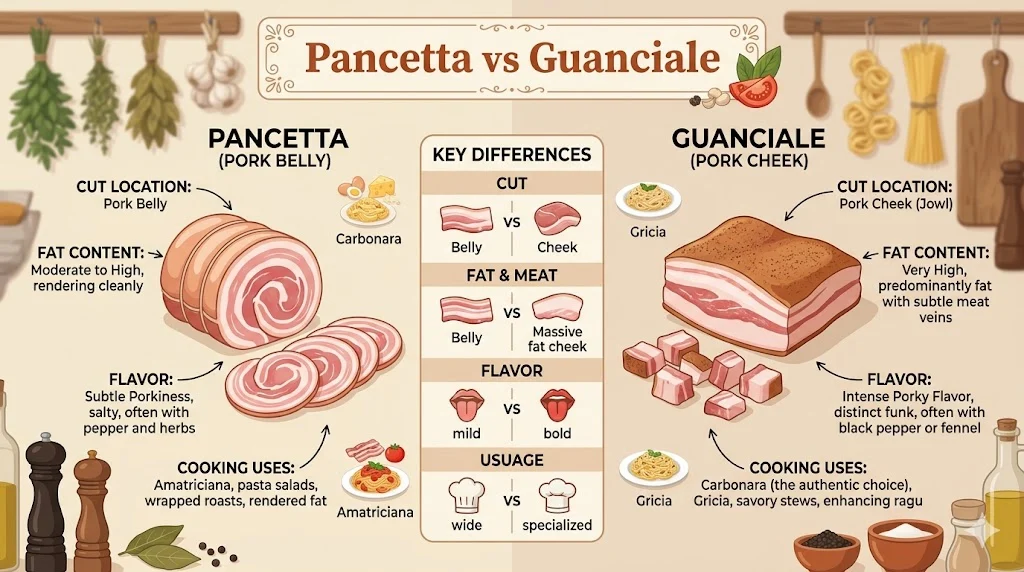
Pancetta vs guanciale is a comparison between two traditional Italian cured pork products. Pancetta comes from pork belly, while guanciale comes from pork cheek. Both are used to add rich, savory flavor to pasta and Italian dishes, but guanciale is more intense, fattier, and traditionally used in recipes like carbonara and amatriciana. Pancetta is milder and more widely available, making it a flexible substitute in everyday cooking.
The debate of pancetta vs guanciale is one of the most common questions in Italian cooking. Both are cured pork products, and both look similar at first glance. This often confuses home cooks and even food lovers who enjoy pasta, pizza, and traditional Italian recipes.
The truth is simple but important. These two ingredients are not the same. They come from different parts of the pig, have different curing methods, and create very different flavors in food.
Understanding pancetta vs guanciale helps you cook better Italian dishes. It also helps you choose the right ingredient when shopping or substituting in recipes like carbonara or amatriciana.
Many people use pancetta when guanciale is not available. But this changes taste, texture, and authenticity. Knowing the difference gives you control over flavor and results.
In this guide, you will learn everything about pancetta vs guanciale in a simple and clear way. From definitions to cooking uses, mistakes, comparisons, and real recipes, this article will help you master both ingredients with confidence.
Quick Answer Overview of Pancetta vs Guanciale
If you need a fast explanation of pancetta vs guanciale, here it is:
- Pancetta is cured pork belly. It is mild, slightly salty, and often rolled or sliced.
- Guanciale is cured pork cheek. It is richer, fattier, and more intense in flavor.
- Guanciale is traditional for Roman pasta dishes.
- Pancetta is more common and easier to find globally.
In short, guanciale is stronger and more authentic for certain Italian recipes, while pancetta is more versatile and widely used.
What Is Pancetta?
To understand pancetta vs guanciale, we first need to look at pancetta.
Pancetta is an Italian cured meat made from pork belly. It is seasoned with salt, pepper, and sometimes spices like nutmeg or garlic. After seasoning, it is rolled and cured for several weeks.
Key Features of Pancetta
- Cut from pork belly
- Cured, not smoked (usually)
- Mild, salty flavor
- Soft texture when cooked
- Available rolled or flat sliced
Pancetta is often compared to bacon, but it is not smoked. This gives it a cleaner, more delicate pork taste.
Common Uses of Pancetta
- Pasta dishes
- Pizza toppings
- Soup base flavoring
- Sandwich fillings
- Breakfast dishes
Pancetta is flexible, which makes it popular outside Italy.
What Is Guanciale?
Now let’s explore the second half of pancetta vs guanciale.
Guanciale is an Italian cured meat made from pork cheek or jowl. The name comes from the Italian word “guancia,” meaning cheek.
It is seasoned with salt, pepper, and sometimes herbs, then aged for several weeks or months.
Key Features of Guanciale
- Cut from pork cheek
- Higher fat content than pancetta
- Strong, deep pork flavor
- Soft, melt-in-mouth texture when cooked
- Traditional ingredient in Roman cuisine
Common Uses of Guanciale
- Pasta carbonara
- Pasta all’amatriciana
- Pasta alla gricia
- Traditional sauces and stews
Guanciale is considered more authentic in classic Roman dishes.
Pancetta vs Guanciale Key Differences
Understanding pancetta vs guanciale becomes easier when comparing them side by side.
Comparison Table
| Feature | Pancetta | Guanciale |
| Cut of meat | Pork belly | Pork cheek |
| Fat content | Medium | High |
| Flavor | Mild, salty | Strong, rich |
| Texture | Firm, sliceable | Soft, creamy when cooked |
| Curing time | 2–4 weeks | 3–6 months |
| Smoked | Usually no | No |
| Common use | General cooking | Traditional Roman dishes |
Flavor Difference Explained
Pancetta gives a balanced pork taste. It enhances dishes without overpowering them.
Guanciale gives a deep, rich, almost buttery pork flavor. It melts into sauces and creates a stronger taste base.
This is why pancetta vs guanciale matters so much in Italian recipes.
Advantages and Disadvantages of Pancetta vs Guanciale
To understand pancetta vs guanciale better, let’s break down their strengths and weaknesses.
Pancetta Advantages
- Easy to find in supermarkets
- Affordable
- Mild flavor suitable for many dishes
- Easy to slice and cook
- Works as a bacon substitute
Pancetta Disadvantages
- Less authentic in traditional Roman recipes
- Lower fat depth compared to guanciale
- Less intense flavor
Guanciale Advantages
- Authentic ingredient for classic dishes
- Rich, deep flavor
- High fat creates smooth sauces
- Traditional Italian cooking standard
Guanciale Disadvantages
- Hard to find outside Italy
- More expensive
- Strong flavor not suitable for all dishes
- Shorter shelf availability
Real-World Cooking Examples of Pancetta vs Guanciale
Understanding pancetta vs guanciale becomes easier with real cooking situations.
Example 1: Carbonara
- Traditional recipe uses guanciale
- It melts into egg and cheese sauce
- Creates creamy, rich texture
If you use pancetta instead:
- Flavor becomes lighter
- Sauce is less intense
- Still tasty but less authentic
Example 2: Pasta Soup Base
Pancetta works better here:
- Adds mild smoky-salt flavor
- Does not overpower broth
- Works well in vegetable soups
Example 3: Pizza Toppings
- Pancetta is commonly used
- It crisps nicely in oven
- Guanciale is too rich for some pizzas
Example 4: Amatriciana Sauce
- Guanciale is essential
- It creates signature flavor
- Pancetta changes traditional taste
Regional and Global Usage of Pancetta vs Guanciale
The importance of pancetta vs guanciale changes depending on location.
Italy
- Guanciale is preferred in central Italy
- Pancetta is widely used across regions
- Traditional chefs prefer guanciale for Roman dishes
United States
- Pancetta is more common
- Guanciale is found in specialty stores
- Many recipes substitute pancetta for guanciale
United Kingdom
- Pancetta is widely available
- Guanciale is rare
- Chefs often adapt recipes using pancetta
Asia and Other Regions
- Pancetta is easier to find
- Guanciale is mostly imported
- Substitution is common in home cooking
Common Mistakes in Pancetta vs Guanciale Cooking
Many people misunderstand pancetta vs guanciale, leading to cooking errors.
Mistake 1: Using Bacon Instead
Bacon is smoked, while pancetta and guanciale are not. This changes flavor completely.
Mistake 2: Overcooking Guanciale
Guanciale needs gentle heat. High heat makes it too crispy and dry.
Mistake 3: Treating Them as Identical
They are not interchangeable in traditional recipes.
Mistake 4: Skipping Fat Rendering
Both need slow cooking to release fat properly.
Mistake 5: Using Pancetta in Strict Traditional Recipes
Some dishes lose authenticity when guanciale is replaced.
Exercises with Answers Pancetta vs Guanciale
To help you learn pancetta vs guanciale, try these simple exercises.
Exercise 1
Which is used in traditional carbonara?
A) Pancetta
B) Guanciale
C) Bacon
Answer: B) Guanciale
Exercise 2
Which comes from pork belly?
Answer: Pancetta
Exercise 3
Which has higher fat content?
Answer: Guanciale
Exercise 4
True or False: Pancetta is always smoked.
Answer: False
Exercise 5
Which is easier to find globally?
Answer: Pancetta
Related Concepts and Comparisons
Understanding pancetta vs guanciale also connects to other food comparisons.
Pancetta vs Bacon
- Bacon is smoked
- Pancetta is not
- Bacon is crispier
Guanciale vs Bacon
- Guanciale is richer
- Bacon has smoky flavor
- Not interchangeable in Italian cooking
Pancetta vs Prosciutto
- Pancetta is cooked
- Prosciutto is eaten raw
- Different textures and uses
Italian Cured Meats Overview
- Salami
- Prosciutto
- Speck
- Pancetta
- Guanciale
Each has a unique role in Italian cuisine.
FAQs
What is the main difference between pancetta vs guanciale?
Pancetta comes from pork belly, while guanciale comes from pork cheek. Guanciale is richer and more traditional.
Can I substitute pancetta for guanciale in carbonara?
Yes, but the flavor will be lighter and less authentic.
Why is guanciale more expensive than pancetta?
It has longer curing time, limited production, and comes from a smaller cut of meat.
Is pancetta the same as bacon in pancetta vs guanciale comparison?
No, pancetta is not smoked, while bacon is usually smoked.
Which is healthier pancetta or guanciale?
Both are high in fat and salt. Neither is considered a health food.
Can I eat pancetta raw?
Yes, if it is cured properly, but it is usually cooked for best flavor.
Why do Italian chefs prefer guanciale?
Because it gives stronger flavor and is traditional in Roman recipes.
What dishes need guanciale specifically?
Carbonara, amatriciana, and pasta alla gricia.
Can I freeze pancetta or guanciale?
Yes, both can be frozen, but texture may slightly change.
Which tastes stronger in pancetta vs guanciale?
Guanciale has a stronger and richer taste.
Conclusion
Understanding pancetta vs guanciale helps you become a better and more confident cook. While both come from pork and share curing methods, they are very different in flavor, texture, and culinary purpose.
Pancetta is mild, flexible, and widely available. It works well in many everyday recipes. Guanciale is rich, fatty, and deeply traditional, especially in Roman pasta dishes.
Choosing between them depends on your recipe. If authenticity matters, use guanciale. If availability and flexibility matter, pancetta is a great option.
In short, pancetta vs guanciale is not just a food comparison. It is a choice between tradition and convenience. Knowing when to use each one will improve your cooking results and help you enjoy authentic Italian flavors at home.