Last Updated on June 16, 2026
“Sus” is a slang term that means suspicious or questionable. People use it in text, chat, gaming, and social media to describe behavior, actions, or situations that seem dishonest, strange, or untrustworthy. The term became widely popular through internet culture and gaming and is now a core part of everyday informal language.
Let’s cut through the noise.
The sus meaning slang comes down to one simple idea: something feels suspicious.
You use “sus” when something doesn’t sit right. Maybe a person acts weird. Maybe a story doesn’t add up. You don’t have full proof. Still, your instincts say something is off.
That’s when you say:
“That’s sus.”
Short sentence. Strong meaning.
It carries doubt, skepticism, and sometimes a quiet accusation. Yet it doesn’t sound harsh. That’s the beauty of it.
Simple Meaning You Can Actually Use
Here’s the meaning in plain terms:
- Sus = suspicious or questionable
- Suggests doubt without proof
- Often used casually
You’re not making a full claim. You’re raising a flag.
Why “Sus” Sounds More Natural Than “Suspicious”
Long words slow conversations down. Short words keep things moving.
Compare these two:
- “That behavior seems suspicious.”
- “That’s sus.”
The second one feels lighter. It sounds like real speech.
That’s why people prefer it.
How “Sus” Adapts to Different Situations
Here’s where things get interesting.
“Sus” doesn’t stay locked into one meaning. It shifts based on context.
It can describe:
- A dishonest person
- A strange situation
- A doubtful claim
- A playful joke
- A weird vibe
Same word. Different layers.
What Does Sus Stand For and Why Do People Use It So Much
A lot of people think “sus” is an acronym.
It’s not.
It’s a clipped word, which simply means a shortened version of a longer word.
Where the Word Comes From
“Sus” comes from:
- Suspicious
- Sometimes suspect
That’s it. No hidden meaning.
Why Shortened Words Dominate Internet Slang
Language online moves fast. People trim words to save time and effort.
Here’s a quick comparison:
| Full Word | Slang Version |
|---|---|
| Suspicious | Sus |
| Because | Cuz |
| Probably | Prob |
| Message | Msg |
Short words win because they:
- Save time
- Feel casual
- Fit mobile typing
“Sus” fits perfectly into this pattern.
Why “Sus” Feels More Expressive
Short words don’t just save time. They add impact.
“Suspicious” sounds formal. Almost distant.
“Sus” feels:
- Direct
- Personal
- Emotional
It hits faster. That’s why it spreads.
The Origin of Sus Slang Before It Went Viral
Most people think “sus” started online.
That’s not true.
Early Use in Everyday Speech
“Sus” existed in spoken English long before social media. People used it casually in conversations, especially in informal settings.
You might hear:
- “That sounds a bit sus.”
- “He’s acting sus.”
It carried the same meaning back then.
Why It Didn’t Spread Earlier
Back then, language moved slowly.
There was:
- No viral content
- No global platforms
- No instant sharing
So “sus” stayed local.
The Shift Into Digital Communication
Once texting became popular, everything changed.
People wanted:
- Faster communication
- Shorter words
- Clear emotions
“Sus” started appearing more often in messages and online chats.
Still, it hadn’t exploded yet.
That moment came next.
How Gaming Changed Everything for “Sus”
Gaming created the perfect environment for slang.
Fast communication mattered. Players needed quick, clear signals.
That’s where “sus” found its place.
Why Gaming Speeds Up Language Evolution
In games, you don’t have time for long explanations.
You need to:
- React quickly
- Communicate clearly
- Share ideas instantly
“Sus” solves all three.
Multiplayer Interaction and Suspicion
Many games involve trust and deception.
Players constantly ask:
- Who can I trust?
- Who is lying?
- Who is acting strange?
Instead of typing long sentences, players say:
“He’s sus.”
Simple. Effective.
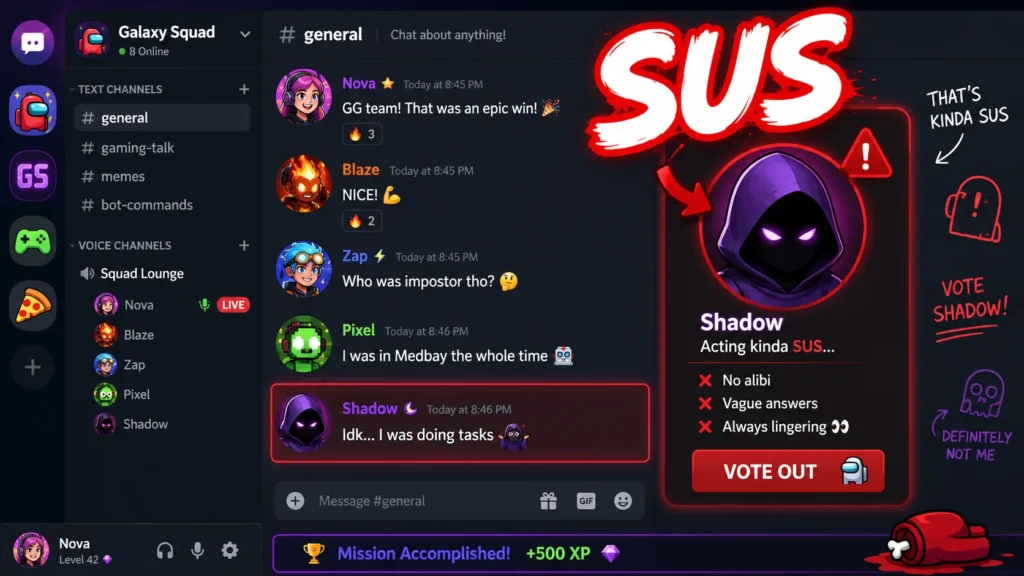
Sus Meaning in Among Us and Why It Went Viral
This is where “sus” exploded globally.
The Turning Point Explained
The game Among Us revolves around identifying impostors.
Players accuse each other constantly.
“I think he’s acting suspicious.”
They say:
“He’s sus.”
That phrase spread like wildfire.
Why the Word Became a Global Trend
Several things made it viral:
- Easy to understand
- Fun to say
- Repeatable in gameplay
- Perfect for memes
Soon, streamers and content creators picked it up. Then social media amplified it.
Within months, everyone knew the word.
How Meme Culture Made It Stick
Memes repeat ideas. Repetition builds memory.
“Sus” became:
- A reaction
- A joke
- A cultural reference
Examples:
- “That look was sus.”
- “Why did he pause like that sus.”
Once a word becomes a meme, it doesn’t fade easily.
Sus Meaning in Text and Chat Today
Now, “sus” lives everywhere.
You’ll see it in:
- Text messages
- Group chats
- Social media
- Comments
How “Sus” Works in Text Messages
Texting is fast. People want short expressions.
Examples:
- “You replied late. Sus.”
- “That excuse sounds sus.”
It replaces longer explanations.
How It’s Used in Chat Conversations
Chat language is even more relaxed.
Examples:
- “bro that’s sus”
- “nah this feels sus”
- “you acting sus today”
You’ll notice:
- Lowercase text
- Minimal punctuation
- Casual tone
That’s intentional.
How Tone Changes the Meaning
Tone shapes everything.
The same phrase can feel different depending on delivery.
“That’s sus.”
Can mean:
- A serious concern
- A playful joke
- Mild doubt
Context decides.
Different Meanings of Sus Based on Context
Now we go deeper.
Suspicious Behavior
This is the most direct meaning.
Examples:
- “He keeps changing his story. That’s sus.”
- “Why did you delete that message? Sus.”
Here, you’re pointing out strange behavior.
Doubt or Uncertainty
Sometimes nothing is clearly wrong. Still, it feels off.
Examples:
- “That deal seems too good. Kinda sus.”
- “I don’t trust that explanation. Sus.”
You’re expressing hesitation.
Playful or Joking Use
Among friends, “sus” becomes lighthearted.
Examples:
- “You didn’t share food? Sus.”
- “You being nice today? That’s sus 😂”
No real accusation. Just humor.
Vibe-Based Meaning
Sometimes you can’t explain it.
You just feel it.
Examples:
- “This situation feels sus.”
- “Something about this is sus.”
It’s instinct, not logic.
How to Use Sus in a Sentence Naturally
Let’s make this practical.
Everyday Conversation Examples
- “Why are you avoiding the question? That’s sus.”
- “You canceled again? Sus.”
- “He’s acting really sus lately.”
Short sentences. Clear meaning.
Texting Examples
- “you online but ignoring me sus”
- “that excuse is sus ngl”
- “nah bro this feels sus”
Relaxed tone. Real usage.
Social Media Examples
- “this is kinda sus 😭”
- “not sure about this sus”
- “why did he do that SUS”
Emojis often amplify meaning.
When You Should and Shouldn’t Use Sus
Not every situation fits slang.
Use It In These Situations
- Casual conversations
- Friendly chats
- Social media
- Gaming
These spaces welcome informal language.
Avoid It In These Situations
- Work emails
- Interviews
- Academic writing
- Professional settings
Using slang here can hurt credibility.
Quick Rule That Works Every Time
Ask yourself:
“Would I say this in a formal setting?”
If not, skip it.
Synonyms and Similar Slang Words Compared
Let’s expand your understanding.
| Word | Meaning | Tone | Example |
|---|---|---|---|
| Sus | Suspicious | Casual | “That’s sus.” |
| Shady | Dishonest | Strong | “He’s shady.” |
| Sketchy | Risky | Casual | “That place is sketchy.” |
| Fishy | Odd | Mild | “Something’s fishy.” |
| Dodgy | Unreliable | Informal | “That deal is dodgy.” |
Key Differences You Should Know
- Sus feels lighter and less direct
- Shady sounds more accusatory
- Sketchy focuses on situations
Choosing the right word changes tone.
Why People Say “Sus” (Deep Insight)
This isn’t random.
Language evolves for a reason.
Short Words Spread Faster
Short words:
- Are easier to remember
- Travel quickly
- Fit modern communication
“Sus” checks all these boxes.
Internet Culture Drives Adoption
Online spaces reward:
- Speed
- Humor
- Simplicity
“Sus” fits perfectly into that system.
Social Identity and Language
Using slang shows belonging.
When you say “sus,” you signal:
- Cultural awareness
- Internet fluency
- Social alignment
It becomes more than just a word.
Common Mistakes People Make With “Sus”
Even simple slang has rules.
Overusing It
Using “sus” too often feels forced.
Using It in the Wrong Context
Formal situations don’t mix with slang.
Misreading Tone
Sometimes it’s a joke. Sometimes it’s serious.
Context matters.
Sus Meaning in Urdu and Regional Context
If you speak Urdu or live in South Asia, you’ve probably noticed how quickly English slang blends into daily conversation. The word “sus” is a perfect example. It doesn’t have a direct one-word translation in Urdu, yet people use it all the time.
So what does sus mean in Urdu?
At its core, “sus” translates loosely to:
- مشکوک (Mashkook) → suspicious
- شک ہونا (Shak hona) → to have doubt
- گڑبڑ لگنا → something feels off
But here’s where things get interesting.
People rarely translate it. Instead, they mix it into Urdu sentences naturally.
Real-Life Examples in Urdu + English Mix
- “Yeh banda thora sus lag raha hai.”
- “Uski story bilkul sus hai.”
- “Scene kuch sus lag raha hai, check karo.”
Notice the pattern?
The word “sus” stays in English, but the structure around it is Urdu. That’s how modern slang evolves fast, flexible, and culturally blended.
Why “Sus” Works So Well in Urdu Conversations
There are a few reasons this word fits perfectly:
- It’s short and punchy
- It carries a casual tone, not too serious
- It avoids sounding overly formal like “mashkook”
- It feels modern and internet-driven
In fact, using “sus” often makes you sound more connected to online culture, especially among younger audiences.
Is “Sus” Rude or Offensive?
Let’s clear this up. Many people wonder if calling someone “sus” crosses a line.
Short answer?
Usually no but context matters.
When “Sus” Is Harmless
Most of the time, “sus” feels light and playful.
For example:
- Joking with friends
- Talking about a game
- Reacting to something weird online
In these cases, it’s closer to saying:
- “That’s odd”
- “That seems off”
- “Hmm I don’t trust that”
No real offense intended.
When “Sus” Can Feel Negative
However, tone changes everything.
Calling someone “sus” can feel rude if:
- You accuse them seriously
- You say it in a tense situation
- You imply dishonesty without proof
For instance:
- “You’re acting sus” (casual)
- vs
- “You’re really sus” (accusatory tone)
Same words. Different impact.
Quick Rule of Thumb
Use “sus” when the vibe is light or curious, not confrontational.
If you’re unsure, soften it:
- “That seems kinda sus, not gonna lie”
- “Maybe I’m wrong, but that feels sus”
This keeps things friendly.
Sus vs Shady vs Sketchy vs Fishy
“Sus” doesn’t exist alone. It belongs to a whole family of slang words that express doubt.
But they’re not identical.
Here’s a clean breakdown.
Comparison Table
| Word | Meaning | Tone | Usage Style |
|---|---|---|---|
| Sus | Slightly suspicious | Casual / playful | Modern slang |
| Shady | Secretive, possibly dishonest | Negative | More serious |
| Sketchy | Risky or unreliable | Informal | Real-world + online |
| Fishy | Something doesn’t add up | Mild suspicion | Traditional slang |
Key Differences
- Sus → Quick reaction, often joking
- Shady → Suggests hidden bad intentions
- Sketchy → Feels unsafe or unreliable
- Fishy → Logical suspicion, something doesn’t match
Example in One Scenario
Imagine someone cancels plans last minute.
- “That’s sus” → light suspicion
- “That’s shady” → you think they’re hiding something
- “That’s sketchy” → feels unreliable
- “That’s fishy” → story doesn’t make sense
Each word shifts the tone slightly.
Why People Say “Sus” So Often
Language evolves for a reason. Words survive because they’re useful.
“Sus” exploded in popularity because it checks every box.
Reasons Behind Its Popularity
- Speed – one syllable, instant meaning
- Flexibility – works in jokes, games, chats
- Emotion – expresses doubt without long explanation
- Relatability – everyone understands the vibe
But there’s more.
Influence of Internet Culture
Online spaces shaped this word:
- Gaming communities
- Meme pages
- Short-form videos
- Group chats
People needed a fast reaction word. “Sus” became that word.
Psychological Angle
Humans constantly judge behavior.
We notice:
- Inconsistencies
- Strange actions
- Unclear intentions
Instead of explaining all that, we just say:
“That’s sus.”
It’s efficient. It feels natural.
Sus in Memes and Viral Culture
If you’ve spent even five minutes online, you’ve seen “sus” in memes.
It thrives in humor.
Popular Meme Formats
- “When your friend says they didn’t eat your food kinda sus”
- “No homework but teacher says check again sus”
- “Phone at 1% but lasts 2 hours sus”
These jokes work because they tap into shared experiences.
Why It Works in Memes
- It’s relatable
- It’s short
- It leaves room for interpretation
A good meme doesn’t explain everything.
“Sus” helps keep it open-ended.
How to Use “Sus” Like a Native Speaker
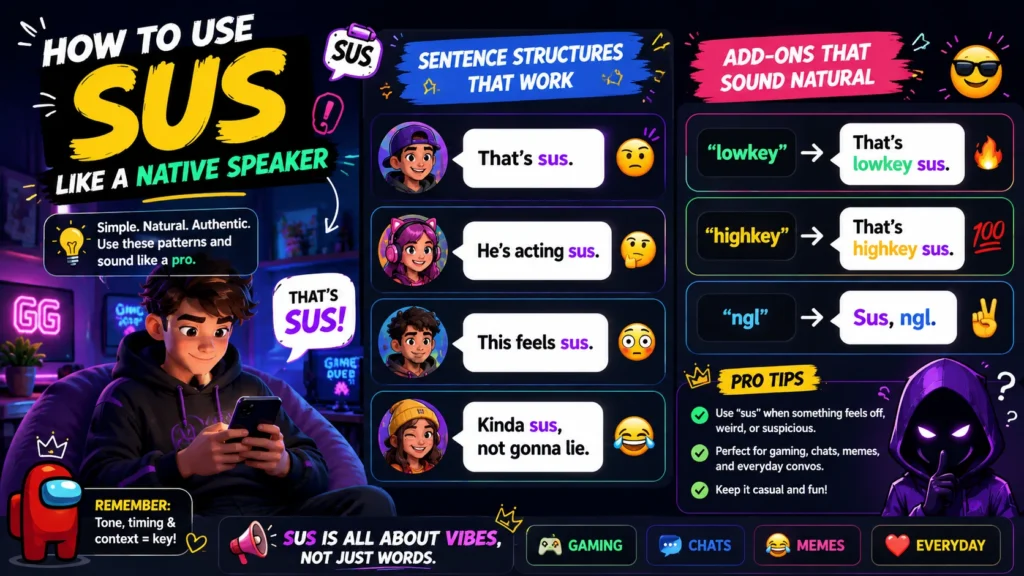
You don’t need complicated rules. Still, a few patterns can help you sound natural.
Sentence Structures That Work
- “That’s sus.”
- “He’s acting sus.”
- “This feels sus.”
- “Kinda sus, not gonna lie.”
Add-ons That Sound Natural
- “lowkey” → “That’s lowkey sus”
- “highkey” → “That’s highkey sus”
- “ngl” → “Sus, ngl”
These combinations make your speech feel authentic and current.
Common Mistakes to Avoid
Even simple slang can go wrong.
Here’s what to watch out for.
Mistake One: Overusing It
If everything is “sus,” the word loses meaning.
Use it when something genuinely feels off.
Mistake Two: Using It in Formal Situations
Don’t say “sus” in:
- Job interviews
- Academic writing
- Professional emails
It sounds unprofessional.
Mistake Three: Misreading Context
Not every weird situation is suspicious.
Sometimes things are just weird.
Learn the difference.
The Evolution of “Sus” in Language
“Sus” isn’t just slang. It’s a case study in how language changes.
Linguistic Breakdown
- Type: Clipped word
- Origin: “suspicious”
- Function: adjective and noun
Semantic Shift
Originally, “suspicious” sounded serious.
“Sus” softened it.
Now it can mean:
- Slight doubt
- Playful accusation
- Meme reaction
That’s a major shift in tone.
What This Tells Us About Language
Language moves toward:
- Efficiency
- Emotion
- Speed
“Sus” fits all three.
Final Thoughts
Some slang fades quickly. Others stick.
“Sus” has staying power.
It’s simple.
It’s flexible.
It fits modern communication perfectly.
More importantly, it captures a universal feeling:
That tiny moment when something just doesn’t feel right.
And instead of explaining it, you just say
“That’s sus.”