Last Updated on May 15, 2026
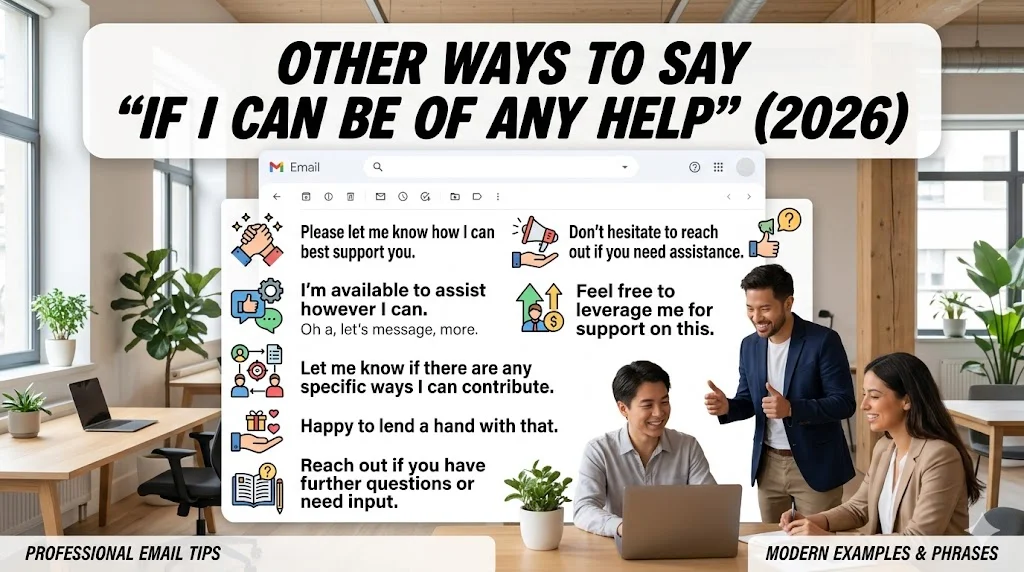
Looking for other ways to say if I can be of any help? Try:
Please let me know how I can assist, I’m happy to help, Feel free to reach out if needed, Let me know if you need anything, I’m available to support.
These alternatives help you sound more natural, professional, and approachable.
The phrase “if I can be of any help” is a polite and widely used expression in English, especially in emails and professional communication. It shows willingness to assist, but it can sound formal, outdated, or repetitive if used too often.
Learning alternatives to “if I can be of any help” helps you communicate more clearly and naturally in both professional and casual contexts. It also allows you to express excitement in English while maintaining a helpful tone.
Using the right variation can make your communication sound warmer, more confident, and more modern.
“Offering help clearly and confidently builds trust and professionalism.”
Quick Categories
Formal alternatives to “if I can be of any help”
- Please let me know if I may assist
- Should you require assistance, feel free to contact me
- I remain available for further support
Pro Tip: Use these in formal emails, client communication, or corporate settings.
Casual alternatives
- Let me know if you need anything
- Happy to help anytime
- Just reach out if needed
Pro Tip: Best for friendly conversations or internal team communication.
Professional alternatives
- I’m happy to assist further
- Please don’t hesitate to reach out
- I’m available to support
Pro Tip: Ideal for workplace emails, follow-ups, and client responses.
Informal expressions
- I’ve got you covered
- Give me a shout if you need help
- Let me know anytime
Pro Tip: Use only in relaxed environments or with close colleagues.
Common Mistakes
- Using outdated phrasing
Example: “If I can be of any assistance whatsoever…” - Being too vague
Example: “Let me know.” (without context) - Overusing in every email
Example: Ending every message with the same phrase - Too informal in professional settings
Example: “Hit me up if you need help” - Lack of clarity
Example: Not specifying what help you can offer
What Does “If I Can Be of Any Help” Mean?
It means you are offering your assistance or support if someone needs it.
Grammar Tip:
- Usually used as a conditional phrase in polite communication
Example Sentence:
“If I can be of any help, please don’t hesitate to contact me.”
When to Use It
- In professional emails
- Customer service communication
- Team collaboration messages
- Follow-up emails
Spoken vs Written:
- Written: more common and formal
- Spoken: often replaced with simpler phrases
Formal vs Informal:
- Formal: “Please let me know if I may assist”
- Informal: “Let me know if you need anything”
Is It Professional or Polite to Say “If I Can Be of Any Help”?
Polite? ✔️ Yes
Professional? ✔️ Yes
However, it can feel too formal or slightly outdated in modern communication.
Business Example:
“If I can be of any help, please feel free to contact me.”
Pros and Cons
Pros
- Polite and respectful
- Widely understood
- Professional tone
- Safe to use
Cons
- Sounds outdated
- Overused
- Lacks personality
- Can feel generic
“Modern communication favors clarity and simplicity over overly formal phrasing.”
Other Ways to Say “If I Can Be of Any Help” (With Examples)
These alternatives will help you sound more fluent, confident, and natural in different situations.
Use them based on tone, audience, and context.
1. Phrase: Please let me know how I can assist
Meaning: Offering help directly
Explanation: Clear and professional
Example Sentence: “Please let me know how I can assist with this project.”
Best Use: formal emails
Worst Use: casual chats
Tone: professional, helpful
Context Variability: professional
2. Phrase: I’m happy to help
Meaning: Willingness to assist
Explanation: Simple and friendly
Example Sentence: “I’m happy to help if you need anything.”
Best Use: all settings
Worst Use: none
Tone: warm, approachable
Context Variability: both
3. Phrase: Feel free to reach out if needed
Meaning: Open invitation for help
Explanation: Modern and widely used
Example Sentence: “Feel free to reach out if needed.”
Best Use: emails
Worst Use: urgent situations
Tone: neutral, professional
Context Variability: both
4. Phrase: Let me know if you need anything
Meaning: General offer of help
Explanation: Very common alternative
Example Sentence: “Let me know if you need anything.”
Best Use: casual/professional
Worst Use: formal letters
Tone: friendly
Context Variability: both
5. Phrase: I’m available to support
Meaning: Offering availability
Explanation: Slightly formal
Example Sentence: “I’m available to support if required.”
Best Use: workplace
Worst Use: casual
Tone: professional
Context Variability: professional
6. Phrase: Please don’t hesitate to reach out
Meaning: Encourages contact
Explanation: Polite and professional
Example Sentence: “Please don’t hesitate to reach out for assistance.”
Best Use: emails
Worst Use: informal chats
Tone: formal, polite
Context Variability: professional
7. Phrase: I’m here to help
Meaning: Direct and supportive
Explanation: Friendly tone
Example Sentence: “I’m here to help whenever you need it.”
Best Use: team communication
Worst Use: formal letters
Tone: warm
Context Variability: both
8. Phrase: Let me know how I can help
Meaning: Specific offer
Explanation: More active than passive phrasing
Example Sentence: “Let me know how I can help with the task.”
Best Use: collaboration
Worst Use: none
Tone: helpful
Context Variability: both
9. Phrase: Happy to assist further
Meaning: Continued support
Explanation: Professional tone
Example Sentence: “Happy to assist further if needed.”
Best Use: follow-ups
Worst Use: casual chats
Tone: professional
Context Variability: professional
10. Phrase: I’m glad to help
Meaning: Positive willingness
Explanation: Friendly tone
Example Sentence: “I’m glad to help anytime.”
Best Use: casual/professional
Worst Use: formal docs
Tone: warm
Context Variability: both
11. Phrase: Just let me know
Meaning: Simple offer
Explanation: Informal but clear
Example Sentence: “Just let me know if you need anything.”
Best Use: casual
Worst Use: formal emails
Tone: relaxed
Context Variability: informal
12. Phrase: Reach out anytime if needed
Meaning: Flexible help
Explanation: Modern phrasing
Example Sentence: “Reach out anytime if needed.”
Best Use: emails
Worst Use: urgent
Tone: friendly
Context Variability: both
13. Phrase: I’d be happy to assist
Meaning: Polite willingness
Explanation: Slightly formal
Example Sentence: “I’d be happy to assist with this.”
Best Use: professional
Worst Use: casual
Tone: polite
Context Variability: professional
14. Phrase: Let me know if there’s anything I can do
Meaning: Broad help
Explanation: Common expression
Example Sentence: “Let me know if there’s anything I can do.”
Best Use: all
Worst Use: none
Tone: neutral
Context Variability: both
15. Phrase: I’m here if you need support
Meaning: Supportive tone
Explanation: Emotional + professional
Example Sentence: “I’m here if you need support.”
Best Use: teamwork
Worst Use: formal docs
Tone: supportive
Context Variability: both
16. Phrase: Please let me know if you require assistance
Meaning: Formal help offer
Explanation: Traditional business tone
Example Sentence: “Please let me know if you require assistance.”
Best Use: corporate
Worst Use: casual
Tone: formal
Context Variability: professional
17. Phrase: Always happy to help
Meaning: Friendly willingness
Explanation: Positive tone
Example Sentence: “Always happy to help.”
Best Use: informal/professional
Worst Use: formal docs
Tone: warm
Context Variability: both
18. Phrase: I’m at your disposal
Meaning: Formal support
Explanation: Very formal phrasing
Example Sentence: “I’m at your disposal for further assistance.”
Best Use: formal
Worst Use: casual
Tone: formal
Context Variability: professional
19. Phrase: Let me know how I may assist
Meaning: Formal version
Explanation: Polite tone
Example Sentence: “Let me know how I may assist.”
Best Use: formal emails
Worst Use: casual
Tone: professional
Context Variability: professional
20. Phrase: I’m ready to help
Meaning: Immediate support
Explanation: Direct tone
Example Sentence: “I’m ready to help if needed.”
Best Use: teamwork
Worst Use: formal docs
Tone: confident
Context Variability: both
21. Phrase: Feel free to contact me
Meaning: Open communication
Explanation: Common closing
Example Sentence: “Feel free to contact me for assistance.”
Best Use: emails
Worst Use: casual
Tone: professional
Context Variability: professional
22. Phrase: Let me know if I can assist further
Meaning: Continued help
Explanation: Professional tone
Example Sentence: “Let me know if I can assist further.”
Best Use: follow-ups
Worst Use: casual
Tone: professional
Context Variability: professional
23. Phrase: I’m available if you need help
Meaning: Offering availability
Explanation: Neutral tone
Example Sentence: “I’m available if you need help.”
Best Use: all
Worst Use: none
Tone: neutral
Context Variability: both
24. Phrase: Don’t hesitate to ask
Meaning: Encouraging request
Explanation: Friendly tone
Example Sentence: “Don’t hesitate to ask if you need help.”
Best Use: informal/professional
Worst Use: formal
Tone: friendly
Context Variability: both
25. Phrase: I’m happy to support
Meaning: Willing assistance
Explanation: Professional tone
Example Sentence: “I’m happy to support your work.”
Best Use: workplace
Worst Use: casual
Tone: professional
Context Variability: professional
26. Phrase: Let me know if you’d like assistance
Meaning: Optional help
Explanation: Polite phrasing
Example Sentence: “Let me know if you’d like assistance.”
Best Use: emails
Worst Use: casual
Tone: polite
Context Variability: professional
27. Phrase: I’m here if anything comes up
Meaning: Ongoing support
Explanation: Friendly tone
Example Sentence: “I’m here if anything comes up.”
Best Use: team
Worst Use: formal
Tone: relaxed
Context Variability: both
28. Phrase: I’m glad to assist further
Meaning: Continued help
Explanation: Formal tone
Example Sentence: “I’m glad to assist further.”
Best Use: professional
Worst Use: casual
Tone: polite
Context Variability: professional
29. Phrase: Let me know if support is needed
Meaning: Simple offer
Explanation: Direct phrasing
Example Sentence: “Let me know if support is needed.”
Best Use: workplace
Worst Use: casual
Tone: neutral
Context Variability: professional
30. Phrase: I’m always available to help
Meaning: Continuous support
Explanation: Friendly tone
Example Sentence: “I’m always available to help.”
Best Use: team
Worst Use: formal docs
Tone: warm
Context Variability: both
“Simple, direct offers of help often sound more modern and effective than formal phrases.”
Mini Quiz / Self-Check
1. Most formal option?
A. Just let me know
B. I’m at your disposal
C. Happy to help
Answer: B
2. Best for casual team chat?
A. Please let me know if you require assistance
B. Let me know if you need anything
C. I remain available for support
Answer: B
3. Best for professional email?
A. I’m happy to assist further
B. Hit me up
C. I’ve got you covered
Answer: A
Comparison Table: Top Alternatives
| Phrase | Tone | Best Use |
|---|---|---|
| Please let me know how I can assist | Professional | Emails |
| I’m happy to help | Friendly | All contexts |
| Feel free to reach out | Neutral | Emails |
| Let me know if you need anything | Casual | Teams |
| I’m available to support | Professional | Workplace |
| Please don’t hesitate to reach out | Formal | Clients |
| I’m here to help | Friendly | Teamwork |
| Happy to assist further | Professional | Follow-ups |
| I’d be happy to assist | Polite | Business emails |
| Always happy to help | Warm | Informal |
FAQs
1. Is “if I can be of any help” outdated?
It’s still correct but can sound overly formal in modern communication.
2. What’s the best professional alternative?
“Please let me know how I can assist.”
3. Can I use casual alternatives at work?
Yes, in informal teams or startups.
4. How can I sound more natural?
Use simple phrases like “Let me know if you need anything.”
5. Should I always include this phrase in emails?
It’s recommended, but vary your wording to avoid repetition.
Conclusion
Using other ways to say if I can be of any help allows you to sound more modern, clear, and engaging in both professional and casual communication.
By choosing the right alternative based on tone and context, you can make your messages feel more personal, confident, and effective. Practice these phrases regularly to improve your everyday communication.