Last Updated on May 13, 2026
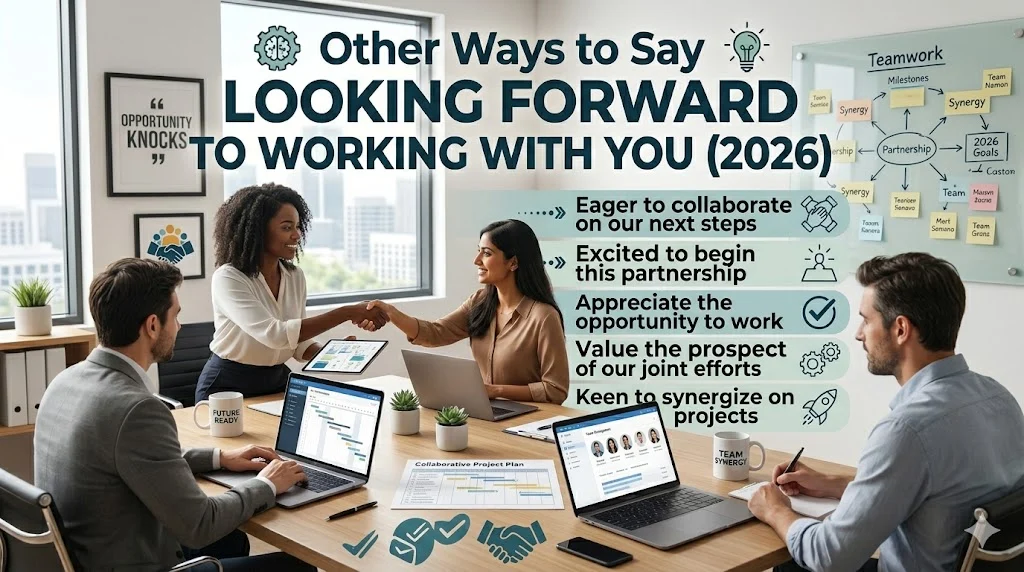
If you need other ways to say looking forward to working with you, try:
I’m excited to collaborate, I look forward to our partnership, I’m eager to begin working together, I’m thrilled to join forces, I anticipate a productive collaboration.
These phrases help you sound more professional, confident, and engaging in emails and conversations.
The phrase “looking forward to working with you” is widely used in professional emails, onboarding messages, and networking communication. While it’s polite and clear, it can also feel overused and predictable.
Learning alternatives to “looking forward to working with you” helps you stand out, tailor your tone, and communicate enthusiasm more effectively. It also improves your ability to express excitement in English while maintaining professionalism.
Whether you’re writing to a new colleague, client, or employer, the right phrase can make your message feel more genuine and impactful.
“A thoughtful closing line can strengthen relationships before work even begins.”
Quick Categories
Formal alternatives to “looking forward to working with you”
- I anticipate our collaboration
- I look forward to our partnership
- I welcome the opportunity to work together
Pro Tip: Use these in corporate emails, client communication, or formal introductions.
Casual alternatives
- Excited to work together
- Can’t wait to collaborate
- Looking forward to teaming up
Pro Tip: Ideal for startups or informal workplace cultures.
Professional alternatives
- I’m eager to collaborate
- I’m excited to contribute
- I look forward to a productive partnership
Pro Tip: Perfect for LinkedIn messages, onboarding emails, and business communication.
Informal expressions
- Let’s do great things together
- Can’t wait to get started
- Excited to be part of the team
Pro Tip: Use only when tone allows friendliness and informality.
Common Mistakes
- Overusing the same phrase
Example: Ending every email with the same sentence - Being too informal
Example: “Can’t wait!!!” in a client email - Lack of personalization
Example: Generic closing without mentioning project/team - Overly long phrasing
Example: “I am extremely and incredibly looking forward…” - Mismatch of tone
Example: Using casual language in formal business emails
What Does “Looking Forward to Working With You” Mean?
It expresses anticipation, enthusiasm, and willingness to collaborate with someone in a professional context.
Grammar Tip:
- “Looking forward to” is followed by a noun or gerund (-ing verb).
Example Sentence:
“I am looking forward to working with you on this project.”
When to Use It
- Job acceptance emails
- Client onboarding communication
- Team introductions
- Networking messages
Spoken vs Written:
- Spoken: often simplified (“Excited to work together”)
- Written: more structured and formal
Formal vs Informal:
- Formal: “I look forward to our collaboration”
- Informal: “Excited to work together”
Is It Professional or Polite to Say “Looking Forward to Working With You”?
Polite? ✔️ Yes
Professional? ✔️ Yes
However, it may sound generic if overused.
Business Example:
“I look forward to working with you on upcoming projects.”
Pros and Cons
Pros
- Polite and professional
- Widely accepted
- Easy to understand
- Suitable for most contexts
Cons
- Overused
- Lacks originality
- Limited emotional range
- Can feel impersonal
“The right wording shows both enthusiasm and professionalism—without sounding repetitive.”
Other Ways to Say “Looking Forward to Working With You” (With Examples)
These alternatives will help you sound more fluent, confident, and natural in different situations.
Use them according to tone, context, and audience to express excitement, admiration, or collaboration.
1. Phrase: I’m excited to collaborate
Meaning: Shows enthusiasm for teamwork
Explanation: Modern and professional
Example Sentence: “I’m excited to collaborate on this project.”
Best Use: team emails
Worst Use: very formal letters
Tone: enthusiastic, professional
Context Variability: both
2. Phrase: I look forward to our collaboration
Meaning: Formal anticipation
Explanation: Direct professional alternative
Example Sentence: “I look forward to our collaboration.”
Best Use: corporate emails
Worst Use: casual chats
Tone: formal, polished
Context Variability: professional
3. Phrase: I’m eager to work together
Meaning: Strong interest
Explanation: Slightly expressive
Example Sentence: “I’m eager to work together on this initiative.”
Best Use: professional emails
Worst Use: formal contracts
Tone: positive, confident
Context Variability: both
4. Phrase: I anticipate a productive partnership
Meaning: Expectation of success
Explanation: Formal and confident
Example Sentence: “I anticipate a productive partnership.”
Best Use: clients
Worst Use: casual
Tone: formal, confident
Context Variability: professional
5. Phrase: I’m thrilled to join forces
Meaning: High enthusiasm
Explanation: Strong, expressive tone
Example Sentence: “I’m thrilled to join forces with your team.”
Best Use: creative roles
Worst Use: corporate
Tone: energetic, bold
Context Variability: casual / professional
6. Phrase: I’m excited to be working with you
Meaning: Friendly enthusiasm
Explanation: Slight variation
Example Sentence: “I’m excited to be working with you.”
Best Use: onboarding
Worst Use: formal
Tone: warm, friendly
Context Variability: both
7. Phrase: I look forward to a successful collaboration
Meaning: Focus on results
Explanation: Professional and goal-oriented
Example Sentence: “I look forward to a successful collaboration.”
Best Use: business deals
Worst Use: casual
Tone: professional
Context Variability: professional
8. Phrase: I’m keen to get started together
Meaning: Readiness
Explanation: Common in UK English
Example Sentence: “I’m keen to get started together.”
Best Use: interviews
Worst Use: formal docs
Tone: professional, friendly
Context Variability: both
9. Phrase: I’m excited to contribute
Meaning: Focus on role contribution
Explanation: Shows initiative
Example Sentence: “I’m excited to contribute to the team.”
Best Use: job acceptance
Worst Use: casual
Tone: professional
Context Variability: professional
10. Phrase: I’m looking forward to partnering with you
Meaning: Collaboration
Explanation: Slightly more formal
Example Sentence: “I’m looking forward to partnering with you.”
Best Use: clients
Worst Use: informal
Tone: professional
Context Variability: professional
11. Phrase: I’m eager to collaborate on this
Meaning: Immediate engagement
Explanation: Direct and active
Example Sentence: “I’m eager to collaborate on this project.”
Best Use: team
Worst Use: formal
Tone: professional
Context Variability: both
12. Phrase: I look forward to working together closely
Meaning: Strong collaboration
Explanation: Emphasizes teamwork
Example Sentence: “I look forward to working together closely.”
Best Use: projects
Worst Use: casual
Tone: professional
Context Variability: professional
13. Phrase: I’m excited about our future work together
Meaning: Forward-looking
Explanation: Positive tone
Example Sentence: “I’m excited about our future work together.”
Best Use: onboarding
Worst Use: formal
Tone: friendly
Context Variability: both
14. Phrase: I’m happy to collaborate with you
Meaning: Polite acceptance
Explanation: Less intense
Example Sentence: “I’m happy to collaborate with you.”
Best Use: general
Worst Use: strong enthusiasm
Tone: neutral
Context Variability: both
15. Phrase: I look forward to building a strong partnership
Meaning: Relationship focus
Explanation: Client-friendly
Example Sentence: “I look forward to building a strong partnership.”
Best Use: clients
Worst Use: casual
Tone: professional
Context Variability: professional
16. Phrase: I’m excited to join the team
Meaning: Team inclusion
Explanation: Role-focused
Example Sentence: “I’m excited to join the team.”
Best Use: onboarding
Worst Use: client emails
Tone: warm
Context Variability: both
17. Phrase: I’m eager to get started
Meaning: Readiness
Explanation: Simple and direct
Example Sentence: “I’m eager to get started.”
Best Use: quick emails
Worst Use: formal
Tone: neutral
Context Variability: both
18. Phrase: I look forward to achieving great results together
Meaning: Outcome-focused
Explanation: Motivational tone
Example Sentence: “I look forward to achieving great results together.”
Best Use: leadership
Worst Use: casual
Tone: confident
Context Variability: professional
19. Phrase: I’m excited to work alongside you
Meaning: Team collaboration
Explanation: Friendly tone
Example Sentence: “I’m excited to work alongside you.”
Best Use: colleagues
Worst Use: formal
Tone: warm
Context Variability: both
20. Phrase: I appreciate the opportunity to work with you
Meaning: Gratitude
Explanation: Polite and professional
Example Sentence: “I appreciate the opportunity to work with you.”
Best Use: clients
Worst Use: casual
Tone: respectful
Context Variability: professional
21. Phrase: I look forward to contributing to our shared goals
Meaning: Team success
Explanation: Strategic tone
Example Sentence: “I look forward to contributing to our shared goals.”
Best Use: corporate
Worst Use: casual
Tone: professional
Context Variability: professional
22. Phrase: I’m excited to collaborate moving forward
Meaning: Future focus
Explanation: Modern phrasing
Example Sentence: “I’m excited to collaborate moving forward.”
Best Use: business
Worst Use: formal docs
Tone: modern
Context Variability: both
23. Phrase: I’m glad to be working together
Meaning: Friendly tone
Explanation: Warm but simple
Example Sentence: “I’m glad to be working together.”
Best Use: team
Worst Use: formal
Tone: friendly
Context Variability: both
24. Phrase: I’m enthusiastic about working together
Meaning: Strong positivity
Explanation: Professional energy
Example Sentence: “I’m enthusiastic about working together.”
Best Use: emails
Worst Use: formal docs
Tone: energetic
Context Variability: both
25. Phrase: I look forward to a fruitful collaboration
Meaning: Productive partnership
Explanation: Formal expression
Example Sentence: “I look forward to a fruitful collaboration.”
Best Use: corporate
Worst Use: casual
Tone: formal
Context Variability: professional
26. Phrase: I’m excited to get to work together
Meaning: Action-oriented
Explanation: Informal but professional
Example Sentence: “I’m excited to get to work together.”
Best Use: startups
Worst Use: formal
Tone: casual
Context Variability: both
27. Phrase: I’m looking forward to making progress together
Meaning: Growth-focused
Explanation: Motivational
Example Sentence: “I’m looking forward to making progress together.”
Best Use: teams
Worst Use: formal docs
Tone: positive
Context Variability: both
28. Phrase: I’m excited to begin our collaboration
Meaning: Starting point
Explanation: Balanced tone
Example Sentence: “I’m excited to begin our collaboration.”
Best Use: projects
Worst Use: casual
Tone: professional
Context Variability: both
29. Phrase: I’m eager to partner with you
Meaning: Collaboration intent
Explanation: Business-friendly
Example Sentence: “I’m eager to partner with you.”
Best Use: clients
Worst Use: casual
Tone: professional
Context Variability: professional
30. Phrase: I look forward to working together successfully
Meaning: Positive expectation
Explanation: Slight variation
Example Sentence: “I look forward to working together successfully.”
Best Use: general
Worst Use: casual
Tone: professional
Context Variability: professional
“Replacing common phrases with tailored alternatives can instantly elevate your professional communication.”
Mini Quiz / Self-Check
1. Most formal option?
A. Can’t wait to collaborate
B. I anticipate a productive partnership
C. Excited to work together
Answer: B
2. Best for startup culture?
A. I’m excited to collaborate
B. I welcome the opportunity
C. I anticipate our collaboration
Answer: A
3. Best for client email?
A. I’m thrilled to join forces
B. I look forward to building a strong partnership
C. Let’s do great things
Answer: B
Comparison Table: Top Alternatives
| Phrase | Tone | Best Use |
|---|---|---|
| I’m excited to collaborate | Modern | Teams/startups |
| I look forward to our collaboration | Formal | Corporate emails |
| I’m eager to work together | Professional | Job emails |
| I anticipate a productive partnership | Formal | Clients |
| I’m excited to contribute | Professional | Onboarding |
| I’m keen to get started | Friendly | Interviews |
| I look forward to building a strong partnership | Formal | Clients |
| I’m excited to work alongside you | Warm | Teams |
| I appreciate the opportunity | Polite | Clients |
| I look forward to achieving great results together | Confident | Leadership |
FAQs
1. What is the most professional alternative?
“I look forward to our collaboration” or “I anticipate a productive partnership.”
2. Can I use “excited” in professional emails?
Yes, especially in modern workplaces or startups.
3. Is this phrase necessary in emails?
It’s recommended as a polite closing but not mandatory.
4. What should I avoid?
Avoid overly casual phrases like “Can’t wait!!!”
5. How do I make it more personal?
Mention the project, role, or company for a tailored touch.
Conclusion
Using other ways to say looking forward to working with you helps you sound more engaging, professional, and original. It also allows you to adapt your tone depending on context and audience.
Practice these alternatives in emails, LinkedIn messages and professional conversations to communicate enthusiasm clearly while maintaining credibility.