
Last Updated on June 10, 2026
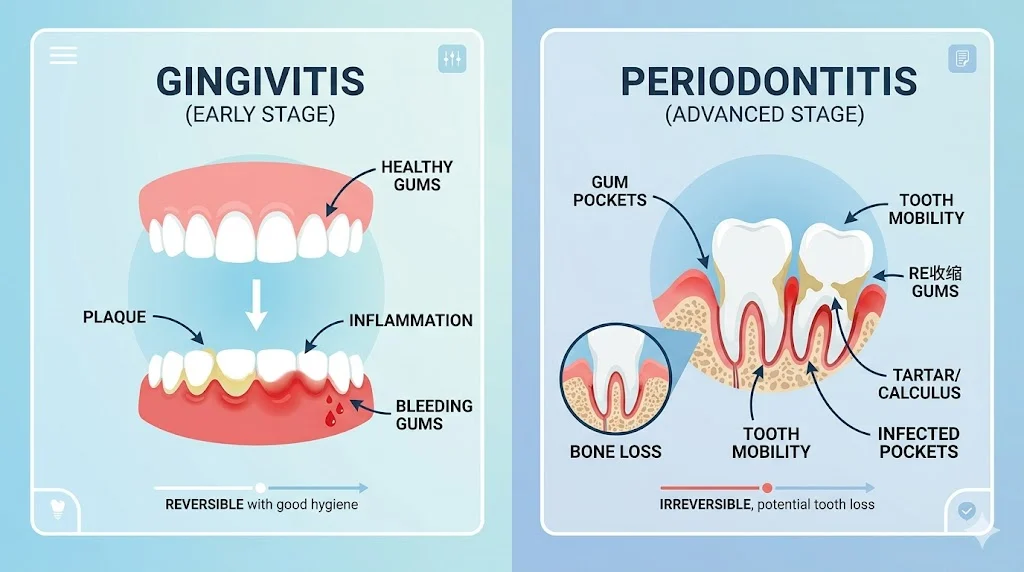
Periodontitis vs gingivitis refers to two stages of gum disease that affect the tissues supporting your teeth. Gingivitis is the early, mild stage that causes gum inflammation and bleeding but is reversible with proper care. Periodontitis is a more advanced stage where infection damages bone and supporting structures, often leading to tooth loss if untreated.
Understanding the difference between periodontitis vs gingivitis helps in early detection, timely treatment, and prevention of long-term dental damage.
Many people confuse gum problems and assume all bleeding gums are the same. But periodontitis vs gingivitis are not identical conditions. They are two stages of gum disease with very different severity levels and outcomes.
Gingivitis is the early warning stage. It causes red, swollen gums that may bleed while brushing. It is common and often painless. Periodontitis is the advanced stage. It damages the bone and tissues that hold teeth in place. If ignored, it can lead to loose teeth or tooth loss.
The confusion between periodontitis vs gingivitis is common because both start with plaque buildup. But their progression and treatment outcomes differ greatly. Gingivitis can often be reversed with good oral hygiene. Periodontitis cannot be fully reversed, only managed.
This guide explains everything in simple language. You will learn symptoms, causes, differences, treatments, real-world examples, and prevention tips. Whether you are a student, patient, or caregiver, this article will help you clearly understand periodontitis vs gingivitis and how to protect your oral health for life.
Quick Answer / Overview of Periodontitis vs Gingivitis
The difference between periodontitis vs gingivitis lies in severity and damage level.
- Gingivitis: Mild gum inflammation caused by plaque buildup. Reversible.
- Periodontitis: Severe gum infection that damages bone. Irreversible but manageable.
In simple terms:
- Gingivitis = Warning stage
- Periodontitis = Damage stage
Both conditions are part of gum disease, but only gingivitis can fully heal with proper care.
Definition and Explanation of Periodontitis vs Gingivitis
What is Gingivitis?
Gingivitis is the earliest stage of gum disease. It occurs when plaque builds up on teeth and irritates the gums.
Common features include:
- Red and swollen gums
- Bleeding during brushing or flossing
- Mild discomfort or no pain
- Bad breath
Gingivitis does not damage bone or connective tissue. This makes it reversible with good oral hygiene.
If treated early, gums return to normal within days or weeks.
What is Periodontitis?
Periodontitis is the advanced stage of gum disease. It develops when gingivitis is not treated.
In periodontitis vs gingivitis, this stage is far more serious because:
- Infection spreads below the gum line
- Bone supporting teeth starts breaking down
- Gums pull away from teeth (gum pockets form)
- Teeth may become loose
Periodontitis is not fully reversible. However, treatment can stop progression.
Key Differences Between Periodontitis vs Gingivitis
| Feature | Gingivitis | Periodontitis |
| Severity | Mild | Severe |
| Damage | No bone damage | Bone loss occurs |
| Pain | Usually painless | May cause pain |
| Reversibility | Fully reversible | Not reversible |
| Gum appearance | Red, swollen | Receding gums |
| Tooth stability | Stable | Loose teeth possible |
| Treatment | Simple cleaning | Deep cleaning or surgery |
This table clearly shows the difference in periodontitis vs gingivitis.
Causes and Risk Factors of Periodontitis vs Gingivitis
Both conditions share similar causes, but severity depends on progression.
Main Causes
- Plaque buildup on teeth
- Poor oral hygiene
- Tartar (hardened plaque)
- Bacterial infection
Risk Factors
Several factors increase the risk of periodontitis vs gingivitis progression:
- Smoking or tobacco use
- Diabetes
- Hormonal changes (pregnancy, puberty)
- Stress
- Poor nutrition
- Genetic factors
- Weak immune system
Smoking is one of the strongest risk factors for turning gingivitis into periodontitis.
Symptoms Comparison: Periodontitis vs Gingivitis
Symptoms of Gingivitis
- Red gums
- Swollen gums
- Bleeding while brushing
- Mild bad breath
- No tooth mobility
Symptoms of Periodontitis
- Receding gums
- Deep gum pockets
- Loose teeth
- Pus between teeth and gums
- Severe bad breath
- Pain while chewing
In periodontitis vs gingivitis, symptom severity increases significantly in periodontitis.
How Dentists Diagnose Periodontitis vs Gingivitis
Dentists use several methods:
Visual Examination
They check gum color, swelling, and bleeding.
Periodontal Probing
A small tool measures gum pocket depth:
- 1–3 mm = healthy or gingivitis
- 4 mm+ = possible periodontitis
X-rays
Used to check bone loss in advanced periodontitis vs gingivitis cases.
Medical History
Doctors review:
- Smoking habits
- Diabetes
- Medications
Treatment Options for Periodontitis vs Gingivitis
Treatment for Gingivitis
Gingivitis treatment is simple:
- Proper brushing twice daily
- Flossing daily
- Professional cleaning (scaling)
- Antibacterial mouthwash
With consistency, gums heal quickly.
Treatment for Periodontitis
Periodontitis treatment is more complex:
- Deep cleaning (scaling and root planing)
- Antibiotics
- Gum surgery (in severe cases)
- Bone grafting (advanced cases)
Unlike gingivitis, periodontitis requires long-term management.
Advantages and Disadvantages (Clinical Perspective)
Although diseases do not have “advantages,” understanding differences helps clarity.
Gingivitis
Advantages:
- Easily reversible
- No permanent damage
- Quick recovery with hygiene
Disadvantages:
- Can progress silently
- Often ignored due to mild symptoms
Periodontitis
Advantages:
- Detectable with clear signs in later stages
Disadvantages:
- Irreversible bone loss
- Risk of tooth loss
- Requires complex treatment
- Long recovery time
Real-World Examples of Periodontitis vs Gingivitis
Example 1: Teen with Gingivitis
A teenager forgets to brush properly for weeks. Gums become red and bleed. After dental cleaning and proper brushing, the gums return to normal.
Example 2: Adult with Periodontitis
A 45-year-old smoker ignores bleeding gums for years. Later, teeth become loose. X-rays show bone loss. Treatment includes deep cleaning and surgery.
Global Awareness of Periodontitis vs Gingivitis
Awareness of periodontitis vs gingivitis varies worldwide.
- Developed countries: Regular dental checkups are common
- Developing regions: Gum disease often ignored
- Urban areas: Better awareness due to dental education
- Rural areas: Late diagnosis is common
Lack of awareness leads to more periodontitis cases globally.
Common Mistakes People Make
Many people misunderstand periodontitis vs gingivitis.
Mistake 1: Ignoring Bleeding Gums
Bleeding gums are often treated as normal, but they are early gingivitis signs.
Mistake 2: Assuming Tooth Pain is Early Stage
Periodontitis may not cause early pain. Damage happens silently.
Mistake 3: Skipping Flossing
Flossing removes plaque between teeth, where brushing cannot reach.
Mistake 4: Delaying Dental Visits
Regular checkups help prevent progression from gingivitis to periodontitis.
Exercises with Answers: Periodontitis vs Gingivitis
Exercise 1: Identify the Stage
- Bleeding gums, no pain
- Loose teeth and bone loss
Answers:
- Gingivitis
- Periodontitis
Exercise 2: True or False
- Gingivitis is irreversible
- Periodontitis can cause tooth loss
- Gingivitis affects bone structure
Answers:
- False
- True
- False
Exercise 3: Match the Treatment
- Gingivitis → ?
- Periodontitis → ?
Answers:
- Gingivitis → Brushing, flossing, cleaning
- Periodontitis → Deep cleaning, surgery
Related Concepts to Periodontitis vs Gingivitis
Understanding periodontitis vs gingivitis also requires knowing related dental terms:
Plaque
Sticky bacteria film on teeth.
Tartar
Hardened plaque that requires professional cleaning.
Cavities
Tooth decay caused by bacteria, separate from gum disease.
Oral Hygiene
Daily practices like brushing and flossing.
Halitosis
Medical term for bad breath.
FAQs
What is the main difference between periodontitis vs gingivitis?
Gingivitis is mild and reversible, while periodontitis is severe and causes permanent bone damage.
Can gingivitis turn into periodontitis?
Yes, untreated gingivitis can progress into periodontitis over time.
Is periodontitis painful?
Not always. Many cases are painless until advanced stages.
Can periodontitis be cured completely?
No. It can be controlled but not fully reversed due to bone loss.
How long does gingivitis take to heal?
With proper care, gingivitis can improve in 7–14 days.
What is the best way to prevent periodontitis vs gingivitis?
Regular brushing, flossing, and dental checkups are the best prevention methods.
Is bleeding gums always gingivitis?
Most of the time, yes. But a dentist should confirm the diagnosis.
Can children get periodontitis?
It is rare but possible, especially with poor oral hygiene or genetic conditions.
Does smoking worsen periodontitis vs gingivitis?
Yes. Smoking significantly increases risk and severity.
When should I see a dentist?
If gums bleed regularly or teeth feel loose, visit a dentist immediately.
Conclusion
Understanding periodontitis vs gingivitis is essential for maintaining long-term oral health. Gingivitis is the early, reversible stage of gum disease that can be treated with simple hygiene practices. Periodontitis is the advanced stage that causes permanent damage to gums and bone structure.
The key takeaway is early action. Many people ignore early signs like bleeding gums, allowing the condition to progress. With regular brushing, flossing, and dental checkups, both conditions can be prevented.
If you notice symptoms of periodontitis vs gingivitis, do not delay treatment. Early care can save teeth, reduce costs, and prevent long-term complications. Healthy gums are the foundation of a healthy smile.