
Last Updated on June 26, 2026
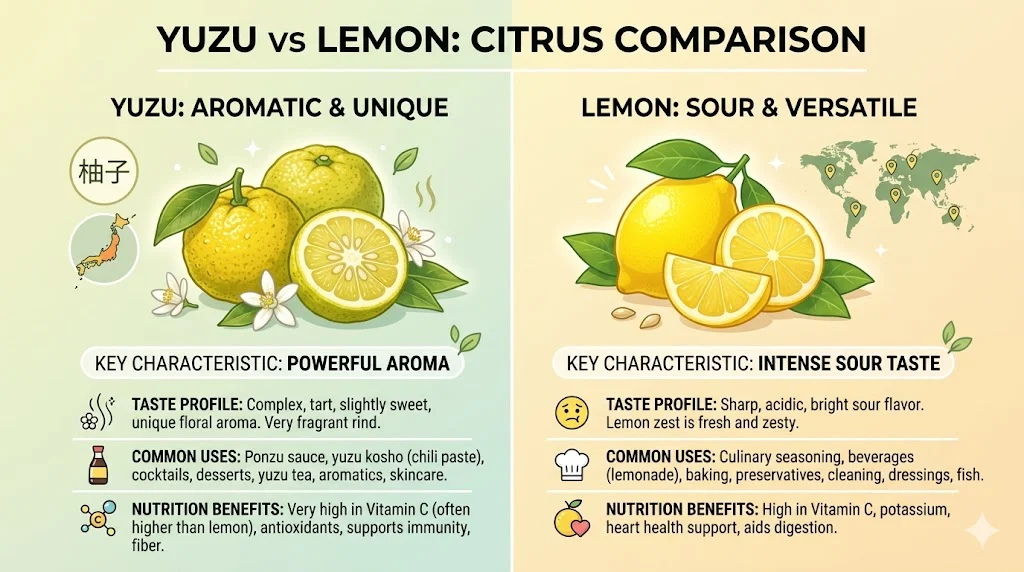
Yuzu vs lemon is a comparison between two citrus fruits with very different origins, flavors, and culinary uses. Yuzu is a fragrant East Asian citrus with a complex aroma, while lemon is a widely used global citrus known for its sharp sour taste. Both are used in cooking, drinks, and skincare, but they are not interchangeable in most recipes.
The comparison between yuzu vs lemon often confuses food lovers, chefs, and beginners in cooking. Both are citrus fruits, both are sour, and both are used to add freshness to food and drinks. But they are not the same.
Yuzu comes mainly from East Asia, especially Japan, Korea, and China. It has a strong aroma, a floral scent, and a taste that is a mix of lemon, lime, and grapefruit. It is rarely eaten raw because it is too sour and full of seeds.
Lemon, on the other hand, is one of the most common fruits in the world. It is widely available, easy to use, and has a sharp sour flavor that works in almost any recipe. From lemonade to desserts, lemon is a kitchen essential.
Understanding yuzu vs lemon helps you choose the right citrus for cooking, drinks, skincare, and even health remedies. This guide explains everything in simple language so you can clearly know when to use yuzu and when to use lemon in daily life.
Quick Answer: Yuzu vs Lemon Overview
Yuzu is a rare aromatic citrus fruit with a complex floral flavor, mainly used in Japanese and Korean cuisine. Lemon is a common sour citrus fruit used globally for cooking, drinks, and cleaning.
In simple terms:
- Yuzu = fragrant, complex, rare, gourmet citrus
- Lemon = sharp, sour, common, everyday citrus
What is Yuzu?
Yuzu is a small citrus fruit that originated in China and became highly popular in Japan and Korea. It looks like a small grapefruit with a rough, uneven yellow skin.
Key Features of Yuzu
- Strong floral aroma
- Sour but slightly sweet taste
- Lots of seeds
- Thick rind used for zest and oil
- Rare and expensive in many countries
Yuzu is rarely eaten like an orange. Instead, its juice, peel, and zest are used in sauces, teas, desserts, and perfumes.
What is Lemon?
Lemon is a globally cultivated citrus fruit known for its bright yellow color and sharp sour taste. It is one of the most widely used fruits in cooking.
Key Features of Lemon
- Strong sour flavor
- Juicy pulp
- Thin, smooth peel
- Widely available
- Affordable and versatile
Lemon is used in cooking, baking, drinks, cleaning products, and even medicine.
Yuzu vs Lemon: Flavor Profile Comparison
The biggest difference in yuzu vs lemon is flavor.
Yuzu Flavor
- Floral
- Slightly sweet
- Citrus mix of lime, grapefruit, and mandarin
- Aromatic and complex
Lemon Flavor
- Sharp sour taste
- Straightforward citrus flavor
- Less aromatic than yuzu
- Strong acidity
Simple Analogy
Think of it like this:
- Yuzu is like a perfume with many layers
- Lemon is like a sharp, clean acid note
Yuzu vs Lemon: Nutritional Comparison
Both fruits are healthy, but their nutritional value is slightly different.
| Nutrient | Yuzu | Lemon |
| Vitamin C | High | Very high |
| Calories | Low | Low |
| Fiber | Moderate (mostly peel) | Moderate |
| Antioxidants | Very high | High |
| Availability | Limited | Global |
Both support immunity, skin health, and digestion.
Advantages and Disadvantages of Yuzu vs Lemon
Advantages of Yuzu
- Unique and complex flavor
- High culinary value in gourmet cooking
- Strong aromatic oils
- Used in high-end restaurants
Disadvantages of Yuzu
- Expensive
- Hard to find outside Asia
- Not suitable for all recipes
- Very seedy
Advantages of Lemon
- Easy to find worldwide
- Cheap and affordable
- Versatile in cooking
- Long shelf life
Disadvantages of Lemon
- Less aromatic than yuzu
- Simple flavor compared to yuzu
- Can be too sour for some dishes
Culinary Uses of Yuzu vs Lemon
Cooking Uses of Yuzu
- Japanese sauces like ponzu
- Yuzu kosho (chili paste)
- Desserts (cheesecake, sorbet)
- Seafood seasoning
- Tea and cocktails
Cooking Uses of Lemon
- Lemonade and drinks
- Baking (cakes, cookies)
- Salad dressing
- Marinades for meat and fish
- Soup flavoring
Regional and Global Usage
Yuzu in Different Regions
- Japan: essential in traditional cuisine
- Korea: used in teas and syrups
- China: used in herbal drinks
- Western countries: luxury ingredient in fine dining
Lemon in Different Regions
- Global use in almost every cuisine
- Middle East: seasoning and drinks
- Europe: desserts and sauces
- South Asia: pickles and drinks
Yuzu vs Lemon: Comparison Table
| Feature | Yuzu | Lemon |
| Origin | East Asia | South Asia (historically), now global |
| Taste | Complex, floral | Sharp, sour |
| Aroma | Very strong | Moderate |
| Availability | Rare | Common |
| Price | High | Low |
| Culinary use | Gourmet dishes | Everyday cooking |
| Juice yield | Low | High |
| Seeds | Many | Few |
Real-World Examples of Yuzu vs Lemon
Example 1: Sushi Restaurant
A high-end sushi restaurant uses yuzu in dipping sauces because of its fragrance. Lemon would make the taste too sharp.
Example 2: Home Cooking
A home cook uses lemon juice in salad dressing because it is easy to find and affordable.
Example 3: Dessert Making
- Yuzu cheesecake: delicate, aromatic flavor
- Lemon tart: bold and tangy flavor
Common Mistakes in Yuzu vs Lemon Usage
Mistake 1: Treating them as identical
They are not interchangeable in all recipes.
Mistake 2: Using lemon instead of yuzu in gourmet dishes
This changes the entire flavor profile.
Mistake 3: Overusing yuzu juice
Yuzu is strong and should be used in small amounts.
Mistake 4: Ignoring zest differences
Yuzu peel is more aromatic than lemon peel.
Exercises with Answers: Yuzu vs Lemon Understanding
Exercise 1
Which fruit is more common worldwide?
Answer: Lemon
Exercise 2
Which fruit is more aromatic and floral?
Answer: Yuzu
Exercise 3
Name one dish where yuzu is commonly used.
Answer: Ponzu sauce or yuzu kosho
Exercise 4
Can lemon replace yuzu in all recipes?
Answer: No, because the flavor profile is different
Exercise 5
Which fruit is more suitable for lemonade?
Answer: Lemon
Related Comparisons
Understanding yuzu vs lemon becomes easier when compared with other citrus fruits:
Yuzu vs Lime
- Lime is sharper
- Yuzu is more aromatic
Yuzu vs Orange
- Orange is sweet
- Yuzu is sour and complex
Lemon vs Lime
- Lemon is slightly less sharp
- Lime is more acidic
FAQs
What is the main difference between yuzu vs lemon?
Yuzu is aromatic and complex, while lemon is sharp and sour with a simpler taste.
Can I replace lemon with yuzu in recipes?
Sometimes yes, but not always. Yuzu has a stronger aroma and different flavor profile.
Why is yuzu so expensive compared to lemon?
Because it is rare, difficult to grow, and mostly produced in limited regions.
Is yuzu healthier than lemon?
Both are healthy and rich in vitamin C. Neither is significantly better.
What does yuzu taste like compared to lemon?
Yuzu tastes like a mix of lemon, lime, and grapefruit with floral notes.
Where is yuzu mainly used?
It is mainly used in Japan, Korea, and high-end international cuisine.
Can I drink yuzu like lemon water?
Yes, but it is usually used in small amounts due to its strong flavor.
Which is better for weight loss: yuzu or lemon?
Both support digestion and hydration, but neither is a direct weight loss solution.
Is lemon more versatile than yuzu?
Yes, lemon is more widely used in everyday cooking and drinks.
What is the best use of yuzu?
The best use is in sauces, desserts, and aromatic flavoring.
Conclusion
The comparison of yuzu vs lemon shows that both fruits are valuable but serve different purposes. Yuzu is a rare, aromatic citrus fruit used in gourmet cooking, especially in Japanese and Korean cuisine. It adds depth, fragrance, and complexity to dishes, making it a favorite among chefs.
Lemon, on the other hand, is a global kitchen essential. It is affordable, easy to find, and extremely versatile. From drinks to desserts to savory dishes, lemon plays a key role in everyday cooking.
Choosing between yuzu vs lemon depends on your goal. If you want bold aroma and a unique gourmet touch, yuzu is ideal. If you need something practical, sour, and widely available, lemon is the better choice.
Understanding their differences helps improve cooking decisions and enhances flavor balance in recipes. While they may look similar, their taste and usage are very different. Using them correctly can significantly improve the quality of your food and drinks.