
Last Updated on May 16, 2026
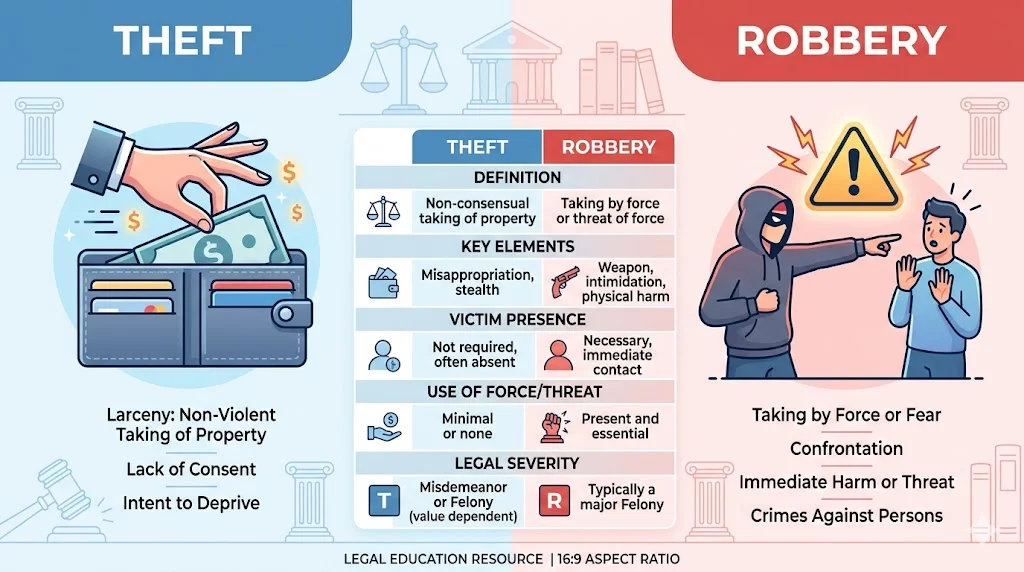
Robbery and theft are both crimes involving taking someone’s property without permission, but they are not the same. Theft is the act of taking property without force or threat, while robbery involves force, intimidation, or fear against a person. The key difference lies in violence or threat during the crime.
Robbery vs theft is a common topic in law, education, and daily discussions. Many people use these words as if they mean the same thing. However, they describe different crimes with different legal meanings and punishments.
The confusion happens because both crimes involve taking something that does not belong to you. But the way the act happens is very different. One involves force or fear, and the other does not. This difference changes how the law treats the crime.
Understanding robbery vs theft is important for students, law learners, business owners, and even everyday citizens. It helps people understand their rights and legal responsibilities. It also helps in identifying the seriousness of different criminal acts.
In this article, we will break down robbery vs theft in simple language. You will learn definitions, differences, examples, legal views, mistakes people make, and even practice exercises. By the end, you will clearly understand how these two crimes differ and why the distinction matters in real life.
Quick Answer Overview
Robbery vs theft can be explained in a simple way:
Theft is when someone takes property without permission and without using force.
Robbery is when someone takes property using force, threats, or fear against a person.
In short:
Theft is silent and non violent.
Robbery is violent or threatening.
Both are crimes, but robbery is considered more serious because it involves harm or fear to a person.
Definition of Robbery vs Theft
What is Theft
Theft is the unlawful taking of someone else’s property with the intention of keeping it permanently. It does not involve force or threats against a person.
Key points about theft:
- Property is taken without permission
- No physical force is used
- No threat or intimidation is involved
- It can happen secretly
Example:
A person quietly takes a phone from a table without the owner noticing.
Theft is also called larceny in many legal systems.
What is Robbery
Robbery is taking someone’s property using force, fear, or intimidation. The victim is present and is threatened or harmed during the act.
Key points about robbery:
- Property is taken directly from a person
- Force or threat is used
- Victim feels fear or danger
- It is a violent crime
Example:
A person points a knife at someone and demands their wallet.
Robbery is considered more dangerous because it affects both property and personal safety.
Robbery vs Theft Key Differences
Core Difference
The main difference in robbery vs theft is presence of force.
Theft has no force.
Robbery has force or threat.
Detailed Comparison Table
| Feature | Theft | Robbery |
| Use of force | No | Yes |
| Threat or intimidation | No | Yes |
| Victim presence | Not necessary | Required |
| Type of crime | Property crime | Violent property crime |
| Legal seriousness | Less severe | More severe |
| Example | Shoplifting without notice | Mugging with threat |
Nature of the Crime
Theft is usually secretive and non violent. It happens when the victim is not aware.
Robbery is direct and confrontational. It happens in the presence of the victim.
Legal Impact
In most legal systems, robbery carries harsher punishment than theft. This is because robbery creates fear and danger to human life.
Advantages and Disadvantages of Understanding Robbery vs Theft
Although crimes do not have advantages, understanding robbery vs theft has benefits in education and law awareness.
Advantages
- Helps in legal education
- Improves awareness of rights
- Assists in identifying crime types
- Useful for law students and exams
- Helps business owners prevent crime
Disadvantages of Confusion
- Misunderstanding legal charges
- Incorrect reporting of crime
- Weak legal defense or complaints
- Confusion in media or news interpretation
Understanding the difference helps avoid these issues.
Real World Examples of Robbery vs Theft
Theft Examples
- Picking a wallet from a bag without being noticed
- Stealing goods from a store secretly
- Taking a bicycle left outside a house
These are theft because there is no confrontation.
Robbery Examples
- Snatching a purse while threatening the person
- Armed robbery at a shop
- Forcing someone to hand over money at gunpoint
These are robbery because force or fear is used.
Regional and Global Legal Differences
Different countries define robbery vs theft in similar but slightly different ways.
Common Law Countries
In countries like the United Kingdom and United States:
- Theft is taking property without consent
- Robbery includes force or intimidation
Civil Law Countries
In many European systems:
- Theft is basic unlawful taking
- Robbery is aggravated theft with violence
South Asian Legal Systems
In countries like Pakistan and India:
- Theft involves dishonest taking without consent
- Robbery involves theft with fear or injury
Although wording changes, the core idea remains the same.
Common Mistakes in Understanding Robbery vs Theft
Mistake 1: Thinking all stealing is robbery
Not all stealing is robbery. Only theft involving force is robbery.
Mistake 2: Ignoring victim presence
Some people think robbery can happen without a victim present. This is incorrect.
Mistake 3: Confusing burglary with robbery
Burglary is entering a building illegally. It may or may not involve theft or robbery.
Mistake 4: Assuming theft is minor and harmless
Theft is still a crime and can lead to serious punishment.
Exercises with Answers
Exercise 1
Identify the crime:
A person quietly takes a phone from a desk without anyone noticing.
Answer:
Theft
Exercise 2
Identify the crime:
A person threatens a shopkeeper and demands money.
Answer:
Robbery
Exercise 3
True or False:
Robbery can happen without the victim being present.
Answer:
False
Exercise 4
Fill in the blank:
The main difference between robbery vs theft is __________.
Answer:
force or threat
Exercise 5
Choose the correct option:
Which is more serious?
A. Theft
B. Robbery
Answer:
B. Robbery
Related Concepts and Comparisons
Theft vs Burglary
Burglary is entering a place illegally with intent to commit a crime. Theft is the act of taking property. They can overlap but are not the same.
Robbery vs Extortion
Extortion is forcing someone to give property through threats without immediate physical taking. Robbery involves direct taking with force.
Theft vs Shoplifting
Shoplifting is a form of theft that happens in stores.
Robbery vs Mugging
Mugging is a common street form of robbery involving sudden attack or threat.
Importance of Understanding Robbery vs Theft
Understanding robbery vs theft is important for:
- Law students studying criminal law
- Police reporting and investigation
- Court cases and legal defense
- Insurance claims
- General public safety awareness
It helps people clearly describe incidents and understand legal consequences.
Prevention Tips for Theft and Robbery
Preventing Theft
- Keep belongings secured
- Use locks and alarms
- Avoid leaving valuables unattended
- Install security cameras
Preventing Robbery
- Avoid unsafe areas at night
- Stay alert in public places
- Do not display valuables openly
- Use safe transport routes
FAQs
What is the main difference between robbery vs theft?
The main difference is force. Theft has no force, while robbery includes force or threat.
Is robbery worse than theft?
Yes. Robbery is more serious because it involves violence or intimidation.
Can theft become robbery?
Yes. If force or threat is used during theft, it becomes robbery.
Is shoplifting theft or robbery?
Shoplifting is theft because it is done without force.
Does robbery require physical harm?
No. Threat alone is enough for robbery.
What is an example of theft vs robbery?
Theft is taking a phone unnoticed. Robbery is taking a phone by threatening the owner.
Are robbery and burglary the same?
No. Burglary is illegal entry, while robbery involves forceful taking of property.
Which is easier to prove in court, robbery vs theft?
Theft is usually easier to prove because it does not require proving force or fear.
Can robbery happen without weapons?
Yes. Verbal threats alone can make it robbery.
Why is understanding robbery vs theft important?
It helps in legal awareness, reporting crimes correctly, and understanding punishment severity.
Conclusion
Robbery vs theft is an important legal distinction that helps us understand different types of property crimes. Theft is the act of taking property without permission and without force. Robbery is more serious because it involves force, threats, or fear directed at a person.
Understanding this difference is useful in daily life, legal education, and crime reporting. It helps people recognize the seriousness of a situation and respond correctly. Theft may happen quietly, but robbery directly affects personal safety.
The key takeaway is simple: all robbery involves theft, but not all theft is robbery. Knowing this difference improves legal awareness and helps build safer communities. Whether you are a student, professional, or general reader, this knowledge is valuable for understanding how law protects property and people.